
Warhammer 40,000’s Combat Patrol Companion: A Deep Dive into GW’s New Player Strategy
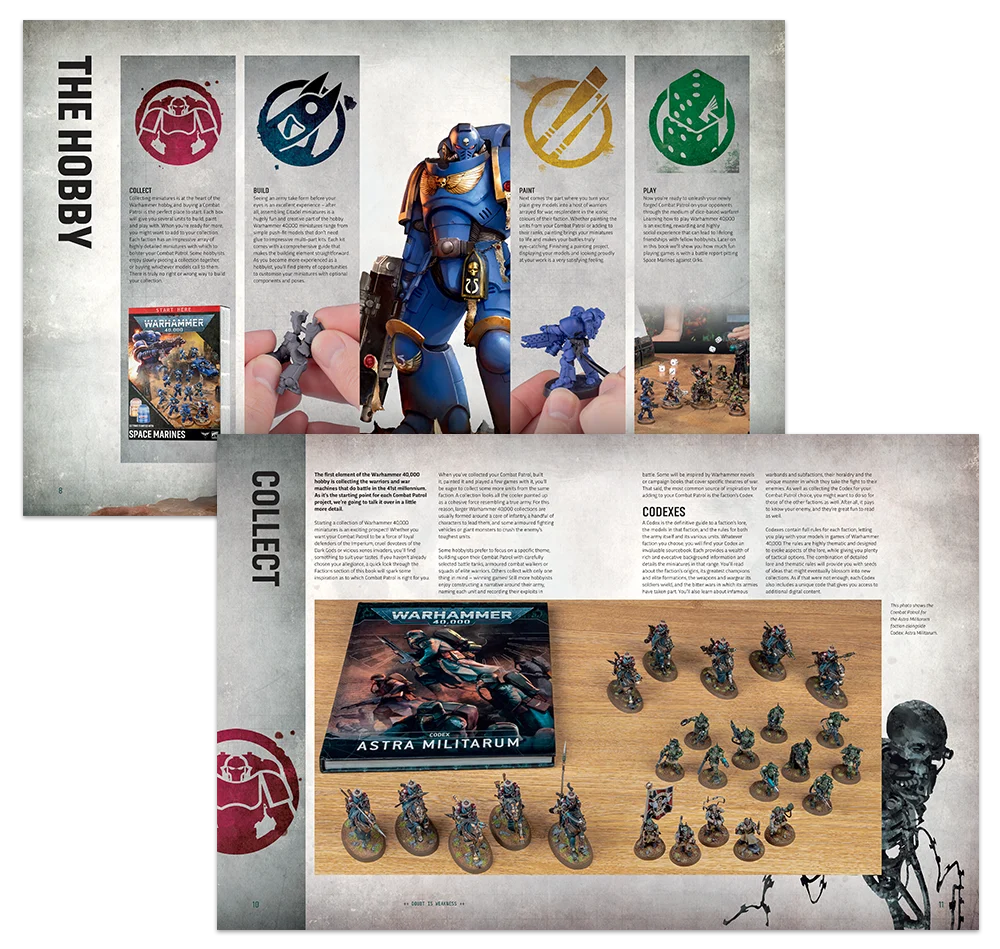
The release of Games Workshop’s latest Warhammer 40,000 product, the Combat Patrol Companion, has garnered significant attention, not least for what it contains, but for what it conspicuously omits. Positioned as an essential guide for newcomers entering the grim darkness of the 41st Millennium, this companion volume arrives alongside the new Armageddon boxed set, promising to demystify the rich lore and intricate hobby aspects of the game. However, a surprising revelation has left many fans perplexed: the book, despite its title and beginner-centric focus, does not include the actual rules for the Combat Patrol format, directing players instead to digital resources.
This strategic decision by Games Workshop prompts a closer examination of the Combat Patrol Companion‘s true purpose, its effectiveness as an onboarding tool, and the broader implications for the future of physical rulebooks and introductory products in the tabletop gaming industry. Is this a shrewd move to streamline content and embrace digital flexibility, or a missed opportunity to provide a truly comprehensive physical entry point for burgeoning enthusiasts?
Unpacking the Core Offering: Main Facts and Initial Impressions
The Combat Patrol Companion emerges as a near 200-page, full-color tome, boasting the signature high-quality production Games Workshop is known for. Its glossy pages are filled with stunning artwork, detailed lore summaries, and vibrant photographs of Citadel miniatures. The book’s primary objective, as outlined by Games Workshop, is to serve as an accessible primer for the Warhammer 40,000 universe, explaining its vast setting, the fundamental principles of the game, and the foundational steps of the miniatures hobby.
Notably, the Combat Patrol format itself — a scaled-down version of Warhammer 40,000 designed for faster, more accessible games — also sees a peculiar treatment in the new edition. While the Core Rulebook for the latest iteration of Warhammer 40,000 does contain rules for Combat Patrol, these rules are reportedly indistinguishable from the standard rules for the larger game. This lack of bespoke, simplified Combat Patrol rules within the main rulebook, combined with their complete absence from the dedicated Combat Patrol Companion, creates a somewhat disjointed experience for new players hoping for a concise, self-contained entry point.
Games Workshop provided a preview copy of the Combat Patrol Companion for review, allowing for an in-depth assessment of its contents and its potential impact on the player base. The initial impression confirms its aesthetic appeal and the breadth of its informational content, but the missing rules loom large over its overall utility.
A Shifting Landscape: Chronology and Context
To fully appreciate the Combat Patrol Companion, it’s crucial to understand the evolving landscape of Warhammer 40,000 and Games Workshop’s strategies for new player acquisition. For decades, the core rulebook for Warhammer 40,000 was a monolithic entity, a weighty tome encompassing not just the rules of play, but also extensive lore, faction overviews, hobby guides, and often, battle reports. This all-in-one approach served as a comprehensive, albeit sometimes intimidating, introduction to the hobby.
However, recent editions have seen a gradual shift towards modularity. Rulebooks have become more focused on rules, with lore and hobby content increasingly being spun off into supplementary volumes, apps, or dedicated starter sets. This trend is partly driven by the sheer volume of content in the Warhammer 40,000 universe, but also by Games Workshop’s desire to offer tailored entry points for different player types.
The Combat Patrol format itself is a relatively recent innovation, designed to address a common barrier to entry: the time and monetary investment required to build and paint a full Warhammer 40,000 army. By offering smaller, pre-defined forces (often packaged in convenient Combat Patrol box sets), Games Workshop aimed to provide a quicker, less daunting path to playing the game. These boxes typically come with a small rulebook, often a condensed version of the core rules, along with basic instructions.
The release of the new Armageddon box set and its accompanying small rulebook, which only contains rules, signals a further step in this modular approach. The Combat Patrol Companion effectively takes on the role of the traditional "lore and hobby" sections that were once integral to the core rulebook. This segmentation, while potentially allowing for more focused content, also places a greater burden on new players to acquire multiple products or navigate various digital platforms to gather all the necessary information.
Dissecting the Pages: Supporting Data and Content Analysis
The Combat Patrol Companion is, in essence, a distillation of the non-rules content traditionally found in a Warhammer 40,000 core rulebook. Clocking in at just under 200 pages, the book is divided into several key sections, each designed to acclimate a beginner to the sprawling universe and complex hobby.
![[40K] Tabletop Battles Reviews: The Combat Patrol Companion](https://assets.tabletopbattles.com/wp-content/uploads/2026/06/40k_11E_CombatPatrolCompanion_Review_Banner-768x432.png)
The Lore of the 41st Millennium
Approximately two-thirds of the book is dedicated to lore and setting information. This section serves as an excellent primer for the uninitiated, providing a high-level overview of the Warhammer 40,000 universe. Readers will find:
-
Setting the Stage: An introduction to the grimdark nature of the 41st Millennium, explaining the constant warfare, the decay of the Imperium, and the myriad threats facing humanity. This sets the tone effectively, conveying the oppressive atmosphere that defines the setting.
-
The Pillars of the Imperium: A particularly well-executed two-page spread vividly illustrates the major institutions of the Imperium of Man. From the omnipotent High Lords of Terra and the shadowy Inquisition to the esoteric Navis Nobilite and the stern Adeptus Arbites, this visual breakdown provides a clear hierarchy and function for the vast bureaucratic and military apparatus that governs humanity. It helps new players grasp the sheer scale and complexity of the human empire.
-
Major War Zones: The book offers comprehensive summaries of key conflict zones that have shaped the narrative of Warhammer 40,000 over recent years. These include:
- Armageddon: The iconic industrial world, perpetually scarred by conflicts with Orks and Chaos, and the namesake of the new box set.
- The Five Hundred Worlds: A region of ongoing strife and imperial consolidation.
- The Eye of Terror/Cadian Gate: The infamous warp rift and the critical defensive line that once guarded the Imperium from its horrors.
- The Maelstrom: Another volatile warp storm, home to various renegade forces.
- Bastior: A more recent battleground, highlighting ongoing narrative developments.
- The Pariah Nexus: A chilling zone where the very presence of the Warp is suppressed, a terrifying domain of the Necrons.
- The Chalnath Expanse: A frontier region experiencing significant conflict.
These summaries are incredibly valuable for players who might have missed previous campaign books or narrative developments, offering a concise catch-up on the current status and stakes of major conflicts. They provide context for why certain factions are fighting in specific locations, enriching the gaming experience.
-
Faction Overviews: The Companion dedicates four-page spreads to each major faction in the game. These sections include:
- Basic Introduction: A concise overview of the faction’s history, ideology, and combat doctrine.
- Stunning Model Photography: High-quality images showcasing painted miniatures, often focusing on the contents of that faction’s Combat Patrol box. This visual appeal is crucial for drawing new players in and helping them choose an army.
- "Next Steps" for Expansion: Practical advice on how to expand a Combat Patrol force into a full-sized army, suggesting additional units that complement the starting force. This guidance is invaluable for beginners who might feel overwhelmed by the vast array of available models.
- Notable Omissions: Curiously, some prominent factions are absent from these overviews, such as the towering Imperial Knights and the infernal Chaos Daemons. While these might be considered more niche armies, their exclusion means a less comprehensive introduction to the full breadth of forces in the 41st Millennium.
Mastering the Hobby: Building and Painting Miniatures
A significant portion of the Combat Patrol Companion is devoted to the foundational aspects of the Warhammer 40,000 hobby: building and painting miniatures. These sections, while basic, are presented with clarity and practical advice crucial for new entrants:
- Tools of the Trade: An introduction to essential hobby tools, such as clippers, hobby knives, and mould line removers.
- Assembly Techniques: Practical tips like removing mould lines, dry-fitting components before gluing, and using appropriate glues. These seemingly simple steps are often overlooked by beginners, leading to frustration and less-than-optimal results.
- Painting Fundamentals: Advice on thinning paints, washing brushes after use, applying basecoats, washes, and highlights. The importance of thinning paints, in particular, is a universal lesson for miniature painters and is well-emphasized here.
- Step-by-Step Guides: While not exhaustive, the book offers enough guidance to get a beginner started on their first miniatures, demystifying a process that can appear daunting from the outside. The visual examples are particularly helpful.
This hobby section, though basic, is genuinely useful. It consolidates advice that new players might otherwise spend hours searching for across various online tutorials and forums. It provides a structured, official introduction to the practical skills required to fully engage with the miniatures aspect of the hobby.
The Glaring Omission: The Absence of Rules
Perhaps the most contentious aspect of the Combat Patrol Companion is its complete lack of physical rules for playing Combat Patrol. Instead, the book contains a QR code that directs readers to the Games Workshop website, where the rules are stated to be available, along with an indication that they will also be accessible via the official app.
The book does include a detailed battle report of a Combat Patrol game, walking readers through the flow of play and showcasing how the game unfolds. This visual demonstration is helpful for understanding the concept of a game, but it is no substitute for having the actual rules on hand.
This decision is problematic for several reasons:
![[40K] Tabletop Battles Reviews: The Combat Patrol Companion](https://assets.tabletopbattles.com/wp-content/uploads/2026/06/lorepages.png)
- Incompleteness: A "companion" book for a game format should, intuitively, contain the rules for that format. Its absence creates a fragmented experience, forcing new players to juggle a physical book with a digital device to access fundamental gameplay mechanics.
- Accessibility: Not all new players may have immediate access to a smartphone or reliable internet connection at all times, particularly in a gaming environment where physical books have traditionally been self-contained resources.
- Expectation vs. Reality: The title itself, Combat Patrol Companion, sets an expectation of a comprehensive guide, which is undermined by the omission of the core gameplay rules.
- Digital Fatigue: While digital rules offer flexibility for updates, many players still prefer the tactile experience and ease of reference that a physical rulebook provides, especially for learning a new game.
Official Responses and Strategic Rationale (Inferred)
Games Workshop has not issued a direct "official response" explaining the specific rationale behind the Combat Patrol Companion‘s content segmentation, particularly the exclusion of physical rules. However, based on their broader corporate strategy and recent trends in the tabletop gaming industry, several inferences can be made regarding their likely thinking:
- Digital-First Approach for Rules: Games Workshop has increasingly embraced digital platforms for rules dissemination. This allows for easier updates, errata, and FAQs, ensuring that players always have access to the most current version of the rules. For a dynamic game like Warhammer 40,000, where balance patches and clarifications are frequent, digital rules offer unparalleled flexibility compared to static physical printings. By directing players to an app or website, GW can maintain a single, canonical source of rules.
- Content Segmentation and Product Modularity: The decision to separate lore/hobby content from rules allows GW to create distinct product offerings. The Armageddon box set provides the core rules, while the Companion offers the thematic and practical context. This modularity can appeal to different types of consumers; some might only want the rules, others might prioritize the lore and hobby guidance. It also allows for more focused development and updates for each component.
- Reducing Intimidation for New Players: A single, massive core rulebook can be overwhelming. By presenting lore and hobby advice in a separate, visually appealing volume, GW might aim to create a less intimidating entry point. New players can immerse themselves in the universe and learn painting basics without being immediately confronted by complex gameplay mechanics. The battle report within the Companion then serves as a gentle introduction to gameplay flow without requiring memorization of specific rules.
- Commercial Strategy: By creating separate, high-quality products, Games Workshop can potentially generate additional sales. The Combat Patrol Companion is a premium-feeling book that can be sold independently or as part of a bundle, catering to those who desire the rich background material and hobby advice.
- Eco-Friendly Argument (Minor): While not explicitly stated, reducing the number of physical rulebooks that might become outdated with errata could be framed as a more sustainable approach, though this is likely a secondary consideration.
Broader Implications: For Players and the Hobby Ecosystem
The release of the Combat Patrol Companion and its unique content structure carries significant implications for both new and veteran players, as well as for the broader tabletop gaming hobby.
Implications for New Players
For the intended audience, new players, the Combat Patrol Companion presents a mixed bag:
- Pros: It offers an undeniably high-quality, visually engaging introduction to the Warhammer 40,000 universe and its core factions. The lore summaries are excellent, and the hobby advice is sound, providing a structured learning path for building and painting. It acts as a beautiful coffee-table book that can spark interest and provide a strong thematic foundation.
- Cons: The absence of rules is a major drawback. New players, eager to play, will be frustrated by the need to immediately consult an external digital source. This creates an additional barrier to entry, potentially deterring some who prefer a self-contained physical product. The fragmentation of essential information means new players will need to acquire multiple resources (the Companion, the Armageddon box rulebook, and a digital device/app) to get a full picture of the game.
Implications for Veteran Players
For established players, the value proposition of the Combat Patrol Companion is considerably lower:
- Limited Value: Most veterans are already familiar with the lore, the major war zones, and the basics of building and painting. While the book’s production quality is high, there is little new information that would warrant a purchase beyond a desire for completeness or as a display piece. The war zone summaries might offer a quick refresh, but this is unlikely to be a primary driver for acquisition.
- Redundancy: Much of the content is a re-packaging of information that veterans already possess, either from previous core rulebooks, codexes, or extensive online resources.
Implications for the Hobby Ecosystem and Future Releases
The Combat Patrol Companion signals a continuation, and perhaps an acceleration, of Games Workshop’s evolving product strategy:
- Digital Dominance for Rules: This release reinforces the trend towards digital-first rules. Players should anticipate that future rule updates, errata, and perhaps even core rules themselves, will increasingly reside in apps and on websites rather than solely in physical books. This allows for dynamic, real-time updates but challenges the traditional role of a physical rulebook as a stable, definitive source.
- Specialized Introductory Products: GW is clearly investing in specialized products to onboard new players. The Companion joins other initiatives like the Imperium Magazine (a partworks series offering models and gradual rules/lore instruction) and various starter sets. Each of these aims to capture different segments of potential new players. The Combat Patrol Companion seems to target those who appreciate a premium, curated lore and hobby experience before diving deep into rules.
- The Role of Physical Books: Physical books like the Companion may increasingly become thematic supplements, lore guides, art books, or hobby instruction manuals, rather than comprehensive rulebooks. Their value will lie in their tactile quality, visual appeal, and curated informational content that enhances the experience without necessarily being essential for gameplay.
- Competition from Online Resources: While the Companion offers professional, curated content, it faces stiff competition from the vast array of free online resources (YouTube tutorials, fan wikis, community forums, independent review sites like Tabletop Battles and Goonhammer) that provide similar lore, hobby, and even rules information. The book’s premium price point must justify its convenience and quality against these free alternatives.
In comparison to products like the Combat Patrol Partworks magazine, which often provides physical rules and models incrementally, the Companion‘s lack of rules feels like a significant oversight. The partworks model, by delivering a complete, albeit small, play experience with each issue, arguably offers a more immediate and satisfying entry point for beginners.
Final Verdict: A Beautiful, Yet Incomplete, Guide
The Combat Patrol Companion is a visually stunning and meticulously produced book. Its lore sections are engaging, offering a fantastic entry point into the sprawling narrative of Warhammer 40,000, and its hobby guides provide solid, actionable advice for aspiring miniature painters and builders. For someone entirely new to the hobby, it offers a beautifully curated introduction to the why and how of Warhammer 40,000.
However, its utility is severely hampered by the absence of the very rules that define the Combat Patrol format. This omission transforms what could have been a self-contained, indispensable guide into a supplementary product that still requires external resources for actual gameplay. While the move towards digital rules offers advantages for Games Workshop in terms of flexibility and updates, it creates a fragmented experience for the end-user, especially the beginner it purports to serve.
Ultimately, the Combat Patrol Companion finds itself in a peculiar niche. It’s too comprehensive for a casual glance but too incomplete for a serious beginner to rely on solely. Its value is primarily as a high-quality lore and hobby reference, or as a gateway to spark initial interest. For those already immersed in the Warhammer 40,000 universe, its appeal is limited. Games Workshop’s strategic intent with this product is clear – to segment and diversify its introductory offerings – but whether this particular execution effectively serves the new players it aims to attract remains a subject of ongoing debate within the community. The journey into the 41st Millennium, it seems, now requires a little more navigation than ever before.

Leave a Comment