The Cinematic Echo: How Steven Spielberg’s ‘Disclosure Day’ Reclaims the Legacy of ‘The Last Crusade’
The release of Steven Spielberg’s latest sci-fi thriller, Disclosure Day, has ignited a fervor among cinephiles and critics alike. While the film is being praised for its taut pacing and timely exploration of corporate whistleblowing, a specific sequence has captured the attention of film historians and eagle-eyed fans. Deep within the second act lies a masterfully choreographed setpiece on a moving train—a scene that does more than just drive the plot forward. It serves as a profound, perhaps even chilling, homage to one of the most iconic moments in Spielberg’s own filmography: the opening sequence of 1989’s Indiana Jones and the Last Crusade.
By revisiting the imagery of the "circus train," Spielberg isn’t merely indulging in nostalgia. Instead, he is using Disclosure Day to synthesize a lifetime of thematic obsessions, linking his childhood trauma, his formative cinematic experiences, and his evolution as the world’s premier visual storyteller.
Main Facts: The "Musical Instrument" Sequence
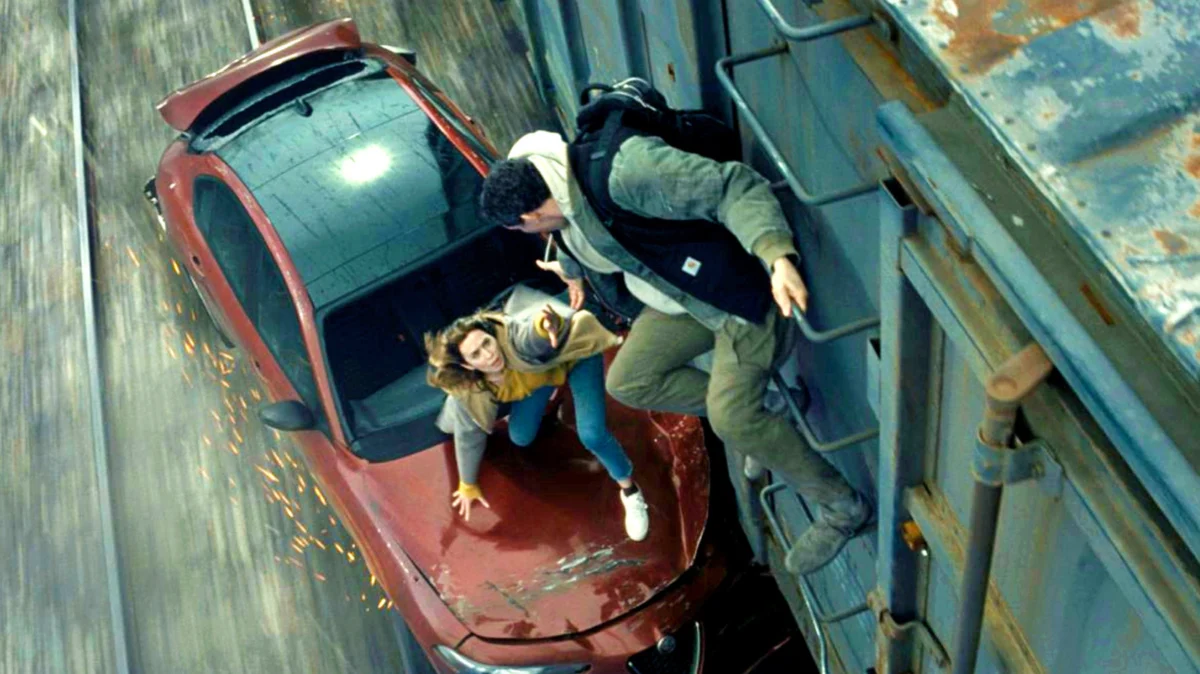
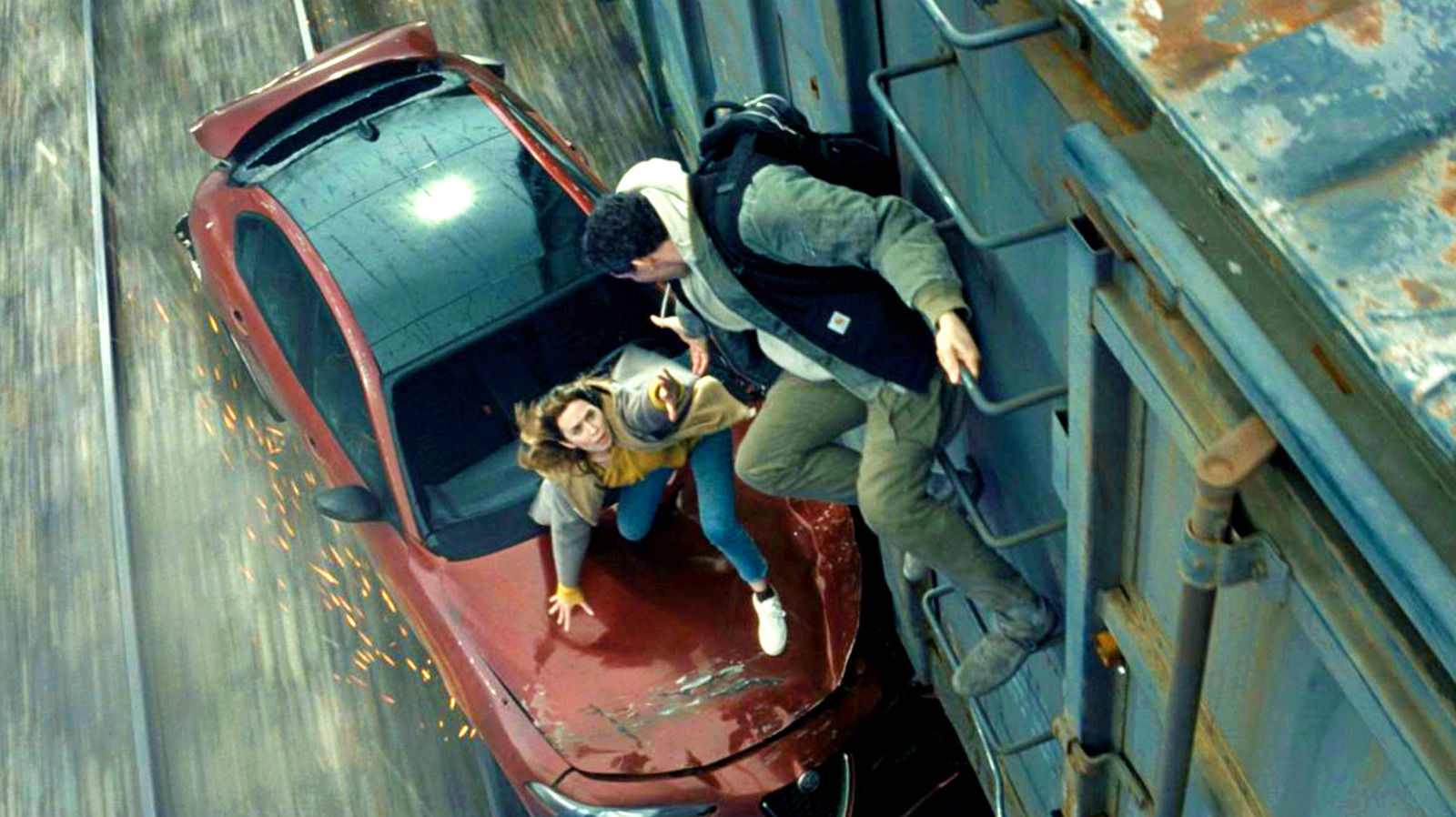
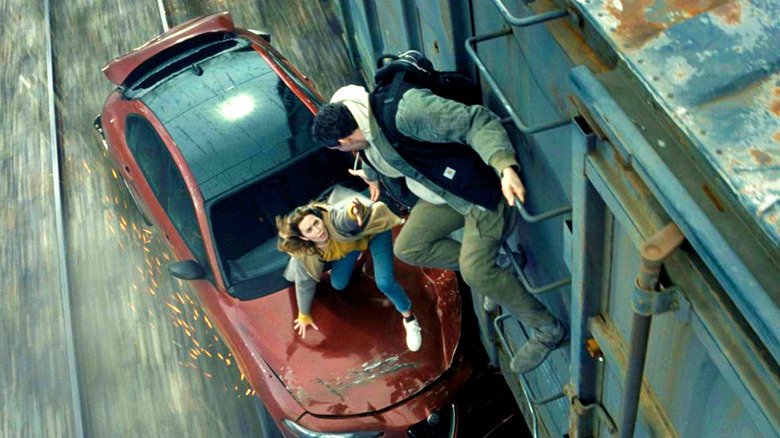
In Disclosure Day, the narrative follows Margaret Fairchild (Emily Blunt), a disgraced investigative journalist, and Daniel Kellner (Josh O’Connor), a whistleblower from the shadowy tech conglomerate Wardex. The scene in question occurs as the duo attempts to flee a Wardex extraction team. In a desperate bid to eliminate the witnesses, a company mercenary rams their vehicle, pushing it directly into the path of an oncoming freight train.
In a sequence defined by "Spielbergian" kinetic energy, Margaret and Daniel manage to leap from the doomed car and scramble into a passing boxcar. However, they don’t find safety; they find a claustrophobic environment filled with high-end orchestral instruments—grand pianos, harps, and crates of violins.
The parallels to The Last Crusade are immediate and striking. In the 1989 film, a young Indiana Jones (River Phoenix) escapes grave robbers by leaping onto a circus train, eventually falling into a vat of snakes. In Disclosure Day, the "snakes" are replaced by the tension of the strings. As the train lurches, the instruments slide and groan. The sound design heightens the screech of violin bows against floorboards and the discordant "slithering" sound of loose piano wires.
The visual composition—low-angle shots of the characters cowering beneath heavy objects while the world outside blurs into a rhythmic strobe of light and shadow—directly mirrors Indy’s frantic crawl through the reptile car. It is a moment of pure, unadulterated terror that transforms a mundane setting into a psychological labyrinth.
A Chronology of the Spielbergian Train
To understand why this homage in Disclosure Day carries such weight, one must look at the chronological evolution of the train as a symbol in Spielberg’s work.
1952: The Genesis
The obsession began not with a camera, but with a crash. As dramatized in Spielberg’s semi-autobiographical 2022 film The Fabelmans, a young Steven was traumatized and mesmerized by the spectacular train wreck in Cecil B. DeMille’s The Greatest Show on Earth. This event is the "Big Bang" of his career; he spent his childhood attempting to recreate the crash with a Lionel train set, eventually filming it on 8mm to "possess" the fear.
1989: The Formative Adventure
In The Last Crusade, Spielberg used the train to define the origin of Indiana Jones. The sequence on the circus train is where Indy gets his scar, his hat, and his phobia of snakes. It established the train as a place of transition—a chaotic space where a boy becomes a hero through a baptism of fire (and reptiles).
2022: The Deconstruction
With The Fabelmans, Spielberg finally explained why the train mattered. He revealed that the train represented a loss of control and the overwhelming power of the moving image. By showing Sammy Fabelman’s obsession with the mechanics of the crash, Spielberg invited the audience to see his filmography as an attempt to control the uncontrollable.
2026: The Full Circle in ‘Disclosure Day’
In Disclosure Day, the train is no longer a place of adventure or a childhood memory. It is a site of adult consequence. When Margaret Fairchild suffers a panic attack amidst the "slithering" sounds of the musical instruments, it echoes the "Spielberg face"—that look of paralyzed awe and terror. But here, the resolution is different. Instead of escaping the snakes, Daniel Kellner forces Margaret to touch the vibrating strings of a cello to ground herself. It is a moment of sensory grounding that subverts the trauma of the train, suggesting that the director is finally finding peace with his oldest cinematic demon.
Supporting Data: Visual and Auditory Parallels
The technical execution of the Disclosure Day sequence provides empirical evidence of this intentional homage. Film analysts have noted several key "rhymes" between the two films:
| Element | Indiana Jones and the Last Crusade | Disclosure Day |
|---|---|---|
| The Catalyst | Jumping from a horse onto a moving roof. | Jumping from a crushed car into a side door. |
| The Internal Threat | Vats of literal snakes. | "Slithering" sounds of loose instrument strings. |
| Lighting Palette | High-contrast "Chiaroscuro" (slats of light through wooden boards). | Stroboscopic LED flashes from passing track signals. |
| Character Beat | Young Indy freezes in terror; must move to survive. | Margaret freezes in a panic attack; must connect to survive. |
| Soundscape | Hissing snakes and the rhythmic thumping of tracks. | Discordant orchestral groans and metallic screeching. |
The choice of musical instruments as the "threat" is particularly savvy. It references Spielberg’s long-standing partnership with composer John Williams, suggesting that the very "music" of cinema—which once helped Spielberg process his fears—has now become the environment in which his characters must survive.
Official Responses and Production Insights
While Spielberg himself has been characteristically coy about the specific references, members of the production team have offered insights into the scene’s creation.
Cinematographer Janusz Kamiński, a longtime collaborator, noted in a recent American Cinematographer interview: "Steven wanted the train car to feel alive. He spoke a lot about the ‘rhythm of the rails’ being a heartbeat. We used specific shutter angles to make the movement of the instruments feel jagged and threatening, much like the snakes in the ’89 film. It was about capturing the feeling of being trapped inside a machine that is also a monster."
Lead actress Emily Blunt discussed the emotional weight of the scene during the London press junket: "Steven told me that Margaret shouldn’t just be afraid of the men chasing her. She’s afraid of the momentum. The train is the truth—it’s Disclosure Day—and it’s moving too fast for her to process. He wanted that sequence to feel like a primal scream."
Josh O’Connor added that the physical nature of the set—which used practical gimbals to shake the entire "instrument car"—contributed to the genuine sense of unease. "There’s a history in those shots," O’Connor said. "You feel like you’re stepping into a frame that has been in the director’s head for seventy years."
Implications: The Auteur’s Late-Career Synthesis
The inclusion of such a specific homage in Disclosure Day carries significant implications for how we view Spielberg’s late-career output.
First, it confirms that The Fabelmans was not a one-off "memory piece" but a Rosetta Stone for all his future work. By understanding the "Sammy Fabelman" version of the train crash, we can now see Disclosure Day as a sequel to Spielberg’s own life. The "Disclosure" of the title refers not just to the corporate secrets of Wardex, but to the director’s ongoing disclosure of his own psyche.
Second, the film redefines the "Spielbergian" hero. Unlike the young, agile Indiana Jones who escapes the snakes through luck and bravado, Margaret and Daniel survive the train through empathy and grounding. This shift from physical escapism to emotional endurance marks a more mature, reflective phase for the filmmaker.
Finally, Disclosure Day reinforces the idea that Spielberg is currently engaged in a project of "closing the loop." By returning to the imagery of the train—the very thing that started his journey—he is providing a sense of narrative closure to one of the most storied careers in Hollywood history.
As Disclosure Day continues its box-office run, the "musical train" sequence stands as a testament to the power of the auteur. It is a chilling, beautiful reminder that for Steven Spielberg, the tracks always lead back to the beginning, but the destination is always something new. In the discordant hum of those violins on a speeding train, we hear the echo of a boy in 1952, finally learning how to make the crash mean something more than just destruction.