Safeguarding the Craft: DGA Secures Landmark Protections Against AI and Production Contraction in New Four-Year Deal
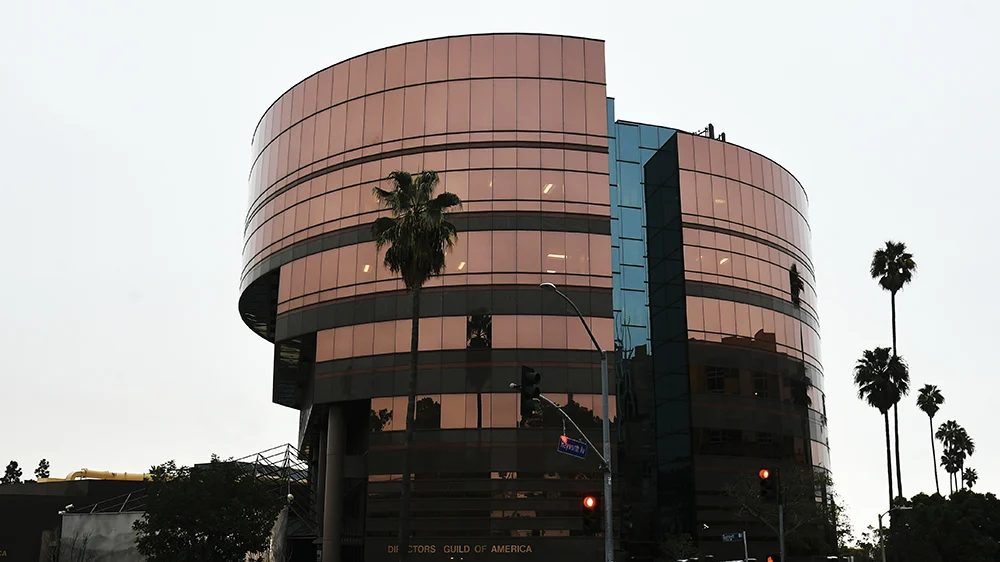
In an era defined by rapid technological shifts and a sobering economic contraction within the entertainment industry, the Directors Guild of America (DGA) has unveiled the details of a tentative four-year agreement with the Alliance of Motion Picture and Television Producers (AMPTP). The contract, which arrived after weeks of high-stakes negotiations, represents a defensive bulwark designed to protect the "career director" from two primary threats: the encroachment of artificial intelligence and the increasing trend of multi-hyphenate actors and crew members occupying limited episodic directing slots.
The deal comes at a precarious moment for Hollywood. With production levels down nearly 40% over the last four years, the DGA’s 19,500 members are facing an unprecedented unemployment crisis. By securing provisions that prioritize veteran directors and mandate strict human oversight of AI-generated content, the DGA leadership is attempting to stabilize a profession that many fear is being diluted by studio cost-cutting and the globalization of production.
Main Facts: A New Shield for Career Directors
The centerpiece of the new contract is a provision specifically designed to curb the practice of "vanity directing" or the habitual casting of actors and series regulars in the director’s chair. For years, episodic television has served as a training ground for stars looking to expand their resumes. However, in a market where 40% of production jobs have evaporated, the DGA has determined that these "slots" must be reserved for those whose primary livelihood is directing.
Protecting the Episodic Slot
According to the union’s summary, the contract seeks to "preserve valuable episodic directing slots for career directors." It achieves this by placing hard limits on the number of episodes that can be helmed by individuals who lack a proven track record in directing and are already employed on a series in another capacity—such as actors, writers, or producers. This move is intended to ensure that the "middle class" of directors, who do not have the luxury of a primary acting salary, can maintain their health insurance eligibility and pension credits.
The AI Mandate: Human Control in a Digital Age
Artificial Intelligence was a central pillar of the 2023 strikes by the WGA and SAG-AFTRA, and the DGA has now followed suit with even more specific language regarding the director’s creative authority. The new deal stipulates that all footage generated by AI will remain under the absolute control of the director. Furthermore, the studios must provide transparency regarding the use of AI in any production and offer notice if AI models are being trained using a director’s work.
To bridge the gap between traditional craft and new technology, the agreement also establishes an employer-funded program. This initiative will provide DGA members with specialized training to master AI tools, ensuring that directors remain the "pilots" of the technology rather than being replaced by it.
Economic and Health Adjustments
On the financial front, the DGA secured significant increases in contributions to its health plan. As healthcare inflation continues to outpace general economic growth, the studios have agreed to raise the cap on wages subject to these contributions. However, this came with a trade-off: for the first time, members will likely see the imposition of monthly premiums, a move similar to the concessions made by the Writers Guild earlier this year to keep their funds solvent.
Chronology: From Production Slump to Tentative Agreement
The path to this contract was paved by the industry-wide upheaval of the last several years. The timeline of this negotiation reflects a union responding to a "new normal" in Hollywood.
- 2021–2024: The Great Contraction. Following the "Peak TV" bubble, studios began a period of aggressive belt-tightening. Mergers, such as the formation of Warner Bros. Discovery, led to canceled projects and reduced episode counts. Production jobs fell by 40%, leaving thousands of DGA members without work.
- Late 2023: In the wake of the historic dual strikes by writers and actors, the DGA began internal polling to identify the most pressing concerns for its next cycle. The "protection of the craft" emerged as a top priority.
- May 2024: Formal negotiations began with the AMPTP. The DGA focused heavily on the "career director" provision, citing the dwindling number of opportunities for non-acting directors.
- Tuesday, May 21, 2024: The DGA and AMPTP reached a tentative agreement after intensive sessions focused on AI and international production incentives.
- Friday, May 24, 2024: The full terms of the deal were released to the membership, triggering a period of review before a ratification vote.
Supporting Data: The 40% Downturn and the "Noah Wyle" Context
The necessity of this contract is underscored by the grim data regarding Hollywood’s output. The 40% downturn cited by the union isn’t merely a statistic; it represents a fundamental shift in how television is produced. In 2022, scripted series reached a record high of nearly 600 shows. In 2024, that number is projected to drop significantly as streamers pivot from "subscriber growth" to "profitability."
The Multi-Hyphenate Dilemma
The union pointed to a "case in point" regarding the shift in directing opportunities: Noah Wyle. The veteran actor, known for ER and currently starring in The Pitt, directed an episode in the show’s second season. While the DGA clarified that the new provision is not meant to bar someone like Wyle—who has an established directing history—it is intended to stop the "automatic" hand-off of episodes to first-time directors who are already on the payroll as actors.
By limiting these "internal" hires, the DGA estimates it can reclaim dozens of directing slots per season for its rank-and-file members. In a landscape with 40% fewer shows, those dozens of slots are the difference between a director qualifying for health insurance or losing their coverage.
International "Runaway" Production
The DGA’s data also highlights the flight of production from the United States to international hubs like the U.K., Canada, and Eastern Europe. Under the previous contract, DGA members often found themselves excluded from U.S.-funded productions that filmed overseas. The new deal addresses this by forming a joint committee with the studios to study the application of the DGA contract outside North America, ensuring that American directors can "follow the work."
Official Responses: A Unified Front Against Outsourcing
The rhetoric from the DGA leadership suggests a shift in how unions interact with the political and corporate structures of Hollywood. Rather than just negotiating wages, the DGA is now demanding that studio CEOs take an active role in the survival of the domestic industry.
Lobbying for the Future
One of the most unusual and significant portions of the deal involves a commitment to federal lobbying. The DGA has been a vocal proponent of a federal tax incentive to compete with the lucrative subsidies offered by foreign governments. Under the terms of the new agreement, the studios have agreed to have their "top executives"—the CEOs themselves—participate in lobbying efforts alongside the union. This moves beyond the standard advocacy of the Motion Picture Association (MPA) and puts the weight of Hollywood’s corporate giants behind the push to bring production back to U.S. soil.
The Union’s Stance on AI
"Our craft is at a crossroads," said a spokesperson for the DGA negotiating committee. "This contract ensures that the director remains the singular creative force on a production. Whether a shot is captured on a lens or generated by an algorithm, it must be the director’s vision that prevails. We are not anti-technology; we are pro-director."
The AMPTP, while more reserved in its public statements, indicated that the deal reflects a "shared commitment to the long-term health of the industry" while acknowledging the "complex economic realities" facing the studios.
Implications: What This Means for the Future of Hollywood
The ratification of this contract will have immediate and long-term consequences for the television landscape and the careers of thousands of creative professionals.
The End of the "Actor-Director" Trend?
While the deal won’t completely stop actors from directing, it will make it significantly harder for showrunners to "gift" episodes to their stars as a perk of the job. This "professionalization" of the directing slot will likely lead to a more competitive market where experienced episodic directors—those who specialize in the "visual language" of a series—are given priority. For aspiring directors, the path may become narrower, but for established ones, the floor has been reinforced.
AI as a Tool, Not a Replacement
By securing control over AI footage, the DGA has set a precedent that could influence other creative unions globally. If a director has the final word on AI-generated elements, it prevents studios from using "prompt engineers" to bypass the creative hierarchy. However, the requirement for directors to undergo AI training suggests that the job description is permanently changing. The director of 2028 will likely need to be as proficient in digital generative tools as they are in blocking a scene.
The Health Care Trade-Off
The move toward monthly premiums marks a shift in the labor-management dynamic. For decades, union health plans were seen as "gold-standard" benefits with little out-of-pocket cost for members. The DGA’s decision to accept premiums in exchange for higher employer contributions signals a pragmatic approach to a looming fiscal crisis. It ensures the plan stays afloat during lean production years, even if it increases the monthly burden on the individual member.
A Focus on "Made in the USA"
If the joint lobbying efforts for federal tax incentives are successful, we could see a "reverse migration" of production. This would not only benefit directors but the entire ecosystem of below-the-line workers—gaffers, grips, and costume designers—who have been hit hardest by the 40% production slump.
Conclusion
The DGA’s tentative agreement is more than a standard labor contract; it is a survival strategy. By addressing the existential threats of AI and production flight, while simultaneously reclaiming jobs from multi-hyphenate "outsiders," the Guild is attempting to preserve the integrity of the directorial profession. As the 19,500 members prepare to vote, the industry watches closely. The result will determine whether Hollywood can find a sustainable path forward in a world where the only constant is change.