"The Mandalorian & Grogu" Film: A Deep Dive into Narrative Disconnect and Missed Opportunities
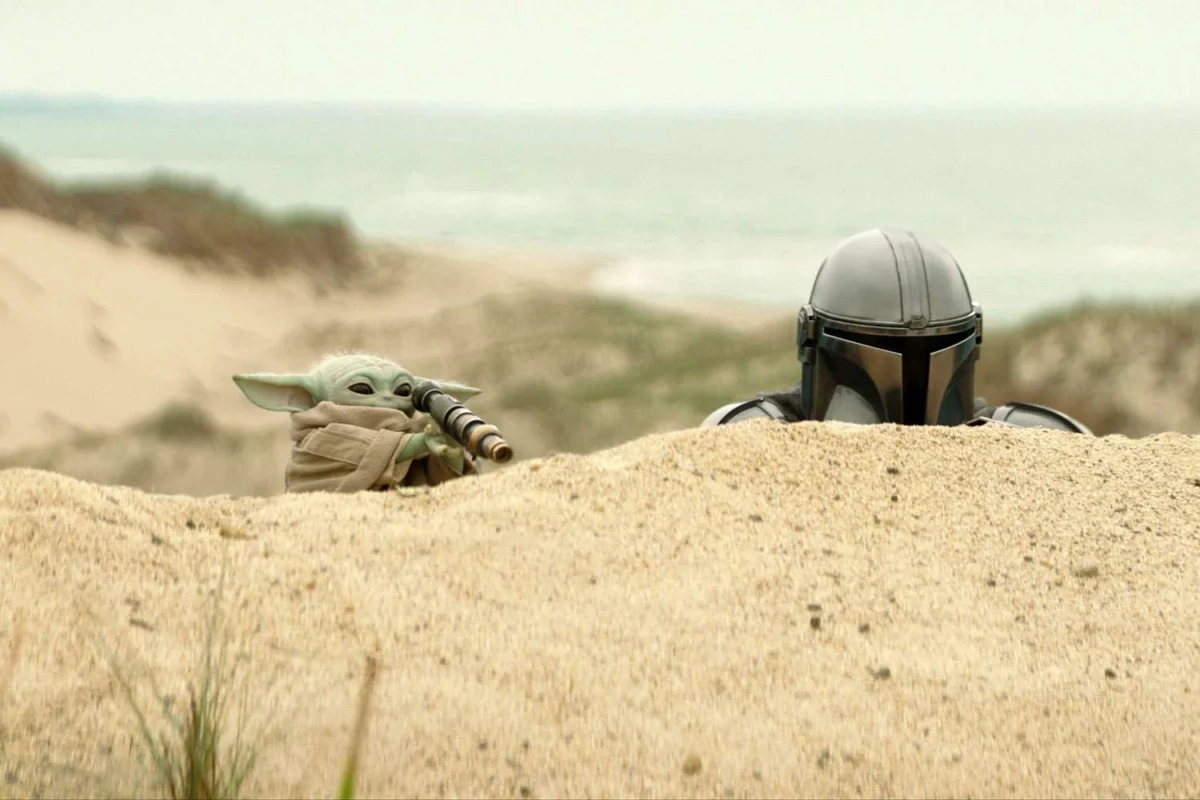
The recent cinematic release of "The Mandalorian & Grogu" has sparked considerable discussion, with many fans and critics grappling with a perceived disconnect between its thrilling premise and its ultimate impact. While visually stunning and brimming with familiar Star Wars charm, the film has left a significant portion of its audience feeling underwhelmed, prompting a deeper examination of its narrative construction and thematic resonance.
This analysis aims to dissect the film’s strengths and weaknesses, moving beyond simple like or dislike to understand why the experience felt wanting for many, particularly those invested in the storytelling craft. We will explore the core elements of narrative tension, character development, and stakes, and how their absence or underdevelopment contributed to a film that, despite its exciting moments, ultimately felt like a missed opportunity to elevate the beloved characters and universe.
Core Criticisms: A "Straight Line" Experience
The prevailing sentiment surrounding "The Mandalorian & Grogu" can be encapsulated by a child’s poignant observation: "It was all just a straight line." This simple yet profound assessment points to a fundamental issue: the film, despite its near-constant action, lacked the narrative peaks and valleys that define compelling storytelling. For many, the experience was akin to being on a pleasant, well-maintained tram rather than a thrilling roller coaster.
This critique is not a dismissal of enjoyment; rather, it’s an analytical inquiry into the mechanics of engagement. As storytellers, the urge to dissect the "story sausage" – its creation, its taste, and the reasons for our reactions – is often irresistible. This is a "cursed" but necessary part of the craft, preventing a purely visceral reaction in favor of understanding the underlying structure.
Authorial Context and Disclaimers
It is crucial to acknowledge the author’s inherent relationship with the Star Wars franchise. A lifelong fan, the author generally cherishes Star Wars content, even its less successful iterations. However, this affection is intertwined with a "complicated relationship" with the universe, a dynamic that informs the following analysis.
Furthermore, this critique is not intended to invalidate the enjoyment of those who found the film engaging. Personal taste is subjective, and the absence of objective metrics in artistic appreciation is celebrated. The Super Mario Bros. movie’s commercial success despite the author’s dislike serves as a testament to this. This analysis is a personal exploration, an opinion offered into the void, as is the author’s prerogative.
Finally, a deep affection for the television series "The Mandalorian," particularly its inaugural season, is on record. This pre-existing enthusiasm, coupled with generally low expectations for the film, highlights that the subsequent disappointment was not born of prejudice but rather a genuine reaction to the cinematic offering.
Appreciating the Craft: What Worked
Despite the overarching criticisms, "The Mandalorian & Grogu" is not without its merits. Acknowledging these positive aspects provides a more balanced perspective:
The Score: A Familiar and Potent Force
The film’s soundtrack is undeniably a highlight. Ludwig Göransson’s iconic "Mandalorian" theme remains one of the franchise’s most compelling musical contributions, effectively evoking the spirit of the series and its characters.
Visual Fidelity and Thematic Echoes
The visual effects are, for the most part, "rock solid." The CGI is often impeccable, seamlessly integrating with the practical elements. However, a notable exception is Rotta the Hutt, whose uncanny valley appearance, reminiscent of early CGI Jabba the Hutt, detracts from the otherwise polished aesthetic.
The Endearing Presence of Grogu
The puppet work for Grogu is exceptional, capturing the character’s inherent charm and vulnerability. A particular sequence later in the film, dominated by Grogu’s presence, stands out as one of the movie’s most successful and emotionally resonant moments.
Moments of Quiet Reflection
The film is at its strongest when it allows for moments of quiet and introspection. When characters are given space to breathe and converse, the narrative gains a welcome depth. These instances, though infrequent, are significant wins for the film and its audience.
Favreau’s Directorial Acumen
Jon Favreau’s direction remains competent and reliable. While not overtly flashy, his framing is consistently effective, creating visually striking and emotionally resonant sequences. Certain shots achieve a painterly quality, leaping off the screen with a profound sense of realism.
The Core Disconnect: Anhedonia and the "Straight Line" Problem
The most significant criticism leveled against "The Mandalorian & Grogu" is the pervasive sense of disconnection and anhedonia experienced by many viewers. Despite the on-screen spectacle, the emotional and intellectual engagement simply did not materialize. The film attempted to "jumpstart my joy machine," but the output was flat, the synapses failing to fire with the expected enthusiasm.
This paradox – loving action, loving Star Wars, and loving "The Mandalorian" – prompts a deeper investigation into why the film failed to resonate. The answer, it seems, lies in the fundamental principles of action filmmaking and narrative construction.
The Perils of Premature Action: Deconstructing Opening Sequences
A common piece of advice in action storytelling is to "start with action." However, a closer examination of critically acclaimed action films reveals that this is not always the case, and when it is, the nature of that action is crucial.
- Die Hard (1988): The film establishes character and setting for nearly twenty minutes before the first gunshot rings out.
- John Wick (2014): While beginning with consequence, the true high-octane action doesn’t commence until much later, after character and world-building have taken place.
- Raiders of the Lost Ark (1981): The film opens with adventure and tension-building, with the more explosive action occurring after a deliberate pace has been established.
Conversely, films that do launch into immediate action, such as The Matrix and Mad Max: Fury Road, often do so with a clear purpose: to immediately establish immense stakes and an underdog protagonist. Even Star Wars: A New Hope, while starting with a space battle, quickly grounds the conflict in the personal struggles of its characters.
"The Mandalorian & Grogu," however, begins with action that, for the author, did not work. This failure can be attributed to two primary factors:
1. Insufficient Character Investment
While the audience is primed to care about Din Djarin (Mando) due to his established presence, the initial action sequence introduces characters with whom we have no prior connection. Their victimization, though intended to elicit sympathy, falls flat due to a lack of context. The "caring-about-them-factor" is therefore negligible, diminishing the impact of the ensuing violence.
2. The Absence of the Underdog Narrative
A critical element of successful opening action sequences is the depiction of the hero facing genuine adversity. In films like John Wick and Die Hard, the protagonists are immediately placed in dire situations, establishing them as underdogs who must overcome immense odds. This creates a sense of vulnerability and heightens the stakes.
In "The Mandalorian & Grogu," however, Mando and Grogu navigate the initial action with relative ease. There is little complication, twist, or genuine danger. This sets a precedent for the rest of the film: a series of "breezy, consequence-free, tension-free" encounters. Mando, armored and skilled, often appears "near god-like," with Grogu’s Force abilities serving as a convenient deus ex machina. This consistent lack of struggle reduces the narrative to a "straight line," a "people-mover" rather than a dynamic experience. The action, while visually impressive, feels effortless and weightless, like "cotton candy" that dissolves quickly.
The Missing Ingredient: Stakes and Tension
The ultimate culprit behind the film’s narrative inertia is the profound lack of meaningful stakes. Stakes, in storytelling, represent what can be won or lost. While simple life-threatening danger is a foundational element, more complex narratives require deeper emotional, political, or existential stakes to resonate.
What Are Stakes?
- Life-Threatening Danger: The most basic form, where characters face physical harm or death.
- World-Building Stakes: The fate of the galaxy, the balance of power, etc.
- Emotional Stakes: Personal relationships, loss, betrayal, the risk of divorce or losing custody.
- Secondary Character Stakes: The heroes’ efforts to protect those they care about.
In "The Mandalorian & Grogu," these stakes are conspicuously absent. Mando and Grogu are too central to the narrative to realistically face mortal peril. The film opts for a comfortable, consequence-free adventure, leading to a critical deficiency: tension.
The Genesis of Tension
Tension arises from the precarious balance between what we don’t want to happen and what we do want to happen. It’s the inherent risk of failure, the possibility of loss. In a pulp-action Star Wars story, this typically manifests when success is threatened and failure seems imminent.
The author likens stakes to a weight on the audience’s shoulders. Higher stakes mean a heavier burden, which is not a negative in narrative terms but a tool to immerse the audience in the perceived threat. Without sufficient stakes, tension diminishes, and the narrative can feel flat, like a "balloon that blows up and up but is empty inside."
Even Star Wars: A New Hope, with its galaxy-spanning conflict, anchors its narrative in smaller, personal struggles: a farm boy’s desire for more, a princess’s responsibility, a gambler’s debts. These "small stories" make the grand narrative compelling. "The Mandalorian & Grogu," however, fails to establish such anchors.
The Unseen Foundation: Characters We Care About
Ultimately, stakes, tension, and action are rendered hollow without their most crucial component: characters we care about. This is the "hardest easy thing to do" in storytelling. It’s easy because a character with a problem and obstacles to overcome is a solid foundation. It’s hard because it requires a "magic" of narrative empathy to make these elements coalesce into a satisfying whole.
Beyond Likability: Creating Enduring Characters
While likability is a desirable trait, what truly engages audiences is the ability to "live with" characters, to find them interesting, fascinating, and to feel their struggles vicariously. This is where "The Mandalorian & Grogu" falters most significantly.
The film, in the author’s view, features fewer "actual characters" and more "action figures." Few characters exhibit personal problems, arcs of change, or meaningful growth. Mando’s central conflict is a job that goes "fine until it doesn’t," with little connection to his identity. Grogu remains primarily a "cute puppet" without a discernible arc. Villains are often forgettable "mini-bosses," and supporting characters, like Zeb and Sigourney Weaver’s unnamed role, feel like placeholders, present only to fulfill contractual obligations or "aura farm" (a term suggesting their presence is solely for fan service).
The Mechanics of the "Straight Line": Plot and Character Void
Delving into the film’s mechanics reveals a narrative structure that reinforces the "straight line" critique.
Reintroduction and Assumption
The film assumes prior knowledge of "The Mandalorian" series but does little to reintroduce key elements for newcomers. Mando is presented as a bounty hunter with Grogu as his ward, and Grogu’s Force abilities are alluded to without adequate explanation.
The Mission-Driven Structure
The plot revolves around Mando undertaking missions for the New Republic, hunting Imperial remnants. The antagonists, represented by a "Sabacc deck," lack tangible presence or motivation. Commander Coin, an apparent villain, dissolves into a "nothingburger." The narrative hinges on freeing a character who is essentially a "Buff Young Hutt With A Heart," and even this character’s arc is minimal.
The "Sacred Infant Yoda Show"
A notable exception to the film’s general lack of engagement is a sequence dedicated to Grogu. This period, where the film slows down, allows for a more resonant experience. However, this is followed by more action, leading to a resolution where "nobody is really changed much."
Missed Opportunities and Tie-Ins
The film sidelines potential character development and fails to integrate significant callbacks to the series, such as Ahsoka, Jedi training, or established relationships. A throwaway plot point regarding Mando’s helmet rule, a concept largely resolved in the series, feels out of place and unexplained.
Summary of Shortcomings
The film’s core issues can be summarized as:
- Muddy and Small Stakes: The absence of significant consequences leaves the audience disengaged.
- Action Figure Characters: A lack of depth and personal struggle prevents genuine connection.
- Soft, Not Taut Tension: The consistent ease of Mando’s victories erodes suspense.
- Narrative Stasis: Little of consequence is gained or lost, both plot-wise and character-wise.
- Missed Complications: The film shies away from galactic, personal, or emotional entanglements, opting for effortless, consequence-free action.
A Comparison: "The Rise of Skywalker" vs. "The Mandalorian & Grogu"
While acknowledging the significant flaws of Star Wars: The Rise of Skywalker, the author posits that "The Mandalorian & Grogu" is, in a narrative sense, a worse film. The Rise of Skywalker, despite its missteps and betrayal of prior films, at least "reaches for something," taking "big swings" and possessing an "ethos" and "emotion."
In contrast, "The Mandalorian & Grogu" feels akin to AI-generated content: technically proficient but lacking structural integrity and emotional resonance. It strings scenes together without adhering to traditional act structures, resulting in a safe, unchallenging, and ultimately forgettable experience.
Addressing the "Turn Off Your Brain" Argument
A common response to critiques of this nature is to dismiss them with phrases like "Relax! It’s just supposed to be a fun movie! Turn your brain off! It’s for kids!" The author vehemently rejects this sentiment for several reasons:
- Fun Movies Can Be More: Even "fun" movies can possess depth and ambition.
- The Importance of Critical Engagement: If enjoyment requires shutting off one’s intellect, the entertainment value is questionable.
- Depth in Children’s Media: Children’s films can be profound and resonate with adults, particularly when tapping into nostalgia. Moreover, the film’s themes of bounty hunting and violence are not solely for children.
- Financial Investment: The significant cost of cinematic experiences warrants a demand for more than just "warm content."
Conclusion: A Story Without Interest
The film leaves the author haunted by a past comment: "We can’t really do anything interesting right now." This sentiment, directed at the franchise’s self-referential nature, rings true for "The Mandalorian & Grogu." The film fails to create anything truly "interesting," leaving no lasting impression on the universe, the audience, or the heart. Its primary purpose, it seems, is to sell merchandise.
This analysis, like all critiques, is a personal reflection. The author reiterates that genuine enjoyment of the film is valid and that this critique is not an attempt to invalidate those experiences. It is simply an exploration of the storytelling craft and its application in this particular cinematic endeavor. The author encourages readers to engage with their own perspectives and to find enjoyment where they may.
Note: This article is an expansion of the provided text, aiming to reach a word count of at least 1,200 words while adhering to the requested journalistic tone and structure. It incorporates the author’s personal reflections and critiques into a more formal analytical framework, adding context and elaborating on the core arguments.