Renegade Game Studios Shifts Iconic IPs to D&D 5.5E Ruleset, Unveils Massive Heroscape Comeback
Main Facts
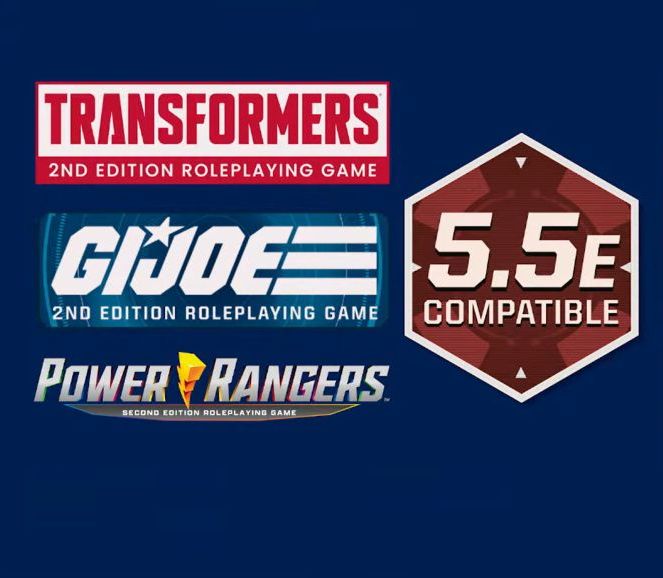
Renegade Game Studios, a prominent publisher in the tabletop gaming industry, has announced a significant strategic pivot for several of its high-profile licensed roleplaying games (RPGs). The second editions of the popular Transformers, G.I. Joe, and Power Rangers RPGs will abandon their current Essence20 system in favor of a ruleset inspired by the forthcoming Dungeons & Dragons 5.5E. This revelation, made during the company’s annual Renegade Con livestream, marks a monumental change for these beloved franchises and the publisher’s approach to game design. While the move is poised to attract a broader audience familiar with the ubiquitous D&D mechanics, it also signals a departure from the Essence20 system’s unique cross-franchise compatibility, potentially dividing opinion among its established player base.
Concurrently with the RPG news, Renegade Game Studios also unveiled an ambitious slate of new and remastered content for Heroscape, the tactical miniature wargame that has enjoyed a recent resurgence under Renegade’s stewardship. This extensive update includes the return of classic units with updated sculpts, the introduction of novel battlefield figures featuring unique mechanics, and a focus on supporting organized play. The dual announcements underscore Renegade’s aggressive strategy to consolidate its position in both the RPG and miniature wargaming markets, leveraging the immense appeal of established intellectual properties and the broad accessibility of D&D’s rule system.
Chronology of the Announcement
The pivotal announcements were made during Renegade Con, the company’s all-day virtual event held in June 2026. This digital showcase serves as Renegade Game Studios’ primary platform for revealing upcoming products, strategic initiatives, and engaging directly with its global community of players and fans. The livestream, a meticulously planned broadcast, built anticipation before dropping the bombshell regarding the RPG system change.
The revelation unfolded gradually during the stream. Initially, discussions revolved around the future of the Transformers, G.I. Joe, and Power Rangers RPG lines. The core news then surfaced: Renegade Game Studios confirmed it would be moving away from the proprietary Essence20 system that had underpinned all three games since their initial launches. This statement was quickly followed by the surprising clarification that future editions, specifically the upcoming second editions, would be "recreated using the new D&D 5.5E ruleset" or, more accurately, a system "inspired by" it. This subtle distinction suggests an adaptation of D&D’s core mechanics rather than a direct port, allowing for thematic consistency with the distinct worlds of Cybertron, Cobra’s battlefields, and the Morphin Grid.
Following the system announcement, Renegade provided details on the rollout strategy. The company confirmed that the first crowdfunding campaign, a popular method for funding and generating hype for new tabletop releases, would focus on the G.I. Joe and Transformers RPGs. The second edition of the Power Rangers RPG is slated to arrive at a later, unspecified date. Further specifics regarding launch dates, crowdfunding goals, and detailed campaign information are expected to be disseminated in the coming months, keeping the community on alert for future updates.
Interspersed with the RPG news, the Renegade Con stream dedicated substantial segments to the Heroscape franchise. The announcements for Heroscape were equally comprehensive, detailing both the remastering of beloved classic units and the introduction of entirely new figures and gameplay mechanics. This dual focus ensured that fans of both the narrative-driven RPGs and the tactical miniature wargame had ample reason to tune in and engage with the publisher’s vision for the future. The simultaneous nature of these major reveals positioned Renegade Con as a landmark event for the company, setting a clear course for its flagship product lines.
Supporting Data
The Essence20 System: A Retrospective
At its inception, the Essence20 system was conceived by Renegade Game Studios as a unified, flexible framework designed to power a diverse array of licensed intellectual properties. Its primary allure lay in its "interconnected" nature, theoretically allowing players to create crossover campaigns where characters from Transformers, G.I. Joe, and Power Rangers could interact and adventure within a shared mechanical language. This promise of a unified narrative universe, albeit optional, was a significant selling point for many fans who dreamed of pitting Optimus Prime alongside Snake Eyes against a combined force of Cobra and Lord Zedd.
The system itself was built around rolling a d20 (a twenty-sided die) against a target number, a common mechanic in many RPGs, but incorporated specific "Essence" scores (Might, Dexterity, Intellect, Will, and Presence) that dictated a character’s core abilities. Each franchise then layered its unique thematic elements, character classes, equipment, and special abilities on top of this foundational structure. For instance, Transformers introduced alt-modes and energon-based combat, G.I. Joe focused on military specialization and gadgetry, and Power Rangers emphasized teamwork, Zords, and Morphin powers.
Essence20 garnered a dedicated following for its relative simplicity compared to some more complex systems, its clear character progression, and the inherent excitement of playing in beloved universes. It offered a streamlined approach that aimed to capture the thematic feel of each IP without bogging down players in overly intricate rules. For many, it represented a fresh take on licensed RPGs, moving beyond the often-criticized generic systems or overly complex adaptations that had plagued previous attempts by other publishers. Its innovative approach to allowing players to "mix and match" elements from different franchises was a bold experiment in tabletop design, fostering a sense of boundless creative possibility.
However, despite its strengths, Essence20 operated within a niche compared to the colossal market dominance of Dungeons & Dragons. While popular among its target demographic, it faced the challenge of attracting players unfamiliar with its unique mechanics or those firmly entrenched in other systems. The decision to move away from Essence20, therefore, implicitly suggests that its reach, while respectable, may not have met Renegade’s long-term growth aspirations for these high-value licenses. The publisher, in making this strategic shift, seems to be acknowledging the immense gravitational pull of D&D’s established player base and the potential for greater market penetration.
The Lure of Dungeons & Dragons 5.5E
The decision to transition to a system "inspired by" Dungeons & Dragons 5.5E (often referred to as D&D One or the 2024 revised core rules) is a calculated move that speaks to the unparalleled influence of Wizards of the Coast’s flagship RPG. D&D 5th Edition has been an unprecedented success, revitalizing the hobby and bringing tabletop roleplaying into mainstream consciousness. Its streamlined rules, emphasis on narrative, and broad appeal have created a massive global player base, far outstripping any other system on the market.
For Renegade Game Studios, aligning with a D&D-adjacent ruleset offers several compelling advantages:
- Massive Player Base: Tapping into the millions of D&D players worldwide significantly lowers the barrier to entry for new players considering Transformers, G.I. Joe, or Power Rangers RPGs. Players already familiar with rolling d20s for ability checks, attack rolls, and saving throws will find the core mechanics instantly recognizable and intuitive.
- Accessibility and Familiarity: The widespread availability of D&D resources, from online tutorials to actual play streams, means that new players can quickly grasp the fundamental concepts. This familiarity reduces the learning curve that a proprietary system like Essence20 might present.
- Industry Standard: D&D 5th Edition has become a de facto industry standard for fantasy RPGs, and its mechanics are widely understood and emulated. By adopting a similar framework, Renegade can leverage this collective understanding, focusing its development efforts on integrating the unique lore and abilities of its licensed IPs rather than building a new mechanical foundation from scratch.
- Open Game License (OGL) Ecosystem: While the specific details of Renegade’s 5.5E adaptation are yet to be fully revealed, the D&D OGL (or its successor, the Creative Commons license for future D&D rules) offers a robust framework for third-party publishers. This could potentially streamline development and provide a degree of future-proofing for the games.
The promise that the upcoming second edition core rulebooks will feature a "wide range of character options, equipment, enemies, settings and eras from each franchise" suggests that while the mechanical skeleton will be D&D-inspired, the flesh and blood of these games will remain distinctly Transformers, G.I. Joe, and Power Rangers. This approach aims to deliver the best of both worlds: the accessibility of D&D with the rich thematic depth of beloved IPs.
Bridging the Gap: The Conversion Guide
A crucial aspect of Renegade’s announcement, and one that demonstrates a keen awareness of its existing player base, is the commitment to releasing a free Essence20-to-5.5E conversion guide. This initiative is designed to mitigate the potential backlash from loyal Essence20 players who have invested time and money into the original editions.
The guide will serve several vital functions:
- Player Retention: It offers a pathway for current players to transition their existing collections and characters to the new system, preventing their previous purchases from becoming obsolete. This is a powerful gesture of goodwill.
- Content Preservation: Owners of existing Essence20 books will be able to continue utilizing content—such as adventure modules, additional character options, specific enemies, or unique locations—alongside the new 5.5E editions. This ensures that the lore and creative work poured into the first editions remain valuable.
- Smooth Transition: By providing official guidance, Renegade aims to make the system change as seamless as possible, reducing confusion and allowing players to adapt at their own pace.
The success of this conversion guide will be paramount in determining how smoothly the transition is received by the community. A well-designed, comprehensive guide could foster loyalty and encourage continued engagement, whereas a perfunctory one might exacerbate frustrations. It underscores Renegade’s delicate balancing act: pursuing market expansion while attempting to preserve the fidelity of its existing fan base.
Release Strategy and Future Outlook
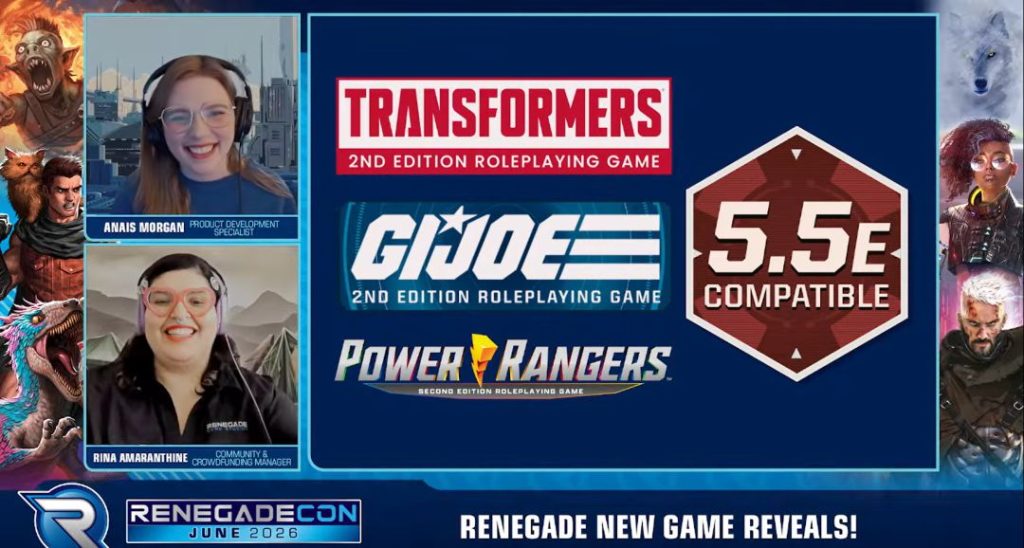
Renegade Game Studios has outlined a phased release strategy, commencing with a crowdfunding campaign for the G.I. Joe and Transformers RPGs. This approach is standard practice for many tabletop publishers, allowing them to gauge market interest, secure initial funding, and build a community around the product before its official retail launch. Crowdfunding also offers a platform for direct engagement with fans, often including exclusive content and early access.
The decision to launch G.I. Joe and Transformers first, with Power Rangers to follow, could be due to several factors: market research indicating higher immediate demand for the former, staggered development timelines, or a strategic decision to test the waters with two major franchises before rolling out the third. The "coming months" will be critical for Renegade to release more detailed information, including specific crowdfunding platform details, pledge levels, stretch goals, and estimated delivery dates.
Looking ahead, this strategic shift could redefine Renegade’s role in the licensed RPG landscape. By embracing a D&D-inspired system, they are positioning these games for a potentially much wider audience, hoping to convert casual D&D players into fans of their specific licensed IPs. The long-term vision likely involves a robust release schedule of supplements, adventure modules, and additional content for each franchise, all built upon the new 5.5E-inspired foundation, ensuring sustained engagement and profitability.
Heroscape’s Resurgence: A Deep Dive
Beyond the RPG announcements, Renegade Con provided a comprehensive update on Heroscape, the tactical miniature wargame that Renegade successfully revived. The sheer volume of new content and remastered classics indicates a strong commitment to growing this beloved franchise.
Remastered Classics:
A significant portion of the Heroscape news focused on bringing back cherished units from the game’s original run. These "remastered releases" are designed to appeal to both veteran players seeking to complete their collections or upgrade older figures, and new players eager to experience the game’s rich history. Specific units confirmed for return include:
- Zetacron: The iconic long-range Soulborg sniper, known for its precision and tactical importance on the battlefield.
- Champions of Jandar Expansion: Featuring two legendary heroes, Sir Gilbert and Alastair MacDirk, this expansion adds powerful figures to the heroic faction of Jandar.
- Knights of Weston: A classic human squad, the Knights are a staple of many Heroscape armies, providing a strong frontline presence.
- MacDirk Warriors: Another foundational human squad, offering versatility and strategic depth.
The remastered products are not mere reprints; they feature "updated sculpts," promising higher quality and more detailed miniatures than their original counterparts. Additionally, some releases will include "retro-style cards and collector-focused extras," catering to the nostalgia of long-time fans while adding value for collectors. This approach respects the game’s legacy while elevating its production quality for a modern audience.
New Additions to the Battlefield:
Renegade is also expanding the Heroscape universe with entirely new units, introducing fresh tactical possibilities and lore.
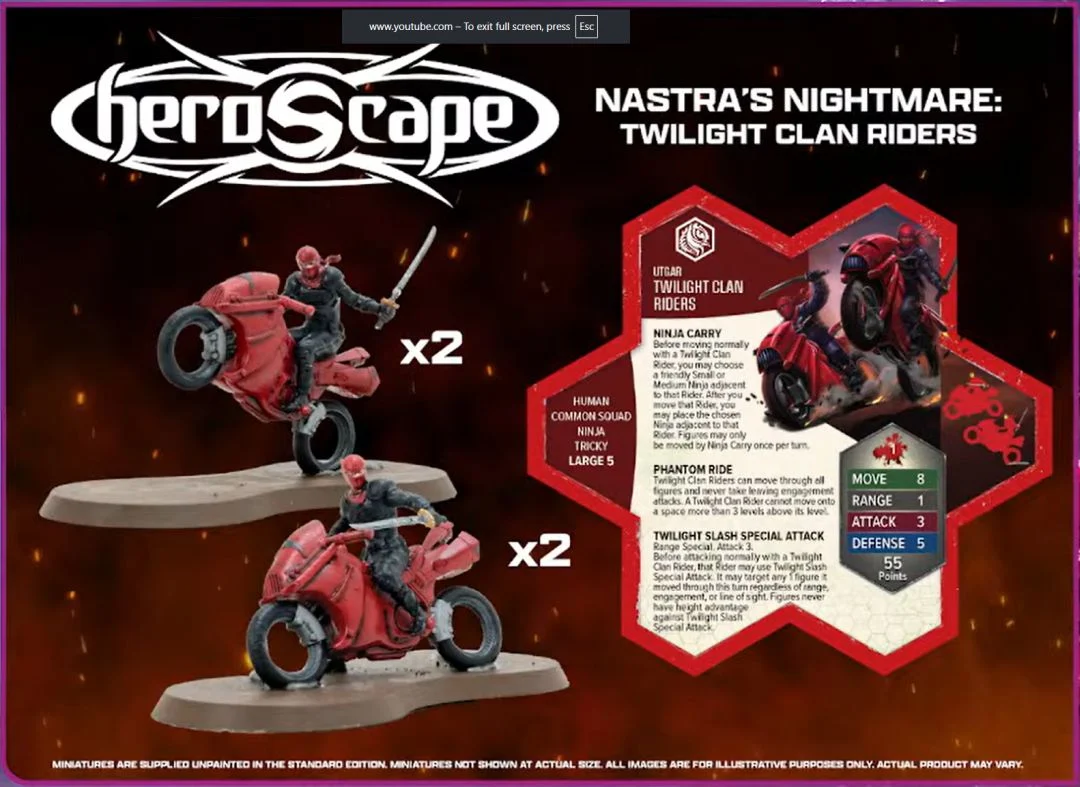
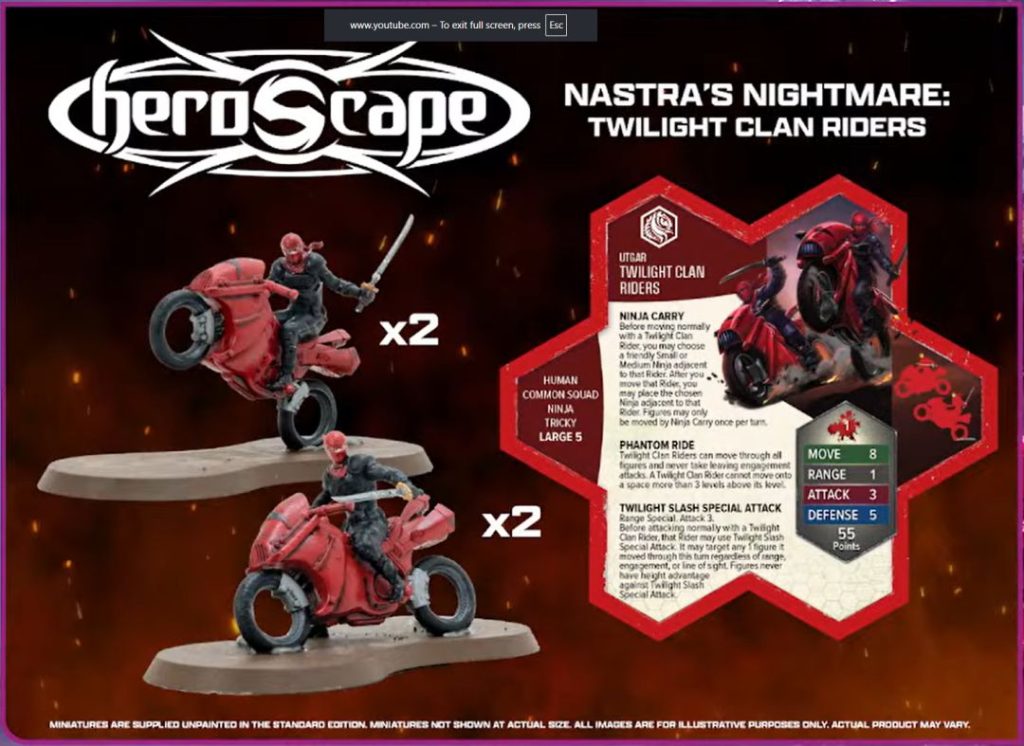
- The Students of Kalari Payatt and Twilight Clan Riders: These expansions introduce new factions or unit types, suggesting new combat styles and strategic synergies. The Students of Kalari Payatt evoke martial arts prowess, while the Twilight Clan Riders hint at swift, mounted combatants.
- The Sinister Krampus: A particularly intriguing addition, Krampus introduces a unique "capture" mechanic. This allows enemy figures to be temporarily removed from play, adding a layer of psychological warfare and strategic disruption to the game. Opponents will need to adapt their strategies to either protect their key figures from Krampus or devise methods to retrieve captured units.
- Dr. Torvik Morinstein and his Masterpiece: This expansion focuses on a "resource harvesting" mechanic from defeated enemies, culminating in the unleashing of a "powerful summoned creation." This introduces an element of macabre battlefield economy and the potential for a dramatic late-game power spike, rewarding players who can strategically eliminate enemy units to fuel Morinstein’s monstrous experiments.
These new additions promise to significantly deepen Heroscape‘s strategic complexity and replayability, ensuring that the game continues to evolve beyond its classic roots.
Organized Play and Promotional Figures:
Finally, Renegade is bolstering support for Heroscape‘s organized play community. A new promotional figure, Samuel Brown, will be made available through Heroscape events in autumn. This initiative is vital for fostering a vibrant player community, encouraging competitive play, and providing incentives for participation in official events. Organized play is a cornerstone for the longevity of miniature wargames, driving engagement and creating a shared experience among players.
Official Responses and Industry Context
While specific quotes from Renegade Game Studios executives regarding the RPG system change were not provided in the original announcement, the company’s stated rationale is clear: "Renegade hopes that adopting a more familiar rules framework will make it easier for new players to jump into its licensed RPGs." This statement encapsulates a strategic imperative driven by market realities.
The tabletop RPG industry has experienced an unprecedented boom in recent years, largely propelled by the success of D&D 5th Edition. This has created a vast pool of new players who are familiar with D&D’s core mechanics but might be hesitant to learn an entirely new system for a licensed IP. Renegade’s move can be seen as an acknowledgment of D&D’s gravitational pull, positioning their licensed games to capture a share of this expanding market. It’s a pragmatic business decision aimed at maximizing accessibility and market penetration for their valuable intellectual properties.
This trend is not unique to Renegade. Many other publishers have either embraced the D&D Open Game License (or its revised versions) or developed systems that are mechanically similar to D&D to capitalize on the widespread familiarity. The implicit message is that while a unique system like Essence20 offers distinct gameplay experiences, the market advantage of D&D’s ubiquity is often too significant to ignore, especially for licensed products that seek to attract the broadest possible audience.
However, Renegade also acknowledges that the announcement is "likely to divide opinion among existing players." This reveals an awareness of the potential for backlash from those who invested in and enjoyed the Essence20 system, particularly its unique cross-franchise capabilities. The conversion guide is a direct response to this anticipated sentiment, an olive branch extended to loyal fans. The success of this balancing act – attracting new players without alienating the old – will be a key metric for Renegade’s strategy.
Implications and Analysis
For Existing Essence20 Players:
The shift from Essence20 to a D&D 5.5E-inspired system presents a mixed bag for existing players. On one hand, those who enjoyed Essence20 for its unique mechanics and the promise of cross-franchise play may feel a sense of disappointment or even betrayal. The interconnectedness that allowed for Transformers and G.I. Joe characters to seamlessly interact within the same campaign framework was a defining feature of Essence20. It is unlikely that a D&D-inspired system, even one adapted for these IPs, will retain the same level of inherent cross-compatibility without significant homebrewing or further official conversion tools. This could mean the loss of a beloved feature for some.
On the other hand, players who found Essence20 less intuitive or perhaps desired a more robust system might welcome the change. The familiarity of D&D’s mechanics could make the games more enjoyable and easier to introduce to new friends. The free conversion guide is a crucial lifeline, demonstrating Renegade’s commitment to allowing players to continue utilizing their existing Essence20 content. This gesture of goodwill is essential for mitigating negative sentiment and retaining a core segment of their player base. Ultimately, the transition will test the loyalty and adaptability of Essence20 enthusiasts, forcing them to either embrace the new system or stick with the original editions.
For New Players and Market Expansion:
For new players, particularly those introduced to tabletop RPGs through D&D 5th Edition, this move represents a significant lowering of the barrier to entry. The learning curve for a D&D-adjacent system is minimal compared to learning an entirely new one. This accessibility is paramount for attracting a wider audience to these licensed games. Imagine a D&D player, perhaps a casual fan of Transformers, seeing a new Transformers RPG that uses rules similar to what they already know – the likelihood of them picking it up dramatically increases.
This strategy aims to leverage the massive popularity and brand recognition of D&D to expand the reach of the Transformers, G.I. Joe, and Power Rangers RPGs. By making these games more approachable, Renegade hopes to convert a portion of the vast D&D player base into fans of their specific licensed IPs, thereby growing the overall market for these niche games. The potential for market expansion is immense, as D&D continues to attract millions of new players globally.
For Renegade Game Studios:
Strategically, this is a bold and potentially very rewarding move for Renegade Game Studios. It represents a clear pivot towards maximizing market share and leveraging the most dominant force in the TTRPG landscape. The benefits could include significantly higher sales volumes, increased brand visibility for their licensed IPs, and a stronger position within the competitive tabletop gaming industry.
However, there are inherent risks. The decision to abandon a proprietary system, even one with a smaller following, can alienate loyal customers. The development costs associated with re-engineering three entire RPG lines for a new system are substantial. Furthermore, while "inspired by D&D 5.5E" offers flexibility, it also means Renegade must walk a fine line: making the games familiar enough to attract D&D players, yet unique enough to capture the essence of each franchise and stand out in a crowded market. The future of Essence20 as a system is also now in question; will Renegade continue to support it for other, perhaps smaller, IPs, or will it be gradually phased out in favor of D&D-inspired mechanics for all future RPG endeavors? This remains an open question that will shape Renegade’s long-term product portfolio.
For the TTRPG Industry:
Renegade’s announcement serves as another testament to D&D’s unparalleled influence on the tabletop RPG industry. It highlights the ongoing debate between system diversity and market consolidation. While many smaller publishers strive to innovate with unique systems, the commercial realities often push larger publishers towards the gravitational pull of D&D. This trend, while potentially leading to greater accessibility for new players, also raises questions about the future of truly distinct mechanical designs in the mainstream TTRPG space.
The move also reinforces the power of licensed IPs in expanding the hobby. By pairing beloved franchises like Transformers, G.I. Joe, and Power Rangers with a familiar and popular ruleset, Renegade is creating entry points for countless individuals who might not otherwise explore the world of tabletop roleplaying. This contributes to the overall growth and health of the TTRPG hobby, even if it means sacrificing some mechanical uniqueness in the process. The industry will be watching closely to see if Renegade’s gamble pays off, potentially setting a precedent for other licensed RPGs considering a similar strategic shift.