The Shadow War for Asia: Unpacking the Great Game
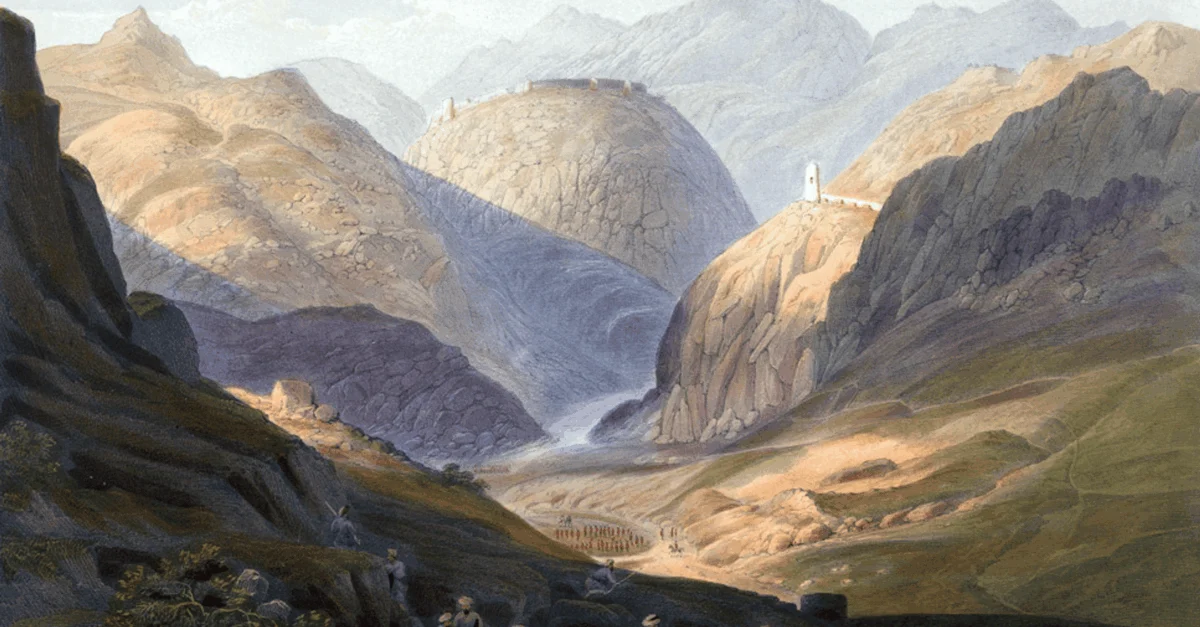
London, UK – For much of the 19th century, a silent, relentless struggle for dominance played out across the vast, rugged landscapes of Central Asia. Known as "The Great Game," this intense geopolitical rivalry pitted two of the world’s most formidable empires – the British and the Russian – against each other in a high-stakes contest for influence, territory, and strategic advantage. Far more than a mere diplomatic skirmish, it was a protracted "cold war" avant-garde, characterized by espionage, proxy conflicts, strategic military deployments, and a pervasive atmosphere of paranoia that shaped international relations for generations.
At its core, the Great Game was primarily concerned with the defense of British India, the jewel in the imperial crown, from perceived Russian encroachment. The sprawling territories of Central Asia, particularly Persia (modern Iran) and Afghanistan, became the pivotal battlegrounds, serving as volatile buffer zones where the two powers vied for control. While historians sometimes debate the true extent of direct military confrontation, the game’s consequences resonated globally, influencing events from the Scramble for Africa to the shifting alliances that ultimately set the stage for the First World War. The curtain on this imperial drama finally fell in the early 20th century, hastened by Russia’s surprising defeat to Japan in 1905 and the emergence of a far more menacing threat in Imperial Germany’s rising ambitions in Europe.
Origins and Nomenclature of an Imperial Contest
The evocative term "Great Game" was first coined by Arthur Connolly, a British intelligence officer and explorer, in the 1830s, encapsulating the clandestine and often deadly nature of the imperial rivalry. However, it was Rudyard Kipling’s seminal 1901 novel, Kim, that immortalized the phrase, bringing the shadowy world of imperial spies and strategic maneuvering to a wider public imagination. Kipling’s vivid portrayal of British and Russian agents operating covertly across the Indian subcontinent and Central Asia cemented the Great Game as a cultural touchstone, shaping popular understanding of this complex historical period.
Spanning roughly from the 1820s until the eve of the First World War in 1914, this era has been aptly described by historians like L. James as a "cold war" of its time. Much like the 20th-century ideological standoff between the United States and the Soviet Union, the Great Game largely avoided direct, large-scale military engagements between the two principal adversaries. Instead, it unfolded through a sophisticated web of proxy wars, where local rulers and factions were armed and supported by one empire against the other. Espionage, intricate diplomatic strategies, strategic bluffs, and calculated troop movements formed the primary tactics.
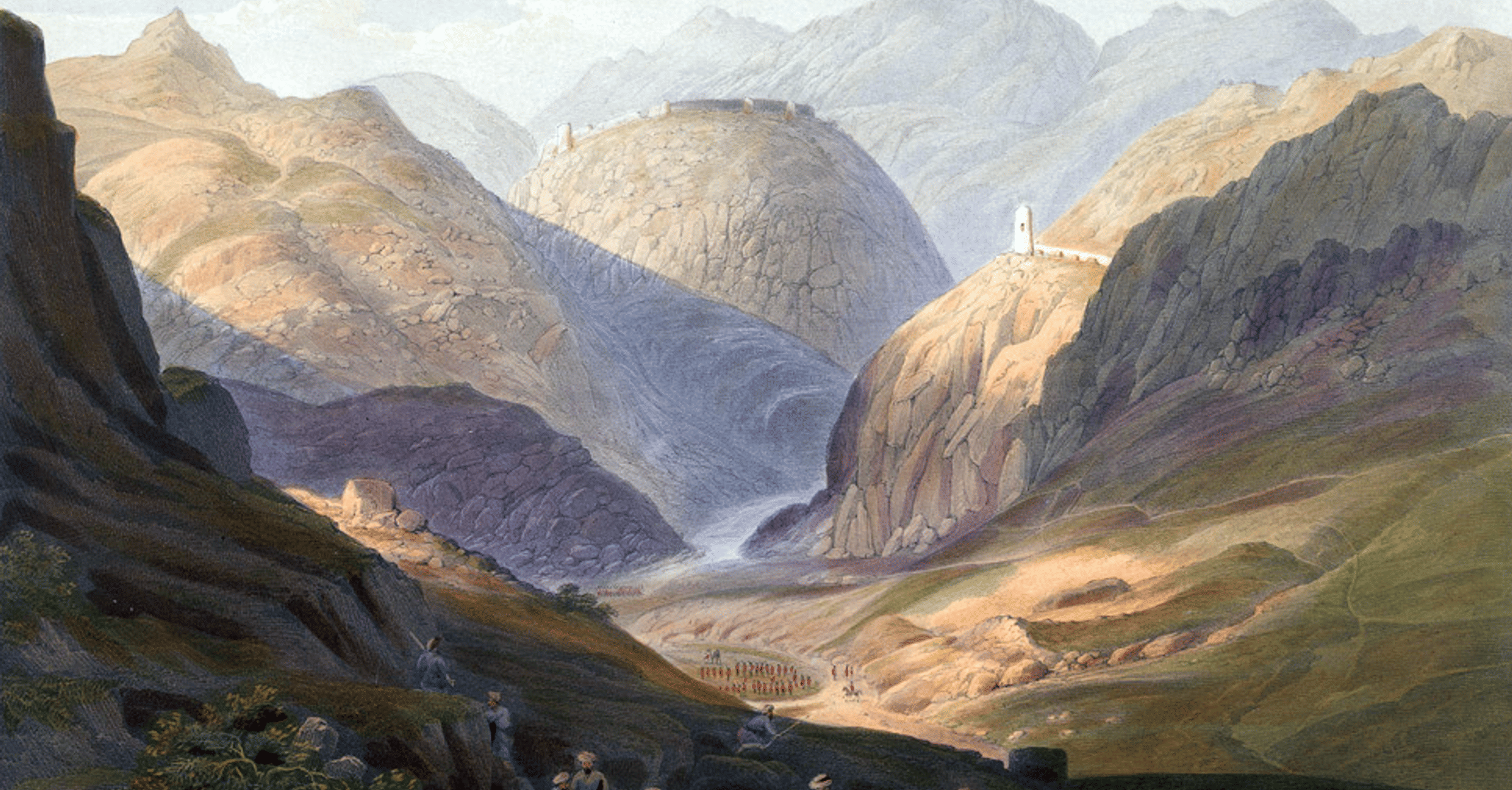
The singular, glaring exception to this pattern of indirect confrontation was the Crimean War (1853-1856). In this brutal conflict, Britain, allied with France and the Ottoman Empire, directly engaged Russia. While often remembered for its Western Front in Crimea, the war was a direct consequence of Russia’s expansionist drive towards the Black Sea and the Balkans, threatening Ottoman integrity and, by extension, British and French interests in the Mediterranean and the routes to Asia. The war, though geographically distant from Central Asia, was a critical manifestation of the underlying Anglo-Russian rivalry for naval supremacy and regional influence, proving that beneath the veneer of diplomatic maneuvering, the potential for open warfare was always present.
Contrasting Empires: Ideologies and Ambitions
The two titans of the Great Game represented vastly different political and social systems. The Russian Empire, a colossal landmass encompassing approximately 160 million people by the late 19th century, was governed by an autocratic Tsar, wielding absolute power. Its economy, while growing, lagged significantly behind Western European powers in terms of industrialization. Russian expansionism was often driven by a quest for warm-water ports, access to resources, and a perceived historical mission to bring "order" to its southern and eastern frontiers.
In stark contrast, Britain stood as a well-established parliamentary democracy, albeit one with a highly undemocratic colonial apparatus. The British Empire, the largest in history, encompassed some 400 million people across over 50 countries. British officials and diplomats, often imbued with a sense of imperial superiority, viewed their Russian counterparts with disdain, seeing Russia’s autocratic rule and industrial backwardness as signs of an inferior civilization. This ideological clash fueled much of the mutual suspicion, with Britain portraying itself as a guardian of liberal values against Russian despotism, even as its own colonial rule was frequently brutal and exploitative.
The geopolitical landscape of Persia and Afghanistan became the physical embodiment of this imperial clash. These ancient lands, rich in culture and strategically located, were not merely empty spaces to be carved up. They were complex societies with their own rulers, tribal allegiances, and political dynamics. Both empires sought to exploit these internal divisions, backing various contenders for power or influencing local decision-makers to secure favorable trade routes, military access, or political alignment. The concept of "buffer zones" was crucial: neither power wanted the other directly on its border with India or Central Asia, leading to a constant struggle to ensure these intermediate states remained neutral or, ideally, sympathetic to their respective interests.
The Central Asian Chessboard: Ambitions and Confrontations
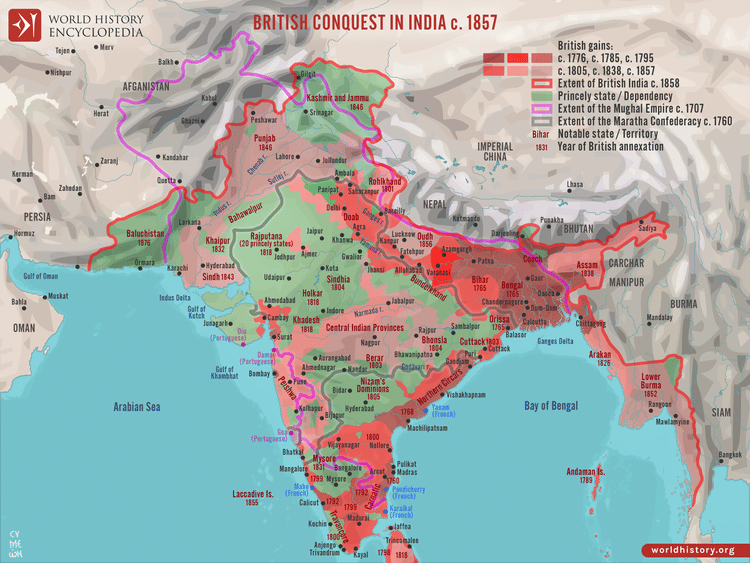
Britain’s paramount concern throughout the Great Game was the security of British India. The fear of a Russian invasion, particularly through the North-West Frontier – the treacherous mountain passes separating what is now Pakistan and Afghanistan – was a constant preoccupation. This region, with its formidable terrain and strategically vital routes like the Khyber Pass, had historically served as the gateway to the Indian subcontinent for invaders, most famously Alexander the Great in the 4th century BCE. The specter of Russian Cossacks descending into the fertile plains of Punjab sent shivers through the British Raj.
Both empires adopted aggressive policies to gain influence in the buffer zones. Britain suspected Russia harbored designs on Afghanistan, seeing it as a potential launchpad for an invasion of India. Conversely, the Russians believed Britain sought to control Afghanistan as a base to project power into Russian-controlled Central Asian territories. This mutual paranoia often translated into direct intervention.
Chronology of Expansion and Conflict:
- 1837: The Great Game intensified with Persia, backed by Russian advisors and resources, laying siege to Herat in northern Afghanistan. This move, seen by Britain as a clear Russian proxy action, triggered immediate alarm in Calcutta and London.
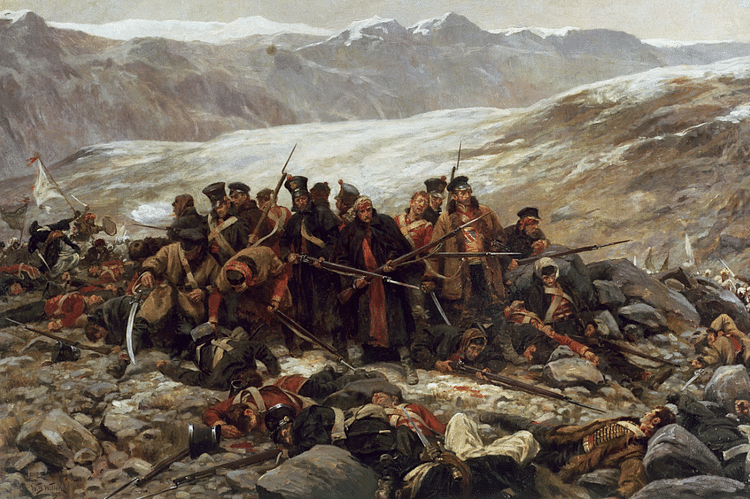
- 1838-1842: The First Anglo-Afghan War. In response to the perceived Russian threat, Britain launched a disastrous attempt to install a pro-British ruler in Afghanistan. The initial occupation was met with fierce resistance, culminating in the infamous 1842 retreat from Kabul, where a British-Indian army of over 16,000 was almost entirely annihilated, a humiliating blow to British prestige and a stark lesson in the difficulties of controlling Afghanistan.
- Simultaneously, Russia pursued its own expansionist agenda further east. It established commercial concessions in China and, through strategic annexations of Chinese territories like Amur in 1858 and Ussuri in 1860, secured a vital naval base at Vladivostok, opening a new front in its imperial ambitions.
- Russia then turned its attention to the remnants of the old Mongol khanates in Central Asia, systematically absorbing them into its empire. Khiva fell in 1864, Tashkent in 1865, and Samarkand in 1868, bringing the Russian frontier ever closer to Afghanistan and British India.
- The British East India Company, though a private entity, acted as an extension of British imperial power, consolidating control over the Indian subcontinent. Key annexations included Sind in 1843, Jammu and Kashmir in 1846, Punjab by 1849 (following victory in the Second Anglo-Sikh War), and Baluchistan in 1876. These acquisitions were strategically vital, extending British India’s western frontier and creating a more formidable defensive line against any potential Russian advance.
- 1878-1880: The Second Anglo-Afghan War. Another British attempt to control the Afghan buffer zone, this conflict was partly a direct response to Russian diplomatic overtures to the Afghan ruler, Amir Sher Ali. Despite initial military successes, Britain again found itself entangled in a costly and ultimately unsuccessful effort to impose its will, leading to the establishment of a British sphere of influence rather than outright control.
- The Crimean War (1853-1856): While geographically separate, this major European conflict was a direct manifestation of Anglo-Russian rivalry. Britain, France, and the Ottoman Empire decisively defeated Russia, halting its expansion into the Balkans and ensuring the status quo around the Black Sea, thereby preventing Russia from gaining a stronger foothold that could threaten British routes to India.
- The Sepoy Mutiny (1857-1858): This massive internal rebellion against British rule in India sent shockwaves through the empire. It profoundly amplified British fears that any future Anglo-Russian war could be exploited by Indian separatists, potentially leading to the loss of India. The memory of the Mutiny instilled a deep-seated paranoia, making the defense of India an even more urgent priority.
The Tools of Empire: Diplomacy, Espionage, and Infrastructure
The Great Game was not solely fought on battlefields; it was a comprehensive struggle involving every tool of imperial power. Diplomacy was a constant dance, with treaties, alliances, and threats used to gain advantage. The seemingly insignificant marriage of Queen Victoria’s granddaughter, Alexandra Feodorovna, to Tsar Nicholas II in 1894, had virtually no impact on the underlying imperial rivalry, illustrating how deep-seated the geopolitical competition was, transcending even royal family ties.
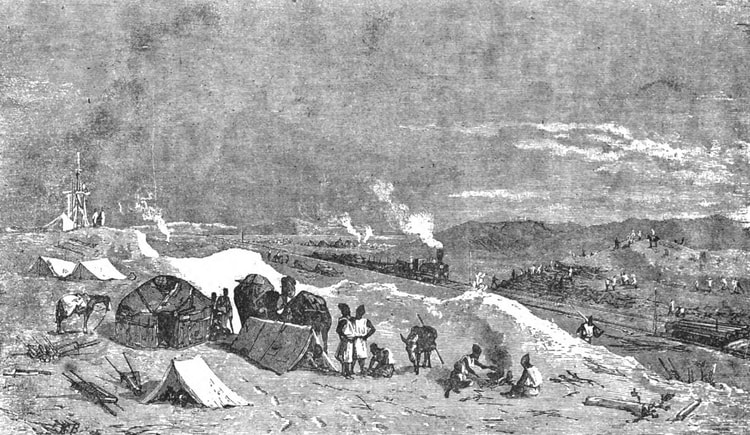
Military readiness remained a critical component. In 1885, the "Pandjeh incident" saw Russian troops mobilize to the Afghan border, occupying a disputed oasis. This near-escalation highlighted the volatile nature of the frontier. The construction of new Russian railways in Central Asia, such as the Transcaspian Railway, significantly enhanced Russia’s military capabilities, allowing for rapid deployment and resupply of forces right up to the Afghan border. Theoretically, Russia could mobilize an estimated 300,000 troops to the frontier in under three months, a formidable threat compared to Britain’s Anglo-Indian army of approximately 95,000 men. Reinforcing this smaller force was increasingly difficult for Britain, particularly towards the end of the century, as military commitments elsewhere in the empire, such as the costly Boer War in Southern Africa (1899-1902), stretched its resources thin.
Despite their ambitions, both Britain and Russia ultimately failed to conquer Afghanistan. Its fiercely independent tribes and formidable terrain proved unconquerable. This led Britain to adopt a policy of "masterly inactivity," essentially a form of containment where they sought to maintain Afghanistan as an independent buffer state rather than attempting to directly control it.
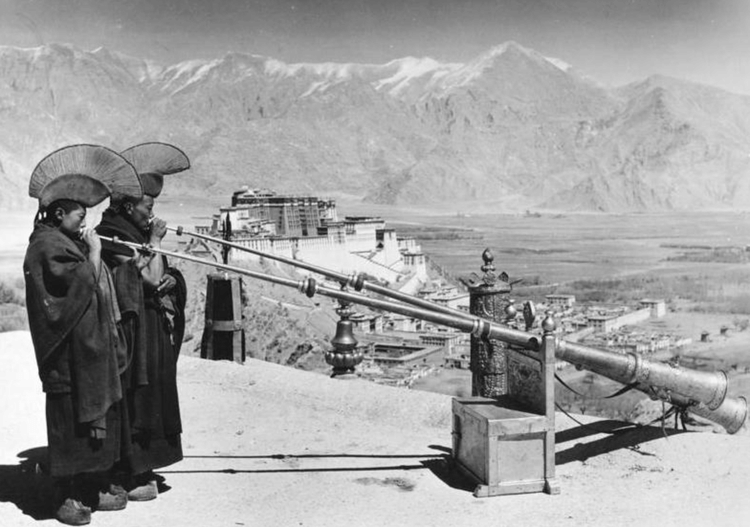
British paranoia, however, sometimes led to more aggressive and ill-advised actions. Tibet, a remote and isolated state ruled by the Dalai Lama and Buddhist monks, and nominally under Chinese suzerainty, became another focal point. Convinced, largely without evidence, that Russia intended to infiltrate Tibet and destabilize Central Asia further, Britain launched the Younghusband Expedition in 1904. A British force, led by soldier-explorer Francis Younghusband, invaded Tibet, resulting in brutal massacres of poorly armed Tibetan defenders. Upon reaching the mythical capital of Lhasa, a place rarely seen by foreigners, Younghusband found no Russians and no discernible evidence of their presence. The British eventually withdrew, securing only vague assurances from the Chinese emperor that no rival power would gain influence in Tibet, a testament to the extent of British Russophobia.
Spies and Russophobia: The Architects of Paranoia
The Great Game was, perhaps more than anything, a psychological war fueled by intense "Russophobia" within the British establishment. As historian L. James notes, this fear "infected the minds of nearly every nineteenth-century British statesman, diplomat and strategist, and was strongly felt among all classes and shades of political opinion." The logistical impossibility of a full-scale Russian invasion of India, a point often overlooked by British strategists, did little to quell these anxieties. Even renowned neutral explorers like the Swede Sven Hedin found their scientific expeditions met with suspicion, their cartographic skills seen as potential intelligence assets for the enemy.
Espionage became an industrial-scale enterprise. British-paid spies, often recruited from local populations and posing as beggars, traders, or holy men, infiltrated Russian territories, gathering intelligence on troop movements, military capacity, and political intentions. Telegraph operators and post office staff were bribed to intercept communications. Agents were even placed within Russian consulates, masquerading as household staff. This murky world was rife with double agents, who often perpetuated the cycle of suspicion by feeding both sides dubious reports, primarily to secure payment and maintain their cover. The sheer volume of these often unreliable reports, flowing back and forth across Asia, fueled a self-perpetuating diplomatic paranoia that became a defining characteristic of the Great Game.
Shifting Alliances and Global Ramifications
The Great Game was not confined to Central Asia; its ripples extended globally, particularly intertwining with the "Scramble for Africa." In 1882, Britain’s occupation of Egypt and its control over the Suez Canal, a vital artery connecting Europe to British India, deeply angered France, which had historically viewed Egypt as its own sphere of influence. This dispute, along with other colonial rivalries in Africa, created significant Franco-British discord.
Russia shrewdly exploited this animosity, seeking to draw France into its orbit. The "embarrassment" Britain faced in Central Asia due to Russian pressure was used by the French government to extract concessions in Africa and the Pacific, further straining Anglo-French relations. This maneuvering culminated in a formal Franco-Russian alliance in 1892. The sight of Russian warships entering the Mediterranean via the Bosphorus and anchoring in the French naval base at Toulon deeply alarmed the British Royal Navy, which had long prided itself on controlling the Mediterranean, seeing a potential Franco-Russian naval alliance as a direct threat to its global dominance.
The Turning Point: The Russo-Japanese War
The complex web of Franco-Anglo-Russian relations was further complicated by the outbreak of the Russo-Japanese War (1904-1905). France found itself allied with Russia, while Britain had forged an alliance with Japan in 1902, ostensibly to counter Russian expansion in East Asia. The war itself was a stunning display of Japan’s emerging power and Russia’s surprising weakness. Despite possessing the third-largest navy in the world, Russia’s fleet proved obsolete and poorly led, suffering catastrophic defeats at sea and on land.
Japan’s decisive victory, achieved largely without direct British military intervention, allowed it to seize Manchuria and halt Russian imperial ambitions in China. The humiliation of defeat also contributed significantly to the Russian Revolution of 1905, severely shaking the Tsar’s autocratic grip on power and forcing significant, albeit temporary, political concessions. From a British perspective, the war was a revelation. It provided undeniable evidence, far more reliable than any spy report, that Russia was militarily incapable of mounting a successful invasion of India. The grand threat that had dominated British strategic thinking for decades was largely a phantom. The Great Game, in retrospect, appeared to many as a "mere game for overly imaginative imperialists," albeit one with profound and often devastating consequences for the ordinary people whose lands and lives were caught in the crossfire.
End Game: From Rivalry to Entente
The fading shadows of the Great Game gave way to a new, more dangerous geopolitical reality. Anglo-French relations dramatically improved following the Moroccan Crises of 1905 and 1911, where Imperial Germany’s aggressive attempts to assert influence in French Morocco solidified Britain’s support for France. The emerging German threat in Europe overshadowed all previous imperial rivalries.
The Great Game effectively concluded with the signing of the Anglo-Russian Convention in 1907. This landmark agreement finally diffused the simmering tensions over rival claims in Afghanistan, Tibet, and Persia. Russia formally agreed not to interfere in British India, and both powers delineated their respective spheres of influence in Persia, recognizing the reality of their existing positions. This shift reflected Russia’s weakened state after its disastrous defeat to Japan and the shared realization by Britain and France that Imperial Germany now posed the greatest threat to global peace and their respective empires.
Mutual suspicion between Britain and Russia persisted, but the immediate threat of direct confrontation receded. Later in 1907, Britain, France, and Russia formalized their alignment into the Triple Entente alliance bloc. This alliance, born out of the ashes of imperial rivalry and forged in the crucible of a new European threat, would ultimately stand victorious against Germany and Austria-Hungary in the devastating conflagration of World War One. The Great Game, a century-long saga of imperial ambition, espionage, and proxy conflict, thus transformed into the precursor of a global war that would forever alter the course of human history.