The Digital Frontier of Nostalgia: How Toy Story 5 Bridges the Generational Gap and Reclaims Jessie’s Legacy
The Toy Story franchise has, since its inception in 1995, served as a poignant barometer for the evolving nature of childhood. What began as a tale of rivalry between a cowboy and a spaceman transformed into a decades-long meditation on mortality, purpose, and the inevitable pain of growing up. With the release of Toy Story 5, Pixar Animation Studios has moved beyond the simple fear of a toy being replaced by a newer model; it has addressed the existential threat of the digital age.
While the fourth installment seemed to provide a definitive, if polarizing, conclusion to Woody’s journey, Toy Story 5 pivots the spotlight toward Jessie the Yodeling Cowgirl. In doing so, the film functions as a direct, spiritual, and narrative sequel to the emotional core of 1999’s Toy Story 2, enriching the series’ most heartbreaking backstory while grappling with the modern "iPad kid" phenomenon.
Main Facts: The Transition from Plastic to Pixels
Toy Story 5 centers on a conflict that many modern parents and developmental psychologists will find strikingly familiar: the battle for a child’s attention between physical play and digital consumption. The film introduces a new antagonist—or rather, a new obstacle—in the form of "Lilypad," a high-tech tablet voiced by Greta Lee. Lilypad represents the sleek, addictive allure of social media, apps, and instant gratification that threatens to make traditional toys like Bonnie’s ragtag group entirely obsolete.
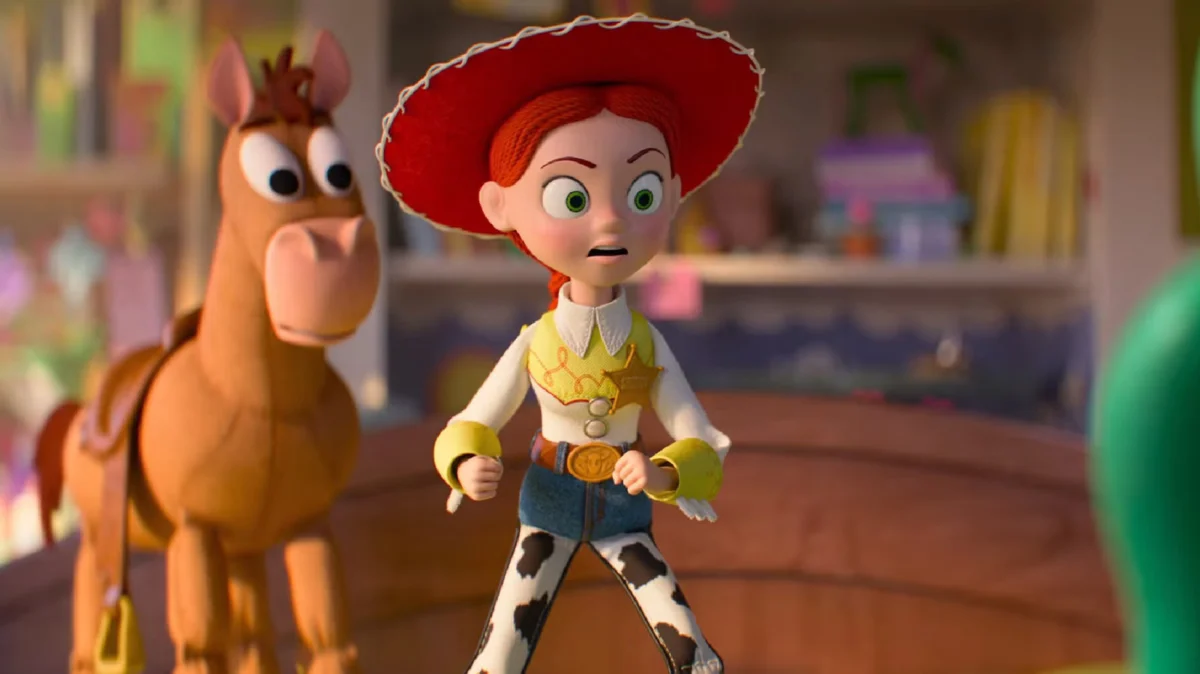
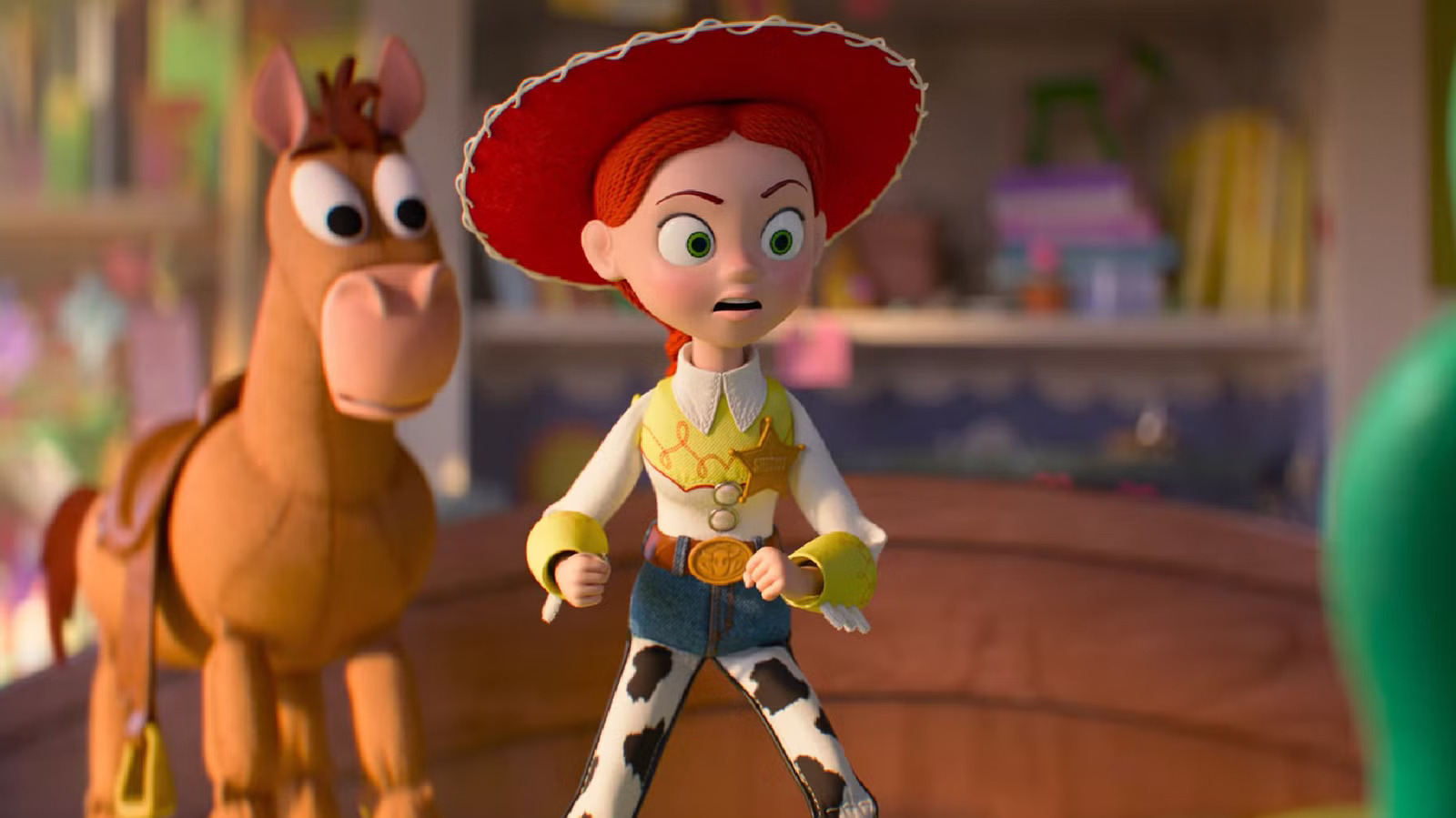
The central narrative thrust belongs to Jessie (voiced by Joan Cusack). Having been appointed the new leader of the group by Woody at the conclusion of Toy Story 4, Jessie finds herself presiding over a kingdom in decline. As Bonnie’s interest shifts toward the glowing screen of Lilypad, Jessie’s deep-seated trauma regarding abandonment is reignited. This fear drives her to lead a mission to prove that the tangible bond between a toy and a child is superior to the fleeting dopamine hits of a digital interface.
The film’s climax takes an unexpected turn, leading Jessie and her faithful steed, Bullseye, back to the very location where her original heartbreak began: the home of Emily, the girl who famously gave her away in a donation box decades ago. By revisiting this location, Toy Story 5 provides a sense of narrative closure that has been nearly thirty years in the making.
Chronology: From Andy’s Room to the Digital Abyss
To understand the weight of Toy Story 5, one must trace the chronological evolution of the toys’ psychological states throughout the franchise:
- The Era of Replacement (Toy Story 1 & 2): In the original films, the threat was internal. Woody feared being replaced by Buzz Lightyear, and later, Jessie introduced the concept of external abandonment. Toy Story 2’s "When She Loved Me" sequence established that a toy’s greatest tragedy is the aging process of their owner.
- The Era of Utility (Toy Story 3): The toys faced the "end of life" scenario as Andy left for college. This film solidified the idea that toys are meant to be passed down, creating a cycle of service.
- The Era of Autonomy (Toy Story 4): Woody broke the cycle, choosing a life of "lost toy" freedom over the traditional owner-toy relationship. This left a power vacuum in Bonnie’s room, which Jessie was forced to fill.
- The Era of Obsolescence (Toy Story 5): The fifth film enters the 2020s. The toys are no longer fighting for a new child; they are fighting for the concept of physical play itself. The narrative brings the series full circle by returning to Jessie’s origins to find a solution for the future.
Supporting Data: The Impact of the "When She Loved Me" Legacy
The decision to focus on Jessie is backed by the enduring cultural impact of her backstory. According to various audience surveys and retrospective reviews, the "When She Loved Me" montage in Toy Story 2, featuring Sarah McLachlan’s vocals, remains one of the most emotionally resonant scenes in Pixar history. It transformed Jessie from a hyperactive sidekick into a tragic figure representing the "disposable" nature of childhood artifacts.
In Toy Story 5, the screenplay leverages this history to heighten the stakes. The film reveals that Jessie has never truly healed from Emily’s rejection; she has merely managed it. When Bonnie begins to ignore the toys in favor of Lilypad, Jessie doesn’t just see a bored child—she sees the beginning of the end.
The film’s "data point" of emotional resonance occurs when Jessie finds a box buried beneath a tire swing at Emily’s old property. Inside, she discovers that Emily—now an adult—had a daughter whom she named Jessie. This discovery provides empirical "proof" within the movie’s logic that the impact of a toy is not measured by the minutes spent playing with it, but by the lasting impression it leaves on a child’s heart. This revelation serves as the "supporting data" Jessie needs to regain her confidence as a leader.
Official Responses: Pixar’s Creative Philosophy
The production of Toy Story 5 was met with initial skepticism from fans who felt that Toy Story 3 or 4 should have been the final word. However, Pixar executives, including Chief Creative Officer Pete Docter, have defended the necessity of the fifth film. In various press statements leading up to the release, the studio emphasized that they would only return to this world if there was a story that felt essential to the characters’ growth.
"We realized that the world has changed since 1995," a studio representative noted during a D23 presentation. "Children today interact with the world through screens. If the Toy Story characters are meant to reflect the reality of childhood, they have to face that monster. Jessie was the natural choice to lead that conversation because she knows what it’s like to feel the world shifting beneath her feet."
Director Andrew Stanton, a veteran of the franchise, reportedly pushed for the inclusion of the Emily connection. The goal was not to have a literal reunion—which some early drafts suggested—but to show that the "spirit" of the toy survives through the stories parents tell their children. This creative choice has been praised by critics for maintaining the bittersweet tone of the series without resorting to easy sentimentality.
Implications: The Future of the Franchise and Physical Play
The implications of Toy Story 5 extend beyond the screen, touching on real-world concerns regarding the "digital takeover" of childhood. By framing the tablet (Lilypad) not as an evil entity, but as a seductive distraction that lacks the "soul" of a physical object, the film encourages a balanced view of technology.
For the franchise, Toy Story 5 suggests a new path forward. It moves the series away from the "Woody-centric" model and proves that the ensemble cast—specifically Jessie, Buzz, and even Rex or Slinky—has enough narrative weight to carry a film. The "legacy" twist (Emily naming her daughter after the toy) implies that the toys are more than just playthings; they are cultural touchstones that bridge generations.
Furthermore, the film sets a precedent for how legacy sequels can handle deep-cut lore. By reaching back to Toy Story 2, Pixar has rewarded long-time fans while providing a clear emotional arc for new viewers. The ending of Toy Story 5 does not necessarily close the door on more adventures, but it provides a sense of peace. Jessie realizes that even if Bonnie eventually grows up or becomes absorbed in a digital world, the idea of Jessie will persist.
In conclusion, Toy Story 5 is a sophisticated exploration of what it means to be relevant in an era of rapid technological change. By anchoring the high-concept "Toys vs. Tablets" plot in the deeply personal history of Jessie and Emily, Pixar has crafted a sequel that feels less like a corporate mandate and more like a necessary final chapter in a story about the enduring power of love and memory. The age of the tablet may have come, but as Jessie discovers under the old tire swing, the age of the heart is never truly over.