George Griffith: The Enigmatic Pioneer of Scientific Romance and Adventure
Plymouth, England – In the annals of early speculative fiction, few figures present as intriguing and contradictory a profile as George Griffith. Born George Chetwynd Griffith-Jones on August 20, 1857, in Plymouth, England, Griffith was a prolific writer whose adventurous life mirrored the fantastical narratives he penned. Often overlooked by mainstream literary history, he was a pivotal figure in the nascent genre of scientific romance and adventure, popularizing themes of future warfare, space travel, and technological marvels for a vast Victorian and Edwardian audience. Though his literary legacy remains a subject of debate among critics, his contributions to the popular imagination of his era and the development of genre tropes are undeniable.
Griffith’s life was a testament to restless intellect and an unquenchable thirst for experience, leading him from the quiet confines of a clergyman’s home to the far reaches of the globe, and ultimately to the forefront of popular fiction. His career trajectory, marked by dramatic shifts and a relentless output, encapsulates the spirit of an age fascinated by progress, exploration, and the boundless possibilities—and perils—of the future.
The Architect of Tomorrow’s Adventures: Main Facts
George Griffith, who formally adopted the simpler surname by deed poll in 1894, was a British author renowned for his contributions to the "scientific romance" genre, a precursor to modern science fiction. His most famous work, The Angel of the Revolution (1893), captivated readers with its thrilling depiction of aerial warfare and social upheaval. Griffith was not merely a writer of adventure; he was an adventurer himself, circumnavigating the globe in a record-breaking 65 days and undertaking extensive travels through South America and South Africa, experiences that undoubtedly fueled his vivid imagination.
His literary output, characterized by a blend of technological speculation, exotic locales, and often radical political undertones, made him a household name in the popular magazines of his time, particularly Pearson’s Weekly. Despite achieving considerable popularity and pioneering several narrative conventions now commonplace in science fiction—such as the "countdown to zero" for a launch, as noted by Robert Godwin—Griffith’s prose style has frequently drawn criticism for being "inept" or "technically bad" from later historians like Brian Stableford and Everett Bleiler. Nevertheless, Bleiler recognized him as arguably "the first professional science fiction writer," underscoring his importance in establishing the commercial viability of the genre.
Griffith’s influence extended beyond his own stories; his son, Alan Arnold Griffith, became a celebrated mechanical engineer who played a crucial role in the development of the jet engine, a fascinating real-world echo of his father’s fictional fascination with advanced aviation.
A Life of Unconventional Journeys: Chronology of George Griffith
George Chetwynd Griffith-Jones’s early life was marked by a lack of geographical stability, a characteristic that would later define his adult pursuits. Born in 1857 to George Alfred Jones, a clergyman, and Jeanette Henry Capinster Jones, the family moved frequently as his father was assigned to various parishes. By the age of seven, young George had already experienced life in at least six different locales, fostering a sense of rootlessness that perhaps contributed to his later wanderlust.
His education was largely informal, shaped primarily by home-schooling under his parents’ guidance and an insatiable appetite for the books within his father’s library. This self-directed learning environment, while fostering intellectual independence, also presented challenges. Following his father’s death in 1872, Griffith was enrolled in a private school, where the limitations of his unconventional education, particularly in subjects like mathematics, became starkly apparent. This brief stint in formal schooling proved uncongenial, and by 1873, at just sixteen years old, Griffith abandoned his studies.
The call of the open sea proved irresistible. He ran away from home and signed on as a sailor, only to desert his ship in Melbourne, Australia, after less than three months. This dramatic act of youthful rebellion set the tone for a period of varied experiences. For the next three years, he worked a succession of odd jobs across Australia, honing his adaptability and experiencing the vastness of the British Empire’s colonial frontier. By the age of 19, he had not only travelled extensively but also acquired a diverse set of practical skills.
His return to England marked a temporary shift towards a more conventional path. He took up teaching, first at Worthing College in Sussex and later at Bolton Grammar School in Manchester. However, this period was far from fulfilling for Griffith, who candidly described his time in education as "penal servitude." It was during this unloved profession, paradoxically, that his literary ambitions began to solidify. In 1887, he published his first two books, Poems and The Dying Faith, both collections of poetry, under the pseudonym "Lara." This marked the beginning of his prolific writing career, during which he would also use other pseudonyms like "Levin Carnac" and "Stanton Morich." The same year, in February 1887, he married Elizabeth Brierly. Their union would produce a daughter and two sons, including Alan Arnold Griffith, whose future achievements in mechanical engineering would, in a fascinating twist of fate, embody the very spirit of technological advancement his father championed in fiction.
The year 1888 saw Griffith abandon the educational field for the more dynamic world of journalism, moving to London. He quickly immersed himself in the bustling newspaper industry, working for and eventually editing a local publication. This venture, however, ended abruptly when the newspaper faced a libel suit. Griffith, in a display of principle, chose to defend the paper, but they ultimately lost, forcing its closure.
Undaunted, by 1890, Griffith had found a new home at Pearson’s Weekly, a popular magazine known for its sensational stories and broad appeal. His talent for captivating narratives quickly earned him a regular column. When the magazine decided to commission a series of "future war" stories, Griffith enthusiastically volunteered. This opportunity led to the creation of his breakthrough work, The Angel of the Revolution, which was serialized in 39 installments, capturing the public’s imagination with its daring vision of airships battling for global supremacy and a nascent socialist revolution.
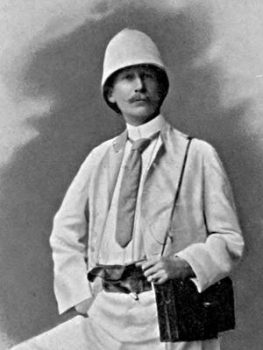
The success of The Angel of the Revolution propelled Griffith into the limelight. While Pearson’s was running its sequel, Olga Romanoff, Griffith embarked on a real-life adventure that would further cement his reputation as a man of action: a circumnavigation of the globe. He completed this extraordinary feat in a then-record 65 days, meticulously documenting his journey in a serial titled "How I Broke the Record Round the World," published in 1894. It was around this time, perhaps to fully embrace his identity as an author and adventurer, that he formally changed his name to George Griffith by deed poll.
His global travels did not stop there. The magazine, capitalizing on his popularity, dispatched him to South America, where he continued to churn out both fiction and travel articles. During this period, he famously claimed to have discovered the true source of the Amazon River, a testament to his adventurous spirit, whether entirely factual or embellished for literary effect. Another significant journey took him to South Africa, further broadening his horizons and providing rich material for his prolific pen.
In the late 1890s, Griffith diversified his literary output, venturing into historical fiction. However, his long-standing association with the Pearson magazine family came to an end in February 1901. This parting of ways coincided with a period of decline in his writing career and, tragically, a deterioration of his health. Despite returning to the themes that had initially brought him fame—future war stories and explorations of technological advancements—he found it increasingly difficult to recapture his earlier success. The literary landscape was shifting, and he struggled to maintain the audience and publisher support that had once been the bedrock of his career.
George Griffith died prematurely on June 4, 1906, at the age of 48, from cirrhosis of the liver in Port Erin on the Isle of Man. He was laid to rest there in Kirk Christ Church Cemetery, his adventurous life concluded, but his complex legacy left for future generations to unravel.
Thematic Explorations and Genre Evolution: Supporting Data
George Griffith’s literary output was a vibrant tapestry woven from the threads of scientific speculation, geopolitical anxieties, and social commentary, all delivered through the thrilling lens of adventure. His works resonated deeply with a fin-de-siècle audience captivated by rapid technological change and the shifting global order.
His most impactful contributions were in the realm of "future war" narratives. The Angel of the Revolution (1893) and its sequel, Olga Romanoff (1894), stand as prime examples. These novels were not mere fantasies; they tapped into very real concerns about the arms race, the potential of aerial combat (then still largely theoretical), and the specter of global conflict. Griffith envisioned a world where powerful airships, piloted by a clandestine, revolutionary force, could reshape international power dynamics. His detailed descriptions of these aerial battles and the geopolitical machinations behind them provided a template for countless future war stories. The narratives also often included strong female characters, such as the eponymous Olga Romanoff, who challenged traditional gender roles, reflecting some of the nascent feminist sentiments of the era.
Beyond the battlefield, Griffith was also a pioneer in depicting interplanetary travel. Brian W. Aldiss, in Trillion Year Spree, highlights Griffith’s shift from stories of "war and revolution" to "more peaceful subjects" in works like A Honeymoon in Space (1901). This novel offered readers a grand tour of the planets within our solar system, showcasing an early form of "space opera" that predated many of its more famous iterations. While perhaps lacking the scientific rigor of H.G. Wells or the detailed engineering of Jules Verne, Griffith’s imaginative leaps into the cosmos opened new vistas for popular fiction. He explored themes of alien civilizations, cosmic phenomena, and the sheer wonder of interstellar travel, making the universe accessible to the common reader.
Technological speculation was a hallmark of his work. Robert Godwin specifically credits Griffith with inventing the now-ubiquitous "countdown to zero" sequence for a rocket launch, a narrative device that injects tension and excitement into countless space-faring tales. This exemplifies how Griffith, even if his scientific explanations were often rudimentary, possessed an intuitive grasp of how to dramatize technological concepts for a popular audience. His stories often featured advanced weaponry, innovative transportation, and communication devices that stretched the imagination of his readers, making him a significant popularizer of scientific and technological ideas.
Griffith’s prolific output, often serialized in popular magazines, ensured his wide reach. He understood the commercial demands of the era, crafting fast-paced, engaging narratives that kept readers eagerly awaiting the next installment. His travels, particularly his record-breaking circumnavigation, were not just personal adventures but also savvy marketing tools, blurring the lines between the author’s real-life exploits and his fictional creations. This helped cultivate an image of Griffith as a man who lived the adventures he wrote about, further enhancing his appeal.
His work, while often categorized as "scientific romance," also dipped into other genres, including historical fiction in his later years. This versatility demonstrated his range, even as his core appeal remained rooted in imaginative exploration. Griffith’s stories, though sometimes criticized for their narrative simplicity or didacticism, were instrumental in shaping the tropes and conventions that would become foundational to science fiction. He took complex ideas about technology, society, and the future and packaged them into accessible, thrilling narratives for a mass audience, proving that speculative fiction could be commercially successful and culturally resonant.
A Divisive Legacy: Official Responses and Critical Reappraisal
Despite his immense popularity during his lifetime, George Griffith’s standing in literary history, particularly within the academic discourse of science fiction, has been a complex and often contentious one. His legacy is characterized by a fascinating dichotomy: a widely read author who pioneered significant genre tropes, yet whose literary craftsmanship frequently draws sharp criticism.
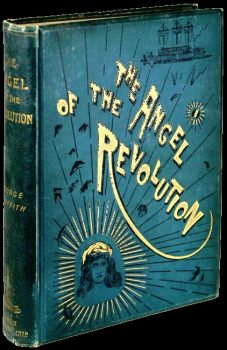
One of the most nuanced assessments comes from Brian W. Aldiss, a renowned science fiction author and historian. In Trillion Year Spree: The History of Science Fiction, Aldiss notes Griffith’s thematic evolution, observing his shift from early works steeped in "stories of war and revolution," such exemplified by The Angel of the Revolution and its sequel, Olga Romanoff, to "more peaceful subjects" in later novels like A Honeymoon in Space, which offered a grand tour of the planets. Aldiss’s observation highlights Griffith’s versatility and willingness to explore different facets of scientific romance, even if his initial fame was built on more confrontational narratives.
However, the praise for Griffith’s thematic pioneering is often tempered by critiques of his prose. Brian Stableford, another prominent science fiction scholar, acknowledges Griffith’s "importance to the field in creating several tropes," recognizing his role in laying groundwork for future authors. Yet, Stableford does not shy away from labeling Griffith’s writing style as "inept," suggesting that while his ideas were influential, their execution left much to be desired. He further speculates that many of the tropes Griffith introduced "would have been invented by other authors" eventually, implying that Griffith’s contribution was more about timing and popularization than singular, indispensable genius.
Perhaps the most direct and simultaneously laudatory yet critical assessment comes from Everett Bleiler, a foundational figure in science fiction bibliography and criticism. Bleiler famously called Griffith "the first professional science fiction writer," a significant designation that underscores his role in establishing the commercial viability and full-time dedication to the genre. This recognition highlights Griffith’s foresight and entrepreneurial spirit in a nascent literary field. However, Bleiler immediately qualified this praise by also labeling Griffith "a bad writer technically." This blunt assessment encapsulates the core tension in Griffith’s legacy: he was a groundbreaking popularizer and a professional pioneer, but not necessarily a master stylist.
Conversely, Robert Godwin offers a more specific and positive attribution, crediting Griffith with inventing the iconic "countdown to zero" sequence for a launch. This detail, though seemingly minor, demonstrates Griffith’s intuitive understanding of narrative tension and his ability to craft memorable, effective genre conventions that have endured for over a century. It suggests that even amidst criticisms of his overall style, Griffith possessed flashes of genuine innovation in storytelling mechanics.
Collectively, these critical responses paint a picture of George Griffith as a figure of paradox. He was undeniably instrumental in popularizing scientific romance and shaping its early conventions. His works, despite stylistic flaws, engaged a mass audience and explored themes that were deeply resonant with the anxieties and aspirations of his age. The consensus seems to be that while his prose might not stand the test of time against literary giants, his historical significance as a prolific, professional, and pioneering voice in speculative fiction is secure. He paved the way for others, demonstrating the commercial potential and imaginative power of a genre that was still finding its feet.
Echoes of a Pioneer: Implications and Lasting Significance
George Griffith’s story is more than just the biography of a forgotten author; it is a lens through which to examine the early development of popular fiction, the commercialization of literature, and the complex relationship between popular appeal and critical acclaim. The implications of his life and work resonate across several dimensions.
Firstly, Griffith’s professional journey highlights the emerging landscape of professional authorship in the late Victorian and early Edwardian eras. His transition from an unfulfilling teaching career to full-time journalism and then prolific fiction writing for popular magazines like Pearson’s Weekly illustrates a growing opportunity for writers to make a living through their craft, especially within burgeoning genre fiction. He understood the mechanics of serialization, the appetite of the mass market, and how to brand himself as an adventurous figure, effectively becoming one of the first "media personalities" of his kind. His "first professional science fiction writer" designation by Bleiler is crucial here, marking a shift from amateur enthusiasts to dedicated careerists.
Secondly, his works provided a vital bridge between earlier adventure narratives and modern science fiction. While Jules Verne explored technological wonders and H.G. Wells delved into profound social commentary through scientific romance, Griffith occupied a unique space by combining thrilling, action-packed adventure with overt technological speculation and often radical social ideas. He made these concepts accessible and entertaining for a broad, less academic audience, arguably broadening the genre’s appeal beyond its initial intellectual circles. His future war stories, for instance, tapped into widespread anxieties about technological advancement and imperial rivalry, making his fiction feel incredibly relevant to contemporary readers.
Thirdly, the development of science fiction tropes owes a subtle but significant debt to Griffith. While Stableford suggests others might have eventually conceived of them, Griffith was among the first to widely popularize concepts like aerial warfare, interplanetary travel for leisure, and the dramatic countdown. These narrative devices became foundational elements, influencing subsequent generations of writers, filmmakers, and even real-world engineers (as seen in his son, Alan Arnold Griffith). His stories, despite their perceived technical flaws, sparked imaginations and helped establish a lexicon of genre conventions.
Finally, Griffith’s ultimate decline, both in health and literary standing, offers an important lesson about the ephemeral nature of popular success and the challenges of adapting to a rapidly changing literary market. His inability to maintain his audience after parting ways with Pearson’s in 1901 suggests that popular appeal is fickle, and that even a prolific and once-successful author can be left behind as tastes evolve and new voices emerge. His story serves as a reminder that while pioneering a genre, especially one as dynamic as science fiction, can bring temporary fame, maintaining a lasting critical legacy often requires more than just novelty and volume.
In conclusion, George Griffith remains a compelling, if controversial, figure. He was a restless spirit who lived an extraordinary life, channeling his adventures and anxieties into a torrent of imaginative fiction. Though often overshadowed by his more celebrated contemporaries, his role in professionalizing science fiction, popularizing its themes, and developing its narrative architecture is undeniable. His legacy, while debated in terms of literary merit, stands as a testament to the power of a writer who dared to imagine the future, shaping the dreams and fears of a generation, and leaving an indelible, if complex, mark on the history of speculative literature.