Dungeons & Dragons Unveils Striking Alternate Cover for 2024 Player’s Handbook, Signalling Diverse Play Experiences
FOR IMMEDIATE RELEASE
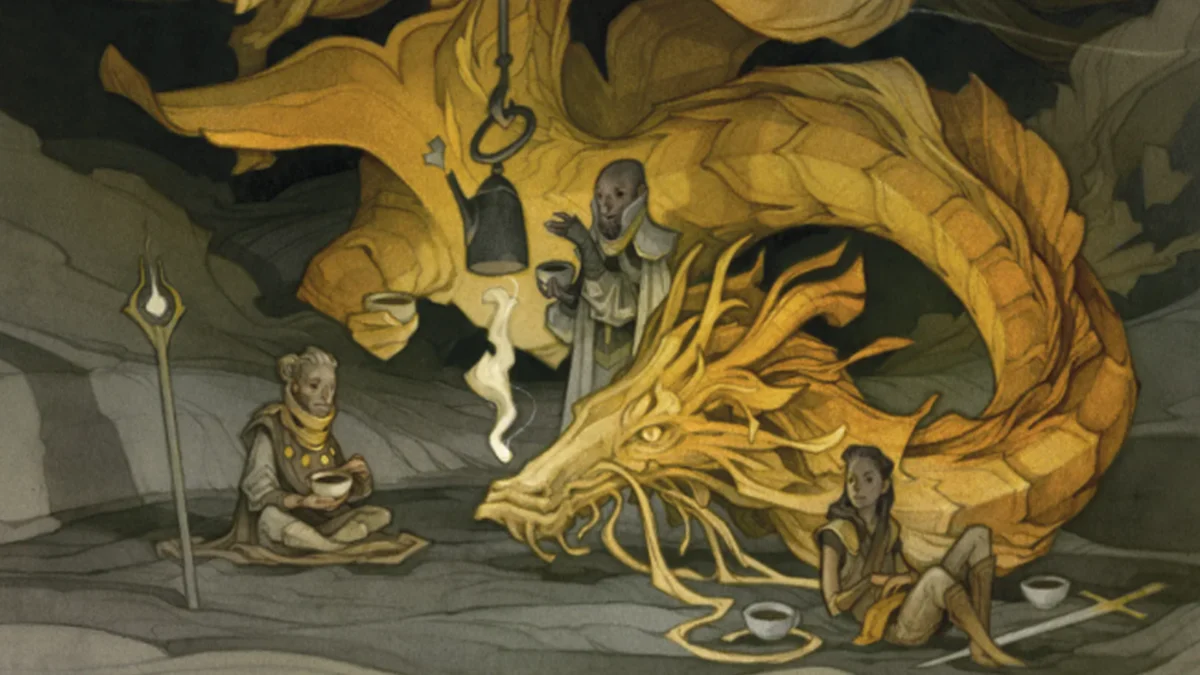
[City, State] – [Date] – Wizards of the Coast, the acclaimed publisher behind the legendary tabletop roleplaying game Dungeons & Dragons, has officially revealed the alternate cover artwork for its highly anticipated 2024 Player’s Handbook. This unveiling follows closely on the heels of the standard cover’s debut last week, presenting a deliberate and distinct thematic contrast that speaks to the multifaceted nature of D&D gameplay and its evolving player base. The alternate cover, a serene and contemplative scene crafted by artist Wylie Beckert, offers a stark visual counterpoint to the standard edition’s action-packed battle tableau, setting the stage for a new era of the iconic fantasy RPG.
Main Facts
The Dungeons & Dragons community is abuzz with the recent revelation of the alternate cover for the 2024 Player’s Handbook. This new artwork provides a markedly different aesthetic and thematic interpretation compared to the standard edition cover, which was showcased just a week prior. While the standard cover, illustrated by Tyler Jacobsen, depicts a classic D&D party engaged in a dynamic battle against a horde of kobolds, featuring iconic characters like Strongheart the Knight and Yolande the Elven Queen, the alternate version presents a scene of quiet camaraderie.
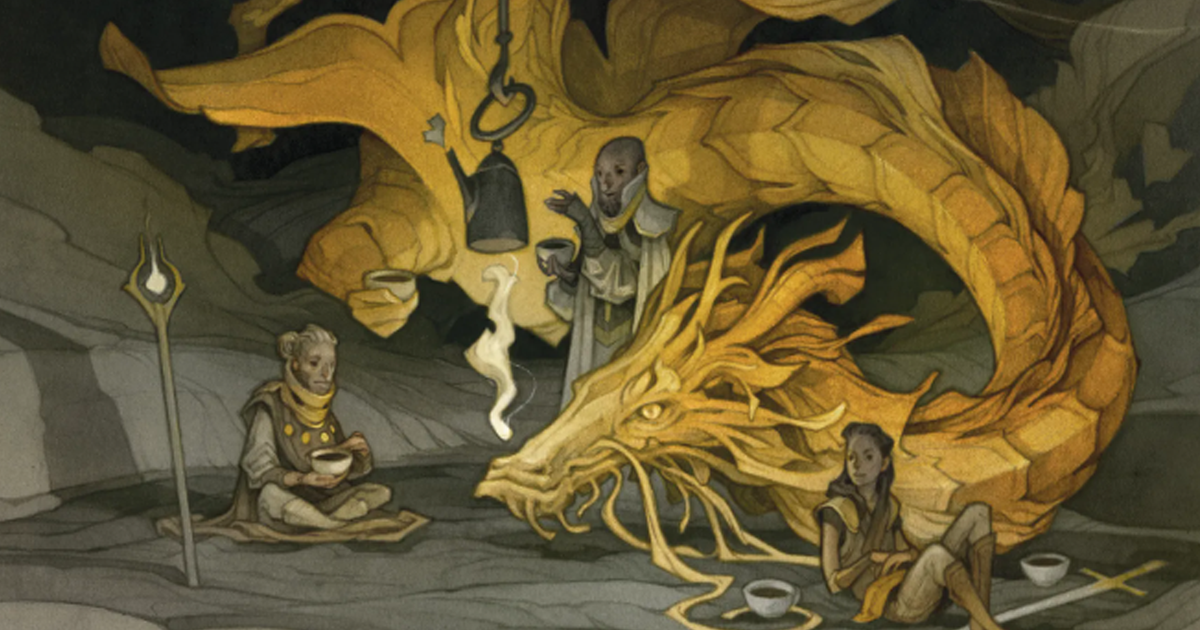
The alternate cover, designed by the distinctive artist Wylie Beckert, portrays a party of adventurers – a wizard, cleric, fighter, and rogue – sharing a peaceful tea party within the confines of a cave. A friendly golden dragon, a recurring motif across both covers, is depicted as an integral, if somewhat oversized, participant in this intimate gathering, even delicately clutching a teacup in its massive paw. This visual narrative deliberately shifts focus from the high-stakes combat often associated with D&D to the more introspective, social, and exploration-focused elements of the game.
This collector’s edition, featuring Beckert’s unique art, is slated for an early release on September 3rd, exclusively through local game stores. The wider retail release for the standard edition of the 2024 Player’s Handbook will follow on September 17th. This staggered release strategy not only creates an incentive for collectors and dedicated fans to visit their local game stores but also underscores Wizards of the Coast’s commitment to supporting brick-and-mortar retailers. The alternate versions of D&D core rulebooks are primarily distinguished by their external aesthetics, with the internal content remaining consistent with their standard counterparts, catering specifically to players who appreciate unique artistic interpretations and the collectibility factor.
Chronology: The Road to the 2024 Core Rulebooks
The journey to the 2024 Dungeons & Dragons core rulebooks has been a multi-year endeavor, rooted in the "One D&D" initiative announced in 2022. This initiative aimed to update and refine the ruleset of the 5th Edition, ensuring backward compatibility while incorporating player feedback and modernizing various game mechanics. Over nearly two years, Wizards of the Coast engaged its vast player base through public playtest documents, surveys, and extensive community dialogue, meticulously refining character options, spells, monsters, and Dungeon Master tools. The goal was to create a version of D&D that felt both familiar and fresh, enhancing the gameplay experience for veterans while making the game more accessible to newcomers.
Standard Cover Unveiling
The first major visual milestone for this new era was reached last week with the grand reveal of the standard cover for the 2024 Player’s Handbook. Illustrated by Tyler Jacobsen, this artwork instantly resonated with fans as a quintessential D&D scene. It features a diverse and heroic party of adventurers, composed of classic D&D archetypes, locked in a fierce confrontation with a swarm of kobolds. Prominently displayed are iconic characters from D&D lore, including Strongheart the Knight, known for his valor; Elkhorn the Dwarf Warrior, embodying resilience; and Yolande the Elven Queen, representing arcane power and grace. Behind them, a majestic golden dragon looms, suggesting a powerful ally or perhaps an imposing backdrop to their epic struggle.
The standard cover’s composition is dynamic and action-oriented, emphasizing the combat and high-fantasy adventure that many associate with Dungeons & Dragons. It serves as a powerful visual declaration that while the rules might be updated, the heart of D&D—heroic quests, dangerous foes, and thrilling battles—remains firmly intact. This initial reveal generated significant excitement, solidifying the anticipation for the updated rulebook and offering a first glimpse into the visual direction of the new edition.
Alternate Cover Revelation and Historical Context
Hot on the heels of the standard cover, the alternate version was officially unveiled, creating a stir due to its stark thematic divergence. (As reported by Polygon, among others, on June 5th, 2024). This alternative artwork, a captivating piece by Wylie Beckert, offers a narrative that is both unexpected and deeply resonant with a different facet of D&D play. Instead of a battle, it depicts a cozy, intimate scene: a classic adventuring party—a wizard, cleric, fighter, and rogue—sharing a pot of tea within the warm glow of a cave. The golden dragon, rather than a formidable beast of war, is a gentle giant, participating in the tea party with a surprising delicacy, holding a teacup with one claw while the party’s rogue playfully perches on its back.
This reveal is not an isolated incident in D&D’s publishing history. Wizards of the Coast began consistently offering alternate art covers for its core rulebooks and major supplements several years ago, a strategy that has proven immensely popular with the community. Books like Xanathar’s Guide to Everything, Tasha’s Cauldron of Everything, and Monsters of the Multiverse have all received this special treatment. These alternate covers, often featuring unique art styles and themes, serve multiple purposes: they cater to collectors who desire visually distinct editions, they offer players a choice that might better reflect their personal aesthetic preferences, and critically, they are often exclusive to local game stores for an initial period, providing a tangible benefit to these vital community hubs. Wylie Beckert herself is no stranger to this tradition, having previously illustrated the acclaimed alternate cover for Tasha’s Cauldron of Everything, known for its intricate and whimsical style. The consistent offering of alternate covers has become a beloved tradition, enriching the D&D collecting experience and highlighting diverse artistic talents.
Supporting Data: A Tale of Two D&D Experiences
The decision to present two such distinct covers for the 2024 Player’s Handbook is a shrewd strategic move by Wizards of the Coast, reflecting a deep understanding of its diverse player base and the varied ways D&D is enjoyed. Each cover serves as a visual manifesto for a different, yet equally valid, aspect of the D&D experience.
Thematic Analysis – Standard Cover: The Call to Arms
Tyler Jacobsen’s standard cover is a potent encapsulation of Dungeons & Dragons as a heroic fantasy adventure, primarily focused on action, combat, and grand quests. This aligns perfectly with D&D’s public image and its origins as a tactical wargame.
- Action vs. Exploration/Roleplaying: The immediate visual impact is one of conflict. The party is clearly in motion, weapons drawn, spells being cast, facing a tangible threat. This imagery reinforces the perception that D&D is fundamentally a game about overcoming obstacles through combat, tactical decision-making, and heroic feats. For many, this is the quintessential D&D experience: delving into dungeons, slaying monsters, and claiming treasure.
- Iconic Characters: The inclusion of established figures like Strongheart, Elkhorn, and Yolande is a nod to D&D’s rich legacy and its enduring appeal. These characters are instantly recognizable to long-time fans, connecting the new edition to the storied history of the game. It suggests that while the rules are updated, the spirit of classic D&D adventures endures.
- Monster Choice: Kobolds are a classic, low-level enemy, often serving as the first adversaries for fledgling adventurers. Their presence on the cover symbolizes the beginning of an epic journey, a foundational challenge that sets the tone for grander battles to come. They represent the ever-present dangers lurking in the fantastical world.
- Golden Dragon: The dragon’s majestic presence behind the party adds a layer of epic scale. Dragons are synonymous with D&D, representing immense power, ancient wisdom, and often, formidable challenges or legendary allies. Its position suggests a powerful force overseeing or participating in the battle, amplifying the heroic stakes.
- Artist’s Style (Tyler Jacobsen): Jacobsen’s style is often characterized by its dynamic compositions, strong heroic figures, and vibrant fantasy realism. His work typically evokes a sense of high adventure and traditional fantasy, making him an ideal choice for the standard cover that aims to broadly represent D&D’s core appeal.
Thematic Analysis – Alternate Cover: The Intimate Adventure
Wylie Beckert’s alternate cover, by contrast, champions a more nuanced, intimate, and often overlooked aspect of D&D: the moments of camaraderie, shared experience, and quiet reflection that form the bedrock of long-term campaigns.
- Slice-of-Life D&D: This is perhaps the most striking departure. The "tea party" scene illustrates that D&D is not solely about fighting monsters but also about the downtime, the interpersonal dynamics, and the simple pleasures of adventuring life. It speaks to players who prioritize roleplaying, character development, and world immersion over pure combat encounters. It’s a powerful statement that quiet moments of connection are as vital to the D&D experience as epic battles.
- "Tea Party" Imagery: The act of sharing tea is universally associated with comfort, hospitality, and social bonding. Placing this domestic scene within a rugged cave environment creates a delightful juxtaposition, highlighting the resilience and adaptability of adventurers who find solace and community even in dangerous places. It subtly suggests that true heroism isn’t just in slaying dragons, but in forging bonds.
- Dragon’s Role: The golden dragon’s inclusion as a gentle participant, rather than a combatant or distant observer, further emphasizes companionship and the potential for unique, non-combative relationships within the game world. Its delicate handling of a teacup adds a touch of whimsical charm and humanity (or draconicity) to the scene, subverting expectations of fearsome beasts. The rogue balancing on its back suggests a level of trust and familiarity that goes beyond master and pet, hinting at deep, shared histories.
- Party Composition: The classic quartet of wizard, cleric, fighter, and rogue is presented, universal archetypes that resonate with every D&D player. Their relaxed postures and interaction suggest a well-established group, comfortable in each other’s presence, highlighting the importance of the adventuring party as a social unit.
- Artist’s Style (Wylie Beckert): Beckert’s art is distinctive, often characterized by intricate detail, a slightly surreal or dreamlike quality, and a strong narrative flair. Her work frequently incorporates elements of folklore and whimsical fantasy, making her perfectly suited to depict a scene that challenges conventional D&D imagery. Her previous work on Tasha’s Cauldron of Everything‘s alternate cover also showcased a unique, story-rich aesthetic, demonstrating her ability to bring a fresh perspective to D&D’s visual language.
- Broader Appeal: This cover consciously appeals to players who are drawn to D&D for its storytelling potential, its emphasis on character arcs, and the rich social interactions it fosters. It might attract new players who find purely combat-focused imagery intimidating or less appealing, showcasing that D&D offers a spectrum of experiences.
Market Strategy: Catering to a Diverse Community
Wizards of the Coast’s decision to offer two vastly different covers is a sophisticated market strategy. It acknowledges the breadth of its audience, from hardcore tactical players to narrative-focused roleplayers, and from casual enthusiasts to dedicated collectors. By providing distinct visual identities, WotC ensures that the 2024 Player’s Handbook can resonate with a wider demographic. The staggered release, prioritizing local game stores for the alternate version, is also a crucial element. It rewards and supports the brick-and-mortar stores that serve as crucial community hubs for D&D players, driving traffic and encouraging pre-orders, while also building anticipation for the broader release. This strategy effectively leverages the "collector’s item" appeal, creating a sense of urgency and exclusivity for a segment of the market that values unique editions.
Official Responses and Community Reception
While Wizards of the Coast has yet to issue a comprehensive official statement specifically contrasting the two covers, their actions and past statements regarding the "One D&D" initiative provide ample insight into their philosophy. The release of two such thematically distinct covers can be seen as a direct reflection of WotC’s broader vision for the 2024 core rulebooks and the future of D&D.
Wizards of the Coast’s Implicit Stance
It is highly probable that Wizards of the Coast views these dual covers as a celebration of D&D’s multifaceted nature. The standard cover, with its heroic battle, represents the classic, action-packed fantasy adventure that has defined the game for decades. It’s a powerful statement for those who love the thrill of combat, dungeon delving, and epic confrontations. The alternate cover, on the other hand, subtly communicates that D&D is also about camaraderie, character development, world immersion, and the quieter, more intimate moments of storytelling.
This approach aligns with the stated goals of the "One D&D" initiative: to create an inclusive and adaptable ruleset that supports all styles of play. By showcasing two different visions on the very face of its foundational rulebook, WotC is implicitly stating that there is no single "right" way to play D&D. Whether you seek grand battles or cozy tea parties with dragons, the 2024 Player’s Handbook aims to provide the tools for your preferred adventure. The selection of artists like Tyler Jacobsen, known for his dynamic heroic fantasy, and Wylie Beckert, celebrated for her unique, narrative-rich style, further reinforces this commitment to diverse artistic interpretation and thematic representation.
Anticipated Community Reaction
The Dungeons & Dragons community is famously passionate and vocal, and the reveal of these covers has undoubtedly sparked considerable discussion across social media, forums, and local game store tables. Early reactions suggest widespread appreciation for both artworks, with players often expressing a preference for one over the other based on their personal playstyle or aesthetic taste.

Many players who gravitate towards combat and tactical challenges will likely find the standard cover deeply appealing, seeing it as the embodiment of what D&D means to them. Conversely, those who prioritize roleplaying, character development, and narrative depth will likely be drawn to the alternate cover, feeling that it better represents the heart of their campaigns. The "tea party" scene, in particular, has garnered significant positive attention for its refreshing and unexpected take on adventuring life. This divergence in preference is precisely what Wizards of the Coast likely intended, fostering healthy debate and allowing players to feel seen and represented by the game’s official imagery. The staggered release, with the alternate cover hitting local game stores first, is also likely to be viewed positively as a gesture of support for these vital community hubs.
Implications: Shaping the Future Perception of D&D
The dual cover reveal for the 2024 Player’s Handbook carries significant implications for the future art direction, marketing, and overall perception of Dungeons & Dragons. It’s more than just a choice of aesthetics; it’s a statement about the evolving identity of the game.
Future of D&D Art Direction
This move suggests a broadening of D&D’s visual language. While heroic combat will always be a cornerstone, the inclusion of a cover that celebrates downtime and camaraderie indicates a willingness to explore and promote a wider array of themes through official artwork. This could lead to future supplements featuring art that emphasizes exploration, social interaction, puzzle-solving, or even moments of quiet character reflection, rather than solely focusing on monsters and battles. It signifies an artistic maturity, acknowledging that the depth of D&D lies not just in its mechanics, but in its narrative breadth.
Influence on Player Experience and Perception
The covers serve as the primary visual introduction to the 2024 Player’s Handbook, shaping first impressions for both veteran players and newcomers.
- For Existing Players: It validates different playstyles. Players who prefer combat will feel affirmed by the standard cover, while those who lean towards narrative and social elements will see their preferred style represented by the alternate. This fosters a sense of inclusivity within the existing community.
- For New Players: The alternate cover, especially, could be a powerful tool for attracting new players who might otherwise be intimidated by purely combat-focused imagery. It presents D&D as a game where friendships, shared stories, and even a peaceful tea party with a dragon are as central as slaying goblins. This broadened perception could significantly expand D&D’s appeal beyond its traditional demographics, inviting those interested in collaborative storytelling and imaginative social interaction.
Market Impact and Local Game Store Support
The staggered release model is a clear strategic decision to bolster local game stores (LGS). By making the collector’s alternate cover available exclusively at LGS two weeks before the general release, Wizards of the Coast directly incentivizes foot traffic and pre-orders at these crucial brick-and-mortar establishments. This strengthens the relationship between the publisher and local retailers, recognizing their role as community hubs and essential points of access for the hobby. In an increasingly digital marketplace, this dedicated support for physical stores is a significant and welcomed gesture by both retailers and players.
Evolution of the Game and Brand Identity
The 2024 core rulebooks represent an evolution of D&D 5th Edition. The dual covers symbolically encapsulate this evolution: retaining the classic, action-packed essence (standard cover) while embracing a more diverse, nuanced, and perhaps more modern understanding of tabletop roleplaying (alternate cover). It sends a message that D&D is a living, breathing game, capable of adapting and expanding its identity while honoring its roots. This dual presentation reinforces the idea that D&D is not a monolithic experience but a vast canvas upon which countless different stories can be painted, appealing to a broader spectrum of imaginations and play preferences.
In conclusion, the unveiling of the alternate cover for the 2024 Player’s Handbook is more than just an aesthetic choice; it’s a thoughtful declaration from Wizards of the Coast. By offering two distinct visual narratives, Dungeons & Dragons is signaling its commitment to celebrating the full spectrum of experiences its game provides, from epic battles to intimate moments of camaraderie, solidifying its place as a dynamic and ever-evolving cornerstone of the tabletop gaming world. The stage is now set for the September release, promising a new chapter for adventurers across the globe.