The Illustrated Zeitgeist: Comics as a Mirror to Architecture, Geopolitics, and the American Identity
The intersection of daily satire and cultural critique has long served as a barometer for the collective consciousness. In the latest installment of "Comic Strip of the Day," veteran commentator Mike Peterson delves into a multifaceted landscape where the whimsical world of Finnish cartooning meets the stark realities of sustainable architecture, the historical hardships of the Great Plains, and the increasingly polarized climate of the American 250th anniversary. Through the lens of strips like Dark Side of the Horse, Arctic Circle, and Madam & Eve, we find a narrative that bridges the gap between lighthearted observation and the weighty implications of global policy and domestic social friction.
Main Facts: The Synthesis of Satire and Reality
The primary focus of recent commentary centers on four distinct pillars: the nuances of cross-cultural humor, the engineering and historical context of "green" architecture, the personal adjustments necessitated by geographical relocation, and the intensifying political rhetoric surrounding the United States’ Semiquincentennial.
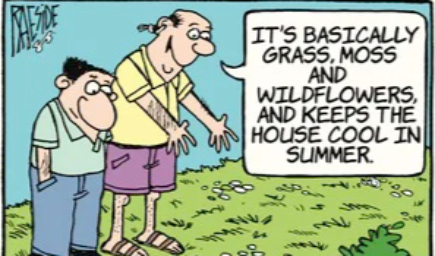
At the heart of the discussion is Dark Side of the Horse, a strip penned by a Finnish creator whose work challenges the stereotype of the "dour Finn." Peterson highlights the cartoonist’s mastery of the English language and American colloquialisms—a testament to the high standards of the Finnish education system. This cultural exchange serves as a springboard for a deeper investigation into the "turf roof" phenomenon, a traditional Scandinavian building technique now finding its way into modern eco-conscious discourse through strips like Arctic Circle and The Other Coast.
Furthermore, the commentary addresses the socio-political "Juxtaposition of the Day," contrasting the lightheartedness of summer comics with the vitriolic debates over "political correctness," immigration (specifically concerning Haitian migrants), and the global perception of American leadership. As the United States approaches its 250th anniversary in July 2026, the role of the cartoonist has shifted from mere entertainer to a critical observer of a nation at a crossroads.
Chronology: From the Great Plains to the Semiquincentennial
To understand the current state of cultural commentary, one must trace the evolution of these themes through three distinct eras:
1. The 19th Century: The Era of the "Soddy"
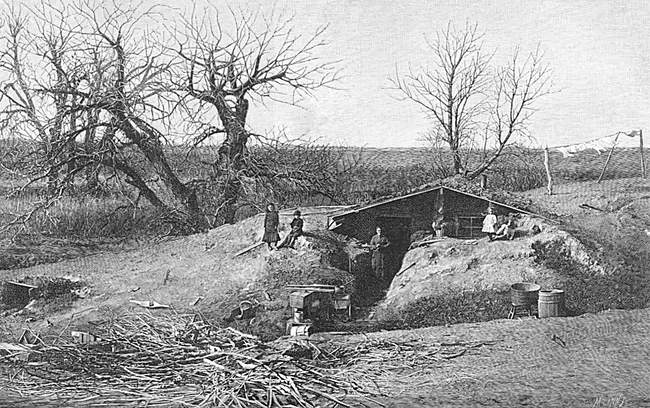
The mention of turf roofs naturally invokes the history of the American Great Plains. Following the Homestead Act of 1862, settlers faced a treeless expanse where lumber was prohibitively expensive. This led to the construction of "soddies"—homes built literally from the earth. These were not the romanticized "green homes" of today but were grueling, temporary shelters prone to insect infestations and structural collapse during heavy rains.
2. The Late 20th Century: The Efficiency Movement
By the 1980s and 90s, as mentioned in Peterson’s reflections on Northern New York, a new wave of energy-efficient housing emerged. These "underground" or earth-sheltered homes sought to utilize the earth’s natural thermal mass. While innovative, they often struggled with issues of natural light and social stigma, remaining a niche architectural choice rather than a mainstream solution.
3. 2024–2026: The Modern Convergence
In the lead-up to the 2026 anniversary, the convergence of environmentalism and political identity has reached a fever pitch. What was once a technical discussion about roofing materials has become a symbol of "lifestyle politics." Simultaneously, the international community—represented by strips like South Africa’s Madam & Eve—has turned its gaze toward the U.S. election cycle, noting how American domestic policy and "impulsive behavior" from leadership directly impact global energy markets and diplomatic stability.
Supporting Data: The Weight of Tradition and Modernity
The technical challenges of turf roofs, a central theme in the current comic cycle, are backed by significant engineering data. A traditional "green roof" can weigh between 15 and 30 pounds per square foot when dry, but this figure can jump to 50–70 pounds when saturated with rainwater or covered in heavy snow.
- Structural Requirements: Conventional American residential framing is often insufficient for a turf roof. Retrofitting requires reinforced rafters and specialized waterproof membranes to prevent the "cow on the roof" scenarios found in Welsh folklore from becoming literal structural failures.
- Education and Language: The proficiency of Finnish creators reflects Finland’s consistent ranking in the top tier of the PISA (Programme for International Student Assessment) scores. Their ability to export humor that resonates with American audiences is a direct result of a bilingual education system that prioritizes cultural literacy.
- Geopolitical Impact: The mention of Haitian immigration and "political correctness" is grounded in current State Department data. As of 2026, Haiti remains under a Level 4 "Do Not Travel" advisory due to civil unrest. The weaponization of this humanitarian crisis in political rhetoric highlights a deepening divide in American discourse that cartoonists are increasingly tasked with deconstructing.
Official Responses and Expert Perspectives
While the comic strips provide the "everyman" view, architectural and political experts offer a more sobering analysis of these trends.
On Sustainable Architecture:
Architectural historians note that while "turf roofs" are aesthetically pleasing and offer excellent insulation, they require a level of maintenance that many modern homeowners are unprepared for. "The transition from a soddy to a timber frame was seen as a mark of progress in the 1800s," says one historical consultant. "To move back toward earth-sheltered living requires a sophisticated understanding of drainage and load-bearing capacity that transcends simple DIY enthusiasm."
On Political Satire:
Political scientists argue that the "Stand Up to Political Correctness Day" referenced in the commentary is a symptom of "affective polarization." Dr. Elena Vance, a specialist in media studies, suggests that "Cartoonists are now operating in an environment where even a joke about a cat or a roof can be interpreted through a partisan lens. The ‘loonies’ on both sides, as Peterson calls them, have made the middle ground of observational humor a dangerous place to inhabit."

On Global Perception:
International observers, particularly in the BRICS nations like South Africa, maintain that American stability is the linchpin of the global economy. The "Dear Leader" archetype discussed in Madam & Eve reflects a global anxiety regarding the predictability of U.S. foreign policy. When the U.S. "sneezes," the rest of the world—particularly those reliant on oil and gas—catches a cold.
Implications: Humor as a Survival Strategy
As the United States moves toward its November elections and its 250th-anniversary celebrations, the implications of this "illustrated zeitgeist" are profound.
The Evolution of the American Marriage
Strips like Arlo & Janis highlight a shift in the American demographic—the "aging-in-place" of the Boomer and Gen X generations. Their move from suburbia to the coast reflects a broader trend of internal migration driven by a desire for a "change of pace," yet often met with the same mundane domestic challenges, personified by the "strange" behavior of house pets.
The Resilience of Satire
The ultimate takeaway from Peterson’s analysis is the necessity of humor in the face of systemic corruption and social upheaval. Whether it is South Africa’s struggle with political "morass" or the American struggle with identity and "political correctness," the act of laughing is presented not as a form of denial, but as a strategy for endurance.
A Call for Global Patience
The closing sentiment—"Give us ‘til November, world"—is a poignant reminder of the high stakes involved in the current American political cycle. The world is indeed watching, and the "jump in and hang on" philosophy suggests that the upcoming months will be a period of intense volatility.
In conclusion, the daily comic strip remains an essential, if often overlooked, medium for understanding the complexities of the modern world. From the engineering of a turf roof to the vitriol of a school board meeting, these artists distill the chaos of the 21st century into four panels of ink and wit. As we approach the historic milestone of 2026, their work reminds us that while the "dark side" of the horse (and humanity) may be ever-present, the ability to find the humor in it is what keeps the structure from collapsing.