The Shadow of Freedom: Unpacking the Black Codes and Their Enduring Legacy
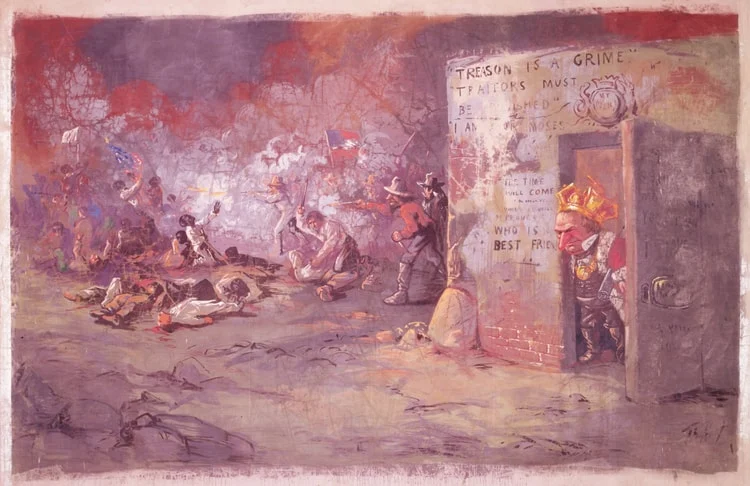
Washington D.C. – In the tumultuous aftermath of the American Civil War, as the United States grappled with the monumental task of reunifying a fractured nation and integrating millions of newly freed individuals, a sinister set of legislative acts emerged from the former Confederate states: the Black Codes. Enacted primarily between 1865 and 1866, these discriminatory laws sought to re-establish a system of racial subjugation and forced labor, effectively undermining the promise of emancipation and laying the groundwork for decades of systemic oppression.
Rooted deeply in centuries of racial hierarchy, economic control, and the brutal institution of chattel slavery, the Black Codes were not merely an unfortunate post-war anomaly. They represented a calculated effort by white Southern elites to maintain their social, political, and economic dominance in a world without legal slavery. By severely restricting Black freedoms, denying equal political and civil rights, and coercing freed men and women back into exploitative labor arrangements, these codes created a form of quasi-slavery that outraged Northerners and galvanized the "Radical" phase of Reconstruction, leading to landmark civil rights legislation. Yet, their destructive legacy endured, morphing into the pervasive Jim Crow laws that would define the segregationist South for nearly another century.
Roots of Repression: A Legacy of Control
The Black Codes did not materialize in a vacuum; they were the culmination of a long and grim history of legal mechanisms designed to control labor and enforce social hierarchies, particularly along racial lines. Their intellectual and legal ancestors can be traced to two distinct but ultimately intertwined traditions: ancient vagrancy laws and the brutal slave codes of colonial and Antebellum America.
Ancient Echoes: Vagrancy Laws Through History
The concept of "vagrancy" as a punishable offense has a surprisingly long and international history, far predating the American Civil War. Originating in late medieval England, these laws were initially crafted to control the movement and labor of impoverished peasants and serfs. Following devastating events like the Black Death, which drastically reduced the labor supply, authorities sought to prevent workers from seeking better opportunities elsewhere. Individuals deemed "vagrants" – often those who were unemployed, homeless, or engaged in begging – could be arrested and forced into labor, effectively binding them to a specific locality or employer. This system ensured a readily available workforce for manorial lords, minimizing the economic disruption caused by labor mobility.
Over centuries, these laws evolved, becoming a tool to regulate and criminalize poverty, homelessness, and "undesirable" social classes. In the American colonies, vagrancy statutes were quickly adopted and adapted, often used to control indentured servants, Native Americans, and later, free Black populations. The underlying principle remained consistent: to criminalize idleness or independent movement among marginalized groups, thereby coercing them into a subordinate labor force. This historical framework provided a convenient legal precedent for states intent on reasserting control over a newly emancipated Black population.
The Brutality of the Slave Codes
More immediate and directly influential were the slave codes, the comprehensive legal structures that underpinned chattel slavery in the American South for over two centuries. These codes were meticulously designed to codify racial hierarchy and white supremacy, defining enslaved people not as human beings with inherent rights, but as property – movable, disposable assets of their masters. This dehumanization was essential for the economic and social fabric of the plantation system.
Slave codes varied in specifics from state to state but shared fundamental tenets. They universally decreed that a child born to an enslaved mother would also be enslaved, perpetuating the system across generations. Enslaved people were systematically denied fundamental legal and civil rights; they could not own property, enter into contracts, testify in court against a white person, or marry legally. Education was often forbidden, and severe punishments – including whipping, branding, and imprisonment – were sanctioned, reinforcing the absolute power of slaveholders. The economic engine of the Antebellum South was overwhelmingly reliant on this forced labor, particularly in its vast agrarian, plantation-based economy.
The Confederacy’s defeat in the Civil War and the subsequent abolition of slavery through the Emancipation Proclamation and the Thirteenth Amendment delivered a catastrophic blow to this economic model. The sudden loss of an entire workforce, combined with an unyielding commitment to white supremacy and a desire to "avenge the defeat" of the Confederacy, created a powerful impetus. Southern legislatures, in a calculated move, began to "wind together" the principles of these historical vagrancy laws and the defunct slave codes, creating a new legal apparatus: the Black Codes. The objective was clear: to restore, as closely as possible, the pre-war labor system and social order under a different guise.
A Nation Divided: Reconstruction’s Frail Dawn
By the autumn of 1865, the cannon fire of the Civil War had ceased, and the Union had prevailed. Millions of enslaved people across the rebellious South had been declared free by the Emancipation Proclamation, a freedom soon to be cemented nationwide by the Thirteenth Amendment, then awaiting official ratification. Yet, as the United States hurtled into the uncharted territory of Reconstruction, a profound and existential question loomed: what would be the fate of the millions of freedpeople scattered across the former Confederacy? Would they truly be granted citizenship, and if so, would that citizenship be equal in every respect?
The Promise of Emancipation and the Lingering Question of Citizenship
The immediate post-war period was fraught with both hope and uncertainty. For African Americans, emancipation represented a seismic shift, the long-awaited dawn of freedom. Yet, the practical realities of freedom in a hostile society were daunting. They sought land, education, family reunification, and the fundamental rights of citizenship. President Abraham Lincoln, in his final public address shortly after the Confederate surrender at Appomattox, had cautiously supported extending suffrage to freedmen, or at least to those who had served honorably in the Union armies. His vision, though limited, suggested a path toward integration.
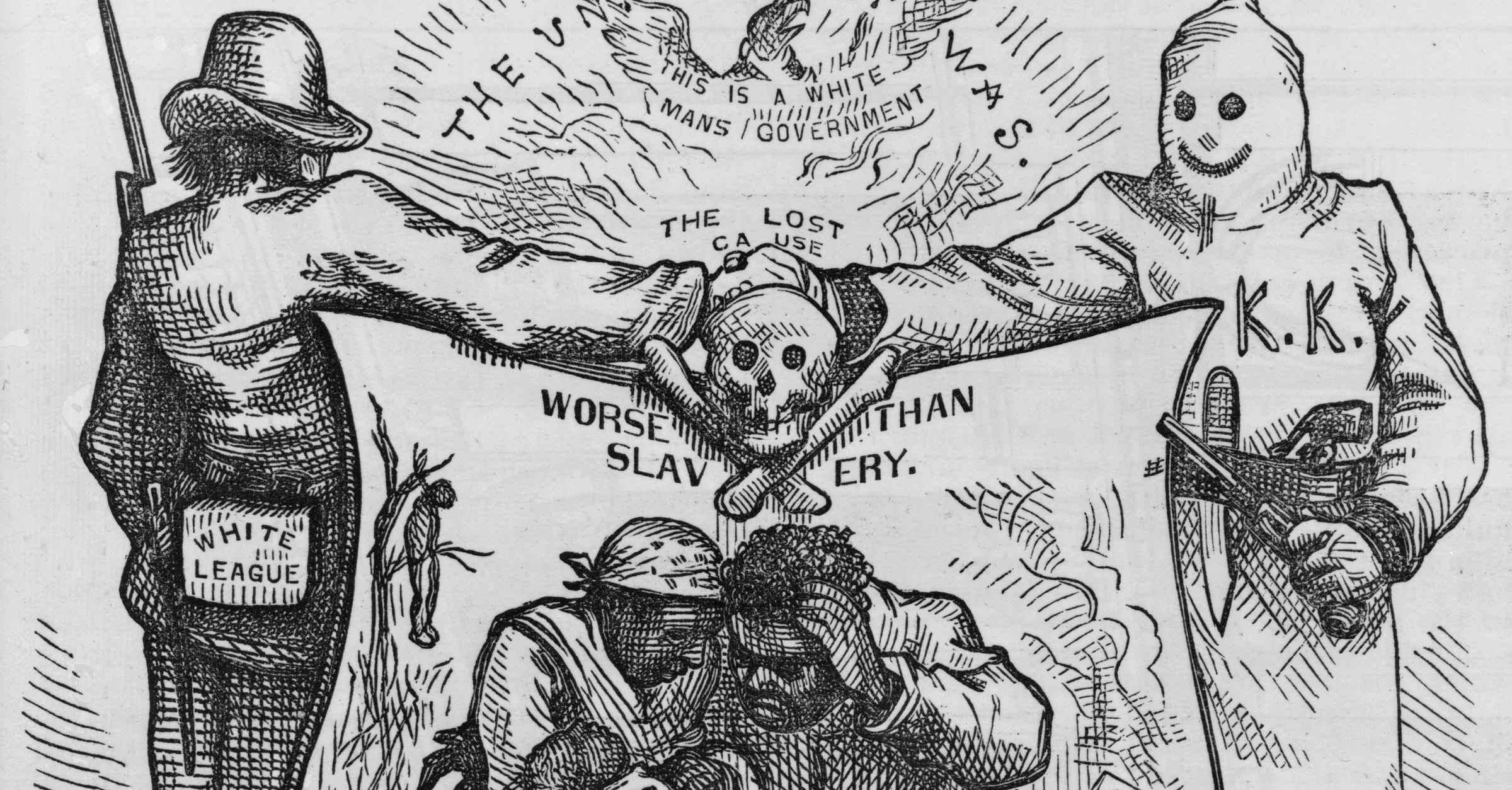
However, Lincoln’s assassination in April 1865 plunged the nation into renewed grief and political instability. His successor, Andrew Johnson, a former Tennessee senator and Union loyalist with deeply ingrained racist views, proved woefully unequal to the "herculean task" of Reconstruction. Johnson’s policies would, in effect, inadvertently provide the former Confederate states with the latitude they needed to enact the Black Codes.
Andrew Johnson’s Lenient Hand
When Johnson assumed the presidency, many abolitionists and freedpeople harbored cautious optimism, hoping he would enforce a robust Reconstruction and punish the architects of secession. Johnson himself had once declared, "Treason… must be made odious, and traitors must be punished and impoverished." However, his actions quickly belied his rhetoric. Rather than pursuing accountability or transformative change, Johnson prioritized a swift reconciliation with the South, often at the expense of protecting Black rights.
Despite maintaining a federal military presence in the former Confederate states, Johnson was remarkably lenient towards ex-Confederates. He offered widespread amnesty, requiring little more than an oath of loyalty to the Union. Crucially, he actively undermined the Freedmen’s Bureau, an essential federal agency established to assist newly emancipated individuals with education, labor contracts, and legal aid. He also vetoed a policy of land distribution that would have provided freedpeople with "40 acres and a mule," a measure that could have laid the foundation for Black economic independence.
Southern states keenly observed Johnson’s permissive approach. In August 1865, Mississippi Governor William Sharkey boldly established a state militia composed exclusively of ex-Confederates. This blatant defiance provoked outrage among Unionists, but Johnson sided with Mississippi, rationalizing that "the people must be trusted." That same month, Johnson further signaled his priorities by ordering the removal of all-Black regiments from the South, claiming their presence humiliated white Southerners and impeded "peaceful Reconstruction." Thousands of Black soldiers, who had fought valiantly for the Union, were subsequently mustered out of the army. Given Johnson’s consistent leniency and tacit approval of Southern self-determination, it is hardly surprising that Mississippi felt emboldened enough to enact the first Black Code in late 1865, setting a dangerous precedent for other former slave states.
Forging Chains Anew: The Black Codes in Practice
The Black Codes, as implemented across the South, represented a systematic effort to reconstruct the plantation economy and re-subjugate freedpeople, effectively stealing their labor and denying them the fruits of emancipation. These laws were meticulously crafted to appear legal while achieving the desired outcome of racial control and economic exploitation.
Stripping Economic Autonomy: Labor and Land Restrictions
Mississippi’s 1865 Black Code, ironically titled "An Act to Confer Civil Rights on Freedmen," served as a chilling blueprint. Far from conferring genuine civil rights, it stipulated that Black people could only rent land within city limits, an explicit measure designed to prevent them from earning a living through independent farming. This provision aimed to force them back onto white-owned plantations, where their labor was desperately needed.
Furthermore, the law mandated that all Black people provide proof of employment in January of each year. Those who failed to do so were arbitrarily labeled "vagrants," a designation that carried severe penalties. These "vagrants" would not only forfeit any wages they had earned that year but also face imprisonment, often leading to forced labor on chain gangs or being "hired out" to white planters to pay off their "fines." This system was a thinly veiled continuation of slavery, using the state’s legal authority to coerce labor.
Reasserting Social Hierarchy: Marriage, Movement, and Daily Life
Beyond economic control, the Black Codes were instrumental in reasserting a strict racial hierarchy and regulating nearly every aspect of Black life. Mississippi’s law, for instance, explicitly forbade interracial marriage between Black and white individuals, proclaiming that "any person who shall so intermarry, shall be deemed guilty of a felony" and would be "confined in the State penitentiary for life." These laws were not merely symbolic; they enforced white racial purity and social dominance.
Other codes included provisions for curfews, restrictions on public assembly, and prohibitions on owning firearms, all designed to limit Black autonomy and prevent any organized resistance. Black individuals were routinely excluded from juries and their testimony against white persons was often disallowed in court, effectively denying them equal protection under the law and leaving them vulnerable to abuse without recourse.
The Re-enslavement of Labor: Contracts and Apprenticeship
Mississippi’s model was quickly adopted and expanded upon by other states. South Carolina, in November 1865, enacted its "Domestic Relations of Persons of Color," which further cemented labor restrictions. This law imposed an annual tax, ranging from $10 to $100, on all Black people working jobs other than farmers or domestic servants. This disproportionately impacted skilled Black artisans and laborers, particularly in cities like Charleston, forcing them to scramble for funds or abandon their professions.
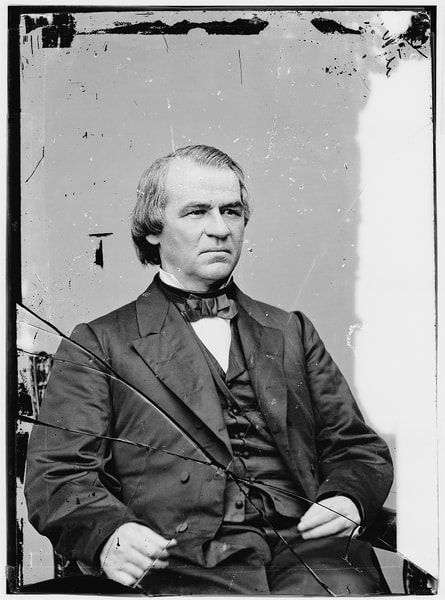
Across the South, these codes restricted Black workers primarily to agricultural and domestic jobs, ensuring a captive labor pool for plantations and households. Workdays were often defined as lasting from "sunrise to sunset," echoing the brutal schedules of slavery. White employers were explicitly granted the authority to physically punish their Black laborers; in Florida, an employer could even whip a Black worker for exhibiting "impudence and disrespect." The language used in many of these codes was tellingly regressive, frequently referring to white employers as "masters" of their Black laborers, a stark indication of the intent to recreate the master-slave dynamic.
Perhaps one of the most insidious aspects of the Black Codes was their weaponization of apprenticeship laws. Traditionally intended to provide children with vocational training, these laws were grotesquely twisted to extract even more free labor. State legislatures declared that, with few exceptions, freedpeople were deemed "incapable" of properly raising their own children. Under this pretext, thousands of Black children were forcibly removed from their parents and "apprenticed" to white planters, often their former enslavers, to work in the fields for years, sometimes even decades, without pay. This practice tore families apart and created a new generation of forced laborers.
By 1866, most of the former slave states – including Maryland, North Carolina, Florida, Alabama, Texas, Louisiana, Kentucky, and Tennessee – had established their own versions of the Black Codes. While specific provisions varied, the overarching goals were consistent: to limit Black freedom of movement, restrict occupational choices, enforce exploitative labor contracts, and maintain white supremacy. As US Supreme Court Justice Samuel Miller presciently observed, these laws "basically led to slavery under a different name." The rise of the Black Codes was also tragically accompanied by a marked surge in violence against freedpeople, manifesting in beatings, whippings, rapes, and murders, underscoring the climate of terror used to enforce this new system.
The North’s Fury and Radical Reconstruction’s Rise
The widespread implementation of the Black Codes did not go unnoticed or unchallenged. News of these egregious laws quickly reached the North, igniting a firestorm of outrage among Republicans, abolitionists, and many ordinary citizens who had fought and sacrificed to end slavery. It became glaringly apparent that the ex-Confederates were not only unrepentant but were actively attempting to resurrect the specter of slavery under a new legal framework.
Outrage and Political Polarization
Northern abolitionists and Radical Republicans expressed profound disbelief and anger at the audacity of the Southern states. One abolitionist leader articulated the sentiment, wondering how the South could possibly believe that "the triumphant North… would tolerate this new slave code," calling it "a little short of madness." For many, the Black Codes represented a betrayal of the Union’s victory and the sacrifices made during the war.
Southern leaders, however, protested their innocence, claiming they were not undermining Reconstruction but merely establishing order. They argued that freedmen would never work voluntarily and required coercion, a deeply ingrained racist belief. A newspaper sympathetic to the Southern cause openly stated that lawmakers were doing "what was best for the State and for society; ever remembering that it was a white man’s State [they were] legislating for," explicitly revealing the white supremacist ideology underpinning the codes. This stark ideological divide intensified political polarization at a critical juncture, as the nation geared up for the pivotal 1866 midterm elections, which would determine the future direction of Reconstruction.
A Spark Ignites: The Memphis and New Orleans Massacres
As President Johnson embarked on a divisive national tour, railing against his "radical" opponents in Congress, two horrific incidents of racial violence erupted in the South, further fueling Northern outrage and solidifying Republican resolve.
The first was the Memphis Riots, which unfolded from May 1-3, 1866. What began as an altercation between white police officers and recently discharged Black Union veterans quickly escalated into a full-blown massacre. White officers, backed by angry mobs of Irish immigrants, stormed through Black neighborhoods, burning homes, schools, and churches, and indiscriminately assaulting freedpeople. By the time federal troops intervened to restore order, 46 Black individuals had been brutally killed, and 75 injured, with extensive property damage.
Just weeks later, on July 30, 1866, the New Orleans massacre shocked the nation. A peaceful demonstration of freedpeople, advocating for suffrage and civil rights, was attacked by a white mob, many of whom were ex-Confederates and former police officers. The mob violently assaulted the demonstrators and then stormed the Mechanic’s Institute, where a constitutional convention was meeting. At least 34 Black individuals were killed and 119 wounded by the rioters, many shot or beaten while attempting to flee.
These massacres, coupled with the systemic oppression embodied by the Black Codes, served as irrefutable evidence to Congress that President Johnson’s lenient approach was a catastrophic failure. They demonstrated that, left unchecked, the South would indeed revert to its antebellum social and economic order, with African Americans facing a new form of servitude and terror.
Congressional Counter-Offensive: Legislation to Reclaim Rights
The growing national indignation and the undeniable evidence of Southern recalcitrance galvanized the Radical Republican-led Congress. Having already secured the passage of the Thirteenth Amendment abolishing slavery, they now moved decisively to counter the Black Codes and protect the rights of freedpeople.
On April 9, 1866, Congress passed the landmark Civil Rights Act of 1866. This revolutionary piece of legislation defined national citizenship for the first time, explicitly stating that all persons born in the United States (excluding Native Americans) were citizens, regardless of race. It guaranteed all citizens "full and equal benefit of all laws and proceedings for the security of person and property, as is enjoyed by white citizens," directly nullifying many of the discriminatory provisions of the Black Codes concerning property, contracts, and legal standing. President Johnson vetoed the bill, but Congress swiftly overrode his veto, demonstrating their unwavering commitment.
A few months later, to provide a more permanent constitutional basis for these protections, Congress drafted and passed the Fourteenth Amendment. Ratified in 1868, this amendment enshrined the principle of birthright citizenship, mandated "due process of law," and guaranteed "equal protection of the laws" to all citizens. These provisions directly aimed to prevent states from enacting laws like the Black Codes that denied fundamental rights based on race.
Buoyed by a sweeping victory in the 1866 midterm elections, which gave them a veto-proof majority, the Radical Republicans doubled down on their efforts. They passed the Reconstruction Acts of 1867, which ushered in a period known as "Radical Reconstruction." These acts divided the former Confederate states (except Tennessee, which had already ratified the 14th Amendment) into five military districts, implementing martial law. To be readmitted to the Union, these states were required to draft new state constitutions guaranteeing Black suffrage and ratify the Fourteenth Amendment. The Black Codes, therefore, directly spurred on the most progressive and vital era of Reconstruction, forcing the federal government to intervene decisively to protect civil rights.
A Persistent Shadow: The Legacy of the Black Codes
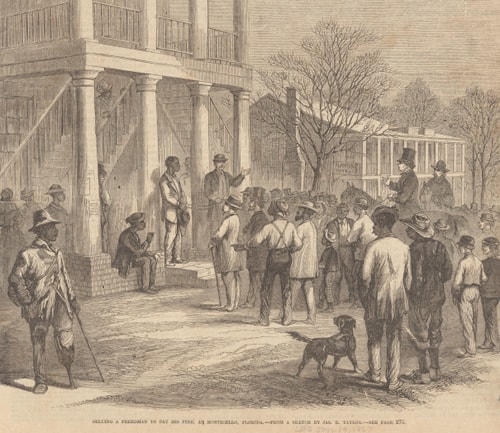
While the Civil Rights Act of 1866, the Fourteenth Amendment, and the subsequent Reconstruction Acts largely dismantled the legal framework of the Black Codes, their spirit and intent proved remarkably resilient. The enthusiasm for Reconstruction, driven by Northern idealism and Republican political power, began to wane over time. Economic depressions, political fatigue, and a resurgence of white supremacist violence (such as that perpetrated by the Ku Klux Klan) gradually eroded public and political will.
By 1877, with the Compromise of 1877 leading to the withdrawal of federal troops from the South, Reconstruction effectively ended. Without federal oversight and protection, Southern states swiftly moved to re-establish white supremacy. They built upon the foundation laid by the Black Codes, evolving them into a comprehensive system of legalized racial discrimination known as Jim Crow laws.
Jim Crow laws, which dominated the South until the mid-20th century, enforced racial segregation in all public facilities, denied African Americans the right to vote through poll taxes, literacy tests, and grandfather clauses, and severely limited their economic and educational opportunities. While the explicit labor coercion of the Black Codes was replaced by sharecropping and debt peonage, the underlying goal remained the same: to maintain a subservient Black labor force and a rigid racial hierarchy. The systemic inequality, economic disenfranchisement, and social injustice that plagued African American communities for generations can be directly traced back to the blueprint established by the Black Codes.
The struggle for civil rights in the 20th century, culminating in the Civil Rights Movement, was a direct fight against the enduring legacy of these discriminatory laws. The Black Codes stand as a stark and sobering reminder of the fragility of freedom and the persistent challenges inherent in achieving true equality. They underscore how legal systems can be perverted to maintain oppression, and how the fight for justice is often a long and arduous battle against deeply entrenched historical forces. Their history is not merely a chapter in the past but a foundational element in understanding the ongoing struggle for racial justice in America.