The Gilded Cage of Silo 18: Analyzing the Status Quo and the Subjugated Rebellion in Season 3

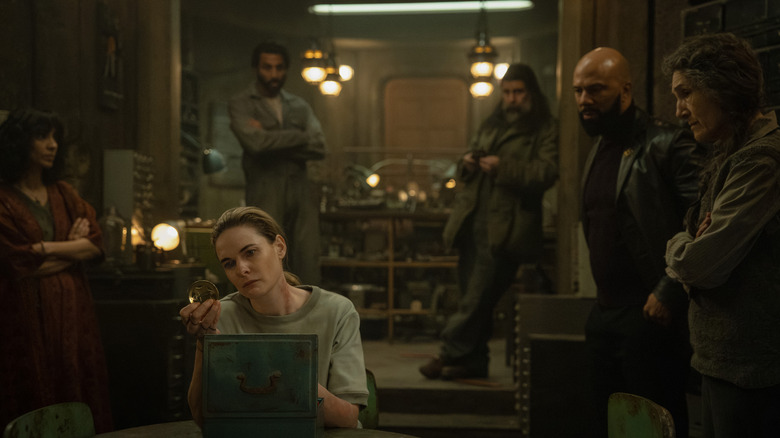
The return of Apple TV+’s critically acclaimed dystopian drama, Silo, has ushered in a jarring new reality for the inhabitants of the 144-level subterranean bunker. While the Season 2 finale left audiences on the edge of a literal and figurative precipice, the Season 3 premiere, titled "Who Are You?", opts for a psychological reset that is as unsettling as it is narratively daring. The central figure of the resistance, Juliette Nichols (portrayed with steely vulnerability by Rebecca Ferguson), has returned to her home silo, but not as the firebrand revolutionary many expected. Instead, she has been installed as a puppet Mayor, her memories stripped away by a clandestine pharmacological campaign.
This shift in power dynamics and the apparent dissolution of the rebellion marks a sophisticated evolution of the series’ themes: the manipulation of truth, the fragility of collective memory, and the lengths to which a technocratic elite will go to maintain "order."
Main Facts: The Erasure of a Revolutionary
The Season 3 premiere reveals a Silo 18 that is eerily tranquil—a stark contrast to the boiling point reached in the previous season. The primary developments are as follows:
- The Time Jump and Juliette’s New Role: The narrative resumes several months after the incinerator incident that closed Season 2. Juliette Nichols, having survived her harrowing journey to the outside and her return through the airlock, has been elected Mayor. However, this is not a victory for the people; it is a calculated move by the administration to pacify the masses using their most potent symbol of hope as a figurehead.
- The Memory Suppression: Juliette suffers from profound amnesia, unable to recall her life prior to her "accident." It is revealed that this is not a natural result of trauma but a deliberate act of sabotage. Camille (Alexandria Riley), the new head of IT, is systematically medicating Juliette with memory-wiping drugs.
- The Rise of the Algorithm: With Bernard (Tim Robbins) seemingly sidelined or removed, a new authority has taken center stage. The "Algorithm"—a disembodied, ominous voice—now dictates the survival protocols of the Silo. Camille acts as its primary agent, ensuring that the status quo remains undisturbed.
- The Subterranean Resistance: While the overt rebellion has been quelled, a group known as the "Outsiders" continues to operate in the shadows. Key figures like Patrick Kennedy (Rick Gomez) and Lukas Kyle (Avi Nash) remain at large, fanning the embers of Juliette’s original mission despite her current incapacity to lead them.
Chronology: From the Brink of Collapse to Forced Stability
To understand the current state of Silo 18, one must look at the rapid sequence of events that led to this fragile peace.
The Season 2 Catalyst
In the closing episodes of Season 2, Juliette Nichols discovered the existence of Silo 17 and its lone survivor, "Solo" (Jimmy). Through him, she learned of the "Safeguard" protocol—a failsafe designed by the creators of the silos to exterminate the entire population if a rebellion becomes unmanageable. Armed with this terrifying knowledge, Juliette staged a desperate return to Silo 18, hoping to warn her people that their desire to go "outside" was being used as a trap.

The Incinerator Incident
The Season 2 finale concluded with Juliette and Bernard trapped in an incinerator, a moment that appeared to be a terminal cliffhanger. The premiere of Season 3 clarifies that while they survived, the event served as the perfect cover for the administration to "reboot" the social structure of the silo.
The "Peace" of Season 3
The jump ahead by several months allows the show to present a Silo that has "moved on." The riots have stopped, the mechanical repairs are underway, and the presence of a "hero" in the Mayor’s office has given the populace a false sense of security. The premiere focuses on the "new normal," where Juliette’s compliance is the cornerstone of public order.
Supporting Data: The Mechanics of Control
The "Safeguard" protocol remains the most significant hidden variable in the Silo universe. As established in Season 2, the protocol is a scorched-earth policy. The administration’s current strategy—drugging Juliette—is a direct response to this threat. By preventing her from speaking about what she saw in Silo 17 and the reality of the outside world, Camille and the Algorithm believe they are "saving" the silo from the Safeguard.
The "Outsider" Movement
Data from the premiere suggests that the rebellion has moved from the streets to the infrastructure. The "Outsiders" use guerrilla tactics, such as hanging banners from the massive stairwell bridges and spreading "forbidden" information through the lower levels (the Down Deep). Their persistence indicates that while the head of the rebellion (Juliette) has been neutralized, the body of the movement remains reactive.
The Role of IT and Judicial
In previous seasons, the conflict was often between the Sheriff’s office and Judicial. In Season 3, the power has shifted almost entirely to IT. Camille’s control over the Silo’s surveillance and the medical supply chain makes her a more efficient—and perhaps more dangerous—antagonist than Bernard ever was. She represents the cold, logical application of the Algorithm’s mandates.

Official Responses: The Narrative Logic of Graham Yost
While we do not have a literal press release from the fictional Silo administration, the creative direction provided by showrunner Graham Yost and the writing team serves as the "official" justification for this radical shift in tone.
The decision to give Juliette amnesia is a classic trope repurposed for high-stakes science fiction. By stripping the protagonist of her agency, the writers have raised the stakes: the audience now knows more than the hero. This creates a pervasive sense of dramatic irony and dread. According to the narrative structure of the premiere, the "official response" of the Silo’s ruling entity (The Algorithm) is that peace is preferable to truth. In the Algorithm’s view, Juliette’s memories are a contagion that could lead to the total extinction of the human race. Therefore, her "treatment" is framed not as a punishment, but as a necessary administrative sacrifice.
Implications: The Fragility of a Constructed Reality
The implications of the Season 3 premiere are profound, touching on the nature of identity and the ethics of survival.
The Psychological Toll on Juliette
Juliette Nichols has always been defined by her drive to fix things—to find the truth behind the machine. By placing her in a "haze," the show explores what happens to a person when their core identity is suppressed. The flashes of memory she experiences (prompted by a cryptic note urging her to find the "truth") suggest that the human spirit—and the specific tenacity of Juliette Nichols—cannot be entirely erased by chemicals. This sets up a season-long arc of rediscovery that will likely be more internal than external.
The Moral Dilemma of the Rebellion
The "Outsiders" are fighting for a leader who no longer recognizes them. This raises a difficult question: Is a rebellion valid if its symbol has been compromised? The fugitives Lukas Kyle and Patrick Kennedy are now the true keepers of the flame, but without the "Mayor’s" support, any move they make will be seen as an act of domestic terrorism rather than a liberation movement.
The Existential Threat
The overarching threat remains the "Safeguard." Every moment Juliette spends in a drug-induced stupor is a moment the Silo moves closer to a potential catastrophic event. If the "Outsiders" push too hard, they might trigger the very extermination Juliette returned to prevent. Conversely, if they do nothing, they remain slaves to a lie.
Conclusion
"Silo" Season 3 has successfully subverted expectations by replacing a physical war with a psychological one. The rebellion isn’t dead; it’s muzzled, gaslit, and hidden in the shadows of the Down Deep. As Juliette begins to piece together the fragments of her past, the tension between the "peace" of the Algorithm and the "chaos" of the truth will inevitably lead to a collision. For the inhabitants of Silo 18, the most dangerous thing in the world isn’t the toxic air outside—it’s the memory of the woman who walked through it and survived.
New episodes of Silo continue to stream on Apple TV+ every Friday, promising a slow-burn descent into the heart of the bunker’s darkest secrets.