The Radiance of Renewal: Guimi You’s Dreamlike Landscapes and the Art of Beginning Again
In the contemporary art world, where bold provocations and digital sharpness often dominate the conversation, the oil paintings of Seoul-based artist Guimi You offer a striking counter-narrative of quietude and introspection. Her latest body of work, currently showcased in the solo exhibition When the Sun Shines Again at Lehmann Maupin in New York City, serves as a profound meditation on the passage of time, the fragility of memory, and the resilient spirit required to rediscover one’s creative voice. Through a synthesis of East Asian pictorial traditions and Western artistic lineages, You creates canvases that are not merely depictions of scenes, but atmospheric portals into the human psyche.
Main Facts: The Essence of ‘When the Sun Shines Again’
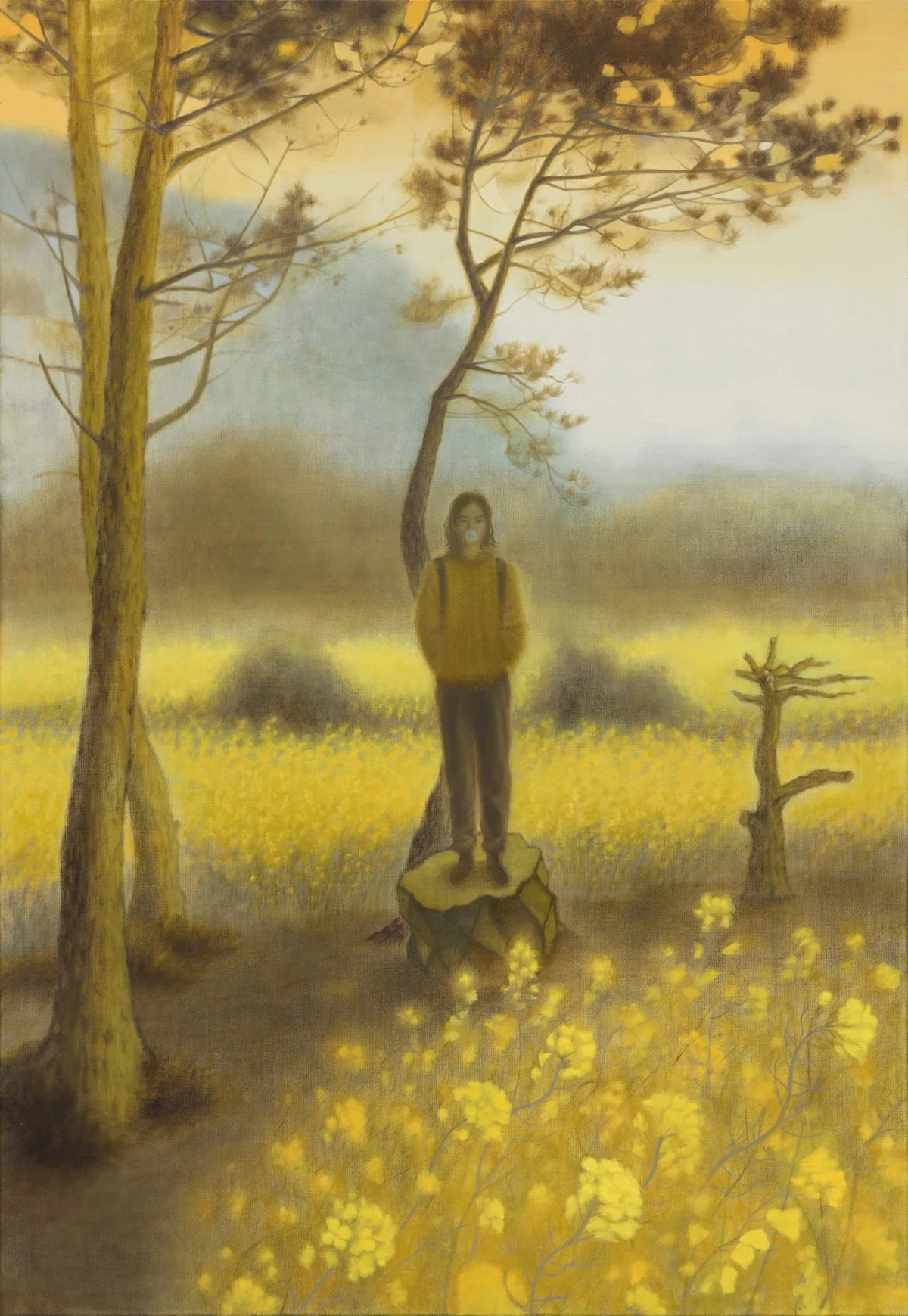
Guimi You’s work is characterized by a distinctive "haze"—a visual quality that suggests the fuzziness of a half-remembered dream or the atmospheric softening of a humid afternoon. This aesthetic choice is foundational to her exploration of how individuals gain perspective as they navigate the complexities of life. The exhibition at Lehmann Maupin, which runs through August 14, centers on the theme of "beginning again," specifically paying tribute to those who return to their passions after periods of absence or hardship.
The primary medium for this collection is oil on linen, a choice that allows for the "atmospheric transparency" that has become You’s signature. The works are populated by anonymous protagonists—figures whose faces are often obscured, shadowed, or turned away from the viewer. This anonymity serves a dual purpose: it emphasizes the introspective nature of the characters and allows the audience to project their own experiences and identities onto the canvas.

Key paintings in the exhibition, such as Spring Walk, Painting, Again, and The Shape of Silence, illustrate the artist’s fascination with the mundane yet transformative moments of daily life. Whether it is a woman walking her dog by a stream or a potter focused on the spinning wheel, You elevates these acts to the level of ritual. The recurring motif of sunlight acts as a narrative thread throughout the gallery, symbolizing clarity, renewal, and the hope that inevitably follows a period of darkness or stagnation.
Chronology: The Evolution of a Vision
The journey toward When the Sun Shines Again is rooted in Guimi You’s long-standing interest in the intersection of personal experience and landscape. Based in Seoul, You has spent years refining a style that bridges the gap between the traditions of her heritage and the global influences of contemporary art.
The Formative Years and Cultural Synthesis
Earlier in her career, You’re work began to explore the "still life" and "landscape" genres, but not in their traditional, static forms. Instead, she looked toward the "evocative" nature of East Asian painting, where the goal is often to capture the spirit or essence of a subject rather than a literal representation. By integrating this with the emotional intensity of Western Romanticism and the logic-defying compositions of Surrealism, she developed a unique visual language.

The Conceptualization of the New York Solo
The current body of work was conceived during a period of reflection on the act of "returning." The gallery notes that the exhibition was specifically designed as a tribute to those who have found the courage to restart their creative journeys. This theme is particularly resonant in a post-global-upheaval context, where many individuals have had to reevaluate their needs, desires, and career paths.
Exhibition Timeline
- Production (2025–2026): The majority of the works featured, including large-scale pieces like Pause and Deep in the Yellow, were completed in this timeframe, showing a maturation of her use of light and shadow.
- Opening at Lehmann Maupin: The exhibition debuted in New York City, marking a significant milestone in You’s international career.
- Closing (August 14): The exhibition concludes its run, having served as a summer highlight for the New York art scene.
Supporting Data: Artistic Technique and Visual Analysis
To understand the impact of Guimi You’s work, one must look closely at the technical execution of her oil compositions. Her use of color and light is not merely decorative; it is structural.
Color Theory and Shadow
In Spring Walk (2026), You utilizes a sophisticated palette where cerulean shadows are used to ground the composition, providing a cool contrast to the vibrant magenta jacket of the protagonist. This use of complementary colors creates a visual vibration that mimics the sensory experience of a crisp spring day. In Deep in the Yellow (2025), the artist pushes this further, immersing the entire canvas in amber and ochre tones that evoke the "golden hour," that fleeting moment of perfect light before sunset.

Composition and Portals
A recurring element in You’s work is the use of architectural "portals"—doorways, windows, and frames within frames. In Painting, Again (2026), the protagonist sits at an easel positioned in an open doorway. This choice suggests a transition between the internal world of the studio and the external world of nature. It reinforces the theme of "rediscovery," placing the artist at the threshold of a new beginning.
Dimensionality and Scale
The physical presence of the works is also significant. Many of the pieces, such as The Shape of Silence, are substantial in size (often exceeding 80 inches in height or width). This scale allows the viewer to feel physically present within the "dreamy" environments You creates. The texture of the linen, visible beneath the layers of oil, adds a tactile quality that grounds the ethereal subjects in reality.
| Painting Title | Year | Dimensions (Inches) | Primary Theme |
|---|---|---|---|
| Spring Walk | 2026 | 65 x 81 7/8 | Movement and companionship |
| Painting, Again | 2026 | 65 x 81 7/8 | Creative renewal |
| Pause | 2025 | 65 x 80 | Stillness and domesticity |
| The Shape of Silence | 2026 | 81 7/8 x 65 | Focus and craftsmanship |
| Golden | 2026 | 74 x 59 7/8 | Spiritual or nostalgic reflection |
Official Responses: Gallery Perspectives and Critical Reception
The reception of When the Sun Shines Again has highlighted You’s ability to tap into a universal sense of "wistfulness." Lehmann Maupin, the representing gallery, has been vocal about the importance of You’s synthesis of traditions.

The Gallery’s Statement
According to the official gallery description, You’s approach "synthesizes East Asian pictorial traditions of evocation and atmospheric transparency with Western lineages such as Romanticism and Surrealism." The gallery emphasizes that You does not view landscape as an "escapist subject." Instead, it is a "space for reflecting on memory, subjectivity, and how we situate ourselves within the world."
Critical Interpretation
Art critics have noted the "somberness tinged with hope" that pervades the collection. There is a consensus that You’s work captures the "courage required to start anew." By depicting figures lost in thought or concentrated on creative tasks, she validates the slow, often solitary process of self-reinvention. The "shadowy" faces of her subjects have been interpreted as a deliberate move to universalize the experience of introspection, making the work accessible to a wide demographic of viewers who find themselves in similar states of transition.
Implications: The Role of Landscape in the Modern Context
Guimi You’s exhibition carries implications that extend beyond the walls of the gallery. Her work challenges the traditional role of landscape painting in the 21st century.

Landscape as Psychological Mirror
In a world increasingly dominated by digital imagery and rapid-fire information, You’s paintings advocate for a "slower" way of seeing. By positioning landscape as a mirror for the internal state, she suggests that our relationship with the environment is deeply tied to our mental well-being. The "quietude" of her gardens and meadows offers a reprieve, but also a challenge to look inward.
The Universal Subject
The use of anonymous protagonists reflects a broader trend in contemporary art toward subjectivity. In You’s hands, the "secondary character" status of the figures allows the environment—the light, the objects, the atmosphere—to become the primary narrator. This shift suggests that our surroundings are just as much a part of our identity as our physical features.
A Tribute to Resilience
Perhaps the most significant implication of When the Sun Shines Again is its validation of the "hiatus." In a society that often prioritizes constant productivity, You’s celebration of those who "return to creating after time away" is a powerful statement. It suggests that the time spent away from a craft—spent in reflection, in grief, or in simple "pausing"—is not lost time, but rather the necessary shadow that gives the subsequent "sunlight" its brilliance.

As the exhibition draws to a close this August, the legacy of Guimi You’s New York solo debut remains. Her canvases serve as a reminder that while memories may be fuzzy and the future hazy, there is an enduring clarity to be found in the act of putting brush to canvas, or hand to clay, and beginning—once again—under the light of a new sun.