The Architect of the Unseen: Alfred De Angelo and the Evolution of Modern Surrealism

Main Facts: The Visionary Behind the Canvas
In the contemporary art landscape, where the digital and the physical increasingly blur, the work of Alfred De Angelo stands as a testament to the enduring power of the painted image. A master of the surrealist form, De Angelo has carved out a niche that is as intellectually rigorous as it is visually arresting. His work does not merely exist on a wall; it functions as a "doorway," a portal through which the viewer is invited to abandon the mundane and enter a "sensual world of provocative beauty."
De Angelo’s repertoire is characterized by a "remarkable fluency and expertise," a technical prowess that grounds his more abstract and bewildering concepts in a tangible, almost tactile reality. While many modern artists lean into the chaotic or the grotesque to achieve a surreal effect, De Angelo maintains a commitment to "beauty"—albeit a beauty that is provocative and often unsettling. His paintings are designed to "lure the viewer out of their well-worn patterns of thought," forcing a confrontation with the limits of human understanding.
Educationally, De Angelo is a product of some of the most prestigious institutions in the United States, holding a Bachelor of Fine Arts (BFA) from the Massachusetts College of Art and a Master of Fine Arts (MFA) from the Rhode Island School of Design (RISD). This academic pedigree is evident in the structural integrity of his compositions and his sophisticated handling of light and shadow, which serve to heighten the "essential mystery of existence" that he seeks to embody.
Chronology: From Academic Rigor to Personal Mastery
The trajectory of Alfred De Angelo’s career is one defined by the synthesis of classical training and the pursuit of a singular, subjective voice. To understand the depth of his current work, one must look at the foundations laid during his formative years in New England’s elite art circles.
The MassArt Foundation (BFA)
De Angelo’s journey began at the Massachusetts College of Art (MassArt) in Boston. As the only publicly funded independent art school in the United States, MassArt has a long-standing reputation for fostering social consciousness and technical experimentation. Here, De Angelo would have been immersed in a culture that demanded both a mastery of traditional media and a willingness to challenge the status quo. It was likely during this period that his "private vocabulary of images" began to take shape, influenced by the historical weight of Boston’s art scene and the burgeoning postmodern movements of the time.

The RISD Refinement (MFA)
Following his undergraduate success, De Angelo moved to the Rhode Island School of Design (RISD) for his Master of Fine Arts. RISD is globally recognized as a premier institution for fine arts, often ranked at the pinnacle of its field. The MFA program at RISD is notoriously intensive, focusing on the "why" as much as the "how." For De Angelo, this period represented a deepening of his philosophical inquiries. It was here that his work moved beyond mere representation and into the realm of the metaphysical. The "fluency" noted by critics today is a direct result of this high-level academic scrutiny, where every brushstroke is expected to carry the weight of an idea.
The Emergence of the "Artist-Painter"
In the years following his formal education, De Angelo has transitioned from a student of the craft to a practitioner of "essential mystery." Establishing his digital presence at artistpainter.ws, he has curated a body of work that reflects a mature artist in full command of his faculties. His career has not been a search for a style, but rather a constant development of a "private vocabulary" used to translate localized, subjective experiences into a universal visual language.
Supporting Data: The Mechanics of Provocative Beauty
To dissect the impact of De Angelo’s work, one must look at the specific elements that comprise his "sensual world." His work operates on several layers—technical, psychological, and philosophical.
Technical Fluency
De Angelo’s technique is often described as "fluent." In the context of surrealism, this means the ability to render the impossible with the conviction of the real. His use of light often mimics the Dutch Masters or the chiaroscuro of the Renaissance, providing a sense of gravity to figures and objects that defy the laws of physics. This technical "expertise" is what prevents his work from being dismissed as mere fantasy; instead, it demands to be treated as a documented reality from an alternate dimension.
The Private Vocabulary
A central pillar of De Angelo’s philosophy is the creation of a "private vocabulary of images." In art theory, this refers to a recurring set of symbols and motifs that have specific meanings to the artist but remain open to interpretation by the viewer. This vocabulary allows De Angelo to express "localized and subjective" experiences—the small, often ignored impressions of daily life—and elevate them to a "personal scale" that resonates with others.

The Psychology of Confusion and Delight
De Angelo’s stated goal is to let viewers "press against the limits of their understanding." This is a psychological tactic known in aesthetics as "the sublime"—the feeling of being overwhelmed by something that is simultaneously beautiful and terrifying or confusing. By giving the viewer "permission to be amazed—and confused—and delighted," De Angelo bypasses the analytical brain and speaks directly to the subconscious.
Official Responses: Critiques and Philosophical Context
The art world has long grappled with the definition of Surrealism in the 21st century. While the movement was founded on the political and psychoanalytic theories of André Breton and Sigmund Freud, contemporary practitioners like De Angelo have shifted the focus toward a more personal, "localized" exploration.
The "Doorway" Metaphor
Critics have frequently pointed to De Angelo’s paintings as "doorways." This metaphor is significant because a doorway implies a transition between two states. In De Angelo’s case, the transition is from the "outward appearance" of the world to its "essential mystery." This aligns his work with the philosophical tradition of Phenomenology—the study of structures of consciousness as experienced from the first-person point of view.
A Counterpoint to Hyper-Realism
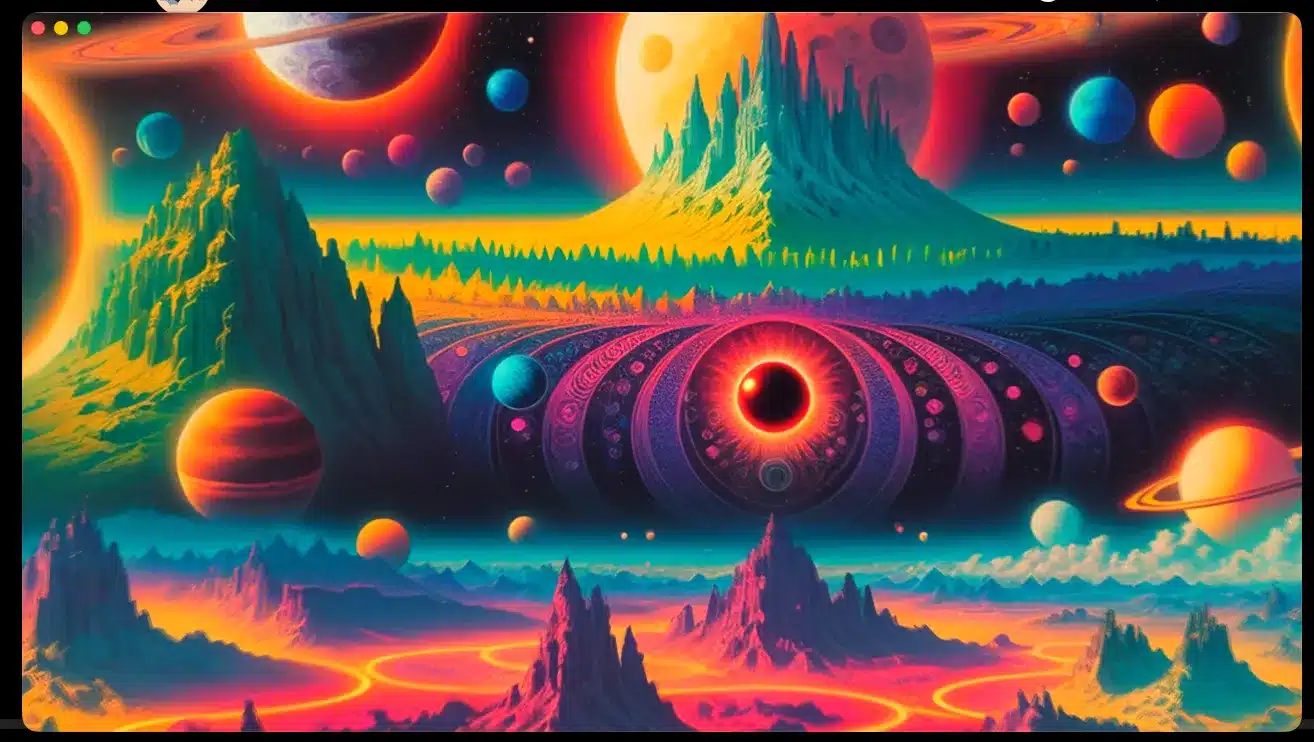
In an era dominated by AI-generated art and hyper-realistic digital renders (as seen in related contemporary trends like Infinidream.ai or the work of Jacob Holster), De Angelo’s work provides a necessary human counterpoint. While AI can simulate surrealism, it lacks the "subjective experience" that De Angelo cites as his primary inspiration. His work is inherently "human terrain," a phrase used by contemporaries to describe art that is rooted in the lived experience rather than algorithmic patterns.
The Artist’s Statement as a Manifesto
De Angelo’s own words serve as the most authoritative guide to his work. He claims to look "through" outward appearances. This suggests a form of "Visual Platonism," where the physical objects we see are merely shadows of a deeper, more "essential" reality. By attempting to "embody" this mystery, De Angelo positions himself not just as a painter, but as a modern mystic using oil and canvas as his tools of divination.
Implications: The Future of the Surrealist Tradition
The work of Alfred De Angelo has significant implications for the future of fine arts and the way we consume visual culture.
The Persistence of Traditional Media
Despite the rise of digital tools, De Angelo’s success proves that the traditional BFA/MFA path and the mastery of physical painting still hold immense value. The "sensual world" he creates is one that benefits from the texture and depth of physical media, providing a "tactile" surrealism that digital screens often struggle to replicate.
Surrealism as a Tool for Mental Flexibility
In a world characterized by "well-worn patterns of thought" and echo chambers, De Angelo’s work serves a social function. By forcing viewers to be "confused" and "amazed," his art encourages cognitive flexibility. It reminds the audience that the world is not always as it seems and that mystery is a vital component of a healthy psyche.
Defining the "Essential Mystery"
As society moves toward a more data-driven, explained existence, the "essential mystery of existence" becomes a rarer commodity. De Angelo’s commitment to this mystery ensures that art remains a space for the unexplained. His "private vocabulary" is a call to action for other artists to look inward rather than outward, suggesting that the most compelling visual worlds are those found within the depths of the individual’s subjective experience.
In conclusion, Alfred De Angelo is more than a surrealist; he is a cartographer of the subconscious. Through his "remarkable fluency" and a deep academic foundation, he continues to push the boundaries of what the canvas can communicate. For those willing to step through his "doorways," the reward is a profound re-engagement with the beauty, confusion, and mystery of the human condition.