The Resurrection of the Guardian: Sungho Bae’s Uncanny Alchemy of Discarded Memory
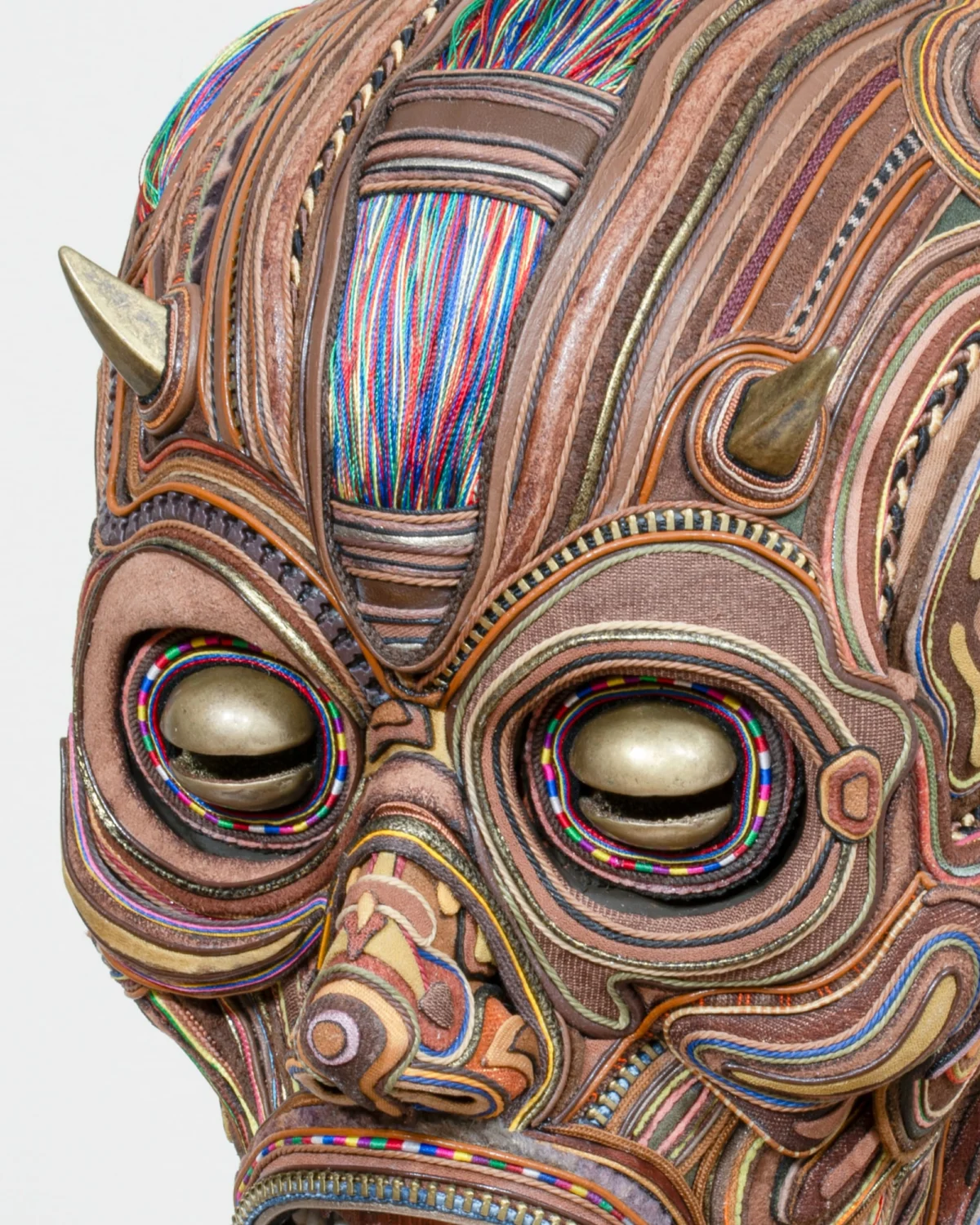
CHICAGO — In the quiet corners of waste-disposal sites and the dusty shelves of thrift shops, Sungho Bae finds the remnants of childhood security. To a casual observer, these are merely "trash"—de-stuffed bears, matted synthetic fur, and plastic limbs. But for the Seoul-born, Chicago-based artist, these objects are vessels of residual emotion and abandoned "power." In his latest exhibition, Apotropaia, currently on view at the 4th Ward Project Space, Bae deconstructs these relics of comfort to create something far more primal and unsettling: sculptures that resemble flayed muscle, exposed organs, and mystical talismans.

By reconfiguring the soft materials of our youth into the visceral language of anatomy, Bae explores the thin line between the protective and the grotesque, the living and the dead.
Main Facts: The Concept and Construction of Apotropaia
The exhibition Apotropaia derives its name from the ancient Greek term apotropaios, meaning "to turn away." Historically, apotropaic magic refers to symbols, amulets, and rituals designed to ward off evil influences or "the evil eye." Bae’s work functions as a contemporary manifestation of this ancient impulse, utilizing the very objects we once trusted to protect us from "monsters under the bed" to create new, modern idols.

Bae’s process is a meticulous form of "textile taxidermy." He gathers discarded plush toys—often those that have reached the end of their lifecycle in the consumer economy—and subjects them to a radical transformation. He skins them, deconstructs their stuffing, and reassembles the vibrant, synthetic fabrics atop figurative armatures. The resulting works are not recognizable as toys; instead, they appear as "fleshy patchworks." The bright pinks, deep reds, and soft textures of the original toys are repurposed to mimic the appearance of biological tissue, sinew, and exposed viscera.
The exhibition, which runs through September 6 at the 4th Ward Project Space, features a variety of forms, including free-standing busts and wall-mounted reliefs. These pieces are further enriched with "apotropaic materials," including used shamanic bells, leather waste, decommissioned ritual objects, and taxidermy glass eyes, creating a bridge between the domestic sphere of a child’s bedroom and the sacred space of a shamanic ritual.

Chronology: From Childhood Comfort to Artistic Deconstruction
The roots of Bae’s practice can be traced back to the universal human experience of "transitional objects"—the blankets or stuffed animals that provide psychological security during early development. In the cultural context of his upbringing in Seoul and his subsequent move to Chicago, Bae began to observe the lifecycle of these objects in a capitalist society.
The Lifecycle of the Object:

- Creation and Acquisition: The toy is manufactured as a consumer good, designed for comfort and aesthetic appeal.
- The Infusion of Meaning: A child ascribes a soul or "power" to the object, often encouraged by parents (as seen in the narrative of the "guardian bear" mentioned in the artist’s background).
- Discard and Decay: As the child matures, the object loses its utility. It is moved to storage, then to a thrift store, and finally to a waste-disposal site, where its physical form begins to break down.
- The Artistic Resurrection: Bae intervenes at the final stage. He salvages the material, stripping it of its original identity to reveal the "spirit" of the material itself.
Over the last several years, Bae has refined this technique, moving from more recognizable assemblages to the highly abstract, "organ-like" sculptures seen in Apotropaia. His move to Chicago facilitated a deeper exploration of urban waste and the "discarded," allowing him to source materials that carry a specific weight of abandonment. By 2026, his work had evolved into the sophisticated synthesis of Korean shamanic tradition and Western sculptural abstraction currently on display.
Supporting Data: A Material and Thematic Analysis
The power of Bae’s work lies in the jarring contrast between his materials and his subject matter. To understand the depth of Apotropaia, one must look at the specific data points of his most significant works.

The "Gut" Series: Ritual in Relief
The wall-mounted works, titled Gut I, Gut II, and Gut III, reference the Korean word Gut (pronounced "goot"), which denotes a shamanistic rite involving offerings and sacrifices to deities or ancestors.
- Dimensions and Materials: Gut I (2026) measures 20.7 × 16.9 × 2.4 inches. Its composition includes salvaged stuffed animals, used shamanic bells, discarded clothing, leather waste, taxidermy glass eyes, and terracotta clay.
- Visual Impact: These pieces are amorphous and "gory" in appearance, yet soft to the touch. The inclusion of shamanic bells suggests that the sculptures are not merely static art but "activated" objects capable of sound and spiritual resonance.
"Dansu": The Tension of the Final Move
One of the most striking pieces in the collection is Dansu (2026), a bust mounted on an aged solid-wood Baduk (Go) board.

- Symbolism: The title Dansu refers to a specific state in the game of Go where a player’s stone is one move away from being captured. It represents a moment of extreme tension—the threshold between survival and defeat.
- Anatomy of the Work: The figure features a cross-cut neck, giving it the appearance of a medical specimen or a sacrificial offering. Its hair is made of bird feathers, and its gaze is fixed through vacant taxidermy glass eyes. The use of an "aged" game board provides a sense of history and gravitas, grounding the "synthetic flesh" in a traditional, weathered reality.
"Head of an Invoker": The Modern Amulet
The Head of an Invoker (2026) stands at 21.7 inches tall. It serves as a centerpiece for the exhibition’s theme of "invoking" protection.
- Composition: This work utilizes walnut wood as a base, providing a stark contrast to the chaotic patchwork of epoxy clay and leather waste that forms the "musculature" of the head. It acts as a visual culmination of the artist’s intent: to create a "guardian" that looks like it has been turned inside out, revealing the raw, pulsing energy of its protective power.
Official Responses and Critical Interpretations
Curators and art critics have noted that Bae’s work occupies a unique space in the contemporary "uncanny." While many artists work with recycled materials, Bae’s specific focus on the emotional history of those materials sets him apart.

The 4th Ward Project Space has described the exhibition as an exploration of "how humankind has long found meaning in objects, rituals, and materials." The gallery notes that by using "decommissioned ritual objects" alongside "waste-disposal sites" materials, Bae effectively levels the playing field between the sacred and the profane.
Critics have pointed out the "Freudian Uncanny" present in the work—the idea of something being simultaneously familiar (the soft fur of a teddy bear) and alien (the shape of a human heart or lung). This cognitive dissonance forces the viewer to confront their own relationship with the objects they once loved. Why were these toys discarded? Bae’s work suggests that while the physical object may be thrown away, the "need" for protection and the "fear" that necessitated the toy in the first place remain a permanent part of the human psyche.

Implications: Waste, Spirit, and the Future of the Object
The implications of Sungho Bae’s work extend beyond the gallery walls, touching on environmental, psychological, and cultural themes.
1. The Ecology of the Soul:
In an era of "fast consumerism," where toys and household goods are discarded at an unprecedented rate, Bae’s work acts as a form of "spiritual recycling." He challenges the notion of "waste," suggesting that objects infused with human emotion never truly lose their value; they simply require a new form to express that energy.

2. The Preservation of Ritual:
By incorporating Korean shamanic elements (shamanic bells, Gut references) into a contemporary American art context, Bae preserves and recontextualizes traditional rituals. He suggests that the "magical thinking" of the ancient world is not dead but merely hidden within the mundane objects of our modern lives.
3. The Reimagined Guardian:
The exhibition asks a haunting question: How might the former significance of a cherished object be reshaped? In Bae’s hands, the answer is a "guardian" that no longer needs to be "cute" to be effective. By embracing the "fleshy" and the "visceral," Bae creates protectors that look like they have survived the very horrors they were designed to ward off.

As Apotropaia concludes its run this September, it leaves behind a profound meditation on the durability of memory. Sungho Bae has successfully turned the childhood toy inside out, revealing that underneath the synthetic fur and polyester stuffing, there lies a raw, enduring pulse of human hope and the eternal desire for safety in the dark.
Exhibition Details:
- Artist: Sungho Bae
- Apotropaia
- Location: 4th Ward Project Space, Chicago
- Dates: Through September 6, 2026
- Materials: Mixed media, salvaged textiles, shamanic artifacts, and organic clays.