Nergal: The Mesopotamian God of War, Death, and Unrelenting Destruction
In the vast pantheon of ancient Mesopotamian deities, few commanded as much fear and reverence as Nergal. Known also by the names Erra and Irra, this formidable god embodied the destructive forces of death, war, and pestilence, shaping the very understanding of suffering and chaos in the earliest civilizations. From his humble beginnings as a regional agricultural deity to his ascension as a universal force, Nergal’s narrative provides a profound insight into the human struggle to comprehend and reconcile with the darker aspects of existence.
Main Facts: A Deity Forged in Fire and Fury
Nergal, in his most recognized form, stands as the Mesopotamian god of death, war, and destruction. His epithets, such as "raging king," "furious king," "fighting cock," and "the burner," vividly illustrate his inherent nature. He was primarily associated with the city of Kutha, where his temple, E-meslam, earned him the additional designation Meslamtaea, meaning "He Who Comes Forth from Meslam." This initial connection, however, would evolve dramatically over millennia, transforming a localized spirit into a figure of cosmic significance.
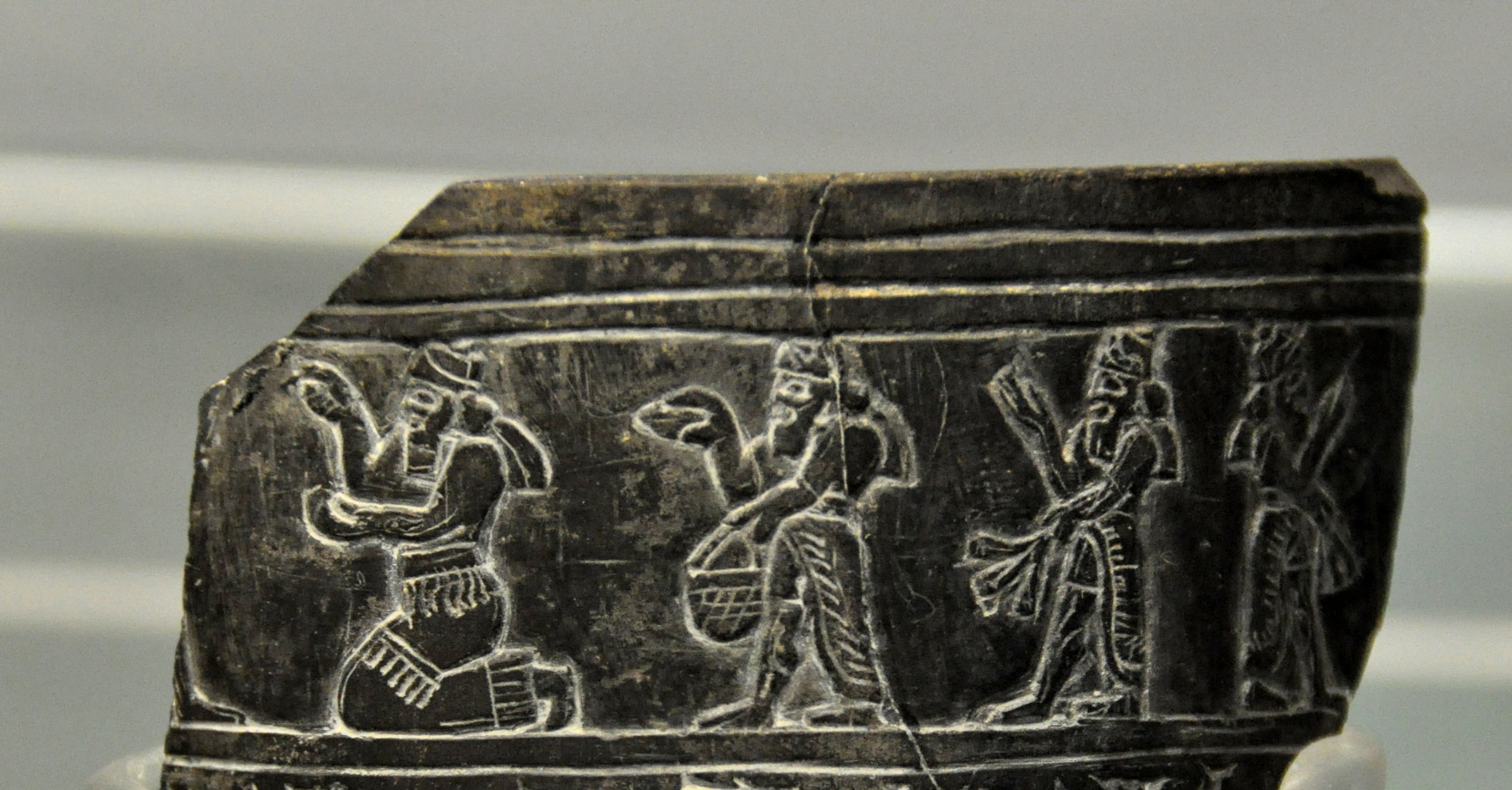
Iconographically, Nergal is depicted as a powerful, striding man adorned in long robes. His most striking feature is often his advancing foot, crushing a human figure, a stark visual representation of his destructive power. He brandishes a mace topped by a double lion’s head and carries a fearsome scimitar, weapons that further underscore his warlike aspect. Beyond his anthropomorphic representation, Nergal was also strongly associated with the lion and the bull, animals that in Mesopotamia symbolized immense natural and supernatural strength, further cementing his image as an untamed, potent force.
His divine lineage places him as the son of Enlil and Ninlil, two prominent deities in the Sumerian pantheon, though he is also occasionally referred to as the offspring of Belet-ili, another name for the mother goddess Nintud/Nintur/Ninhursag, the creator of humanity. While specific consorts are sometimes listed, his primary role transcended traditional familial bonds, focusing instead on his core symbolism: the raw, unbridled destructive force present in both the natural world and the very fabric of human nature. This singular focus on destruction, paradoxically, made him a crucial deity for understanding life itself.
Chronology: Evolution of a Destructive Power
The journey of Nergal from a localized deity to a universal arbiter of fate is a testament to the dynamic nature of ancient Mesopotamian religion.
Early Sumerian Roots (Early Dynastic I, c. 2900-2750 BCE)
Nergal’s earliest veneration began in the city of Kutha during the Sumerian Early Dynastic I period. Initially, he was likely an agricultural deity, his power tied to the life cycles of the land. However, even in this nascent stage, his association with death was palpable. He represented the high summer sun, whose relentless heat scorched the earth, rendering it barren, and the afternoon sun, whose intense blaze hindered crop production. This destructive aspect of the sun, vital yet perilous, was perceived as a manifestation of Meslamtaea’s intense fury. This early understanding laid the groundwork for his later transformation, linking him intrinsically with pestilence, famine, and ultimately, war and death.
Ur III Period (c. 2112-2004 BCE) and Beyond
By the Ur III period, Nergal’s character had solidified. He was no longer merely a regional agricultural god but had transformed into a universal deity associated explicitly with war, pestilence, and death. This evolution reflected a growing societal awareness of widespread calamities and the need for a divine explanation. His worship became more widespread, continuing robustly through the Neo-Assyrian Empire and possibly extending into the early Achaemenid Empire, showcasing his enduring significance across various Mesopotamian civilizations.
The Merging of Identities: Nergal and Erra
A fascinating aspect of Nergal’s history is his eventual conflation with another powerful deity, Erra (or Irra) of Babylon. Initially, these were distinct gods, each with their own cults and narratives. However, as scholar Jeremy Black notes, "The gods Nergal and Erra were originally separate deities, but later became so closely identified as to lose their independent characters." This syncretism was so complete that their names became interchangeable, and today, they are universally recognized as aspects of the same powerful deity. This merging likely occurred as cultic practices and theological understandings converged, reflecting a broader tendency in Mesopotamian religion to consolidate divine attributes.
Continued Veneration and the Cult of the Dead
Nergal’s primary cult center remained Kutha, a city that became synonymous with his potent influence. However, his worship radiated outwards, establishing temples and cultic sites throughout southern Mesopotamia. Cities such as Ur, Uruk, Lagash, Isin, Nippur, and Dilbat all paid homage to the fiery god. He was also honored in Babylon and adopted with fervor by the Assyrians, who, as a martial empire, naturally found resonance with a god of war and destruction.
Perhaps one of his most significant roles developed as he became closely associated with the underworld. This connection positioned him as a central deity in the "Cult of the Dead." Priests dedicated to Nergal would perform sacrifices and rituals, interceding with the god on behalf of souls in the underworld. This demonstrates a nuanced understanding of his power: while he brought death, he also held sway over the fate of the deceased, making him a crucial figure in funerary rites and the eschatological beliefs of the Mesopotamians.
Supporting Data: Iconography, Family, and Cross-Cultural Echoes
The richness of Nergal’s character is further illuminated by his visual representations, divine connections, and the striking parallels he shares with deities from other ancient cultures.
Visual Depictions and Symbolism
As previously mentioned, Nergal’s iconography is deliberately menacing. The striding pose, crushing a human figure, symbolizes his relentless advance and inevitable conquest. The mace with the double lion’s head and the scimitar are not mere weapons; they are extensions of his divine wrath. In Mesopotamian cosmology, the lion symbolized ferocious power, royalty, and untamed wildness, while the bull represented strength, fertility, and cosmic order. By associating Nergal with these potent animals, his worshippers underscored his overwhelming natural and supernatural might. His presence signaled not just destruction, but also a formidable, almost primal, authority.
Divine Lineage and Connections
While the original text leaves the list of his wives/consorts empty, it is common for major Mesopotamian deities to have several consorts reflecting different aspects of their power or regional cultic variations. His parentage from Enlil and Ninlil, key figures in the Sumerian pantheon, grants him a high status. Enlil, the "Lord Wind," was the god of air, wind, storm, and the executor of fate, while Ninlil was his consort. This lineage imbues Nergal with a powerful, if destructive, heritage. The alternative parentage by Belet-ili (Ninhursag), the mother goddess, could suggest a connection to primal creation and destruction, a more fundamental aspect of existence.
Epithets of Destruction
Nergal’s various epithets are not just titles; they are condensed descriptions of his essence. "Dunghill cock" might seem peculiar, but it evokes a fierce, aggressive, and territorial nature, often associated with challenges and battles. "Raging king," "furious king," and "fighting cock" clearly articulate his violent and uncontrollable temper. "The burner" directly links him to the scorching sun of his early agricultural days and, by extension, to the destructive fires of war and plague. These epithets collectively paint a picture of a god whose very being is defined by unrestrained force and an appetite for devastation.
Comparative Mythology: Universal Archetypes of Destruction
Nergal’s attributes find striking echoes in various other ancient mythologies, highlighting universal human experiences with violence and calamity. He is comparable to:
- Ninurta (Sumerian/Akkadian): A prominent god of war, hunting, and storms, Ninurta shared Nergal’s martial prowess and capacity for destruction, often depicted as a divine warrior.
- Aplu (Hurrian/Hittite): This Hurrian/Hittite god was explicitly associated with the plague, a devastating force of death that ravaged ancient societies. The connection is particularly poignant as Aplu/Nergal was held responsible for the plague that swept across the Near East, claiming the life of the great Hittite king Suppiluliuma I (1344-1322 BCE). This direct attribution of a historical catastrophe to a deity underscores his very real and terrifying presence in the lives of the people.
- Ares (Greek): The Greek god of war, Ares, personified the brutal, bloodthirsty, and chaotic aspects of battle, much like Nergal. Both were feared for their impulsiveness and destructive tendencies.
- Mars (Roman): While initially an agricultural god, Mars evolved into the Roman god of war, celebrated for his martial might and often invoked before battles. Like Nergal, he embodied the violent potential of the divine.
These comparisons reveal a shared human impulse to deify the forces of war, disease, and death, providing a framework for understanding and, perhaps, appeasing them.
Biblical Reference
Nergal’s influence extended even to the fringes of other religious traditions, notably appearing in the Bible. In II Kings 17:30, the text mentions that "the men of Cuthah made Nergal," referring to the Assyrian policy of resettling conquered peoples and their gods in new territories. This brief mention confirms the widespread recognition of Nergal, even by those outside the direct Mesopotamian cultural sphere, and highlights his enduring cult in his primary city.
Official Responses: Divine Justifications for Human Suffering
The core paradox of Mesopotamian theology revolved around the problem of suffering: how could benevolent gods allow such widespread misery? Nergal, in his destructive glory, provided a crucial "official response" to this perennial question.
Character and Purpose: The Embodiment of Chaos
Nergal mainly symbolizes the destructive force inherent in human nature and the natural world. He strides, mace and scimitar in hand, laying waste without apparent reason, remorse, or regret. Scholar Jeremy Black observes how Nergal destroys Babylon in one myth "apparently because destruction is simply in his nature, rather than to punish sin." This impulse, this inherent destructive drive, was not an isolated incident but a regular feature of his character. He was known to rampage at will, explaining his actions to other gods simply by citing his notoriously bad temper.
Scholar Yagmur Heffron elaborates on this: "Nergal represents a very particular aspect of death, one that is often and rightly interpreted as inflicted death, for Nergal is also the god of plague and pestilence as well as being closely associated with warfare… In his aspect of a war god, Nergal accompanies the king into battle, delivering death to the enemy. Death brought on by Nergal also had a supernatural dimension, disease often being attributed to demonic agency in Mesopotamia." This perspective framed suffering not as divine neglect, but as the deliberate, albeit capricious, action of a powerful deity or his demonic agents.
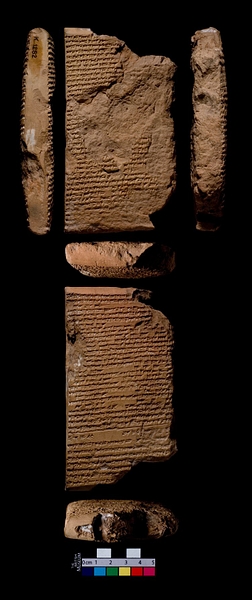
Theological Framework: Explaining the Unexplainable
The Mesopotamian worldview posited that the gods created humanity to be co-workers in maintaining universal order and holding chaos at bay. Plague, pestilence, famine, and war – all seemed to contradict the benevolent intentions of the principal deities and their cosmic plan. Gods like Nergal offered a theological explanation, making human suffering comprehensible within a divine framework.
While the supreme gods might harbor the best intentions for their creations, evil spirits, malevolent demons, or even a capricious deity like Nergal could interfere, visiting death and destruction upon communities. This concept allowed people to maintain faith in the overall goodness of the pantheon while acknowledging the brutal realities of their existence. The "Wrath of Erra" myth serves as a prime illustration of this, where Nergal’s unprovoked destruction of Babylon provides a narrative for seemingly senseless calamity.
The Wrath of Erra: A Case Study in Capricious Destruction
Dating to approximately 800 BCE, The Wrath of Erra is one of the most vivid narratives of Nergal’s destructive nature. In this myth, Nergal (referred to as Erra) is overcome by lethargy and boredom. His very weapons, gathering dust, begin to complain, stirring him from his inertia. Ignoring the prudent counsel of his vizier, Ishum, Erra decides to attack Babylon, a city under the direct protection of the mighty god Marduk, its patron deity.
Erra cunningly travels to Babylon under the guise of a friendly visit. Upon arrival, he feigns shock at Marduk’s supposedly shabby attire, suggesting that the great god should attend to his wardrobe. An embarrassed Marduk admits his neglect but claims to be too busy to address it. Erra, seizing the opportunity, offers to watch over the city while Marduk commissions new clothes. Gratefully, Marduk accepts the offer, unknowingly handing his city over to its imminent destroyer.
Once Marduk is safely absent, Erra unleashes his full wrath. The city becomes a charnel house: people are slaughtered in the streets, buildings crumble, and walls collapse. Stephen Bertman describes the scene: "Once again, Ishum counsels prudence, but to no avail. Young and old are put to death, fathers bury their sons, and the righteous perish together with the wicked." The carnage is indiscriminate, a pure expression of divine fury.
When Erra finally ceases his rampage, satisfied with the death toll, he offers a prophecy: a great leader will someday emerge to unify and protect the people, though clearly, that day was not the present one. Summoned before the other gods to account for his actions, Erra offers no apology or rational explanation. Bertman notes, "Now in the company of the other gods, Erra justifies his actions as simply an expression of the kind of god he is (‘When I get angry, I break things!’)." Ishum then offers a counter-prophecy, foretelling that a remnant will survive and eventually flourish anew, thanks to Erra’s eventual restraint. The poem concludes not with condemnation, but with a paean of praise for Erra, god of war.
This myth served a critical purpose for the Mesopotamians. As Black suggests, "The mythical narrative may mirror invasions of the country between the twelfth and ninth centuries BCE by tribal, nomadic peoples such as the Aramaeans or Suteans." Nergal, through this narrative, became the personified reason behind seemingly unreasonable and catastrophic events, allowing people to process and understand overwhelming suffering within a divine context. The gods themselves struggled to comprehend Nergal’s motives, reflecting the mortal struggle to grasp the arbitrary nature of disaster.
Implications: Control, Protection, and Lasting Legacy
Despite his destructive nature, Nergal’s role was not entirely one of unmitigated terror. His power was also a source of protection, and his narratives speak to attempts by other deities to contain his chaos, leaving a profound and lasting legacy.
The Marriage of Ereshkigal & Nergal: An Attempt at Containment
The myth of The Marriage of Ereshkigal and Nergal, also known simply as Ereshkigal and Nergal, dating to before the 15th century BCE, offers a divine solution to Nergal’s destructive potential. Copies found among the Amarna Letters in Egypt, at Sultantepe in Turkey, and a complete Neo-Babylonian version attest to its widespread importance.
The story highlights the cunning of Enki, the god of wisdom and humanity’s creator, who orchestrates events to mitigate Nergal’s impact by dispatching him to the underworld. The narrative begins with a grand banquet of the gods, which Ereshkigal, queen of the underworld, cannot attend, as she is bound to her realm. The gods, in turn, cannot descend. Enki resolves this by requesting Ereshkigal send a servant to collect her share of the feast. Her son, Namtar, uniquely able to traverse the realms, is sent.
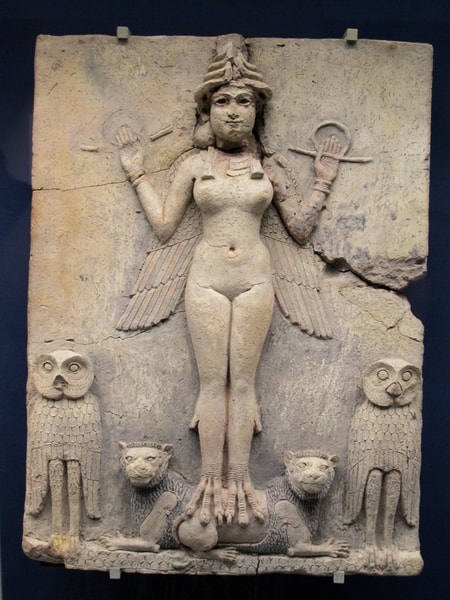
At the banquet, all the gods rise in respect for Ereshkigal’s emissary—all, that is, except Nergal. Insulted, Namtar reports this disrespect to his mother. Ereshkigal, enraged, demands that Nergal be sent to the underworld so she can personally execute him. Recognizing Ereshkigal’s divine right, Enki and the other gods reluctantly agree. However, Enki, foreseeing the outcome, provides Nergal with 14 demon escorts, two for each of the seven gates of the underworld.
Upon arrival, Nergal’s presence is announced. Ereshkigal orders him admitted, with each gate to be barred behind him, ensuring his entrapment. But as Nergal passes through each gate, he posts two demons to keep it open. Reaching the throne room, he overpowers Namtar and drags Ereshkigal to the floor, raising his axe to decapitate her. In a desperate plea, Ereshkigal offers to spare his life if he agrees to marry her and share her dominion over the underworld. Nergal consents, and the myth concludes with the two kissing, vowing eternal togetherness.
This myth, resonating on multiple levels, primarily serves to explain why Nergal cannot remain permanently in the underworld. Enki’s foresight in providing the demons ensures Nergal’s ability to leave for six months of the year, roaming the upper world. This seasonal movement provided a cosmological explanation for phenomena like seasonal warfare and disease outbreaks. More profoundly, it illustrated the goodwill of the other gods, particularly Enki, in their continuous efforts to contain the war god and protect humanity, even if his destructive essence could not be extinguished entirely.
Nergal as Protector and Destroyer: A Paradoxical Deity
Despite, or perhaps because of, his overwhelming destructive tendencies, Nergal was frequently invoked as a protector. Whether residing in the underworld with Ereshkigal or rampaging across the earth, he could be called upon to combat evil demons and malevolent spirits. He was particularly prominent in exorcisms and appears in numerous prayers and incantations.
In a Babylonian incantation, a priest invokes powerful deities for protection during a healing ritual: "I am the priest of Ea. I am the magician of Eridu. Shamash is before me, Sin is behind me. Nergal is at my right hand, Enurta is at my left hand. When I draw near the sick man, when I lay my hand on his head, may a kindly Spirit, a kindly Guardian, stand at my side!" All the invoked gods—Enki/Ea (wisdom), Utu-Shamash (sun), Nanna-Sin (moon), and Enurta/Ninurta (war/hunting)—are formidable, but Nergal’s placement "at my right hand" signifies his crucial and immediate protective role against illness, death, and malevolent entities. His power to destroy was precisely what made him an effective guardian against other destructive forces.
However, this protective aspect was always intertwined with his nature as a bringer of calamity. As Aplu, the Hittite god of plague, Nergal was frequently referenced towards the end of the reign of King Suppiluliuma I. The devastating plague that swept from Egypt through the Hittite lands, claiming the life of the great king, was attributed directly to Aplu/Nergal. In such instances, prayers for salvation might have gone unheeded, as one was praying to the very cause of the suffering. Nergal, in these scenarios, was seen as an unstoppable force, unlikely to cease his rampage until his destructive will was satisfied.
Enduring Influence: From Mesopotamia to Monotheism
Ultimately, Nergal was more often defined by his negative attributes. His inherent destructive nature, coupled with his association with the underworld and death, carved a lasting impression on later religious traditions. In the nascent religion of Christianity, his iconography and character were tragically (or intentionally) associated with the figure of the devil.
Parallels can be drawn with the Egyptian god Set, who embodied chaos, disorder, and the harsh desert, often depicted with red coloring. Nergal, with his fiery epithets and destructive power, shared these attributes of chaos, standing in opposition to the benevolent will of the heavens. These Mesopotamian archetypes of divine malevolence and destruction contributed to the evolving Judeo-Christian vision of God’s adversary, Satan, demonstrating the enduring and transformative power of ancient mythological figures on subsequent religious thought. Nergal’s legacy thus extends far beyond the sands of Mesopotamia, echoing in the very concepts of good and evil that continue to shape human understanding.