Scaling the Peak of Grief: The Complex Intersection of Art and Tragedy in ‘Everest: The Other Side’
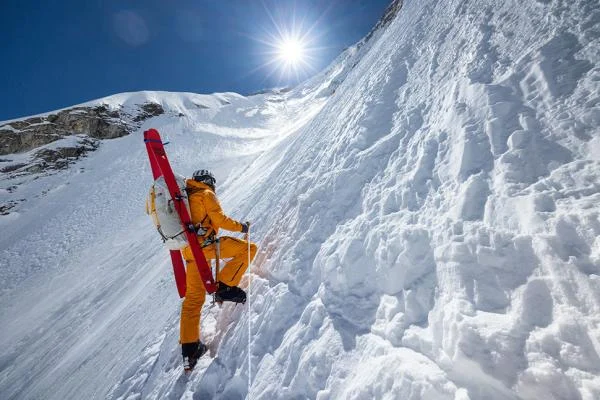
The documentary film world has long been fascinated by the intersection of extreme physical peril and internal psychological turmoil. At the Venice Film Festival, this fascination reached a new apex with the premiere of Everest: The Other Side. Directed by the Academy Award-winning duo Jimmy Chin and Elizabeth Chai Vasarhelyi, the film is a National Geographic production that chronicles Jim Morrison’s harrowing attempt to ski down the North Face of Mount Everest.
However, the narrative on screen is inextricably linked to the narrative off-screen. As the filmmakers captured Morrison’s battle with the world’s highest peak and his own profound grief, their own high-profile marriage was reportedly dissolving behind the scenes. The result is a film that serves as both a technical masterpiece of alpine cinematography and a somber meditation on the cost of obsession.
Main Facts: A Technical and Emotional High-Wire Act
Everest: The Other Side is not a traditional nature documentary. It is a visceral, claustrophobic study of Jim Morrison, an elite alpine climber and skier whose life has been defined by unthinkable loss. The film focuses on his mission to summit Everest via the North Face—the side facing Tibet/China—and become the first person in history to ski down its unforgiving, ice-clad slopes.
The North Face of Everest is a place of legend and lethality. While the South Col route in Nepal sees hundreds of climbers annually, the North Face remains a bastion for the few. Before Morrison’s expedition, only five people had successfully summited this side, and the technical requirements for skiing it were considered by many to be impossible. The route features a 9,000-vertical-foot corridor of "bulletproof ice," where a single misplaced edge results in a terminal fall.
The film’s power lies in its duality. On one hand, it utilizes cutting-edge technology—4K GoPros, high-altitude drones, and powerful telescopic lenses—to provide a "vertiginous" perspective of the climb. On the other, it functions as a "psychological autopsy" of a man who has lost almost everything. Morrison’s history is a litany of tragedy: in 2011, his first wife and two children were killed in a plane crash. In 2022, his partner and fellow elite skier, Hilaree Nelson, perished in his arms during an avalanche on Manaslu. The film asks a question it cannot fully answer: Is Morrison climbing to find peace, or is he climbing because he has nowhere else to go?
Chronology: A Timeline of Ascent and Attrition
The narrative of Everest: The Other Side is built upon a decade of preparation, triumph, and devastating setbacks. To understand the 2025 success depicted in the film, one must look at the chronological sequence of events that forged Jim Morrison’s resolve.
2011–2017: The Foundation of Loss and Partnership
In 2011, Jim Morrison’s life was shattered when a small plane crash claimed the lives of his wife and two young children. In the aftermath, Morrison turned to the mountains not just for sport, but for survival. During this period, he formed a deep professional and romantic bond with Hilaree Nelson, one of the most accomplished ski mountaineers of her generation. Together, they began eyeing "impossible" lines across the Himalayas.

2018: The Lhotse Couloir Breakthrough
The pair made history in 2018 by becoming the first people to ski down the Lhotse Couloir on the world’s fourth-highest mountain. This success served as the proof of concept for an Everest North Face descent. It also solidified their status as the premier duo in extreme skiing, sparking what the film suggests was a "more-conscious-than-they’d-admit" craving to push the limits of human endurance.
2022: The Manaslu Tragedy
During the COVID-19 era, Morrison and Nelson began planning their North Face expedition. However, in September 2022, tragedy struck on Manaslu in Nepal. While skiing down from the summit, a small avalanche dislodged Nelson, sending her falling 5,000 feet to her death. The documentary captures this "nightmarish jump scare" with haunting clarity, utilizing GoPro footage that remains etched in the viewer’s mind.
2023–2025: The Everest Campaigns
Following Nelson’s death, Morrison faced a choice: retire or fulfill their shared dream. In 2023, he launched an initial expedition to the North Face. This attempt was plagued by a "shitstorm" of complications, including broken legs among the crew, monsoon-related delays, and dwindling oxygen supplies. The mission failed, but Morrison returned two years later. The film culminates in the 2025 expedition, where Morrison finally reached the "tip-top" and began the harrowing descent that would cement his legacy.
Supporting Data: The Logistics of the "Death Zone"
The production of Everest: The Other Side required a logistical feat nearly as impressive as the climb itself. To capture the 9,000-foot descent, the cinematography team, led by Clair Popkin, Christopher Murphy, and Jimmy Chin, had to innovate under extreme atmospheric pressure.
- Atmospheric Challenges: At 29,000 feet, oxygen levels are one-third of those at sea level. The crew had to operate heavy camera equipment while enduring "rising temperatures" that made the snowpack unstable and "narrowing climbing seasons" caused by shifting global weather patterns.
- The "Bulletproof" Corridor: The North Face is characterized by blue ice—ice so compacted and frozen that it acts like concrete. Morrison’s skis had to be sharpened to a razor’s edge to maintain grip on a 50-degree incline.
- Human Resilience: The film highlights the role of the Nepalese Sherpas, specifically the charming Yukta, who provided the essential labor and local knowledge required to fix lines and establish high camps. The data shows that for every western climber on the North Face, there are typically three to four support staff working in the shadows.
Official Responses and Critical Context
The film has been met with a mixture of awe and introspection by the documentary community. Jimmy Chin and Elizabeth Chai Vasarhelyi have long been the "inner circle" of high-stakes filmmaking, having won an Oscar for Free Solo. However, Everest: The Other Side feels different.
Critics at Venice noted that while Free Solo was about the pursuit of perfection, this film is about the pursuit of catharsis. The "gossip" regarding Chin and Vasarhelyi’s personal breakup during production adds a layer of "marital angst" to the film’s subtext. While their relationship issues are kept off-camera, reviewers have pointed out that the directors seem to be "using Morrison as therapy," projecting their own experiences of dissolution and restructuring onto his story of grief.
National Geographic, the film’s distributor, has positioned the project as a centerpiece of its autumn slate. A spokesperson for the network emphasized that the film represents the "pinnacle of the emotional ethnography" they strive for—moving beyond simple nature footage to explore the "resilience of the human spirit."

Implications: The Ethics of Extreme Nonfiction
The release of Everest: The Other Side raises significant questions about the future of the "climbing doc" genre and the ethics of filming high-altitude trauma.
The "Why" of Masochism
A recurring theme in the film is the inability of the subjects to explain their motivation. Morrison mutters, "The things we do for fun," while trudging through a lethal crevasse. The implication is that for individuals like Morrison, the mountain is not an obstacle but a mirror. As the film suggests, "When you hit rock bottom, there’s nowhere to go but up." This raises a psychological question about whether these films celebrate bravery or a dangerous form of "death drive."
The Specter of the "Death Zone"
As climate change continues to destabilize the Himalayan peaks, the window for such expeditions is closing. Everest: The Other Side may be one of the last chronicles of a "traditional" North Face ascent before rising temperatures make the route too volatile for even the most elite climbers. The film serves as a data point for the "thinning" of the mountain, showing how environmental factors are now as much of a character as the climbers themselves.
Artistic Legacy of Chin and Vasarhelyi
For the directors, this film marks a transition. From the disaster-stricken Meru (2015) to the mainstream success of Free Solo and The Rescue, Chin and Vasarhelyi have mastered the art of "mounting suspense even when the climax is already foretold." However, the personal toll of their work—and the way their private lives have become "subject of considerable gossip"—suggests that the "wear and tear" of these productions is not limited to those on the mountain.
Conclusion: A Grade of B+
Everest: The Other Side is a "clear-eyed stare into the face of death." It avoids the "soothing nature-doc" tropes of streaming television, opting instead for an "intimately suffocating high-wire sequence" that leaves the audience in "terrified, clammy doubt." While it may not solve the mystery of why men like Jim Morrison risk everything for a few minutes on a frozen peak, it provides a "plangent exploration of grief" that is as haunting as the mountain itself.
National Geographic will open the film in theaters starting October 30, offering audiences a chance to experience the "spectacle at 29,000 feet" on the largest screen possible. It is a fitting tribute to those lost, and a sobering reminder of the heights humans will climb to escape the shadows of their own lives.