From Strategy to Stewardship: Nicholas Lovell’s Creative Pivot and the Rise of ‘Trash Goblin’
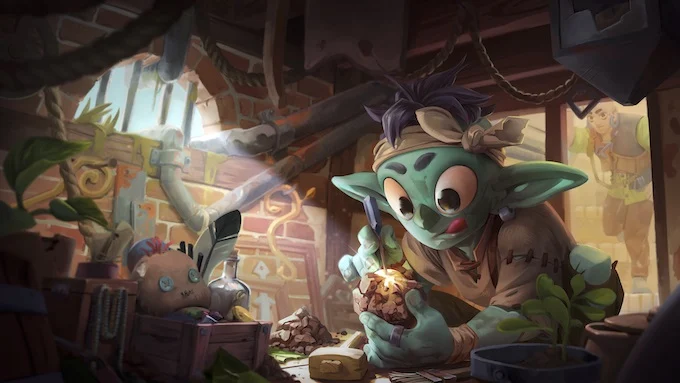
LONDON – Nicholas Lovell, the influential founder of Gamesbrief and a prominent voice in the business of digital media, has officially announced his return to the front lines of game development. Following a prolonged and debilitating battle with Long Covid that sidelined him for over 18 months, Lovell is pivoting from industry consultant to active developer, joining forces with Andrew Smith at Spilt Milk Studios. Their collaborative debut, a "cozy" shopkeeping simulator titled Trash Goblin, has already demonstrated significant market traction, surpassing its initial funding milestones on Kickstarter within hours of its launch.
Main Facts: The Return of a Strategy Icon
The announcement marks a significant transition for Lovell, whose career has largely been defined by analyzing the mechanics of the games industry rather than building the games themselves. As the author of The Curve and a pioneer in explaining Free-to-Play (F2P) business models, Lovell’s move into production signifies a "practice what you preach" moment that has captured the attention of the UK’s independent development scene.
The core of this return is Trash Goblin, a game described as a "wholesome fantasy" experience. Unlike the high-octane, competitive titles that often dominate the industry, Trash Goblin focuses on the tactile joy of upcycling. Players take on the role of a shopkeeper who finds, cleans, repairs, and sells discarded trinkets. The game taps into the burgeoning "cozy gaming" trend—a genre that emphasizes relaxation, creativity, and non-violent progression.
The project’s Kickstarter campaign, which went live in early December 2023, achieved an impressive £10,000 in its first 24 hours. This early success serves as a proof of concept for the "Curve" philosophy Lovell has championed for years: finding a dedicated niche and building a community around a specialized value proposition.
Chronology: A Journey Through Recovery and Redirection
The path to Trash Goblin was not one of choice, but of necessity born from a health crisis. To understand the significance of this launch, one must look at the timeline of Lovell’s forced hiatus and subsequent recovery.
- May 2022: The Onset. Nicholas Lovell contracted COVID-19. While many recovered within weeks, Lovell joined the millions of individuals globally suffering from "Long Covid," a condition characterized by persistent, often debilitating symptoms.
- January 2023: The Nadir. At the start of 2023, Lovell’s condition reached a critical point. He describes a period where his physical and cognitive resources were so depleted that basic daily functions—showering and eating three meals—consumed his entire energy reserve. The rest of his time was spent in bed, battling "brain fog" and a total inability to maintain the concentration required for high-level business consulting.
- Mid-2023: Reflection and Realization. During his convalescence, Lovell underwent a period of professional soul-searching. He realized that while his work with Gamesbrief was impactful, his true remaining ambition lay in the creative act of making games. This period saw the beginning of his dialogue with Andrew Smith of Spilt Milk Studios.
- December 2023: The Announcement. Lovell officially broke his silence on Gamesbrief. Estimating his recovery at approximately 40%, he announced his partnership with Spilt Milk Studios and the launch of the Trash Goblin Kickstarter.
Supporting Data: The Mechanics of a Successful Launch
The success of the Trash Goblin campaign is not an isolated event but a reflection of broader trends in the gaming industry regarding crowdfunding and genre shifts.
The Power of the First 24 Hours
In the world of Kickstarter, the first 24 to 48 hours are predictive of a project’s ultimate success. By raising £10,000 in its first day, Trash Goblin secured the "Project We Love" badge from Kickstarter staff and triggered the platform’s internal discovery algorithms. This rapid funding suggests a high "conversion rate" from Lovell’s existing professional network and Spilt Milk Studios’ established fanbase.
The "Cozy" Market Trend
The choice of a "cozy shopkeeper" game is strategically sound. According to market data from platforms like Steam and Nintendo Switch, the "cozy" genre—popularized by titles like Animal Crossing: New Horizons, Stardew Valley, and Unpacking—has seen a 150% increase in tag usage over the last three years. These games appeal to a diverse demographic, often skewing toward players who seek "digital zen" as an antidote to real-world stress.
Spilt Milk Studios’ Pedigree
The partnership provides Trash Goblin with a stable technical foundation. Spilt Milk Studios, led by Andrew Smith, is a veteran independent outfit known for titles like Tango Fiesta and the ambitious, though eventually sunset, massive-scale shooter Lazarus. Their experience in navigating the complexities of indie publishing complements Lovell’s strategic and marketing expertise.
Official Responses: Lovell on Health and Ambition
In his first public statement since his hiatus, Nicholas Lovell provided a candid look at the reality of his situation, blending personal vulnerability with professional optimism.
"I’ve been very quiet at Gamesbrief for a while," Lovell stated. "I caught Covid in May 2022, and I have had Long Covid ever since. In January 2023, I was lucky to be able to have a shower and eat three meals—the rest of my day was spent in bed with fatigue, brain fog and no ability to concentrate."

Regarding his new direction, Lovell noted that his illness acted as a catalyst for change. "That gave me some time to reflect on what I want to do. And one of the main things I want to do is to make games. As my health improves—and I’m maybe 40% on the road to recovery—I’m going to step up to help Andrew Smith at Spilt Milk Studios make great games."
The sentiment from the development community has been one of overwhelming support. Peers have praised Lovell’s transparency regarding his health, noting that Long Covid remains an "invisible" crisis within the tech and creative industries, where cognitive output is the primary currency.
Implications: A New Chapter for Indie Development
The emergence of Trash Goblin and Lovell’s return have several long-term implications for the industry.
1. The Human Cost of the Pandemic on Creative Industries
Lovell’s story highlights a growing concern: the loss of institutional knowledge and creative talent due to chronic illness. His ability to return, even at 40% capacity, is a testament to resilience, but it also raises questions about how the games industry can better support veteran developers facing long-term health challenges. Lovell’s "slow return" model could serve as a template for others in similar positions.
2. The Application of ‘The Curve’
For years, Lovell has taught developers how to maximize the value of their intellectual property by focusing on "superfans." With Trash Goblin, he is applying these theories in real-time. The game’s focus on "upcycling" and "cleaning" offers satisfying, repeatable loops that are highly shareable on social media platforms like TikTok and Instagram, which are currently the primary drivers for indie game discovery.
3. The Maturation of the Indie Partnership
The collaboration between a business strategist (Lovell) and a technical creative (Smith) represents a maturation of the indie studio model. Many indie studios fail not because of poor game design, but because of poor business strategy. By integrating a business-first mindset into the early stages of development, Spilt Milk Studios is positioning Trash Goblin to be not just a creative success, but a sustainable commercial one.
4. The Sustainability Narrative in Gaming
Trash Goblin arrives at a time when "upcycling" and "repair culture" are entering the cultural zeitgeist. By gamifying the process of cleaning and restoring "trash," the game aligns itself with modern values of sustainability and anti-consumerism, albeit within a fantasy context. This thematic alignment is likely to resonate with younger demographics who are increasingly conscious of environmental impact.
Conclusion: A Wholesome Future
As Nicholas Lovell continues his recovery, his focus remains on the "rest and build" cycle. While Trash Goblin is currently in the spotlight of its Kickstarter campaign, the broader story is one of a veteran thinker finding a new way to contribute to the medium he has spent a career analyzing.
The success of the campaign thus far is a heartening sign for the UK indie scene. It proves that there is still a robust appetite for original, wholesome IP and that the industry’s "wise elders" still have plenty of magic left to contribute—even if they have to do it one shower and three meals at a time. For Lovell, the journey from the sickbed to the dev-kit is more than a career move; it is a reclamation of his creative identity.
The industry will be watching closely as Trash Goblin moves from its successful funding phase into full production throughout 2024. If Lovell’s theories hold true, this "trash" might just become the indie scene’s next treasure.