The Legal and Creative Labyrinth: Why Halle Berry’s Catwoman Was Denied the Name Selina Kyle
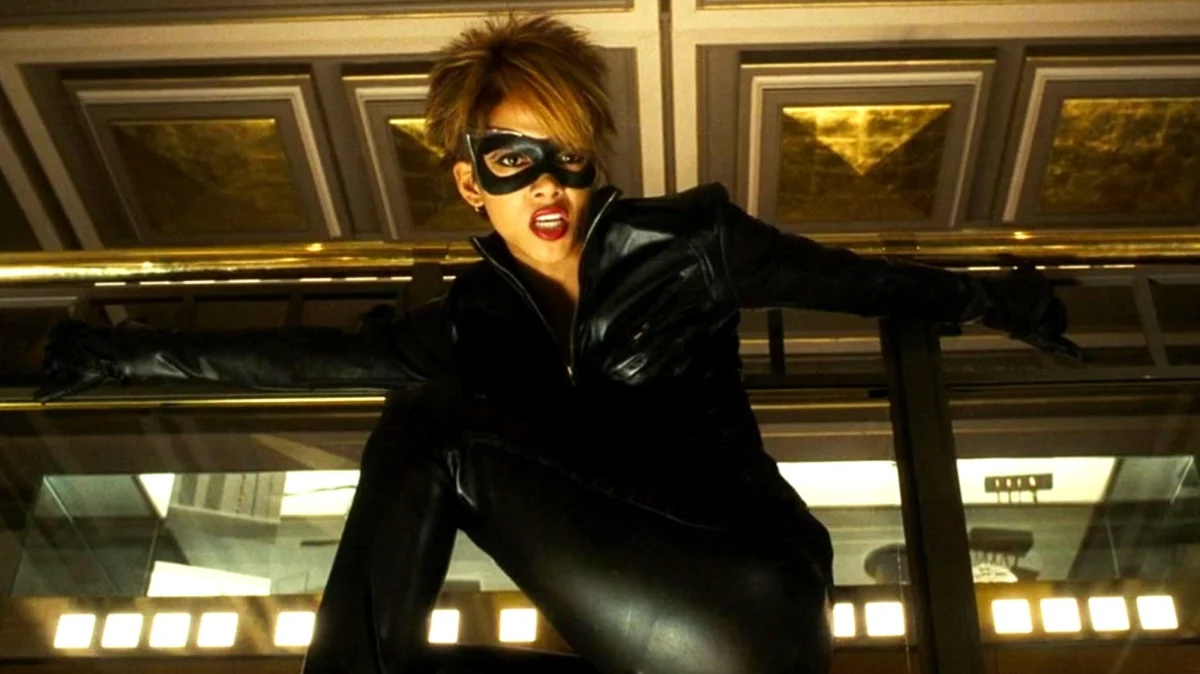
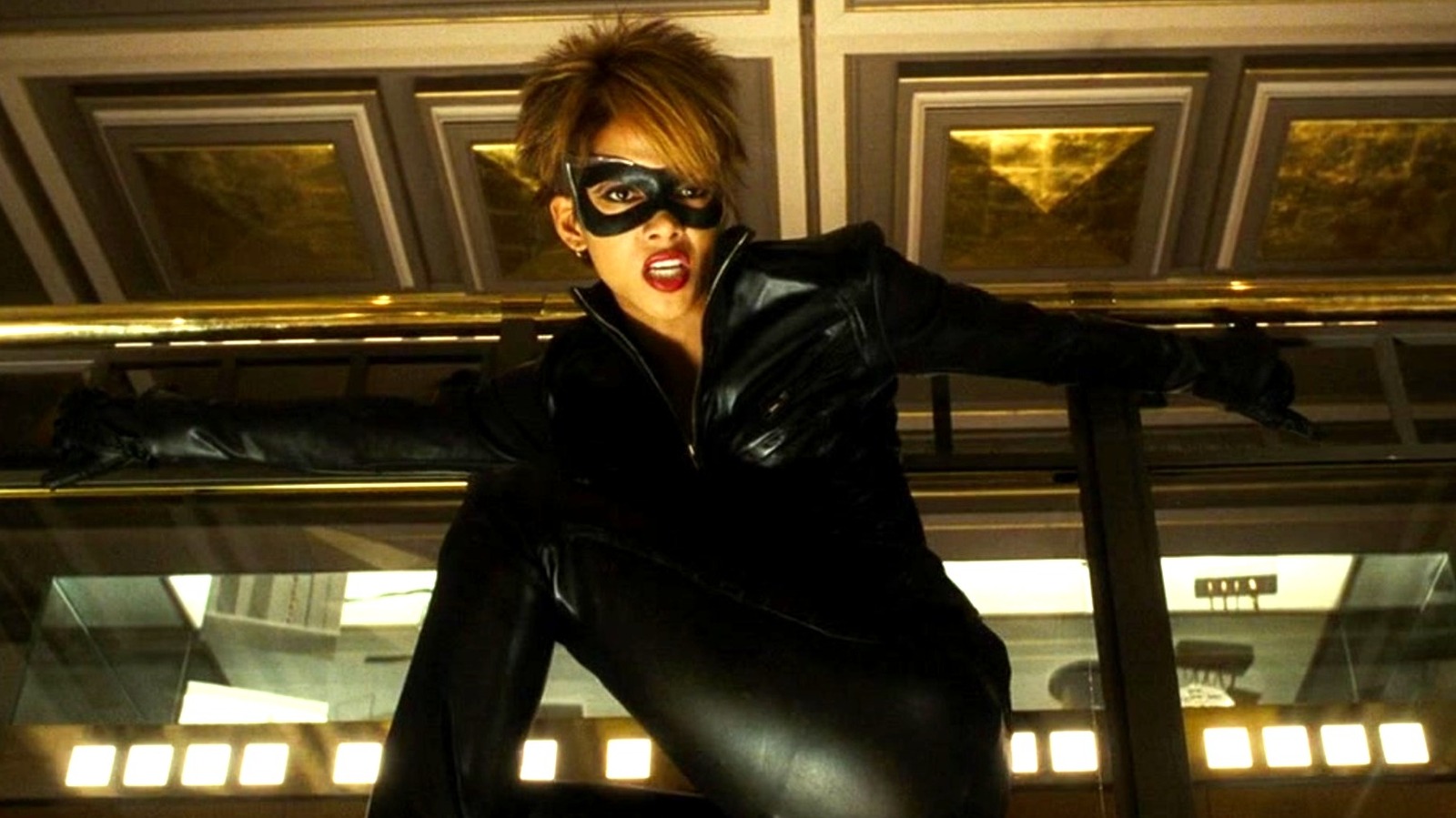
The 2004 release of Catwoman, directed by the French filmmaker Pitof and starring Academy Award winner Halle Berry, remains one of the most scrutinized chapters in the history of comic book cinema. Often cited as a cautionary tale of studio interference and stylistic excess, the film made a choice that baffled DC Comics purists from the moment it was announced: the protagonist was not Selina Kyle, the iconic jewel thief from Gotham City, but rather a shy graphic designer named Patience Phillips.
While audiences at the time largely attributed this change to a lack of reverence for the source material, the reality behind the scenes was far more complex. A combination of restrictive legal contracts, escalating talent costs, and a studio desperate to launch a new franchise without the baggage of previous iterations led to the creation of an entirely new identity for the feline fatale.
Main Facts: A Character Rebranded by Necessity
To understand why Halle Berry’s character was named Patience Phillips, one must look back at the cinematic history of the character. Catwoman made her first major modern cinematic appearance in Tim Burton’s 1992 masterpiece Batman Returns, portrayed by Michelle Pfeiffer. Pfeiffer’s performance was so definitive that it immediately sparked talk of a spin-off film. However, that spin-off languished in "development hell" for over a decade.
By the time Warner Bros. was ready to move forward in the early 2000s, the landscape of Hollywood had shifted. The primary obstacle was a legal one: Michelle Pfeiffer’s original contract. According to credited screenwriter John Rogers, the studio’s agreement with Pfeiffer specifically tied the name "Selina Kyle" to her portrayal. If the studio wanted to use the name Selina Kyle in a solo Catwoman feature, they were contractually obligated to offer the role to Pfeiffer or pay a significant "buyout" fee that the studio deemed prohibitive.
Furthermore, by 2004, Pfeiffer’s market value was substantial, and the studio was looking to pivot toward a younger or more "current" star to lead a potential multi-film franchise. Halle Berry, fresh off her Oscar win for Monster’s Ball and her success in the X-Men franchise, was the chosen successor. However, to avoid the financial and legal entanglements of the Pfeiffer era, the screenwriters were instructed to bypass the name Selina Kyle entirely. This necessitated the invention of Patience Phillips—a character with a different origin, a different power set, and a different moral compass.
Chronology: From Gotham to the Cosmetics Industry
The journey of the Catwoman solo film is a timeline of shifting creative visions.
1993–1995: The Burton-Pfeiffer Era
Following the success of Batman Returns, Tim Burton was attached to direct a spin-off focusing on Selina Kyle. Daniel Waters, who wrote the script for Batman Returns, submitted a draft that saw Selina traveling to a Las Vegas-style resort run by corrupt superheroes. The project stalled as Burton moved on to other films and the Batman franchise transitioned into the more neon-soaked aesthetic of Joel Schumacher.
2001–2003: Reimagining the Feline
As the superhero genre gained new life with X-Men (2000) and Spider-Man (2002), Warner Bros. fast-tracked Catwoman. At various points, actresses like Ashley Judd and Nicole Kidman were rumored for the role. When Halle Berry signed on, the script underwent significant revisions. John Rogers was brought in to write, but he quickly found himself at odds with studio executives who wanted to move away from the "cat burglar" archetype in favor of something more supernatural and corporate-focused.
2004: Production and Release
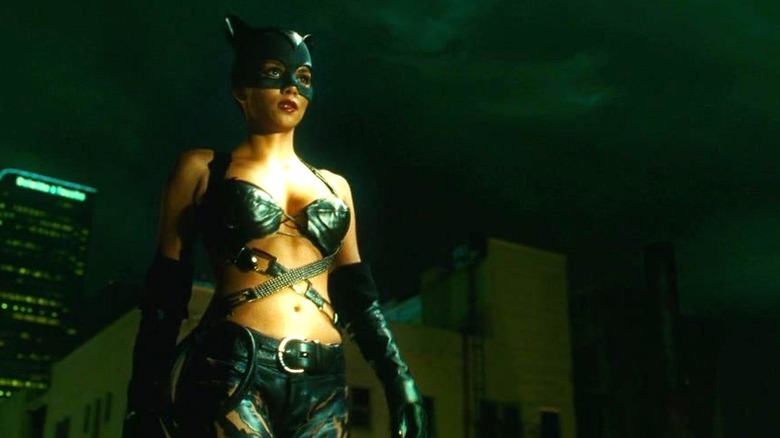
The film was produced with a staggering $100 million budget. Production was marked by a heavy reliance on early-stage CGI and a costume design that was widely panned for being impractical and overly sexualized. The film premiered in July 2004, where it was met with near-universal derision from critics and failed to recoup its budget at the box office.
Supporting Data: The Financial and Critical Fallout
The decision to distance the film from the Selina Kyle lore did little to help its commercial prospects. The following data points highlight the film’s struggle to find an audience and its legacy as a critical failure:
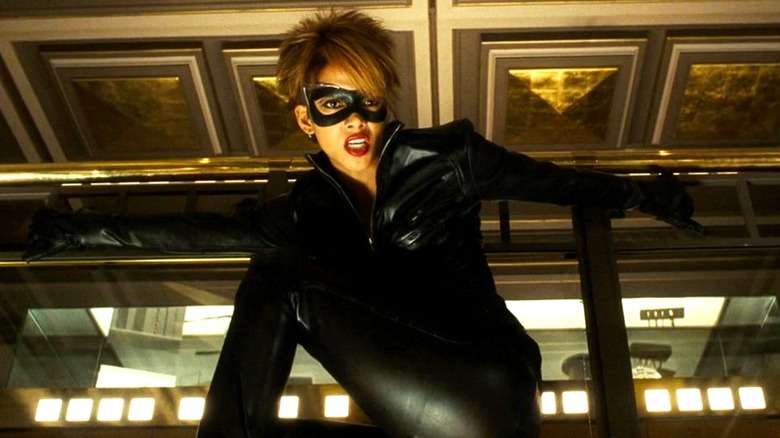
- Budget vs. Box Office: With a production budget of $100 million and an estimated marketing spend of $35 million, the film grossed only $40 million domestically and $82 million worldwide. This resulted in a significant net loss for Warner Bros.
- Critical Reception: On the review aggregator Rotten Tomatoes, the film holds an approval rating of 8%, with the consensus calling it "a toothless action movie."
- Award Recognition (The Razzies): Catwoman was nominated for seven Golden Raspberry Awards. It "won" in four major categories: Worst Picture, Worst Actress (Halle Berry), Worst Director (Pitof), and Worst Screenplay.
- Costume and Lore: The film replaced the traditional high-tech thievery of the comics with "magical" abilities granted by an Egyptian Mau cat named Midnight. This supernatural element was a data point of contention for fans, who felt it undermined the grounded nature of the character.
Official Responses: Candor and Accountability
In the years following the film’s release, those involved have been surprisingly vocal about its failings.
John Rogers’ Candid Critique
John Rogers, one of the three credited screenwriters, has been perhaps the most vocal critic of the final product. In a 2024 oral history with Inverse, Rogers explained that he was essentially fired from the project because he refused to accept "silly" studio notes that he believed would ruin the film.
"The execs were like, ‘We can’t make it Selina Kyle because there’s a contract issue. So if it’s not Michelle Pfeiffer, who we can’t afford anymore, it can’t be Selina Kyle.’ That’s why it’s Patience Phillips," Rogers stated. He has famously referred to the final product as a "sh*t movie" on social media, noting that he never even watched the finished film in its entirety. He argued that the studio "dumped" the movie at the end of a "style cycle" and that it lacked any real cultural relevance.
Halle Berry’s Gracious Defeat
Halle Berry herself handled the backlash with a level of grace rarely seen in Hollywood. Unlike many actors who distance themselves from their failures, Berry famously attended the Razzie Awards in person to accept her Worst Actress trophy. Holding her Best Actress Oscar in one hand and the Razzie in the other, she gave a satirical, tearful speech, thanking Warner Bros. for putting her in a "piece of sh*t, god-awful movie."
Berry has since maintained a sense of humor about the role, though she has also defended the hard work of the crew and her own commitment to the physical demands of the character. In recent years, she has noted that while the movie didn’t work, she was proud to be a Black woman leading a major superhero film—a rarity in 2004.
Implications: The Legacy of Patience Phillips
The failure of Catwoman had long-lasting implications for the superhero genre and for the character of Selina Kyle herself.
1. The "Female-Led Superhero" Stigma
For over a decade, the failure of Catwoman (alongside 2005’s Elektra) was used by Hollywood executives as a justification for not greenlighting female-led superhero movies. It wasn’t until the success of Wonder Woman in 2017 that this "glass ceiling" was truly shattered. The industry’s takeaway from 2004 was mistakenly focused on the gender of the lead rather than the quality of the script and the alienation of the core fan base.
2. Character Continuity and the Multiverse
The film did attempt a subtle nod to its predecessors. In a scene where Patience learns about her lineage from a woman named Ophelia (Frances Conroy), a photograph of Michelle Pfeiffer’s Catwoman is visible. This implied that "Catwoman" was a mantle passed down through generations of women resurrected by magical cats. While this was an attempt to create a "Catwoman Multiverse" before such terms were popular, it ultimately felt like a hollow gesture to fans who wanted a direct connection to the Batman mythos.
3. The Return to Selina Kyle
When the character finally returned to the big screen in Christopher Nolan’s The Dark Knight Rises (2012), portrayed by Anne Hathaway, the studio returned to the "Selina Kyle" name and the "cat burglar" roots. This trend continued with Zoë Kravitz in The Batman (2022). These later iterations proved that the character’s strength lies in her grounded, morally ambiguous nature as a thief, rather than the supernatural, "cosmetic-company-fighting" vigilante depicted in 2004.
In conclusion, the story of Halle Berry’s Catwoman is a testament to how legal constraints and financial maneuvering can fundamentally alter a creative work. Patience Phillips was not born out of a desire to innovate, but out of a need to navigate a contractual minefield. While the film remains a low point in the genre, it serves as a fascinating case study in the intersection of intellectual property law, studio politics, and the enduring power of comic book lore.