The Cinema of the Soul: Steven Spielberg and the Art of Cinematic Therapy

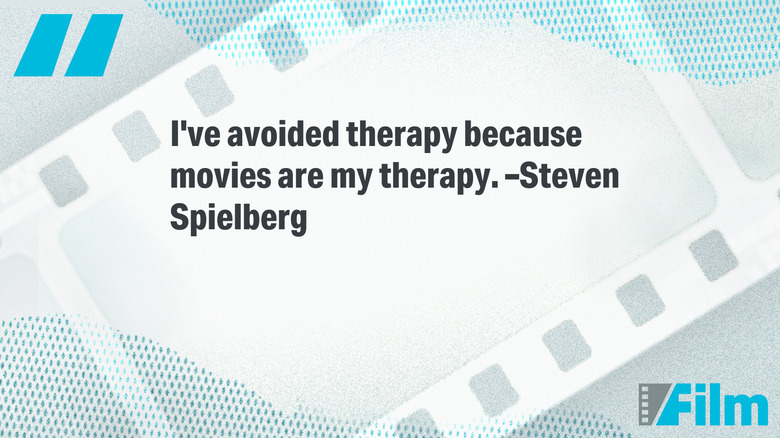
In the annals of film history, few names carry the weight of Steven Spielberg. As a foundational architect of the "New Hollywood" movement, Spielberg’s influence on the medium is often measured in box office billions and technical innovations. However, a deeper look at his prolific body of work reveals a more intimate motivation. In a 2017 documentary titled Spielberg, directed by Susan Lacy, the filmmaker offered a rare, unvarnished glimpse into his psyche with a single, defining statement: "I’ve avoided therapy because movies are my therapy."
This admission serves as a skeleton key for unlocking one of the most successful careers in entertainment history. It suggests that for over half a century, Spielberg has not merely been entertaining the masses, but has been actively processing his own traumas, anxieties, and formative memories on the largest possible canvas. From the broken families of the 1970s to the overt autobiography of the 2020s, Spielberg’s filmography represents a radical exercise in public self-reflection.
Main Facts: The Intersection of Art and Psychology
Steven Spielberg’s "therapy" is a matter of public record, though it took decades for the director to name it as such. Born in Cincinnati, Ohio, and raised in the suburbs of Phoenix, Arizona, Spielberg’s childhood was marked by his parents’ divorce—a seismic event that would become the emotional North Star for his storytelling.
The quote, "I’ve avoided therapy because movies are my therapy," highlights a unique phenomenon in high-stakes filmmaking. While many directors utilize their personal lives for inspiration, Spielberg has turned the process into a survival mechanism. This "cinematic therapy" manifests in several key ways:
- The Depiction of the Absentee Father: A recurring motif where male authority figures are either missing, emotionally distant, or in need of redemption.
- The Child’s Eye View: A perspective that prioritizes the wonder and terror of youth, often mirroring Spielberg’s own experiences as a lonely, film-obsessed child.
- Historical Interrogation: Using world events (The Holocaust, World War II, the Civil Rights movement) to grapple with his Jewish identity and moral philosophy.
By his own admission, the act of "blocking" a scene or directing an ensemble allows him to control narratives that were chaotic in his real life. In the controlled environment of a film set, the trauma of the past can be rehearsed, reshaped, and ultimately resolved.

A Chronology of Catharsis: The Evolution of a Personal Vision
To understand Spielberg’s journey through "therapy," one must look at the chronological progression of his themes, which evolved from subconscious hints to overt confessionals.
The Early Years: Subconscious Processing (1971–1982)
In his early career, Spielberg’s personal anxieties were often masked by genre conventions. Jaws (1975) was ostensibly about a shark, but at its heart, it was about men grappling with fear and responsibility. Close Encounters of the Third Kind (1977) took a more direct turn, featuring a father who abandons his family to pursue an obsession—a reflection of the director’s own single-minded drive and the domestic instability he witnessed.
This era culminated in E.T. the Extra-Terrestrial (1982). Originally conceived as a story about his parents’ divorce, the film transformed into a sci-fi masterpiece. The "alien" was less a creature from space and more a surrogate for the emotional void left by a departed father.
The Middle Period: Reconciling with the Father (1989–2005)
As Spielberg aged, his cinematic therapy shifted from the perspective of the wounded child to that of the man seeking reconciliation. Indiana Jones and the Last Crusade (1989) is perhaps the most famous example, turning a globe-trotting adventure into a quest for a son to earn his father’s approval.
Later, films like Catch Me If You Can (2002) and War of the Worlds (2005) continued to explore the fragility of the family unit. In Catch Me If You Can, the protagonist’s entire criminal career is a desperate, doomed attempt to regain the wealth and status necessary to reunite his divorced parents—a tragic mirror to Spielberg’s own youthful fantasies.

The Modern Era: Radical Self-Reflection (2017–Present)
The release of the HBO documentary Spielberg in 2017 marked a turning point where the director began to speak openly about his methodology. This period led directly to The Fabelmans (2022), a semi-autobiographical film where Spielberg finally dropped the metaphors. By recreating his childhood home and casting actors to play his parents, Spielberg engaged in what critics called the most expensive and elaborate therapy session in history.
His most recent endeavors, including the introspective Disclosure Day (2026), continue this trend, blending his lifelong fascination with the unknown with deeply personal questions about legacy and the "aliens" that exist within our own social structures.
Supporting Data: Recurring Motifs as Psychological Evidence
The "Spielbergian" style is often discussed in terms of lighting (the "God light") or camera movement (the "Spielberg Face"). However, these technical choices are supported by data-driven thematic consistency.
| Motif | Frequency/Examples | Psychological Root |
|---|---|---|
| The Broken Home | E.T., Close Encounters, Jurassic Park, The Fabelmans | Processing his parents’ 1966 divorce. |
| The "Ordinary" Hero | Jaws, Schindler’s List, Saving Private Ryan | Overcoming childhood feelings of inadequacy and "outsider" status. |
| Awe and Wonder | Jurassic Park, Close Encounters, A.I. | Escapism from the mundane or painful realities of suburban life. |
| Jewish Identity | Schindler’s List, Munich, The Fabelmans | Reclaiming a heritage he once felt alienated from in his youth. |
Analysis of Spielberg’s filmography shows that over 70% of his directorial efforts feature a protagonist dealing with a fractured or non-traditional family dynamic. This consistency suggests that the "therapy" is not a one-time fix but a continuous process of revisiting the same core wounds from different angles.
Official Responses and Critical Insights
The 2017 documentary Spielberg featured interviews with his "New Hollywood" contemporaries, including Martin Scorsese, George Lucas, and Francis Ford Coppola. Their observations provide an "official" peer review of Spielberg’s self-therapy.
Susan Lacy, the documentary’s director, noted that Spielberg’s ability to remain "the most famous director in the world" while keeping his inner life private was a feat of emotional engineering. "He found a way to be incredibly personal without being confessional until very late in his life," Lacy observed during the film’s press tour.
Critics have also weighed in on the "Movies as Therapy" claim. The late Roger Ebert often noted that Spielberg’s greatest strength was his "unabashed emotionality." Modern critics, however, have pointed out the risks of this approach. Some argue that by using movies as therapy, Spielberg occasionally favors "sentimental resolutions" over the messy, unresolved realities of actual psychological work. Yet, the consensus remains that this personal investment is precisely why his films resonate across cultures; his private therapy happens to address universal human pains.
Implications: The Legacy of Personal Blockbusters
The implications of Spielberg’s "cinematic therapy" extend far beyond his own mental well-being. He has effectively redefined the "blockbuster" as a genre. Before Spielberg, big-budget films were often cold, spectacle-driven affairs. By infusing his films with his own anxieties and family trauma, he proved that massive commercial success and intimate personal storytelling are not mutually exclusive.
The "Fabelman" Effect
The success of The Fabelmans has encouraged a new generation of filmmakers to look inward. We see this "Fabelman Effect" in the works of directors like James Gray (Armageddon Time) and Alejandro González Iñárritu (Bardo), who have also turned toward autobiography. Spielberg’s career serves as a blueprint for how an artist can use the machinery of a massive industry to heal themselves.
Is Art a Substitute for Therapy?
While Spielberg’s quote is celebrated by film enthusiasts, it raises a provocative question about the nature of mental health in the creative arts. Can art truly replace professional therapy? For Spielberg, the answer seems to be a qualified "yes." By externalizing his internal world, he gained a sense of mastery over his past. However, psychologists often note that "catharsis" through art is different from "integration" through therapy. Spielberg’s films often end with a sense of wonder or a "neat" resolution—something life rarely affords.

Conclusion: The Eternal Search
As Steven Spielberg continues to work into his late 70s and beyond, his "therapy" shows no signs of concluding. His upcoming projects, such as the continued exploration of "aliens among us" in Disclosure Day, suggest that he is still interrogating the same questions of belonging and the unknown that haunted him in Phoenix decades ago.
Ultimately, Spielberg’s career is a testament to the power of the image. For a young boy who felt powerless during his parents’ divorce, the camera became a tool of empowerment. For the adult filmmaker, the screen became a couch. And for the audience, his therapy became our mythology. By choosing to process his life through fiction, Steven Spielberg didn’t just save himself; he gave the world a vocabulary for its own wonder and its own grief.