Celebrating a Century of Imagination: First Fandom Unveils Definitive "Amazing Stories" Centennial Annual
ORLANDO, FL – [Current Date] – As the science fiction world gears up to mark a monumental milestone – the centennial of Amazing Stories, the genre’s pioneering magazine – First Fandom is proud to announce the forthcoming publication of the First Fandom Annual 2026. Edited by acclaimed historians John L. Coker III and Jon D. Swartz, Ph.D., this limited-edition volume promises to be an indispensable tribute to the publication that birthed an entire literary movement. Commemorating "100 Years of Amazing Stories," the Annual offers an unparalleled journey through the magazine’s storied past, featuring rich photo essays, dozens of full-color cover reproductions, and profound insights from a roster of distinguished contributors.
The announcement of this meticulously crafted publication has sent ripples of excitement through the science fiction community, particularly among historians, collectors, and long-time aficionados. With its stringent limit of only 30 copies, the First Fandom Annual 2026 is poised to become an immediate collector’s item, embodying the passion and dedication that has defined First Fandom’s mission to preserve the origins and evolution of speculative fiction.
Main Facts: A Centennial Chronicle in Print
The First Fandom Annual 2026, under the expert editorial guidance of John L. Coker III and Jon D. Swartz, Ph.D., is conceived as the definitive retrospective on Amazing Stories. Its core mission is to celebrate the magazine’s profound impact on science fiction, culture, and the very concept of fandom itself, as it approaches its centennial anniversary in April 2026.
This highly anticipated volume distinguishes itself through several key features designed to captivate and inform. Readers will discover:
- Photo Essays on Editors and Illustrators: In-depth explorations of the visionary individuals who shaped Amazing Stories, from its founder Hugo Gernsback to the various editors who helmed its pages, and the iconic illustrators whose artwork defined the look of early science fiction.
- Dozens of Full-Color Cover Reproductions: A visual feast showcasing the evolution of science fiction aesthetics, featuring the groundbreaking and often stunning cover art that drew readers into new worlds of imagination. These reproductions are central to understanding the magazine’s appeal and its historical context.
- Insights on Writing, Editing, and Publishing: Contributions delve into the intricate processes behind the magazine’s creation across ten decades, offering unique perspectives on the editorial challenges, the evolving literary landscape, and the business of publishing speculative fiction.
- Esteemed Contributors: The Annual boasts an impressive lineup of contributors, including Mike Ashley, James Bacon, John L. Coker III, Steve Davidson, Lloyd & Yvonne Penney, Robert Silverberg, and Jon D. Swartz. Their collective expertise spans historical scholarship, journalistic insight, and direct experience with the genre, ensuring a comprehensive and authoritative narrative.
The publication details underscore its exclusivity and artisanal quality: a 56-page volume, laser-printed on 28# quality paper, featuring many color interior illustrations, gloss covers, and an 8½ x 11, saddle-stitched format. This attention to detail reflects a commitment to producing a physical artifact worthy of the historical weight it carries.
Priced at $35, this limited edition is available for order by sending a check or money order (payable to John L. Coker III) to 4813 Lighthouse Road, Orlando, FL – 32808. The explicit warning that it will "soon be out-of-print" is not merely a marketing tactic but a stark reality given the minuscule print run, emphasizing the urgency for interested parties to secure their copy without delay.
Chronology: A Century of Speculative Vision
The narrative of Amazing Stories is inextricably linked to the birth and evolution of science fiction as a distinct literary genre. The First Fandom Annual 2026 traces this rich history across a full century, offering a chronological journey through its various iterations and impacts.
The Genesis: Hugo Gernsback and the Dawn of "Scientifiction" (1926-1930s)
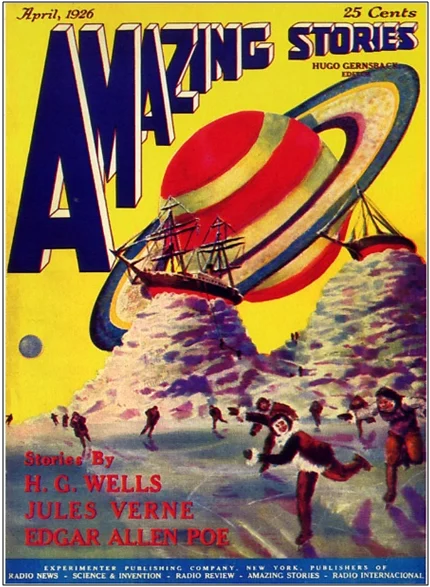
The story begins in April 1926 with the debut of Amazing Stories, launched by the visionary publisher Hugo Gernsback. Often hailed as the "Father of Science Fiction," Gernsback coined the term "scientifiction" to describe the new genre, which he envisioned as a blend of imaginative fiction grounded in scientific principles. His aim was not merely entertainment but also education, inspiring readers with the wonders of science and technology. The inaugural issue, featuring a striking cover by Frank R. Paul, reprinted classic works by H.G. Wells and Jules Verne, alongside new stories, laying the foundation for a literary revolution. Gernsback’s meticulous focus on scientific accuracy, coupled with a penchant for grand, often outlandish concepts, cultivated a dedicated readership and established the blueprint for science fiction magazines for decades to come. This era also saw the nascent stirrings of organized fandom, as readers began to connect through the magazine’s letter columns, forming the very first communities of science fiction enthusiasts.
Evolution Through the Pulp Era (1930s-1950s)
Following Gernsback’s financial troubles and loss of control in 1929, Amazing Stories entered a new phase. T. O’Conor Sloane, Gernsback’s former managing editor, took the reins, steering the magazine through the Great Depression. While Sloane maintained a focus on scientific themes, the magazine faced increasing competition. The 1930s saw the rise of other pulp magazines, and Amazing Stories adapted, albeit sometimes controversially. The most notable shift occurred under Raymond A. Palmer, editor from 1938 to 1949. Palmer ushered in an era of faster-paced, more adventurous stories, often leaning into space opera and fantasy elements. This period is famously associated with the "Shaver Mystery," a series of stories by Richard S. Shaver, which claimed to reveal a hidden history of subterranean beings and ancient civilizations. While hugely popular, boosting circulation dramatically, the Shaver Mystery also sparked intense debate and controversy, dividing fandom and critics alike, but undeniably cementing Amazing Stories‘ place in popular culture.
Navigating the Mid-Century Shift (1950s-1970s)
The post-war era brought new challenges and transformations. The 1950s saw the magazine, under the ownership of Ziff-Davis, attempting to keep pace with a rapidly changing world and the rise of television. Editors like Howard Browne and Cele Goldsmith introduced more sophisticated, character-driven science fiction, moving away from the "bug-eyed monster" tropes of the earlier pulp era. Goldsmith, in particular, is credited with publishing early works by authors who would become genre legends, including Thomas M. Disch and Roger Zelazny, pushing the boundaries of speculative fiction. The 1960s saw further changes, with Ted White taking over as editor in 1969. White championed a more literary approach, striving to elevate the magazine’s quality and attract new talent. His tenure, though marked by financial constraints, is remembered for its artistic integrity and the publication of thought-provoking, socially conscious science fiction, reflecting the turbulent times. The format also shifted, from large pulp to digest size, then eventually to paperback, mirroring broader trends in publishing.
Modern Revivals and Digital Horizons (1980s-Present)
The late 20th and early 21st centuries saw Amazing Stories grapple with the evolving media landscape. The magazine experienced several relaunches and changes in ownership, reflecting the difficulties faced by traditional print publications in a digital age. From TSR, Inc. (the creators of Dungeons & Dragons) in the 1980s, to various independent publishers, each iteration sought to revive the magazine’s glory. A significant chapter in its recent history is Steve Davidson’s acquisition of the brand in 2012. Davidson, a long-time fan and visionary, has tirelessly worked to bring Amazing Stories into the digital age, launching an online presence and periodically publishing new print issues. His efforts underscore the enduring appeal and historical importance of the brand, ensuring its legacy continues to inspire new generations of readers and writers. The centennial publication of the First Fandom Annual 2026 thus arrives at a crucial juncture, bridging the magazine’s foundational past with its dynamic, digitally-influenced present and future.
The Genesis of the First Fandom Annual 2026
The idea for the First Fandom Annual 2026 emerged from a collective recognition of Amazing Stories‘ unparalleled historical significance and the approaching centennial. John L. Coker III and Jon D. Swartz, both deeply embedded in the history and scholarship of science fiction, spearheaded the project. Their collaboration, alongside the esteemed contributors, represents a concerted effort by First Fandom to not only celebrate but also meticulously document the magazine’s profound influence. The Annual is a culmination of years of research, archival work, and a shared passion for preserving the genre’s foundational narratives, ensuring that Amazing Stories‘ centennial is marked with the reverence and scholarly depth it deserves.
Supporting Data: The Pillars of a Legacy
The First Fandom Annual 2026 is more than just a commemorative book; it is a testament to the enduring power of a single publication and the dedicated community it fostered. The supporting data surrounding this Annual illuminates its significance.
The Indelible Mark of Amazing Stories
Amazing Stories wasn’t just a magazine; it was a cultural phenomenon that codified and popularized science fiction. Before Gernsback, speculative fiction existed, but it was Amazing Stories that gave it a name, a home, and a platform. It served as a crucible for new ideas, a testing ground for concepts that would later become staples of the genre: space travel, artificial intelligence, time travel, alien encounters, and dystopian futures. Its influence extended far beyond literature, inspiring scientists, engineers, and dreamers to push the boundaries of real-world innovation. The magazine cultivated a readership that was not merely passive but actively engaged, leading directly to the formation of science fiction fandom itself – a unique cultural movement characterized by its passion, intellectual curiosity, and community building.
The Crucial Role of First Fandom
The organization "First Fandom" plays a vital role in preserving the history of science fiction. Comprising individuals who were active in science fiction fandom prior to January 1, 1940, or their descendants, First Fandom represents the earliest enthusiasts and pioneers of the genre’s community. Their mission is to promote the study and appreciation of early science fiction, recognize the contributions of its creators, and honor the legacy of its fans. The First Fandom Annual 2026 is a direct manifestation of this mission, serving as a tangible link to the genre’s origins and providing invaluable historical context. The meticulous detail in the Annual, from the photo essays to the cover reproductions, reflects the organization’s dedication to historical accuracy and comprehensive documentation.
The Visionary Editors: Coker and Swartz
The editorial leadership of John L. Coker III and Jon D. Swartz, Ph.D., is central to the Annual’s authority and depth. John L. Coker III is a highly respected figure within First Fandom and a noted historian of science fiction, particularly known for his extensive work on fanzines and early genre publications. His deep archival knowledge and connections within the historical fandom community make him an ideal custodian of Amazing Stories‘ legacy. Jon D. Swartz, Ph.D., brings an academic rigor to the project, with his background in popular culture studies and a scholarly approach to the genre’s historical and sociological impact. Their combined expertise ensures that the Annual is not only a celebratory volume but also a significant academic contribution to science fiction studies.
A Constellation of Contributors
The list of contributors reads like a who’s who of science fiction history and contemporary fandom:
- Mike Ashley: A preeminent historian of speculative fiction, whose encyclopedic knowledge of pulp magazines and genre evolution is unparalleled. His contributions offer deep historical context.
- James Bacon: A respected Irish journalist, author, and active member of the science fiction community, bringing a contemporary fan’s perspective alongside a journalistic eye.
- Steve Davidson: As the current owner and publisher of the Amazing Stories brand, Davidson offers a unique, living perspective on the magazine’s ongoing journey and its relevance in the 21st century.
- Lloyd & Yvonne Penney: Long-time fans and historians, the Penneys represent the grassroots dedication of fandom, often contributing unique insights drawn from personal experience and extensive collections.
- Robert Silverberg: A legendary Grand Master of Science Fiction, Silverberg provides an invaluable direct link to the "Golden Age" and beyond. His insights as a prolific author who has witnessed and shaped much of science fiction history are unparalleled, offering a first-hand account of the genre’s evolution.
This diverse array of voices ensures a multifaceted and rich tapestry of perspectives, blending historical analysis with personal reflection and contemporary relevance.
The Art of Preservation: Production Quality
The choice of production specifications – 56 pages, laser printed on 28# quality paper, many color interior illustrations, gloss covers, 8½ x 11, saddle-stitched – is not merely about aesthetics but about preserving history. The full-color cover reproductions are crucial for appreciating the visual identity of Amazing Stories, which often featured groundbreaking and iconic artwork by illustrators like Frank R. Paul. The limited print run of 30 copies elevates the Annual to the status of a rare artifact, a testament to the dedication required to compile and produce such a specialized historical document. This format also harks back to the fanzine tradition, a foundational element of early science fiction fandom, thus subtly connecting the present commemorative effort to its historical roots.
Official Responses: Voices from the Centenary
While there are no "official" governmental responses to the First Fandom Annual 2026, the enthusiasm from the editorial team, contributors, and the broader science fiction community serves as its own form of official endorsement, reflecting a deep reverence for the subject matter.
The Editors’ Vision: A Labor of Love
John L. Coker III and Jon D. Swartz, Ph.D., undoubtedly view this Annual as a culmination of their passion and scholarship. One can infer their collective motivation stems from a profound respect for Amazing Stories‘ foundational role. "This project is more than just a book; it’s a historical imperative," one might imagine them stating. "As we approach the centennial of Amazing Stories, it’s crucial to not only celebrate its pioneering spirit but also to meticulously document its journey, its challenges, and its enduring legacy. We aimed to create a volume that is both a visual delight and a scholarly resource, bringing together the best minds in science fiction history to honor Hugo Gernsback’s original vision." Their hope would be that the Annual serves as a definitive reference for future generations, inspiring continued exploration of science fiction’s origins.
Contributors’ Perspectives: Personal and Profound
The contributors’ involvement speaks volumes about the project’s significance. Robert Silverberg, whose career spans much of the genre’s recorded history, likely lends his voice not just as a historian but as a living witness. "To contribute to a volume celebrating Amazing Stories is to revisit the very wellspring of our genre," Silverberg might reflect. "It was the magazine that opened doors to infinite possibilities for countless readers, including myself. Its legacy is etched into the DNA of science fiction, and this Annual beautifully captures that indelible mark."
Steve Davidson, the current torchbearer for Amazing Stories, would see this Annual as validation and vital continuity. "The First Fandom Annual 2026 is an essential part of keeping the Amazing Stories flame alive," Davidson might comment. "It highlights the incredible journey this magazine has taken and reminds us why its history is so crucial to understanding where science fiction is today, and where it’s headed."
Mike Ashley, the meticulous historian, would emphasize the archival value. "Volumes like this are the bedrock of genre history," he could assert. "They consolidate fragmented information, provide new interpretations, and, most importantly, make primary source material accessible. The full-color cover reproductions alone are a treasure trove for scholars and fans alike."
Fandom’s Anticipation: A Collective Acknowledgment
The science fiction community, particularly those with a deep appreciation for history, views the Annual with keen anticipation. The limited edition status, while making it difficult to acquire, also heightens its perceived value as a historical artifact. Forums and social media platforms dedicated to science fiction history would be abuzz with discussions about its contents and the importance of its preservation. For First Fandom members, it represents a tangible success in their ongoing mission to honor the genre’s pioneers and its earliest expressions. It reinforces the idea that understanding the roots of science fiction is key to appreciating its current vibrancy and future potential.
Implications: Echoes Through the Ages
The publication of the First Fandom Annual 2026 carries significant implications across various facets of the science fiction world and beyond.
For Science Fiction History and Scholarship
This Annual serves as a monumental contribution to science fiction history. It reinforces Amazing Stories‘ foundational status not just as the first dedicated science fiction magazine, but as the primary incubator for the genre’s early tropes, themes, and community. Scholars will find it an invaluable resource, offering consolidated historical narratives, visual documentation, and expert analysis that can inform new research into the genre’s evolution, its relationship with scientific advancements, and its cultural impact. The detailed chronology and photo essays provide a rich context for understanding how speculative fiction transitioned from niche pulp to a globally recognized literary and cultural force.
For Collectors and Archival Preservation
The extreme scarcity of the First Fandom Annual 2026, with only 30 copies printed, immediately elevates it to the status of a highly sought-after collector’s item. This limited availability underscores the dedication of First Fandom to producing unique, high-quality historical artifacts. For private collectors and institutional archives, acquiring a copy will be a priority, ensuring its preservation for future study. The Annual itself, by reproducing rare covers and historical photographs, contributes to the broader effort of digital and physical archival preservation of science fiction’s visual and textual heritage, making previously inaccessible materials available to a wider audience, albeit through a highly exclusive medium.
For the Future of Amazing Stories
While celebrating its past, the Annual also plays a crucial role in maintaining Amazing Stories‘ relevance into its second century. By highlighting its enduring legacy and the contributions of those who have kept it alive (like Steve Davidson), the publication helps to ensure that the magazine’s name continues to resonate. It reminds new generations of readers and writers of the rich history upon which contemporary science fiction is built, potentially sparking renewed interest in the vast archives of Amazing Stories and its potential for future iterations. It symbolizes the continuity of the genre, demonstrating that even as media formats change, the core spirit of speculative imagination endures.
For the "First Fandom" Organization and the Broader Community
This project powerfully showcases First Fandom’s continued dedication to its core mission: preserving and promoting the early history of science fiction. It solidifies their role as crucial custodians of the genre’s origins and demonstrates the value of their collective knowledge and passion. For the broader science fiction community, the Annual is a rallying point, a reminder of shared history and the collaborative spirit that defines fandom. It encourages reflection on how far the genre has come, from humble pulp origins to its current omnipresence in literature, film, television, and gaming.
Broader Cultural Impact
Ultimately, the First Fandom Annual 2026 speaks to the enduring human fascination with the future, with possibility, and with the unknown. By celebrating a century of Amazing Stories, it implicitly celebrates the human imagination itself and its power to shape perceptions of reality and inspire innovation. It serves as a potent reminder that what began as "scientifiction" in the pages of a modest magazine has grown into a profound cultural force, continually pushing the boundaries of thought and storytelling. The Annual is not just a book about a magazine; it’s a chronicle of how a bold idea, nurtured by dedicated individuals, can resonate across generations and continue to inspire a world that increasingly resembles the "amazing stories" it once dared to imagine.