Mahmud II: The Architect of Modern Turkey’s Foundations Amidst an Empire’s Decline
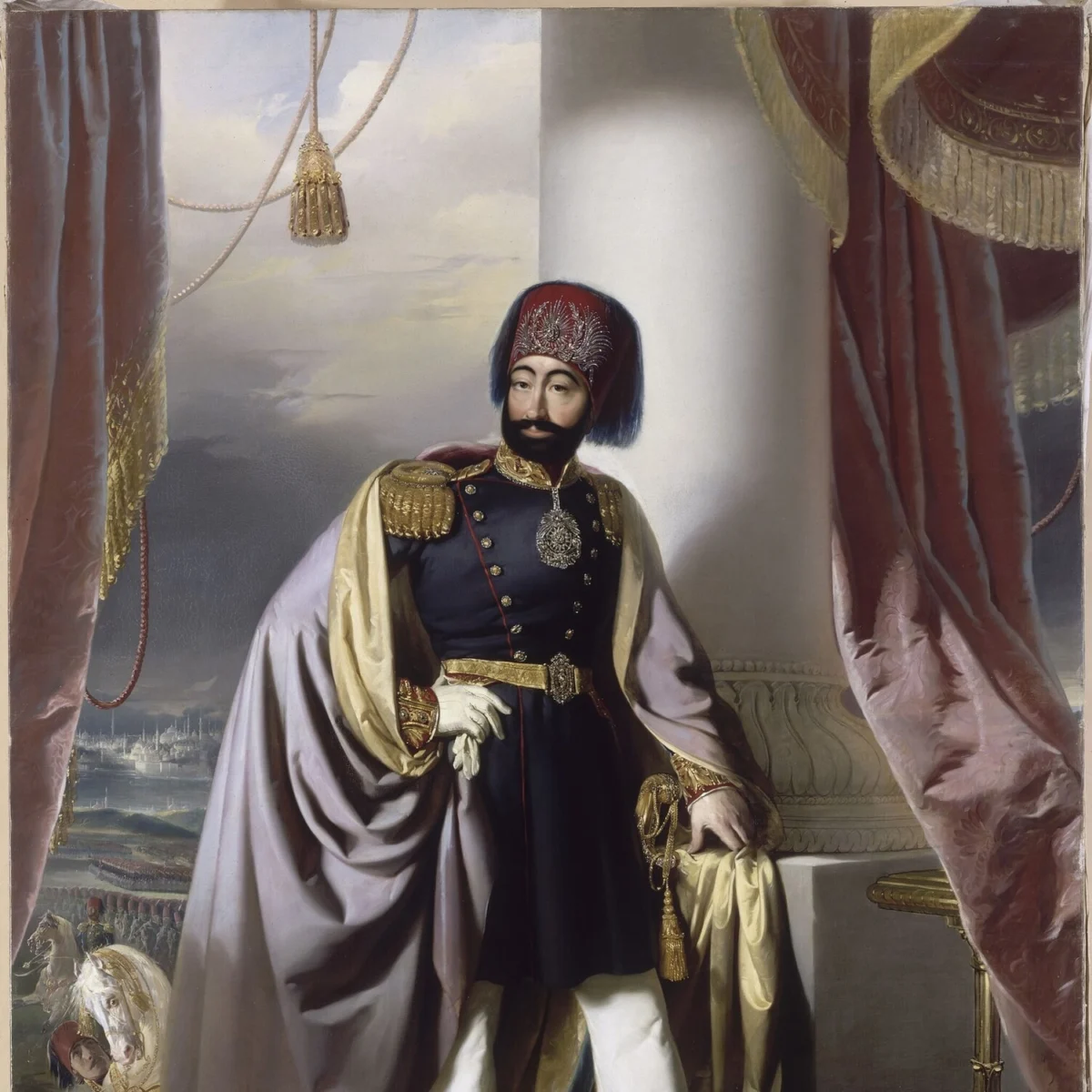
Constantinople, Ottoman Empire – In the annals of the Ottoman Empire, few rulers cast as long and transformative a shadow as Sultan Mahmud II (1785-1839). Ascending to a throne teetering on the precipice of collapse, Mahmud II was not merely a sultan but a radical reformer whose relentless pursuit of modernization irrevocably altered the course of a centuries-old empire. Nicknamed the "Infidel Sultan" by his conservative detractors, his reign was marked by a series of audacious military, governmental, and societal overhauls, laying the foundational stones for the modern Turkish state that would emerge decades after his passing.
His legacy is defined by monumental changes: the brutal but necessary dismantling of the Janissary corps, the establishment of a European-style military, the creation of modern ministries, the introduction of an official gazette, and even revolutionary changes in public appearance. These were not mere adjustments but a systemic dismantling of an old order to pave the way for a new, centralized, and contemporary state structure, mirroring the burgeoning powers of 19th-century Europe.
The Ottoman Empire at a Crossroads
Mahmud II was born into an empire in profound crisis. By the late 18th century, the once formidable Ottoman state, a beacon of military and administrative might, found itself in a severe state of decline. Economically strained, its military system was woefully antiquated compared to the rapidly advancing tactics and technologies of Western armies. Decades of constant defeats against the formidable Russian and Austrian empires had led to the loss of vast territories, shrinking the empire’s once-expansive borders and eroding its prestige.
Internally, the empire was fractured. Powerful provincial notables (ayan) wielded significant autonomy, often defying central authority, while the elite Janissary corps, once the backbone of the Ottoman military, had devolved into a self-serving, corrupt, and politically disruptive force. Faced with this existential threat, Ottoman statesmen found themselves divided. Some advocated a nostalgic return to perceived "golden age" methods of administration, believing that the solution lay in revitalizing old institutions. Others, however, recognized the futility of looking backward and argued for a radical embrace of Western-inspired reforms as the only path to survival. It was into this tumultuous landscape that Mahmud II would step, destined to embody the latter vision.
Early Life and a Perilous Ascent
Mahmud’s early life was marked by the intense political volatility of the era. His uncle, Selim III (reigned 1789-1807), was a pioneering reformist, arguably the most forward-thinking sultan before Mahmud. Selim III understood the urgency of military modernization and established the Nizam-ı Cedid ("New Order"), a modern army trained in European tactics. However, this bold move directly challenged the entrenched power and interests of the Janissaries, who viewed it as a direct threat to their status and very existence. Their fierce backlash, rallied by conservative elements led by figures like Kabakçı Mustafa, culminated in Selim III’s forced abdication in 1807, replaced by his more conservative cousin, Mustafa IV (1779-1808).
While Selim III languished in confinement within the palace, provincial notables, most notably Alemdar Mustafa Pasha (1765-1808), marched on Constantinople with the intent to restore the reformist sultan. The events that followed were a testament to the brutal realities of Ottoman succession. As Alemdar’s troops stormed the palace, Mustafa IV, desperate to eliminate any alternatives to his rule, ordered the execution of both Selim III and the young Mahmud, then a mere 23 years old. His logic was chillingly simple: without other heirs, the Ottoman bloodline would seemingly rest solely with him, deterring Alemdar from further action.
Executioners swiftly apprehended Selim III, killing him on the spot. For Mahmud, however, fate intervened in the form of Cevri Kalfa, a courageous palace concubine. In a desperate act, she threw ash into the faces of the soldiers sent to kill Mahmud, creating a precious window of time. Mahmud seized the moment, escaping to hide on the palace roof, surviving by the narrowest of margins. This dramatic escape, a mere twist of fate, underscores the profound fragility of his early existence and the pivotal role of individuals in shaping history. Had it not been for Cevri Kalfa’s quick thinking, the course of Ottoman history, and by extension, that of modern Turkey, might have unfolded in an entirely different direction.
Navigating a World in Turmoil
Mahmud II’s accession to the throne in 1808 was far from auspicious. The empire he inherited was besieged by both internal dissent and external conflicts. Europe was embroiled in the Coalition Wars, a complex web of alliances and conflicts stemming from the Napoleonic era. The Sublime Porte, traditionally aligned with France, found itself at war with Russia and Great Britain. While the conflict with Britain concluded in 1809, the arduous war with Tsarist Russia dragged on until 1812.
Domestically, the central government’s authority had withered, with provincial notables exercising almost de facto independence across vast territories. Alemdar Mustafa Pasha, the man instrumental in Mahmud’s survival and subsequent ascension, now held the powerful position of grand vizier. Recognizing the severe fragmentation of power, Alemdar convened the most influential provincial notables in Constantinople, resulting in the signing of the Sened-i İttifak (Pact of Alliance) on September 29, 1808. This landmark document, often likened by historians to England’s Magna Carta of 1215, was a curious compromise. It acknowledged the sultan’s absolute authority in principle, while simultaneously granting official recognition to the power and privileges of the provincial notables.
However, Mahmud II harbored deep resentment towards any perceived limitation of his sovereign power. He was unwilling to be indebted to Alemdar or share his authority. Not long after the Pact, the Janissaries, ever a disruptive force, rose against Alemdar, also aiming to restore Mustafa IV to the throne. Mahmud, with a shrewd and ruthless pragmatism, chose not to intervene. Alemdar, cornered in a gunpowder magazine, chose a defiant end, igniting the powder and taking several hundred Janissaries with him. Seizing this opportunity, Mahmud immediately ordered the execution of Mustafa IV, solidifying his position as the sole living heir to the Ottoman throne. This act demonstrated Mahmud’s nascent ability to play the political game, leveraging chaos to consolidate his own power.

The Tide of Nationalism: Peripheral Rebellions
Mahmud’s reign was characterized by relentless challenges, not least the burgeoning nationalist movements sweeping across the multi-ethnic Ottoman Empire, a direct consequence of the French Revolution’s ideas of liberty and self-determination. The weakness of the central state, coupled with the Janissaries’ arbitrary power and the provincial notables’ defiance, created fertile ground for secessionist aspirations.
The Serbian Uprising
The first significant nationalist challenge emerged from Serbia. In 1804, Serbs, under leaders like Karađorđe (1762-1817), rebelled, seeking independence from the Sublime Porte. The timing was opportune for the rebels, as the Ottoman army was simultaneously embroiled in a war with Russia (1806-1812), forcing it to fight on multiple fronts and disperse its limited resources. It was only after Napoleon’s invasion of Russia prompted a peace treaty between the Ottomans and Russia in 1812 that the Sublime Porte could redeploy its forces. In 1813, Ottoman troops successfully suppressed the initial rebellion, defeating Karađorđe.
However, the desire for autonomy persisted. Miloš Obrenović (1780-1860), a rival of Karađorđe, initially collaborated with the Ottomans, being rewarded with the title of Grand Knez of the central Serbian district of Shumadia. Yet, seeing the continued resistance among Serbs, Obrenović launched the Second Serbian Uprising in 1815. By 1817, recognizing the difficulty of achieving full independence, he shifted to negotiation. This pragmatic approach eventually bore fruit, and Serbia’s autonomy was officially recognized in the Treaty of Edirne in 1829, marking a significant step towards self-rule, even if full independence remained elusive for another half-century.
The Greek War of Independence
The spread of nationalist ideas proved even more explosive in Greece. Founded in Odessa in 1814, the Filiki Eteria (Society of Friends) became a pivotal force, disseminating the ideals of the French Revolution and fostering a sense of national identity. The "Megali Idea" (Great Ideal) movement, a romanticized vision aiming to revive ancient Greek civilization and the Byzantine legacy, with Constantinople as its heart, became a powerful ideological driver for independence.
Ironically, Mahmud’s efforts to centralize power inadvertently fueled the Greek rebellion. Ali Pasha of Yanina (1740-1822), a formidable and ambitious governor in Greece, had effectively established a state within the state, ruling with his own army. Determined to reassert central control, Mahmud dismissed Ali Pasha and his sons from their positions in 1820. Ali Pasha, defying the Sultan’s orders, openly rebelled. While the Ottoman army was preoccupied with subduing this powerful provincial challenge, the Filiki Eteria seized what they perceived as a golden opportunity, launching their own rebellion in the Peloponnese in 1821.

The Ottoman Empire found itself fighting two major internal conflicts simultaneously. After successfully eliminating Ali Pasha in 1822, the full weight of the Ottoman army turned towards the Greek rebels. However, the situation descended into a costly stalemate. Desperate, Sultan Mahmud sought assistance from his powerful, semi-autonomous governor of Egypt, Kavalalı Mehmed Ali Pasha (1769-1849). Mehmed Ali agreed, stipulating that in return for suppressing the rebellion, he would be granted the governorships of Crete and the Peloponnese. His son, Ibrahim Pasha, led a formidable Egyptian fleet of 25 vessels, capturing Navarino in March 1825 after a combined land and sea siege.
For a brief period, it seemed Mahmud had triumphed. As historian Shaw notes: "For all practical purposes, then, the Greek revolution was at an end, and with Ali Pasha of Janina gone and the Serbs cowed, Mahmut II had succeeded in reestablishing centralized control throughout most of his empire" (Shaw, 19).
However, the tide turned dramatically due to external intervention. Western powers – France, Great Britain, and Russia – driven by a mix of philhellenism, strategic interests, and a desire to maintain the balance of power in the Mediterranean, decided that Greece should not remain fully under Ottoman control. Without any declaration of war or prior warning, a combined European fleet attacked and annihilated the Egyptian/Ottoman fleet at Navarino in October 1827. This devastating loss, a humiliating blow to Mahmud, irrevocably shifted the momentum. In 1828, Russia capitalized on the Ottoman weakness, declaring war and advancing deep into the Balkans and the Caucasus. The ensuing Treaty of Edirne in 1829 initiated Greece’s path to sovereignty, culminating in its recognition as a fully independent state by the 1830 Protocol of London, and its establishment as a kingdom in 1832. This outcome was a bitter pill for Mahmud, demonstrating the empire’s vulnerability to European intervention.
The "Auspicious Incident": Eradicating the Old Guard
It was abundantly clear that fundamental reforms were indispensable for the Ottoman state’s survival. Yet, the Janissaries stood as the most formidable obstacle. These elite troops, once a symbol of Ottoman military prowess, had become a bastion of staunch conservatism, resistant to any change that threatened their privileges. By the 19th century, they were largely obsolete as a fighting force, an enormous drain on the state treasury, and a constant source of political instability, having dethroned multiple sultans. Selim III’s fate served as a stark reminder of the peril involved in confronting them directly.
Mahmud II, however, was determined not to repeat his uncle’s fatal error. He understood that success required meticulous planning, immense patience, and a decisive strike. For years, he pursued a calculated path of compromise, gradually hollowing out the institutions where the Janissaries and the conservative ulema (religious scholars) held sway. He appointed loyalists or, more often, utterly incompetent individuals to key positions within these bodies, effectively neutralizing them from within. Unlike Selim, Mahmud operated in secrecy, patiently ripening the "raging boil" before making his final incision.

His moment came in the summer of 1826. Instead of creating a separate, rival army like Selim III, Mahmud subtly introduced an auxiliary force, the Eşkinci, drawn from within the Janissary ranks but trained in modern European drills. This was his Trojan horse. Having completed his preparations, Mahmud deliberately provoked a Janissary uprising. On June 15, 1826, discontented Janissary units, perceiving their traditions and power threatened, rose in rebellion. This was precisely what Mahmud had been waiting for.
The response was swift and brutal. Loyalist artillery, strategically positioned, mercilessly bombarded the Janissary barracks at the Et Meydanı, resulting in a bloody massacre. Their headquarters were razed, and resistance in the provinces, where many Janissaries served as fortress garrisons, was swiftly crushed. A full-scale manhunt ensued; Janissaries were systematically hunted down and killed wherever found. Every trace of their existence was eradicated: uniforms burned, banners destroyed, their iconic Mehter military band disbanded, and even their musical compositions consigned to ashes. This ruthless purge, known as the "Vaka-i Hayriye" or "Auspicious Incident," removed the greatest internal impediment to reform that had plagued the Ottoman Empire for centuries. For Mahmud, it was the necessary, albeit violent, precursor to building a new state.
A New Order: Mahmud’s Visionary Reforms
With the Janissaries gone, Mahmud II unleashed a torrent of reforms, transforming the Ottoman state with an ambition akin to Russia’s Peter the Great, who had similarly abolished the streltsy a century prior.
Military Transformation
The Janissary Corps was replaced by the Asakir-i Mansure-i Muhammediye ("The Trained Victorious Soldiers of Muhammad"), a modern, European-style army. This was not just a name change; it involved comprehensive reorganization, Western military training, new weaponry, and the establishment of dedicated military academies to train a professional officer corps. This new army, unlike its predecessor, was directly loyal to the Sultan and instrumental in reasserting central authority.
Administrative Modernization
Mahmud’s administrative reforms were equally profound. He systematically dismantled the old, often overlapping, and inefficient system of individual state officials with vast personal power. In their place, he established a modern, departmentalized bureaucracy with clear responsibilities, laying the foundations for institutions that endure in Turkey today. Key among these were the creation of ministries for the Interior, Foreign Affairs, Justice, and Finance, along with a formal Council of Ministers. To communicate these changes and exert central control, he founded the Takvim-i Vekayi (Calendar of Events), the empire’s first official gazette, in 1831, which served as a vital tool for publicizing reforms and government decrees. Furthermore, the first modern census in the Ottoman Empire was conducted during his reign, primarily for taxation and conscription purposes, signifying a more rational and centralized approach to governance.

Social and Cultural Changes
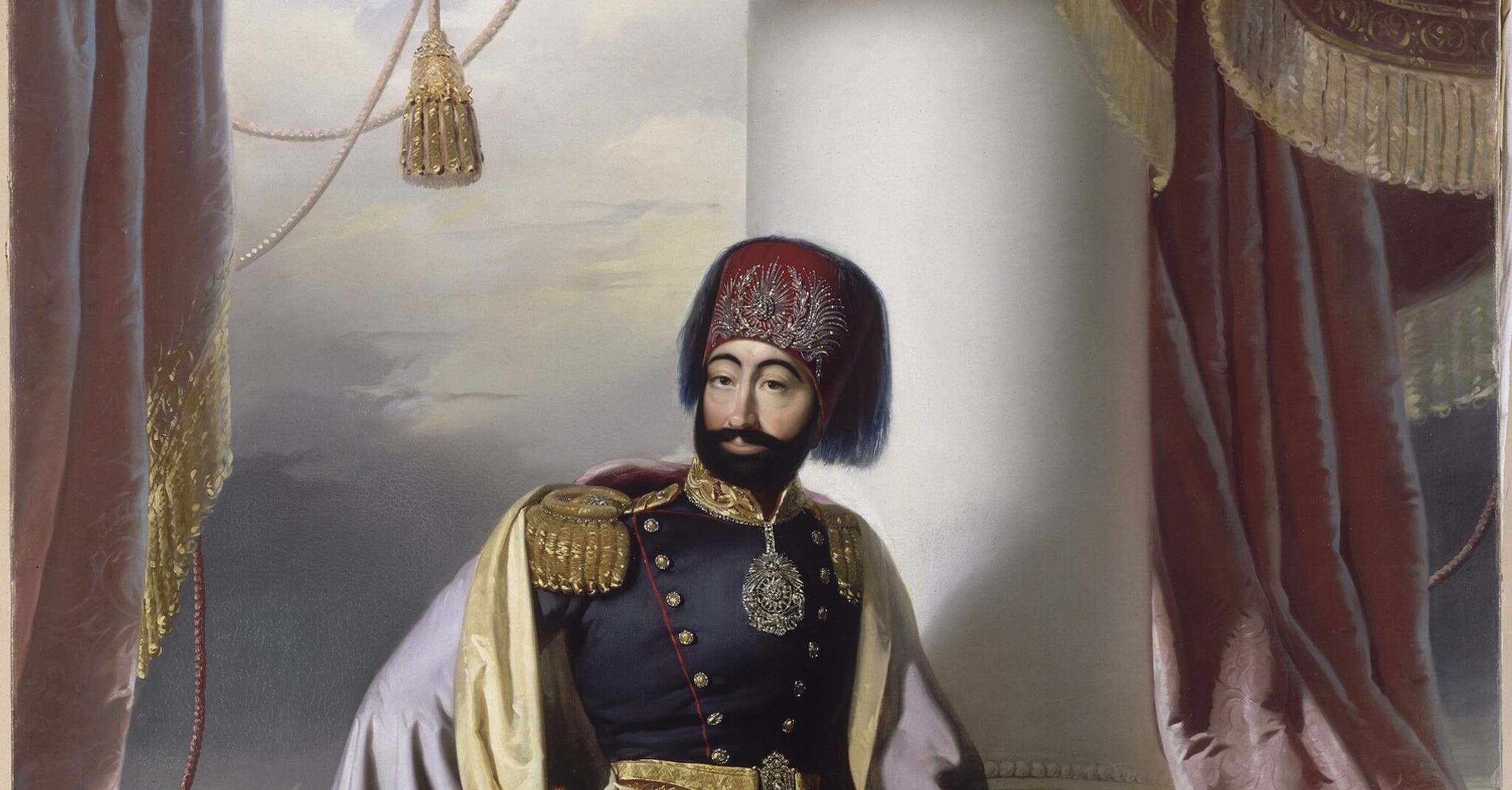
Mahmud extended his reforms beyond the military and administration into the social fabric of the empire. He introduced regulations concerning attire, most notably banning the traditional turbans and old headgear associated with the Janissaries and replacing them with the fez in 1826. This sartorial transformation was extended to civil servants in 1829, who were required to adopt Western-style trousers, jackets (setre or frock coats), and black leather boots, abandoning traditional robes and baggy trousers (şalvar). Even mustaches and beards were regulated. Mahmud’s aim was not merely superficial; these changes were designed to create a visual uniformity, a single "Ottoman citizen" whose individual religion, sect, or social status was obscured by a modern, standardized appearance, fostering a sense of shared identity and loyalty to the state.
Education was another critical area. In 1824, he made primary education compulsory for both girls and boys in Constantinople, a revolutionary step for its time. Recognizing the inadequacy of traditional religious schools, he initiated a new, more secular system of education that incorporated arithmetic, science, and foreign languages. To address the shortage of qualified educators for this new system, Mahmud implemented a visionary program: sending talented students abroad to Europe for higher education. These individuals, upon their return, were appointed to key positions within the state, becoming the vanguard of a new, Western-educated bureaucracy.
Mahmud’s personal conduct also reflected his modernizing zeal. As historian N. Berkes observed: "It was he, too, who initiated the first changes in the lives of the palace inhabitants. Like his contemporary European monarchs, he was the one who ventured outside the capital, traveled, boarded steamships, and even took an interest in learning foreign languages. Due to these behaviors, he was viewed by some among the populace as a sultan who had become ‘infidel-like.’ It was he who strove to refrain from the arbitrary governance, including confiscation of property and ordering executions, that had persisted as a legacy of the habits of former sultans" (Berkes, 173). His personal embrace of modernity underscored his commitment to transformation, even at the cost of being branded an "Infidel Sultan." He also began to curb the arbitrary confiscation of property and executions, striving for a more rational system of justice.
The Egyptian Crisis: A Final Humiliation
Despite his monumental reforms, Mahmud II’s reign concluded with a bitter and humiliating defeat at the hands of his own provincial governor, Mehmed Ali Pasha of Egypt. Having committed his forces to aid Mahmud in suppressing the Greek rebellion, Mehmed Ali Pasha had suffered catastrophic losses, most notably the destruction of his fleet at Navarino in 1827. In 1831, he demanded the governorships of Syria, Crete, and Adana as compensation. Mahmud’s refusal ignited the final major crisis of his reign.
Mehmed Ali Pasha, with a formidable modernized army, dispatched his son, Ibrahim Pasha, who swiftly conquered Palestine and Syria. The Egyptian forces then advanced deep into Anatolia, decisively defeating the main Ottoman army at Konya in 1832. This placed Constantinople itself under direct threat. In a desperate plea for assistance, Mahmud II turned to Russia, his traditional adversary, signing the Treaty of Hünkâr İskelesi in 1833, which effectively made the Ottoman Empire a Russian protectorate for a period. Under immense pressure, Mahmud was forced to accede to Mehmed Ali’s demands, ceding control of Syria, Adana, and Jeddah. It was an unprecedented humiliation: a provincial governor had defeated the Sultan.

Mahmud, however, could not accept this defeat as final. He spent the remainder of his reign rebuilding his forces, determined to reclaim lost territories and restore imperial prestige. By 1839, he felt strong enough to launch a new campaign against Mehmed Ali Pasha. On June 24, 1839, the two armies clashed at Nezib. The outcome was an utter disaster for the Ottoman forces, which were annihilated, with only a handful escaping. Compounding the catastrophe, the Ottoman fleet, which had set sail from Constantinople to attack Egyptian forces, was surrendered to Egypt by its admiral, Ahmed Fevzi Pasha, upon receiving news that the Sultan was on his deathbed.
Mahmud II died on June 30, 1839, just six days after the annihilation of his army. Tragically, he passed away without ever knowing the complete destruction of his land forces or the ultimate betrayal of his navy. His long and arduous reign, dedicated to revitalizing the empire, ended in a devastating military defeat that underscored the depth of the Ottoman crisis.
Legacy and Implications
Mahmud II was, without question, a radical reformer who transformed the Ottoman State in ways no predecessor had dared. His reforms, while visionary and ultimately essential for the empire’s survival, were not universally accepted by the populace, who often felt crushed beneath the weight of rapid and imposed changes. The nickname "Infidel Sultan" itself speaks volumes about the conservative resistance he faced.
Nevertheless, the institutions he established and the modernized system he implemented laid the irrefutable foundations for the Tanzimat era (Reorganization) that followed, a period of intensive Westernizing reforms. More profoundly, his tireless efforts to centralize power, modernize the military, rationalize administration, and instill a sense of common Ottoman citizenship directly paved the way for the emergence of the modern Republic of Turkey. While the extent of his reforms’ immediate success remains a matter of historical debate, there is no doubt that Mahmud II stands as one of the most significant and transformative sultans in Ottoman history, a bridge between an ailing empire and a nascent modern state.