The Digital Brushstroke: Jacob Holster and the Rise of Painterly AI Aesthetics
In an era where generative artificial intelligence is frequently criticized for its "plastic" sheen and clinical perfection, a new vanguard of artists is emerging to reclaim the medium’s potential for warmth, texture, and humanistic expression. At the forefront of this movement is Jacob Holster, known to the digital art world by his handle @bandyquantguy. A scholar, musician, and filmmaker, Holster has carved out a unique niche that defies the current trend toward hyper-realism, opting instead for a "painterly" aesthetic that bridges the gap between traditional fine art and cutting-edge machine learning.
This article explores the work of Jacob Holster, his role as an Assistant Teaching Professor at Penn State University, and how his academic background in music education informs a visual language that is reshaping our understanding of AI as a creative tool.
Main Facts: Defining the "Painterly" AI Movement
The current landscape of AI-generated imagery is largely dominated by tools like Midjourney, DALL-E 3, and Stable Diffusion, which often default to high-contrast, glossy, and photographically "perfect" renders. While impressive, these outputs often fall into the "uncanny valley"—a space where images look real enough to be unsettling but lack the tactile soul of physical media.

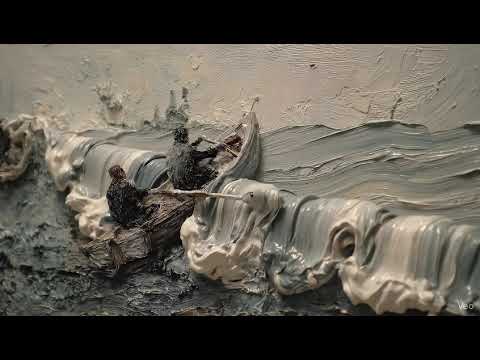
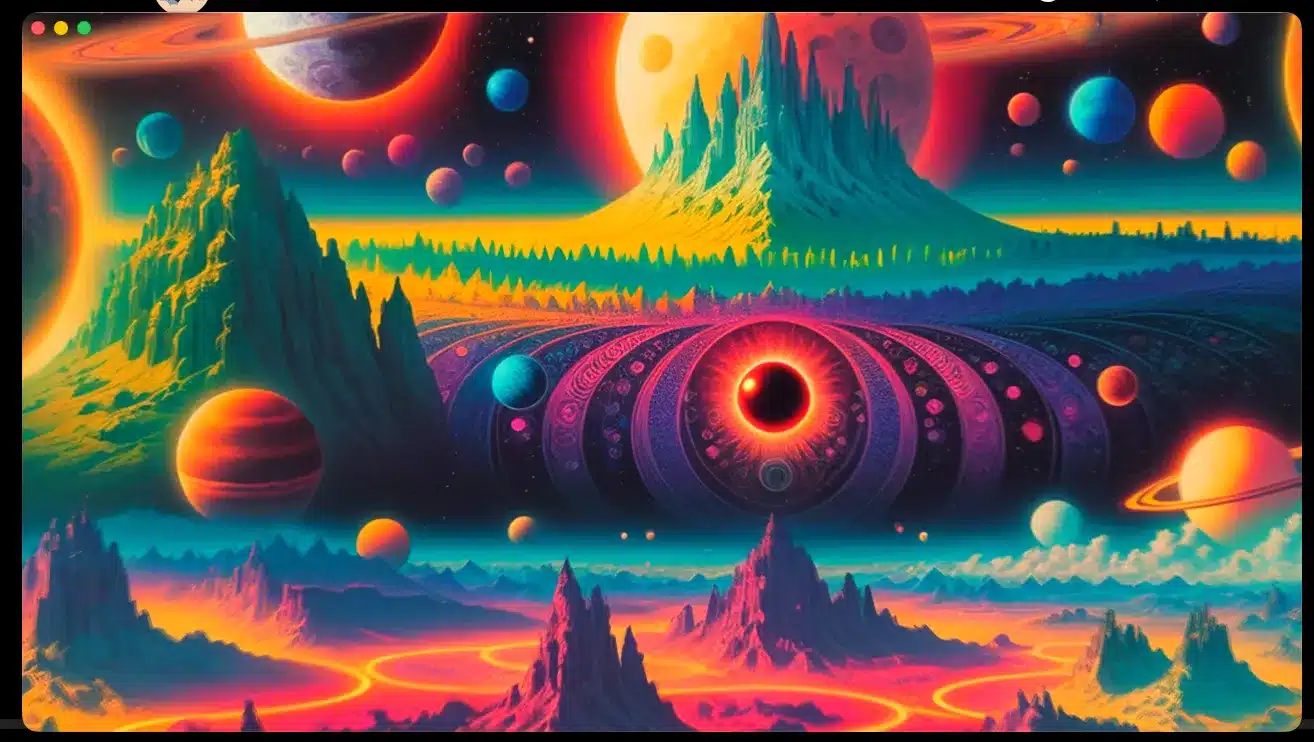
Jacob Holster’s work represents a deliberate departure from this trajectory. His aesthetic, often categorized under his Paint World series, prioritizes:
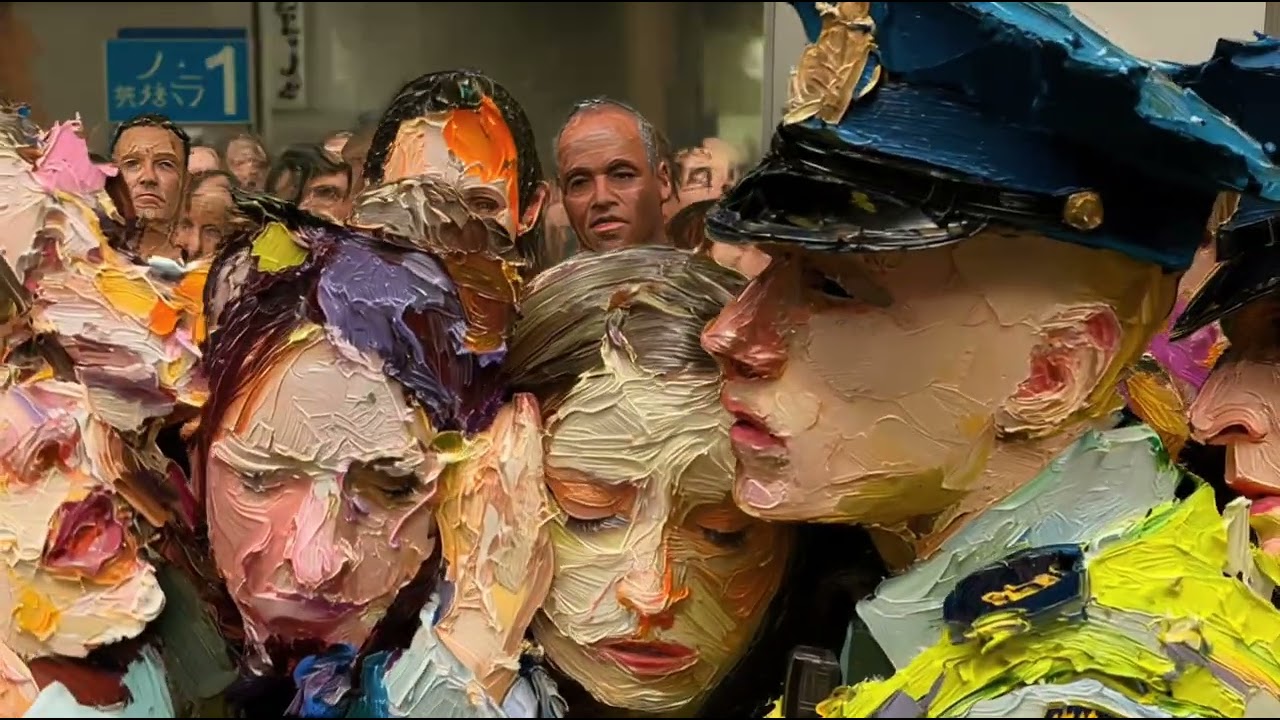
- Tactile Texture: Visuals that evoke the thick impasto of oil paintings or the delicate washes of watercolor.
- Humanistic Narrative: A focus on the "human terrain" of art, exploring consciousness, memory, and pedagogical inquiry.
- Interdisciplinary Fusion: The integration of sound, movement, and visual art, stemming from his background in music education.
Holster’s recent short film, Art Is Human Terrain, has become a touchstone for this style, demonstrating that AI can be used to generate work that feels lived-in, flawed, and deeply emotional.
Chronology: From Pedagogy to the Digital Canvas
Jacob Holster’s journey into the world of AI art is not that of a traditional graphic designer, but rather that of a scholar interested in the mechanics of learning and creativity.
The Academic Foundation
Holster currently serves as an Assistant Teaching Professor of Music Education at Penn State University. His academic career has long been centered on how humans learn, how they express themselves through sound, and how technology can facilitate—or hinder—that process. This background is crucial to understanding his art; he views AI not as a "magic button" for content creation, but as a complex pedagogical partner.
The Emergence of @bandyquantguy
Around 2022 and 2023, as generative AI tools became accessible to the public, Holster began experimenting with how these models could interpret musical concepts and abstract human emotions. Operating under the name @bandyquantguy, he began sharing short vignettes on Instagram and YouTube. These early experiments eventually coalesced into the Paint World series—a collection of over 40 distinct visual explorations that treat the digital screen as a canvas for "living" paintings.
Recent Milestones
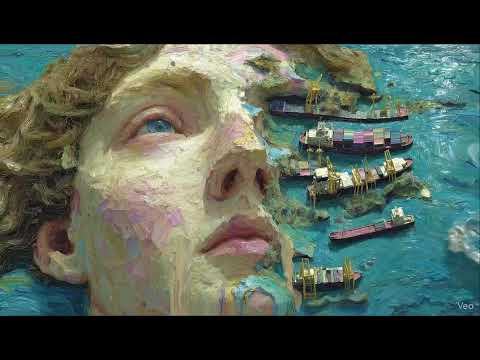
In late 2023 and early 2024, Holster’s work gained significant traction within the surrealist and AI art communities. Projects like Le Voyage [Paint World 28] and Recipe for Consciousness [Paint World 38] showcased a maturing style that moved away from static images toward fluid, cinematic experiences. His work was recently highlighted by Surrealism Today, cementing his status as a key figure in the "Digital Impressionism" movement.
Supporting Data: The Philosophy of "Human Terrain"
To understand why Holster’s work resonates, one must look at the data of his creative output. His projects are rarely "one-off" prompts; they are iterative studies.
The "Paint World" Series
The Paint World series serves as a laboratory for Holster’s aesthetic theories. Each entry explores a specific intersection of color and motion:
- Le Voyage: An exploration of transit and transition, using blurred textures to simulate the feeling of a memory in motion.
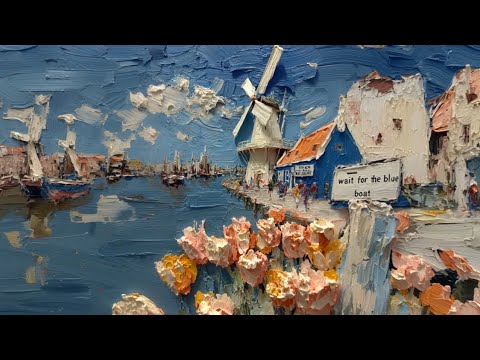
- Wait for the Blue Boat: A study in atmospheric perspective, where the AI is pushed to render water not as a realistic fluid, but as a series of rhythmic, painterly strokes.
- Recipe for Consciousness: A more abstract piece that uses visual metaphors to discuss the "ingredients" of the human mind, reflecting his academic interest in cognitive processes.
Art as "Human Terrain"
In his film Art Is Human Terrain, Holster posits a thesis that is central to his work: that art is a landscape shaped by human experience. In this film, the AI acts as a topographical tool, mapping out the textures of human thought. The "data" here is the history of human art—the AI has been trained on millions of human-made paintings, and Holster uses it to synthesize those collective brushstrokes into a new, yet familiar, visual language.
Official Responses: The Academic and Artistic Intersection
As a professor at a major research institution like Penn State, Holster’s work is subject to a different level of scrutiny than that of a hobbyist. His dual role allows him to provide "official" responses to the ongoing debate regarding AI in the classroom and the studio.
AI in Pedagogy
Holster’s research examines the convergence of AI and music education. He argues that AI should not replace the foundational skills of music or art but should be used to lower the barrier to "creative play." In his view, the AI is a medium—much like a piano or a paintbrush—that requires a high degree of "human terrain" (knowledge, taste, and intent) to master.
The "Anti-Gloss" Movement
The artistic community has responded favorably to Holster’s "anti-gloss" approach. Critics note that while many AI artists are obsessed with the resolution of their images (4K, 8K, photoreal), Holster is obsessed with the resolution of the soul. By leaning into the "artifacts" of AI—the strange swirls and textures that occur when the model tries to mimic paint—he transforms a technical limitation into a stylistic choice.
Implications: The Future of the AI Aesthetic
The work of Jacob Holster has broad implications for the future of digital media, education, and the fine art market.
1. The End of the "AI Look"
As more artists follow Holster’s lead, the generic "AI look"—characterized by smooth surfaces and perfect lighting—will likely become a sign of amateurism. Holster proves that the future of AI art lies in stylization and authorship. The more an artist can bend the tool to a specific, non-default aesthetic (like his oil-painting style), the more "human" the work becomes.
2. A New Era for Music Education
By integrating AI into his teaching at Penn State, Holster is preparing the next generation of educators for a world where AI is ubiquitous. His work suggests a future where music students might use AI to "visualize" the textures of a symphony, creating a multi-sensory educational experience that was previously impossible.
3. The Preservation of the "Human Element"
Perhaps the most significant implication of Holster’s work is the reassurance that human sensibility remains the most important component of the creative process. Even when using a machine that can generate millions of images a second, it takes a human eye—informed by years of study in music, pedagogy, and history—to curate and direct those images into something meaningful.
4. Redefining Digital Surrealism
Holster is part of a movement that is redefining surrealism for the 21st century. Traditional surrealists like Dalí or Magritte sought to unlock the subconscious through physical paint. Holster uses the "subconscious" of the internet—the massive datasets of AI—to create a new form of digital surrealism that feels both ancient and futuristic.
Conclusion: The Scholar-Artist
Jacob Holster (@bandyquantguy) represents a necessary evolution in the world of generative media. By grounding his work in academic inquiry and a deep respect for traditional painterly aesthetics, he has moved beyond the "novelty phase" of AI. His work serves as a reminder that technology is at its best when it is warm, textured, and, above all, human.

As he continues his work at Penn State and his explorations in the Paint World, Holster remains a vital voice for those who believe that the future of art is not a choice between human and machine, but a beautiful, textured synthesis of both.
Where to Explore His Work:
- Instagram: @bandyquantguy
- YouTube: Jacob Holster
- Academic Profile: Penn State University, Department of Music Education