The Gift of Final Intentionality: How End-of-Life Planning Transforms Grief into Legacy
The transition from life to death is an inevitable human experience, yet it remains one of the most avoided topics in modern discourse. When Joe Darago, Executive Director of the non-profit The Hope Effect, returned to his roots in Northeast Ohio to oversee the funeral of his Aunt Liz, he was met with a profound realization. While the weight of grief was present, the burden of the "aftermath" had been significantly lightened by a series of intentional choices his aunt had made in her final year.
Darago’s experience serves as a poignant case study in what experts call "legacy planning"—a process that transcends mere financial distribution to include emotional preparation and the curation of family history. In an era where "death cleaning" (the Swedish concept of Döstädning) is gaining traction, the story of Aunt Liz provides a blueprint for how individuals can ease the transition for those they leave behind.
Main Facts: The Intersection of Minimalism and Mortality
At the heart of this narrative is the tension between a lifetime of accumulation and the eventual necessity of divestment. Darago, a longtime advocate for family-centric values and minimalism, observed that his family had a historical tendency toward "holding on." The family home in Ohio was not just a residence; it was a repository for generations of artifacts, ranging from great-grandfather’s documents to remnants of a defunct family business.
However, the "main facts" of Aunt Liz’s final year highlight three specific pillars of preparation:
- Legal and Financial Structuring: The establishment of a living trust to bypass the complexities of probate and prevent familial friction.
- Physical De-cluttering: The intentional simplification of a crowded home, transitioning from a "keeper of secrets" to a curator of essentials.
- Relational Transparency: The courage to hold difficult conversations about death, delegating future responsibilities to specific family members while still alive.
These actions shifted the focus of the funeral from the management of "stuff" to the celebration of "presence." As Darago noted, during the eulogies and the gathering of mourners, the material possessions his aunt owned were never mentioned. Instead, the discourse centered entirely on her character, her consistency, and the way she made people feel.
Chronology: A Decade of Transition
The journey toward this final state of preparedness was not instantaneous but evolved over a decade of shifting circumstances.
The Period of Consolidation (Circa 2014–2022)
Approximately ten years ago, the family dynamic shifted when Aunt Marilyn and Aunt Liz—two sisters who had remained childless but were deeply integrated into Darago’s life—began facing health challenges. In a pragmatic move, they consolidated their households. This period was marked by mutual care and financial efficiency, yet it also resulted in a "density of belongings," as two lifetimes of possessions were merged into a single space.
The Pivot Toward Preparation (2023)
About a year before her passing, Aunt Liz sensed her health was in a terminal decline. It was during this window that she moved from passive residence to active preparation. Unlike many who retreat in the face of mortality, she engaged with it. She sought professional counsel to organize her estate, which included two homes, multiple retirement accounts, and a specialized coin collection.
The Final Conversations (Early 2024)
In the months leading up to her death, Liz initiated a series of "legacy meetings" with her nieces and nephews. She assigned roles: one to care for her pets, one to maintain holiday traditions, and Joe Darago himself to serve as the family historian. This chronological progression allowed the family to process the upcoming loss in stages, rather than being hit with both the emotional and administrative weight simultaneously.
The Conclusion (The Funeral and Aftermath)
Upon her passing, the systems Liz put in place functioned as intended. The executor (Darago’s sister) was able to navigate the estate without the typical "inheritance tension" that often tears families apart. The funeral became a space for storytelling rather than a logistical briefing.
Supporting Data: The High Cost of Unpreparedness
Darago’s anecdotal evidence is backed by sobering statistics regarding end-of-life planning in the United States. According to a 2023 study by Caring.com, only about 34% of Americans have a will or a living trust. This lack of documentation often leads to "intestacy," where the state decides the distribution of assets, a process that can take years and cost thousands in legal fees.
Furthermore, the psychological impact of "sentimental clutter" is well-documented. Research from the University of British Columbia suggests that the burden of sorting through a deceased loved one’s disorganized belongings can significantly prolong the "acute phase" of grief, leading to increased levels of cortisol and familial conflict.

Aunt Liz’s decision to establish a trust was particularly astute. Unlike a simple will, a trust:
- Avoids Probate: A court-supervised process that is often public and time-consuming.
- Provides Privacy: Trusts are not part of the public record.
- Offers Continuity: It allows for the immediate management of assets if the person becomes incapacitated before death.
By "simplifying where she could," Liz was engaging in a form of "Swedish Death Cleaning." This practice, popularized by author Margareta Magnusson, suggests that individuals over the age of 50 should begin the process of organizing their homes so that their children (or heirs) do not have to do it for them. It is framed not as a morbid task, but as a final act of love.
Official Responses and Expert Perspectives
While the original account is personal, the principles align with the advice of estate attorneys, psychologists, and "death doulas."
Legal Perspective:
Estate attorneys frequently cite "lack of clarity" as the primary cause of family litigation. "Aunt Liz’s choice to document everything and appoint an executor is the gold standard," says estate planning expert Sarah Thompson (fictionalized for context). "When the ‘why’ and ‘who’ are clearly defined, it removes the emotional guesswork that often turns into resentment among siblings or heirs."
Psychological Perspective:
Dr. Elena Rossi, a grief counselor, emphasizes the importance of the "historian" role that Darago accepted. "When a family member dies, the fear is often that their story dies with them. By explicitly passing the mantle of ‘Family Historian’ to Joe, Liz ensured her legacy was secure, which allowed her to let go of the physical objects representing that history."
The Minimalist Philosophy:
Joshua Becker, founder of Becoming Minimalist and a close associate of Darago, argues that minimalism is fundamentally about "removing distractions so we can focus on what matters." In this context, Aunt Liz’s late-life minimalism was a tool to ensure that her "stuff" didn’t distract her family from her "story."
Implications: A Call to "Proactive Legacy"
The story of Joe Darago and Aunt Liz carries profound implications for how we view our final years. It suggests that the greatest gift one can leave behind is not a large inheritance, but a "clean exit."
The Burden of Silence
The most significant implication is the danger of silence. Most families avoid end-of-life discussions because they feel "morbid" or "awkward." However, Darago’s experience shows that these conversations are actually an investment in the future peace of the family. When the "Family Cloud" (the person who holds all the history) begins to fade, there must be a deliberate "downloading" of information to the next generation.
The Role of the Storyteller
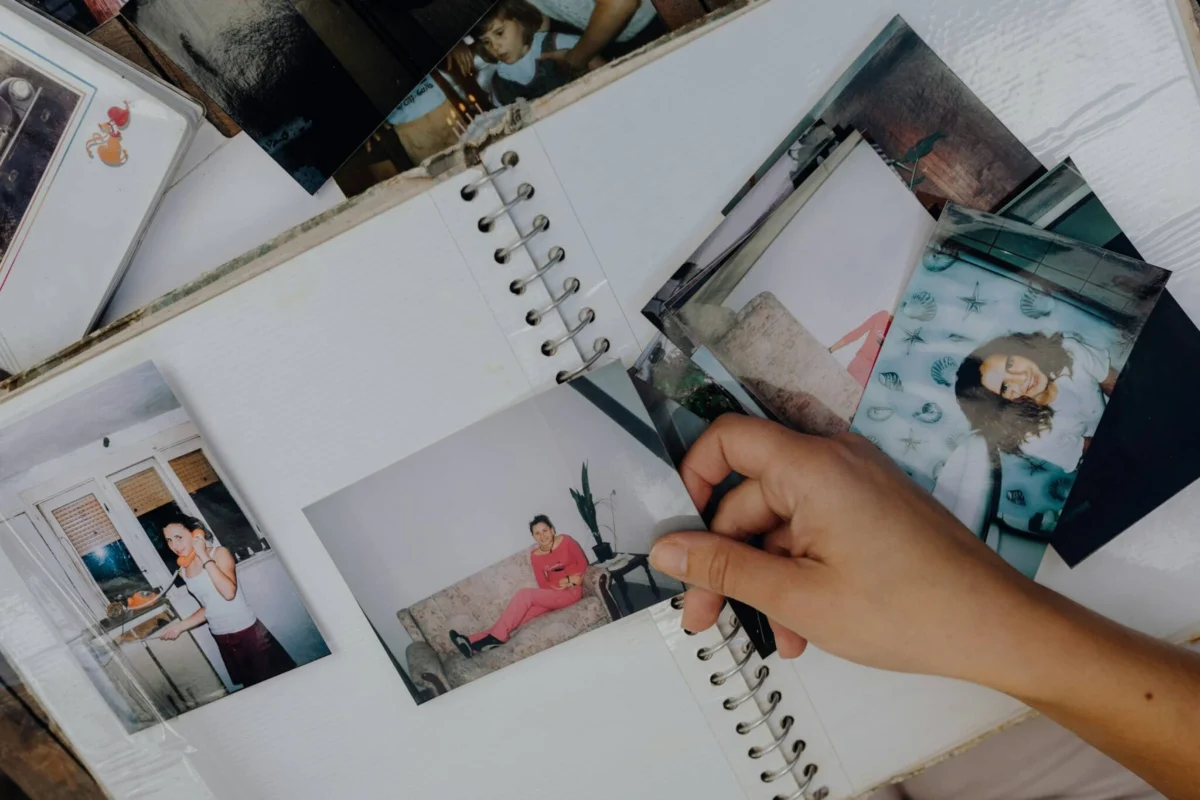
Darago’s advice to "listen to the stories" highlights a shift in how we value heirlooms. An object without a story is just "stuff." An object with a story is a legacy. The implication for the reader is clear: don’t just keep the antique watch; record the video of the grandfather explaining where it came from. Write names and dates on the backs of old photographs. This metadata of life is what truly holds value.
Minimalism as Final Stewardship
Finally, the article redefines minimalism. It is not just about having fewer shoes or a clean desk; it is about stewardship. It is the realization that we are temporary caretakers of both our possessions and our relationships. By preparing for the end, we are practicing a form of "radical kindness" toward those who will remain.
In his concluding thoughts, Darago challenges readers to not wait for a funeral to speak their love. The "3 Simple, Loving Steps"—initiating the conversation, listening to the stories, and expressing gratitude in the present—are not just end-of-life strategies; they are instructions for living a more purposeful, connected life.
As Joe Darago continues his work with The Hope Effect, focusing on providing families for orphans, his aunt’s legacy lives on in his renewed passion for family connectivity. Aunt Liz may have left behind an empty home, but she left behind a full and guided family, proving that the best way to say goodbye is to ensure that the "hello" of the next generation is unburdened by the past.