Unveiling the Enigma: The Queen of the Night, A Mesopotamian Masterpiece
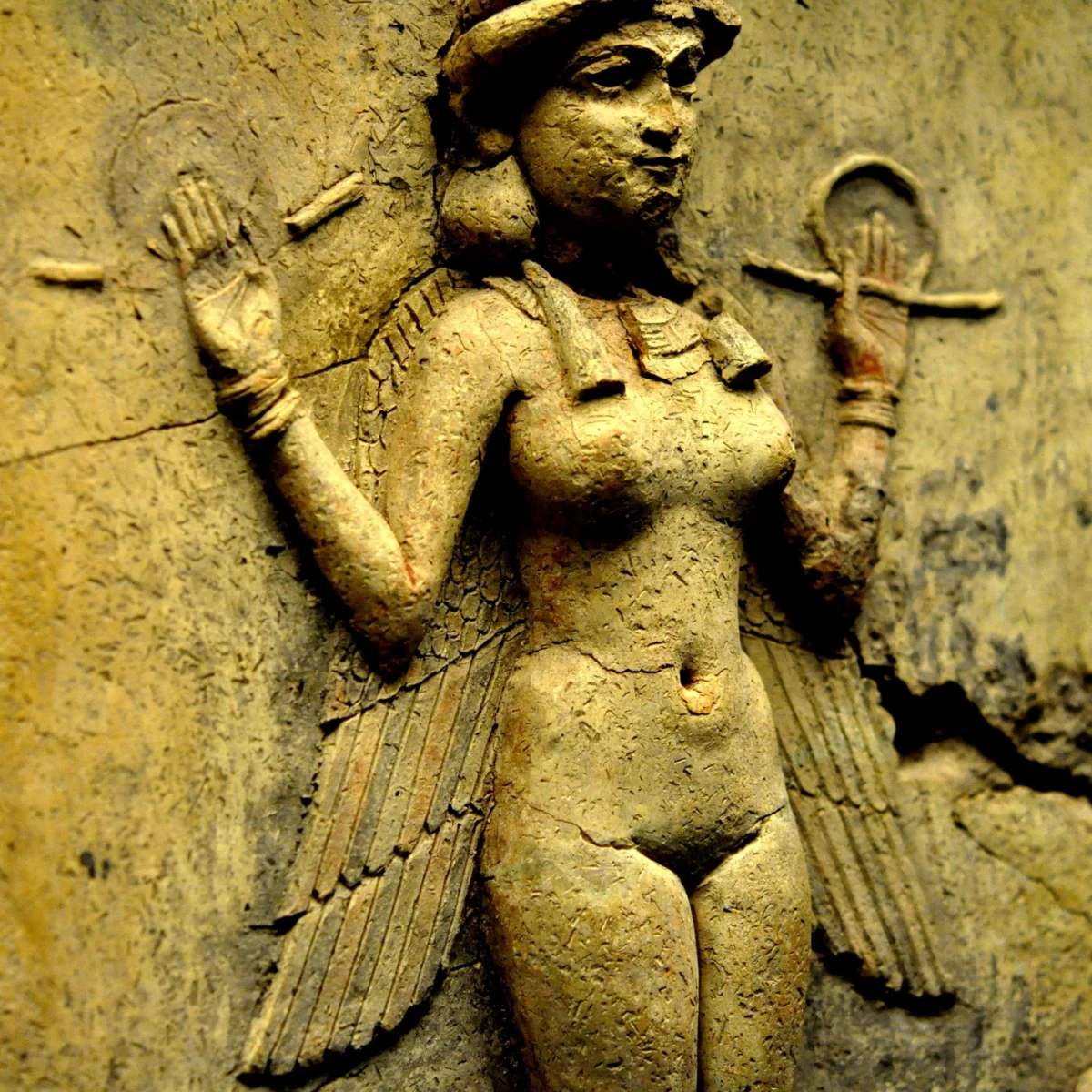
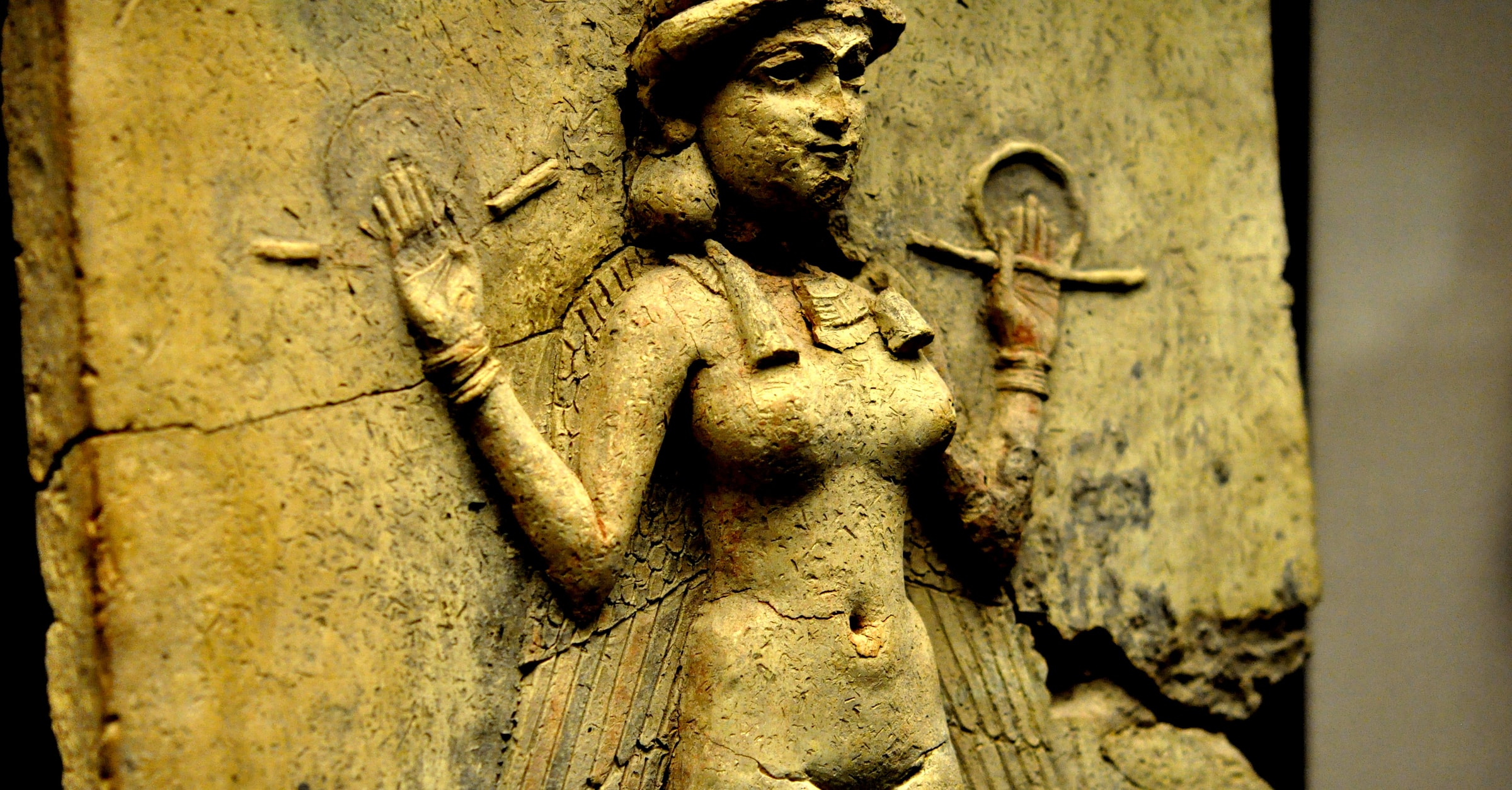
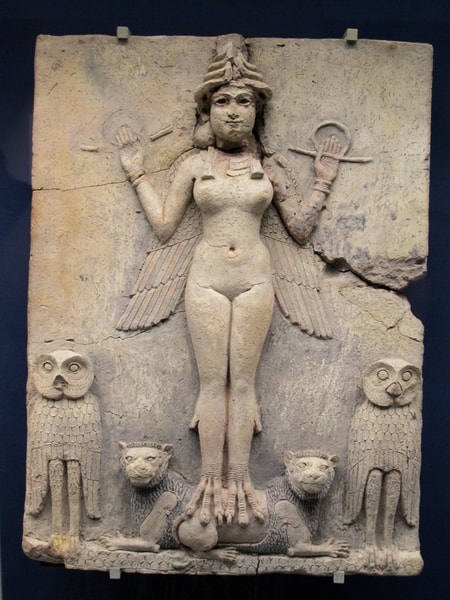
London, UK – Standing sentinel in Room 56 of the British Museum, a baked clay plaque known as The Queen of the Night commands attention. This high-relief terracotta, measuring 19.4 inches (49.5 cm) high, 14.5 inches (37 cm) wide, and 1.8 inches (4.8 cm) thick, depicts a powerful, naked winged woman flanked by two imposing owls, perched atop the backs of two lions. A relic of profound antiquity, this extraordinary artifact offers a tantalizing, yet frustratingly incomplete, window into the complex religious and artistic landscape of ancient Mesopotamia.
A Glimpse into Antiquity: The Artifact’s Core Identity
The primary facts surrounding The Queen of the Night, also referred to as the "Burney Relief," paint a picture of a sophisticated artwork from a pivotal era. Its origins are traced to southern Mesopotamia, specifically Babylonia, during the illustrious reign of Hammurabi (1792-1750 BCE). This period, renowned for its legal and cultural achievements, saw the creation of masterpieces like Hammurabi’s famous diorite stele of laws and the equally significant "God of Ur," both of which share stylistic and technical qualities with the plaque, suggesting a common artistic tradition or even workshop.
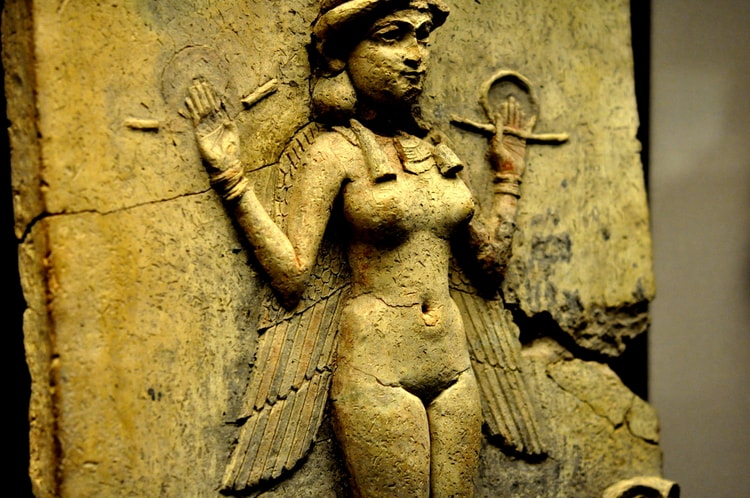
The central figure, undeniably a deity, is adorned with the distinctive horned headdress, a universal symbol of divinity in Mesopotamian iconography. In her raised hands, she grasps the sacred rod-and-ring symbols, emblematic of divine authority and justice. Her body is a fusion of human and avian elements: powerful wings unfurl from her back, while her legs culminate in formidable bird talons, seemingly gripping the lions’ backs with fierce resolve. A notable detail is the presence of a dew claw on her calves, further emphasizing her avian nature. Below her feet, along the plaque’s base, a motif representing mountains indicates a setting of high ground, perhaps a sacred or liminal space.
The specific identity of this winged goddess, however, remains one of the most compelling and hotly debated mysteries in Assyriology. Scholars generally propose three main candidates: Inanna (the Sumerian goddess of love, fertility, and war, later known as Ishtar in Akkadian tradition), Lilith (a formidable demoness), or Ereshkigal (the formidable Queen of the Underworld). Each proposition brings its own set of compelling arguments and equally potent counterpoints, contributing to the plaque’s enduring allure.
Journey Through Time: The Relief’s Modern Odyssey
The modern history of The Queen of the Night is as captivating and complex as its ancient origins, marked by clandestine removal, changing hands, and a protracted journey to its current esteemed position.
Disappearance from Iraq and the Shadow of Illicit Trade:
Sometime between the 1920s and 1930s, a period of intense archaeological activity and unfortunately, widespread illicit trade in antiquities in Iraq, the plaque was removed from its original context. Unlike artifacts unearthed through systematic archaeological excavation, its precise find spot, the circumstances of its discovery, and its original setting remain entirely unknown. This lack of provenance is a significant challenge for scholars, as crucial information about its purpose and cultural context was lost forever, a common ethical dilemma in the world of ancient art. The removal of such an important piece without proper documentation highlights the destructive impact of the unregulated antiquities market on our understanding of history.
The Antiquities Market and Sydney Burney:
The plaque first surfaced in London in the possession of a Syrian antiquities dealer. It was from this dealer that Sydney Burney, a prominent figure in the British art world, acquired the piece. Burney, a former captain in the English Army during World War I and later president of the Antique Dealers Association in London, was a discerning collector. In 1936, the "Burney Relief," as it was then known, gained public prominence when it was featured in the prestigious Illustrated London News, drawing considerable attention to its unique artistry. Interestingly, prior to Burney’s purchase, the British Museum had been offered the plaque but had declined to acquire it, a decision they would later undoubtedly regret.
Authentication and a Protracted Path to the Museum:
The relief underwent rigorous analysis in 1933 and was formally authenticated in 1935, confirming its ancient Mesopotamian origins and exceptional quality. Despite this validation, it remained outside the British Museum’s collection for decades. After Burney, the plaque changed hands twice more over the subsequent years. The value and desirability of such unique artifacts only increased with time, and the British Museum, recognizing its profound historical and artistic significance, finally acquired it in 2003. The price paid was a substantial £1,500,000, a stark contrast to the likely much lower sum requested almost seven decades earlier. This acquisition underscored the museum’s evolving policies regarding ancient artifacts, particularly those with incomplete provenance, balancing the desire to preserve cultural heritage with ethical considerations.
The Modern Naming: "The Queen of the Night":
It was upon its acquisition by the British Museum in 2003 that the "Burney Relief" was officially christened The Queen of the Night. This modern designation was inspired by several key iconographical elements. The original background of the plaque bore traces of a dark, almost black pigment, evoking the essence of night. Coupled with the downward-pointing wings of the figure and her talon-like feet, elements frequently associated with the underworld or nocturnal spirits in ancient Mesopotamian belief, the name resonated with the aura of mystery and chthonic power emanating from the relief. It is crucial to remember that this name is a contemporary interpretation, and the artifact’s original title and precise purpose remain lost to the mists of time.
Craftsmanship of the Ancients: The Making of a Masterpiece
The exquisite quality of The Queen of the Night is a testament to the advanced artistic and technical skills of its Mesopotamian creators. Its composition and manufacturing process provide valuable insights into ancient craft practices.
Material and Technique:
The relief was crafted from clay, carefully mixed with chaff – a common practice to bind the material and prevent cracking during the drying and firing processes. The decision to fire the piece in an oven, rather than simply sun-dry it, is particularly telling. In southern Mesopotamia, where timber was a scarce and precious commodity, its use for firing clay objects was not undertaken lightly. This method was reserved for only the most significant and enduring works of art and architecture, underscoring the profound importance placed upon this specific plaque. The intense heat of the kiln transformed the fragile clay into durable terracotta, ensuring its remarkable survival for over three millennia.
Production Process:
Dr. Dominique Collon of the British Museum has meticulously analyzed the plaque’s creation, detailing a sophisticated multi-stage process. The figure was not separately crafted and then attached; rather, it was an integral part of the plaque from its inception. Collon explains that "clay pressed into a mould and allowed to dry in the sun… the figure was made from fairly stiff clay which was folded and pushed into a specially shaped mould, with more clay added and pressed in behind to form the plaque." This method ensured the structural integrity and high relief of the goddess.
After the initial molding, once the clay had reached a "leather-hard" consistency, intricate details were carved into the surface. The entire surface was then painstakingly smoothed, a meticulous process whose traces are still visible today, particularly near the goddess’s navel. The edges of the plaque were precisely trimmed with a knife before the final and crucial step: baking it in an oven. This careful, labor-intensive process speaks volumes about the value and skill invested in its creation.
Original Pigmentation:
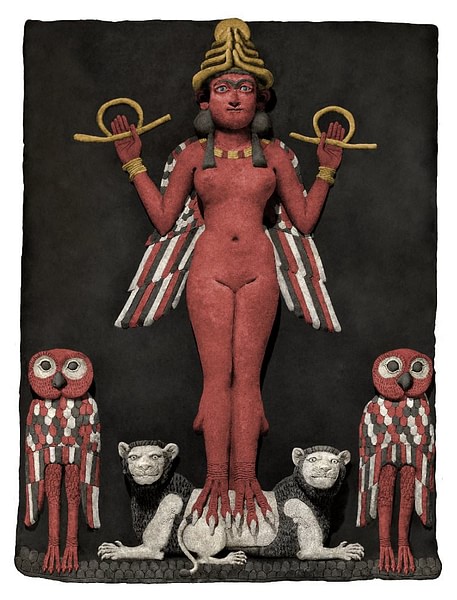
Once cooled from the firing, the plaque was brought to life with vibrant colors, although these have largely faded over the centuries. The background was painted a deep black, providing a dramatic contrast for the central figures. The goddess herself and the owls flanking her were rendered in striking red, while the lions were painted white, their manes depicted in black. The most prestigious elements—the rod-and-ring symbols, the goddess’s necklace, and her horned headdress—were further accentuated with gold. While time has taken its toll, faint traces of these original pigments can still be detected on the piece today, offering a glimpse into its initial splendor and the aesthetic sensibilities of its creators.
Whispers from Ur: Unraveling Origins and Purpose
Without archaeological context, the exact place of manufacture and intended purpose of The Queen of the Night remain subjects of scholarly speculation. However, compelling evidence points to a specific region and offers intriguing theories regarding its function.
Geographical Origin: The Case for Ur:
The strongest theory regarding the plaque’s geographical origin centers on the ancient Sumerian city of Ur. Dr. Collon notes that "The god from Ur is so close the Queen of the Night in quality, workmanship and iconographical details that it could well have come from the same workshop, perhaps at Ur, where extensive remains of the Old Babylonian period were excavated between 1922 and 1934." Ur was a major urban center in ancient Mesopotamia, renowned for its sophisticated artistry and monumental architecture. The stylistic and technical parallels between The Queen of the Night and other artifacts from Ur during the Old Babylonian period are indeed striking, lending considerable weight to this hypothesis. This connection also raises the possibility that the individual who originally removed the plaque might have been associated with one of the excavation teams working in Ur during that era, or perhaps an opportunistic individual who stumbled upon it once it was uncovered.
Original Context and Placement:
The purpose for which such a magnificent piece was created is equally debated. Historian Thorkild Jacobsen famously theorized that the plaque might have been part of a shrine in a brothel, drawing upon the widespread belief in sacred prostitution throughout Mesopotamia. However, Dr. Collon counters this, suggesting that "if this were so, it must have been a very high-class establishment, as demonstrated by the exceptional quality of the piece." The level of craftsmanship, the precious materials (gold), and the complex iconography typically reserved for deities, suggest a more elevated or sacred context.
Collon further hypothesizes that the plaque would have been displayed on a mud-brick wall, likely within an enclosed structure, perhaps a temple, a private shrine, or a public building. The enduring survival of the fired terracotta plaque for over 3,000 years, even after the building that housed it collapsed or was abandoned, is attributed to its early burial. This protective layer of earth shielded it from the ravages of the elements and from potential vandalism, preserving its form for future generations to discover and ponder.
The Goddess or Demon? Debating the Queen’s Identity
The most captivating aspect of The Queen of the Night is the fervent academic debate surrounding the identity of the mysterious female figure. Her unique iconography has led scholars down divergent paths, each offering a compelling, yet ultimately unprovable, case.
The Enigmatic Nude: A Common Mesopotamian Motif
Before delving into specific candidates, it’s important to understand the broader context of nude female depictions in Mesopotamian art. Scholar Jeremy Black observes that "Hand-made clay figurines of nude females appear in Mesopotamia in prehistoric times; they have applied and painted features. Figurines of nude women impressed from a pottery or stone mould first appear at the beginning of the second millennium BC… It is very unlikely that they represent a universal mother goddess, although they may have been intended to promote fertility." This indicates that while nudity often carried connotations of fertility or sexuality, it was a common artistic trope, not necessarily always tied to the highest echelons of the pantheon. However, the grandeur and specific divine attributes of The Queen of the Night elevate her beyond a mere fertility figurine.
Candidate 1: Inanna/Ishtar – The Goddess of Love and War
Inanna, or her later Akkadian counterpart Ishtar, was one of the most prominent and revered goddesses in the Mesopotamian pantheon, presiding over love, sex, fertility, and war. At first glance, she appears a strong contender for the Queen’s identity.
Arguments for Inanna/Ishtar:
- Fertility Association: Inanna’s domain over love and sex aligns with the widespread nude female motif often linked to fertility.
- Lions: Inanna is frequently associated with lions, symbols of power and ferocity.
- Divine Regalia: The horned headdress, rod-and-ring symbols, and necklace are all appropriate attributes for a major goddess like Inanna. Thorkild Jacobsen, for instance, based his argument for Inanna on the goddess’s association with lions, her divine symbols, and the plaque’s overall message of fertility and power.
Arguments Against Inanna/Ishtar (Dr. Collon and others):
- Owls: While owls have been mentioned in some tales concerning Inanna, they were never a consistent or primary part of her established iconography. Dr. Collon points out that Inanna "is associated with one lion, not two," and the rod-and-ring symbol and necklace "could have been worn or held by any goddess." The very first published photograph in 1936, identifying the figure as Ishtar, notably appended the caveat: "whose supporting owls present a problem."
- Frontal Depiction: Crucially, Inanna is almost universally depicted in profile in ancient Mesopotamian art, never in a direct frontal pose as seen on the plaque. This iconographical inconsistency is a major stumbling block.
- Mountain Motif: While mountains could represent various sacred spaces, they don’t exclusively point to Inanna.
The initial identification with Ishtar in 1936 was likely influenced by her immense popularity and recognition among scholars, making her the most obvious choice at the time, despite the iconographical discrepancies.
Candidate 2: Lilith – The Nocturnal Demoness
The proposal that The Queen of the Night represents Lilith introduces a darker, more chthonic dimension to the debate. Lilith, primarily known from Hebrew tradition, has Mesopotamian precursors in the form of lilitu and ardat lili – female demons known for seducing and harming men. Male counterparts, lilu, targeted women and infants.
Arguments for Lilith (Rafael Patai):
- Gilgamesh Connection: Rafael Patai, in The Hebrew Goddess, links the plaque to the Lilith described in the Sumerian poem Gilgamesh and the Huluppu Tree, where she builds her house in a tree before being routed by Gilgamesh. Patai describes the plaque’s figure as "slender, well-shaped, beautiful, and nude, with wings and owl-feet. She stands erect on two reclining lions… and is flanked by owls." He concludes, "Evidently this is no longer a lowly she-demon, but a goddess who tames wild beasts and, as shown by the owls on the reliefs, rules by night."
- Nocturnal Association: The owls, as nocturnal creatures, and the potential dark background of the plaque, align with Lilith’s association with the night and the wilderness.
Arguments Against Lilith (Dr. Black and others):
- Status of Demons: The most significant counter-argument is the rarity of depicting evil gods and demons in high-quality art. Jeremy Black states, "Evil gods and demons are only very rarely depicted in art, perhaps because it was thought that their images might endanger people." A plaque of such exceptional craftsmanship and presumed importance would be highly unlikely to represent a malevolent, lesser demon like a lilitu.
- Origin: Lilith, in her most recognized form, primarily originates from Hebrew tradition, while the plaque is undeniably Mesopotamian. While Mesopotamian lilitu existed, they lacked the divine attributes and prominence suggested by the plaque’s regalia.
- Iconography: While owls are associated with lilitu, they are not the same type of owls depicted on the relief. Furthermore, the divine horned headdress, the sacred rod-and-ring symbols, and the overall powerful, authoritative pose argue against the portrayal of a mere demon. The mountain range, interpreted as representing the wilderness Lilith inhabits, is not exclusive enough to override the other powerful counter-arguments.
Candidate 3: Ereshkigal – Queen of the Great Below
The third and arguably strongest contender is Ereshkigal, Inanna’s older sister and the undisputed Queen of the Great Below, the Mesopotamian underworld. Her name, meaning "Lady of the Great Place," directly refers to the land of the dead.
Arguments for Ereshkigal:
- Downward-Pointing Wings: A crucial piece of iconography is the downward orientation of the goddess’s wings. Throughout Mesopotamia, downward-pointing wings were a definitive indicator of a deity or spirit associated with the underworld or death.
- Nakedness: Ereshkigal is famously depicted as naked in the seminal poem Inanna’s Descent to the Underworld: "No linen was spread over her body. Her breasts were uncovered. Her hair swirled around her head like leeks." The nude portrayal of The Queen of the Night aligns perfectly with this textual description.
- Frontal Depiction: Unlike Inanna, there are no known strictures against depicting Ereshkigal frontally. Her direct, unyielding gaze on the plaque could convey her immutable authority over death.
- Divine Regalia and Authority: As Queen of the Underworld, Ereshkigal would certainly be entitled to the horned headdress and the sacred rod-and-ring symbols. Dr. Collon notes, "Her frontality is static and immutable and, as Queen of the Underworld where ‘fates were determined’, hers was the ultimate judgment: she might well have been entitled to two rod-and-ring symbols," signifying absolute power.
- Lions and Owls: The two powerful lions she stands upon could symbolize her supreme command even over the mightiest creatures of the living world, while the owls, with their inherent association with darkness, night, and often ill omens or the departed, fit seamlessly with the realm of the dead.
- Ganzir and the Mountains: Ereshkigal’s palace, Ganzir, was believed to be located in the eastern mountains, providing a compelling link to the mountain range motif at the base of the plaque. Dr. Collon vividly describes the underworld over which Ereshkigal reigned: "It was a dark place and the dead, naked or clothed with wings like birds, wandered with nothing to drink and only dust to eat. Whatever they had achieved in life, the only sentence was death, pronounced by Ereshkigal."
Conclusion
Despite the compelling arguments for Ereshkigal, a definitive identification remains elusive. As Dr. Collon pragmatically observes, "No definite connection with Ereshkigal can be made as she has no known iconography: her association with death made her an unpopular subject." This lack of comparative artistic evidence for Ereshkigal, due to the understandable reluctance of ancient peoples to depict the formidable queen of death, ultimately prevents absolute certainty.
Implications and Enduring Mystery
The journey of The Queen of the Night from an ancient Mesopotamian workshop to a modern museum, and the relentless scholarly pursuit of her identity, carries profound implications for our understanding of history, art, and cultural heritage.
The Significance of the Unknown
The plaque stands as a powerful testament to the artistic sophistication and complex theological beliefs of ancient Mesopotamia. Its enduring mystery is not a weakness but a strength, continually challenging archaeologists, art historians, and the public to engage more deeply with the past. It highlights the inherent limitations of interpreting ancient artifacts when their original context is lost, underscoring the vital importance of systematic archaeological practices over illicit trade. The ethical debates surrounding its acquisition, particularly its unexcavated status, also serve as a crucial reminder of the ongoing responsibilities of major institutions in managing and preserving global heritage.
A Timeless Legacy
The Queen of the Night has transcended its origins to become a global cultural icon. Its enigmatic gaze continues to spark fascination and scholarly debate, drawing millions to the British Museum. It represents not just a piece of baked clay but a potent symbol of human creativity, spiritual yearning, and the enduring power of art to provoke questions across millennia. While her true name and precise purpose may forever elude us, the "Queen of the Night" remains a captivating ambassador from a distant past, inviting us to contemplate the profound mysteries of ancient civilizations and the timeless human quest for meaning.