
The Marduk Prophecy: An Ancient Text Unveils Power, Piety, and Propaganda in Mesopotamia
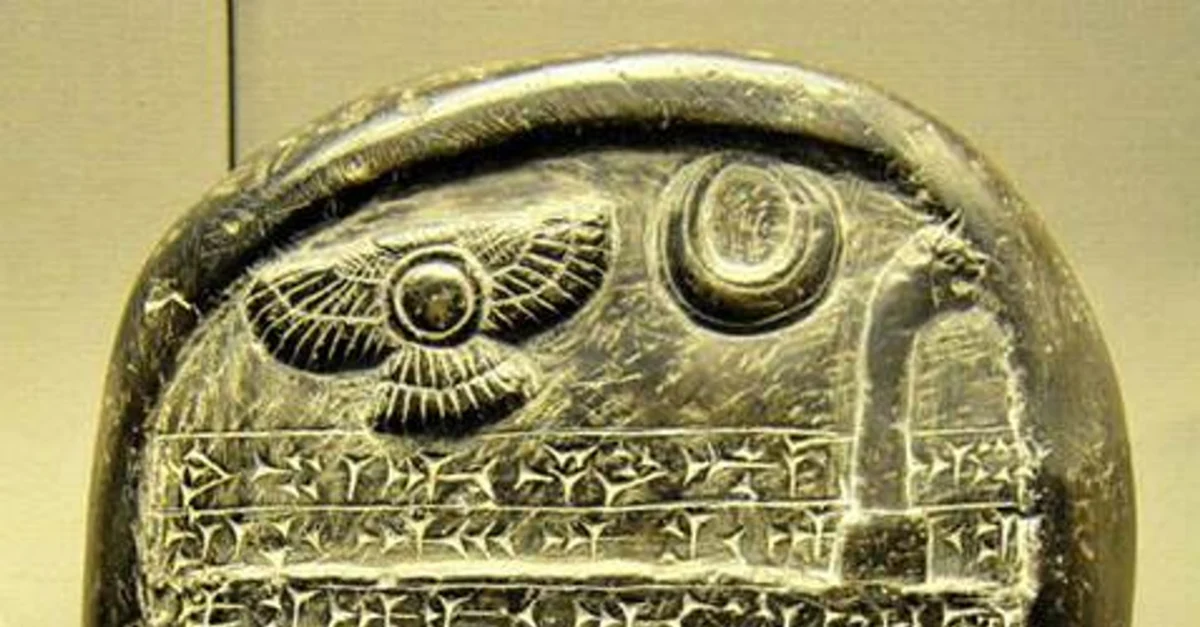
Ashur, Ancient Mesopotamia – Deep within the venerable city of Ashur, a remarkable document known as The Marduk Prophecy was unearthed in a building dubbed "The House of the Exorcist," adjacent to a temple. Dating between 713 and 612 BCE, this Assyrian text offers a fascinating glimpse into the intertwined worlds of religion, politics, and historical revisionism in the ancient Near East. Far more than a mere historical record, it narrates the tumultuous travels of the revered statue of the Babylonian god Marduk, from his home city to the distant lands of the Hittites, Assyrians, and Elamites, culminating in a powerful prophecy of its triumphant return at the hands of a strong Babylonian king.
This ancient manuscript is not merely a chronicle of events but a meticulously crafted piece of propaganda, almost certainly composed during the reign of Nebuchadnezzar I (circa 1121-1100 BCE). Following his decisive victory over the Elamites, which saw the precious statue repatriated to Babylon, the text served to legitimize his rule and celebrate his divine mandate. It exemplifies a common literary genre of the era, where historical occurrences were reinterpreted through a prophetic lens to bolster the authority of contemporary rulers.
I. Main Facts: Unveiling the Marduk Prophecy and its Political Resonance
Discovery and Context in Ancient Ashur
The discovery of The Marduk Prophecy in Ashur, a primary capital of the Neo-Assyrian Empire, is itself significant. Ashur, a city with deep historical roots stretching back to the third millennium BCE, was not merely an administrative center but a powerful religious hub dedicated to the god Ashur. The presence of such a document, chronicling the fate of Babylon’s chief deity, within an Assyrian context suggests its importance extended beyond Babylonian borders, possibly as a means for Assyrian scholars to understand or even critique Babylonian history and religious claims. "The House of the Exorcist" further hints at its potential ritualistic or scholarly use, perhaps by priests or scribes who sought to interpret divine will or historical omens. The document’s survival through centuries of conflict and change underscores its enduring cultural and historical value.
The Narrative of Divine Wanderings
At its core, The Marduk Prophecy recounts the repeated abduction and eventual return of Marduk’s cult statue. In ancient Mesopotamia, the cult statue was not merely a representation; it was considered the physical embodiment of the god itself, a conduit through which the divine presence manifested on Earth. Its removal from a city was a catastrophic event, symbolizing the god’s departure, the loss of divine protection, and the subsequent vulnerability of the populace to chaos, famine, and enemy invasion. The prophecy’s detailed recounting of Marduk’s statue journeying through various hostile and allied territories—Hittite lands, Assyria, and Elam—serves to illustrate the god’s temporary displeasure with Babylon, a divine test, and ultimately, his unwavering commitment to his chosen city and its rightful ruler. The text cleverly attributes Marduk’s "satisfaction" with allies like the Hatti and Assyrians, while expressing "distaste" for Babylon’s traditional enemy, Elam, weaving political alliances and animosities directly into the divine narrative.
Propaganda as Prophecy: The Case of Nebuchadnezzar I
The primary purpose of The Marduk Prophecy was to solidify Nebuchadnezzar I’s claim to power. By framing past events as a "prophetic vision," the text presented the reigning monarch as the divinely ordained savior, the strong Babylonian king destined to restore order and prosperity by bringing Marduk home. This narrative device was a powerful tool in a society where divine favor was paramount to political legitimacy. Nebuchadnezzar I’s victory over the Elamites, who had plundered Babylon and taken the statue, was thus transformed from a military triumph into a cosmic restoration, validating his reign as a period of divine grace and renewed stability. This strategic use of religious narrative to reinforce political power was a hallmark of Mesopotamian kingship.
II. Chronology: The Odyssey of Marduk’s Statue
The travels of Marduk’s statue represent a tumultuous saga mirroring the shifting power dynamics of the ancient Near East. Though The Marduk Prophecy itself lacks a clear timetable, external historical sources allow for a reconstruction of this divine odyssey.
A Divine Captive: Early Removals and Returns
From Hittite Lands to Assyrian Strongholds (c. 1595 – 1225 BCE)
The first documented abduction of Marduk’s statue occurred around 1595 BCE when Mursilli I of the Hittites sacked Babylon. This act of religious desecration and symbolic conquest was a profound blow to Babylonian identity. The statue was carried off to the Land of Hatti, a distant and powerful empire. Later, around 1344 BCE, Hittite King Suppiluliuma I might have returned the statue to Babylon, possibly as a gesture of goodwill to foster trade or diplomatic relations, although this remains speculative.
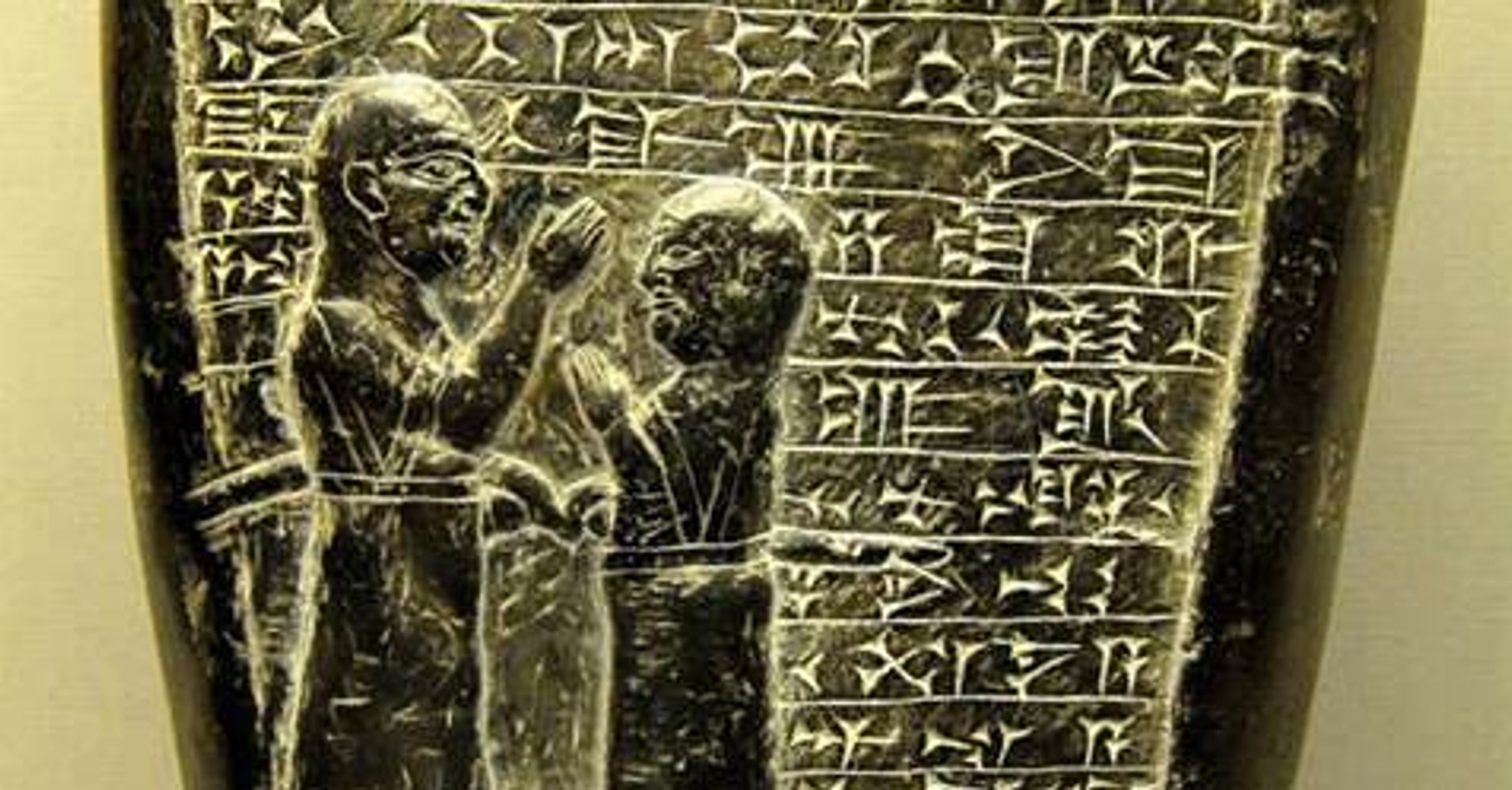
However, the statue’s respite was short-lived. In 1225 BCE, Tukulti Ninurta I of Assyria, a formidable conqueror, sacked Babylon and transported the statue to his capital, Ashur. This event marked a significant shift in regional power, with Assyria asserting its dominance over Babylonia. While some theories suggest Ashur might have been sacked after Tukulti Ninurta I’s death in 1208 BCE, leading to the statue’s potential return, historical consensus points to its continued absence from Babylon.
Elamite Plunder and Babylonian Reclamation (c. 1150 – 1100 BCE)
The statue’s next known whereabouts place it in the hands of Shutruk Nakhunte, King of Elam, around 1150 BCE. It is believed he acquired the statue during his sack of Sippar, a city near Babylon, where the statue had likely been moved for safekeeping at some point. Shutruk Nakhunte famously boasted of destroying Sippar and plundering its treasures, including the significant stele of Naram-Sin. The Elamite possession of Marduk’s statue represented a period of deep humiliation for Babylon.
This era of foreign subjugation ended with the rise of Nebuchadnezzar I. During his reign, approximately 1121-1100 BCE, he decisively defeated the Elamites, reclaiming Marduk’s statue and bringing it back to Babylon. This monumental achievement, as celebrated by The Marduk Prophecy, cemented his legacy as a national hero and divinely favored king.
Assyrian Dominance and Restoration (705 – 669 BCE)
The early first millennium BCE saw renewed Assyrian aggression. Between 705-689 BCE, the statue remained in Babylon until the Assyrian ruler Sennacherib, notorious for his disdain for Babylonian traditions, sacked the city in 689 BCE. Sennacherib had earlier snubbed Marduk by failing to perform the ritual "taking the hand" of the god when proclaiming himself king of Babylon. After sacking the city, he removed the statue, most likely to Nineveh, his capital. Sennacherib’s assassination by his sons in 681 BCE was widely interpreted as Marduk’s divine retribution for the insult to him and his sacred city.
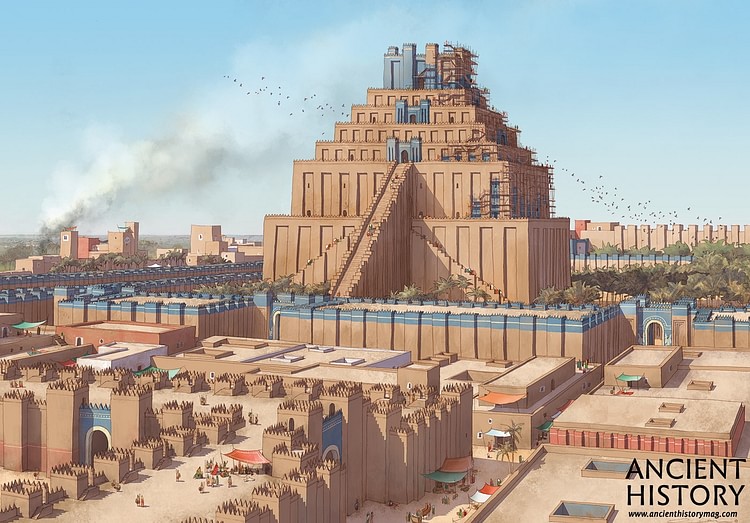
His son and successor, Esarhaddon, ruling from 681-669 BCE, adopted a dramatically different policy. Keen to distance himself from his father’s sacrilege and restore stability, Esarhaddon initiated a massive rebuilding effort in Babylon, returning the statue of Marduk and honoring the god with an even grander temple – the great ziggurat of Babylon, known as Etemenanki, believed to be the model for the biblical Tower of Babel. This strategic act of piety aimed to reconcile with the powerful Babylonian elite and secure divine blessings for his reign.
The Golden Age of Nebuchadnezzar II (c. 605 – 562 BCE)
During the reign of Nebuchadnezzar II, approximately 605 to 562 BCE, Babylon experienced a golden age, becoming one of the most magnificent cities in the ancient world. Marduk’s statue was central to the city’s religious life, and Nebuchadnezzar II undertook extensive urban planning to facilitate its ceremonial processions. Streets were widened to allow for the grand parade of the statue on festival days, particularly during the crucial New Year’s Akitu festival, when it would be carried out through the monumental Ishtar Gate to a special cultic house outside the city walls. This era represented the zenith of Marduk’s public veneration in Babylon.
Persian Conquest and Final Desecration (c. 539 – 485 BCE)
The glory of Babylon eventually succumbed to the rising power of Persia. Around 539 BCE, Babylon was conquered by Cyrus the Great. Cyrus, a shrewd politician, demonstrated great respect for Babylon and its god. His famous "Cyrus Cylinder" inscription justifies his conquest by claiming Marduk himself was on his side, endorsing Cyrus because the previous Babylonian king, Nabonidus, had neglected due praise to Marduk and was unfit to rule. This narrative deftly presented Cyrus not as a foreign conqueror, but as a liberator chosen by Marduk to restore proper worship.
However, the ultimate fate of Marduk’s statue was tragic. Around 485 BCE, Babylon revolted against Persian rule. In a brutal act of retaliation, Xerxes I the Great crushed the rebellion and utterly destroyed the city. As part of this devastation, he melted down the gold statue of Marduk, a symbolic act intended to break the spirit of the Babylonians and dismantle their religious identity. This final act marked the definitive end of Marduk’s tangible presence in Babylon.
III. Supporting Data: Mythology, Culture, and the Cult of Marduk
Mesopotamian Naru Literature: Crafting Historical Narratives
The Marduk Prophecy belongs to a unique genre known as Mesopotamian naru literature. This literary form treated historical events or individuals with poetic license, not for entertainment, but to convey a specific moral or political message. Authors would often place events in the distant past to create a sense of foreknowledge or "prophetic vision" that legitimized contemporary rulers or societal norms. A prime example is The Curse of Akkad, where the historical king Naram-Sin (reign 2254-2218 BCE), known for his piety, is paradoxically depicted as impious. This deliberate distortion served to illustrate the severe consequences of a monarch’s improper relationship with the gods. The underlying message was clear: if even a king as great as Naram-Sin could incur divine wrath for impiety, then lesser rulers must adhere even more strictly to religious duties. The Marduk Prophecy similarly uses a narrative of past events to underscore a monarch’s responsibility to his god, specifically highlighting the importance of protecting and honoring Marduk.
The Enuma Elish and Marduk’s Ascendancy
Marduk’s supreme importance to Babylon stemmed directly from his role as the protagonist of the Enuma Elish, the Babylonian epic of creation. In Mesopotamian mythology, Marduk, son of Enki (Ea), the god of wisdom, ascended to kingship of the gods during a cosmic battle. The epic describes the universe originating from a watery chaos, divided into Apsu (sweet water, male principle) and Tiamat (salt water, female principle). Their offspring, the younger gods, eventually disturbed Apsu, leading him to plan their destruction. Enki thwarted Apsu, but Tiamat, enraged, raised an army led by her consort Quingu to avenge Apsu and annihilate the younger gods.
Faced with impending defeat, the younger gods turned to Marduk, who offered to lead them to victory in exchange for ultimate kingship. Upon their agreement, Marduk valiantly defeated Quingu and slew Tiamat, splitting her body in two to create the heavens and the earth. Having conquered the primordial forces of chaos, Marduk ordered the cosmos, established the heavenly bodies, and, crucially, created humanity from Quingu’s blood. Humans were conceived as co-workers with the gods, tasked with maintaining cosmic order and serving the divine will. This myth thus established Marduk as the benevolent creator and supreme ruler, with all humans considered his children, bound to do his will. This narrative propelled Marduk to such prominence that his worship, as noted by scholar Jeremy Black, "has been compared with monotheism though it never led to a denial of the existence of other gods" (129). This henotheistic devotion cemented Marduk’s status as the paramount deity, especially in Babylon.
The Akitu Festival: The Heartbeat of Babylonian Faith
Marduk’s significance to Babylon was palpable in daily life and annual rituals, most notably the Akitu Festival, the New Year’s celebration. This elaborate twelve-day festival, held in the spring, was far more than a mere holiday; it was a cosmic reenactment of the Enuma Elish, a reaffirmation of Marduk’s kingship, and a renewal of the world. Crucially, the Akitu Festival could not be celebrated if Marduk’s statue was absent from the city. This absence symbolized the actual god’s departure, a break in the cosmic order, and a suspension of divine favor.
During the festival, the king would perform rituals of humility and repentance, emphasizing his role as Marduk’s servant. The cult statue of Marduk would be paraded through the streets, taken to a special "House of the Akitu" outside the city walls, and then returned, symbolizing Marduk’s journey to battle the forces of chaos and his triumphant return, bringing renewed life and fertility to the land. The inability to perform these rituals due to the statue’s absence threw the city into existential crisis, highlighting the profound connection between the physical presence of the cult statue and the well-being of the entire community.
The Cult Statue: A Tangible Divine Presence
In Mesopotamian belief, gods resided in their temples, and their cult statues were not mere idols but vessels through which the deity manifested. The removal of a god’s statue from a conquered city was a deliberate and devastating act. It was seen as stripping the defeated city of its divine protection and essence. Scholar Marc van de Mieroop emphasizes this, writing, "The absence of the patron deity from his or her city caused great disruption in the cult… The absence of the divinity was not always metaphorical but often the result of the theft of the cult statue by raiding enemies. Divine statues were commonly carried off in wars by the victors in order to weaken the power of the defeated cities" (48).
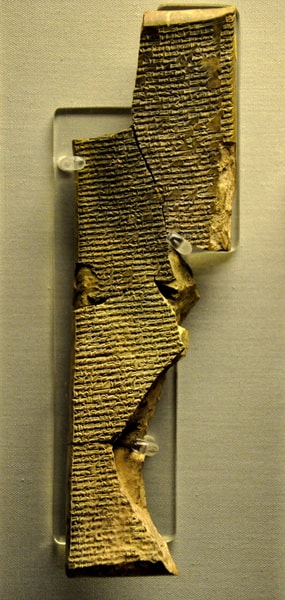
The consequences of Marduk’s absence, as described in The Marduk Prophecy and other texts, paint a grim picture: "People’s corpses block the gates. Brother eats brother. Friend strikes friend with a mace. Free citizens stretch out their hands to the poor to beg. The sceptre grows short. Evil lies across the land. Usurpers weaken the country. Lions block the road. Dogs go mad and bite people. Whoever they bite does not live, he dies" (Van de Mieroop, 48). This apocalyptic imagery underscores the profound psychological and social trauma inflicted by the loss of the city’s divine protector. Marduk was not a distant, ethereal being but a close friend and neighbor, instantly accessible, whose physical presence in the temple and during processions was vital for the city’s prosperity and peace.
IV. Official Responses: Kings, Gods, and the Legitimacy of Power
The Marduk Prophecy as Royal Endorsement
The Marduk Prophecy itself is a prime example of an "official response" to a political and religious crisis. Commissioned by or for Nebuchadnezzar I, it served as an official declaration of his divine legitimacy. By presenting his actions—the defeat of the Elamites and the return of Marduk—as the fulfillment of an ancient prophecy, the text elevated his status from a mere military leader to a divinely appointed restorer of cosmic order. This was a sophisticated form of state-sponsored propaganda, using religious belief to consolidate power and inspire loyalty among the populace. It reinforced the idea that a king’s success was a direct reflection of his piety and the favor of the gods.
Imperial Hubris and Divine Retribution: Sennacherib’s Fate
Sennacherib’s actions towards Babylon and Marduk represent a contrasting "official response" – one of imperial hubris that allegedly invited divine wrath. His decision to sack Babylon in 689 BCE and, more significantly, his deliberate snubbing of the "taking the hand of Marduk" ritual (a ceremony essential for a king to claim legitimate rule over Babylon) were seen as direct affronts to the god. When Sennacherib was assassinated by his own sons in 681 BCE, it was widely interpreted across Mesopotamia as Marduk’s just retribution. This narrative served as a cautionary tale, reinforcing the belief that even the most powerful earthly rulers were subject to divine judgment if they dared to disrespect the gods or their sacred cities.
Esarhaddon’s Piety and Strategic Rebuilding
Esarhaddon, Sennacherib’s son and successor, offered a starkly different "official response" to his father’s legacy. Recognizing the political and religious instability caused by Sennacherib’s actions, Esarhaddon embarked on a comprehensive program of rebuilding Babylon. His efforts were meticulously presented as acts of piety and reconciliation with Marduk. He not only returned the cult statue but also commissioned the construction of an even grander temple for Marduk, the Etemenanki ziggurat. This was a strategic move to secure the loyalty of the powerful Babylonian priestly class and populace, projecting an image of a pious ruler who understood and respected the divine order. His public acts of reverence were an official acknowledgment of Marduk’s supremacy and a means to legitimize his own reign by contrasting it with his sacrilegious predecessor.
Cyrus the Great: A Conqueror Under Divine Mandate
Even foreign conquerors like Cyrus the Great of Persia understood the importance of an "official response" that respected local deities. When Cyrus conquered Babylon in 539 BCE, he did not immediately desecrate Marduk’s cult. Instead, his official narrative, as recorded in the Cyrus Cylinder, presented him as Marduk’s chosen instrument. He claimed that Marduk was displeased with the previous Babylonian king, Nabonidus, and therefore selected Cyrus to restore order and proper worship. This shrewd political and religious maneuvering allowed Cyrus to present himself as a benevolent liberator rather than a destructive invader, thus easing the transition of power and securing the cooperation of the Babylonian populace and priesthood. This highlights how official responses, even from foreign rulers, were carefully crafted to align with the deeply held religious beliefs of the conquered people.
V. Implications: Legacy of a Lost God and a Prophetic Text
The Enduring Significance of Marduk’s Absence
The ultimate destruction of Marduk’s gold statue by Xerxes I in 485 BCE marked a profound loss, not just of a physical object, but of a tangible link to divine protection and Babylonian identity. For a civilization that understood its very existence as intertwined with the presence and favor of its patron deity, this act was a final, devastating blow. While Babylon continued to exist under Persian and later Hellenistic rule, its golden age was irrevocably over, and the absence of Marduk’s cult statue likely contributed to a long-term decline in its religious and cultural vitality. The story of Marduk’s travels and ultimate demise, even if partially embellished by later Greek historians, underscores the deep emotional and spiritual impact of such events on ancient societies. The constant fear of a god’s departure or capture reveals a worldview where the divine was immanent and directly affected human affairs.
Historical Narratives and Their Contested Truths
The reliability of the sources detailing Marduk’s fate, particularly the accounts by Herodotus and Diodorus Siculus regarding Xerxes’ actions, remains a subject of scholarly debate. Both Greek historians are known for their anti-Persian biases and occasional embellishments, with Diodorus, for instance, being responsible for the elaborate descriptions of the Hanging Gardens, which many scholars now believe were located in Nineveh, not Babylon. It is plausible that the story of Xerxes melting down Marduk’s gold statue, portraying the Persian king as impious and brutal, served their respective agendas in demonizing the Persian Empire.
However, the absence of any subsequent mention of Marduk’s statue in later accounts, coupled with the lack of contradictory ancient sources, lends credence to their narratives. While the details might be colored by bias, the core event—the final disappearance of the statue after Xerxes’ assault—is generally accepted. This highlights the complex challenge of reconstructing ancient history, where primary sources are often intertwined with political motives and cultural perspectives, requiring careful critical analysis.
The Marduk Prophecy’s Lasting Insight
When Alexander the Great conquered the Persian Empire and entered Babylon in 331 BCE, there is no mention of Marduk’s statue. This silence strongly supports the conclusion that the statue had indeed been destroyed. Thus, the Marduk Prophecy remains less relevant as a strictly factual historical chronicle and more as an invaluable window into the psyche and political strategies of ancient Mesopotamia.
It profoundly illustrates the immense value that the people of a city placed on their patron deity. Marduk was not an abstract, distant entity; he was a tangible presence, a "close friend and neighbor who lived just down the road." The statue’s travels and eventual destruction were not just political events but deep spiritual crises, echoing the distress one would feel at the loss of a loved one. The Marduk Prophecy thus offers enduring insight into the symbiotic relationship between rulers, the divine, and the populace, where religious belief was a potent force in shaping identity, legitimizing power, and interpreting the turbulent course of history in the ancient world.



Leave a Comment