Pilgrimage Revisited: A Gritty Journey into Medieval Faith and Fury
Dublin, Ireland – [Current Date] – In the vast landscape of historical dramas, some films manage to carve out a unique niche, offering a vision both authentically ancient and strikingly resonant with modern sensibilities. One such cinematic gem is "Pilgrimage," the 2017 historical thriller directed by Brendan Muldowney. While perhaps not a blockbuster, "Pilgrimage" has garnered a reputation for its unvarnished portrayal of 13th-century Ireland, its brutal realism, and its compelling exploration of faith, power, and the darkness that can lurk within both. Seven years on, the film stands as a testament to independent filmmaking, featuring early, impactful performances from now-superstar Tom Holland and the ever-intense Jon Bernthal.
At its core, "Pilgrimage" is a stark, violent, and deeply Catholic-tinged epic, often described as a more overtly religious take on the "Lord of the Rings" archetype, albeit set amidst the stark beauty and savage conflicts of medieval Ireland. It plunges viewers into a world where spiritual conviction clashes head-on with political machinations and primal survival instincts, all centered around a relic of unimaginable power and unsettling properties.
The Quest for a Perilous Relic: Main Facts of "Pilgrimage"
"Pilgrimage" transports its audience to the rugged, untamed western shores of Ireland in the year 1209 C.E. Here, a small community of Irish Catholic monks clings to existence in a remote, windswept monastery. Their isolation, however, belies a profound secret: they are the custodians of a relic that has journeyed across continents, all the way from the Holy Land.
A World of Faith and Fury
The film’s opening establishes a tone of unflinching realism, immediately setting itself apart from romanticized depictions of the medieval era. The martyrdom of St. Matthias, depicted in a brutal and abrupt sequence, swiftly dispenses with any notion of glorious, painless sacrifice. Life is cheap, and death is swift and unforgiving. This sets the stage for the monks’ precarious existence, far removed from the bustling centers of learning often associated with Irish monasticism. Their monastery is not a grand, illuminated haven but a collection of humble, beehive-shaped stone structures and open-air huts, sustained by the meager bounty of seaweed and sea cucumbers. This commitment to verisimilitude is a defining characteristic of "Pilgrimage," immersing the viewer in a past that feels genuinely alien and arduous.
The Pope’s Mandate and the Looming Crusade
The narrative thrust is provided by the looming shadow of a new Crusade. Pope Innocent III, a historical figure known for his formidable political and spiritual authority, dispatches a Cistercian monk named Brother Geraldus (played with chilling fanaticism by Stanley Weber) to Ireland. His mission: to retrieve the monastery’s powerful relic and transport it to Rome, from where it is destined for the Holy Land. The belief is that this artifact will serve as a potent spiritual weapon, turning the tide against the "infidels and heretics" of the Crusader states. This mandate immediately injects a geopolitical dimension into the monks’ secluded lives, dragging them into a conflict far beyond their spiritual contemplations.

A Relic Unlike Any Other
Crucially, "Pilgrimage" subverts common cinematic tropes surrounding holy artifacts. In many films, such a relic would be a fragment of the True Cross, a piece of a significant shroud, or the hallowed bone of a saint, invariably possessing mystical healing powers. However, Muldowney’s film takes a darker, more audacious path. The sacred artifact that these monks have vowed to protect with their lives is not an object of beatific grace, but the very rock used to murder St. Matthias. St. Matthias, notably, was not one of the original twelve apostles, but rather the individual chosen by lot to replace Judas Iscariot—an apostolic understudy, as it were.
This choice of relic is pivotal. The rock is associated not with healing, but with a profoundly dark and vengeful miracle. Its reputation is less akin to the benevolent power of traditional relics and more aligned with the terrifying, destructive force of Spielberg’s Ark of the Covenant. The lore surrounding it dictates that it can inflict great harm upon those who touch it—a danger so potent that even the devoted monks themselves try to avoid direct contact or prolonged gaze. This malevolent quality transforms the relic from a symbol of divine blessing into a volatile, almost cursed object, setting the stage for a journey fraught with both physical and spiritual peril.
A Chronicle of Conflict: The Narrative Arc and Historical Context
The core of "Pilgrimage" unfolds as a brutal road trip, a simple narrative premise enriched by meticulous historical detail and relentless tension.
The Perilous Road to Waterford
The monks’ mission is clear, if perilous: transport the relic from their isolated monastery to the port of Waterford. From there, it is intended to sail to France, then be carried across a war-torn Europe to its ultimate destination in Rome. The journey itself is an odyssey of survival. Though ostensibly under the protection of a small contingent of Norman guards, led by the ruthless Raymond de Merville (Richard Armitage), their path is riddled with dangers. Medieval Ireland in 1209 C.E. was a fractured land, scarred by the ongoing conflict between the native Irish and the Anglo-Norman invaders. Beyond the organized warfare, bandits and opportunists preyed on travelers, making the odds of the entire party reaching Waterford, let alone Rome, exceedingly slim. Every turn in the road, every dense forest, every encounter with another group of travelers, poses a potential threat of death or capture. The film masterfully conveys the sheer arduousness and unpredictability of medieval travel, where a broken bridge could mean days of backtracking, and a seemingly simple path could conceal deadly ambushers.
A Clash of Cultures and Creeds
"Pilgrimage" is startlingly historically accurate, immersing the audience in the complex socio-political landscape of 13th-century Ireland. The Anglo-Norman invasion, which began in the late 12th century, had irrevocably altered the fabric of Irish society. The Normans, portrayed with barely concealed disgust towards the native Irish, were a colonizing force, their presence deeply resented. This resentment manifested in active warfare and, for some of the Irish, a reversion to pre-Christian customs and beliefs, blending ancient paganism with their adopted Catholicism. Hovering on the edges of this conflict were the English, ever-present and poised to exploit any weakness.

This volatile environment places the peace-loving monks in an impossible position. Their ideals of peace and brotherhood, meant to unite all people (or at least all men, as the film notably features no women, reflecting the increasing segregation of monasteries by the 13th century as the Irish church was brought more strictly under Rome’s authority), are brutally tested against the harsh realities of conquest, ethnic strife, and religious fanaticism.
Language as a Battleground
The film’s commitment to authenticity extends to its linguistic landscape, where language itself becomes a symbol of power and cultural identity. The Irish monks speak their native tongue, Irish Gaelic, which was still widely spoken across the country at the time. The Norman guards converse in French, the language of their conquest. Latin, the universal language of the Church, serves as a common ground, translated for the audience as English. This linguistic realism highlights the cultural divides: only one monk in the party is fluent in all three. The visible annoyance of the Normans and Brother Geraldus when the Irish monks speak their native language underscores the cultural subjugation at play, reflecting the broader attempts by Rome and the Normans to assert linguistic and religious hegemony. Tom Holland’s impressive performance includes a convincing command of Irish, further cementing the film’s dedication to historical verisimilitude.
Unearthing the Depth: Supporting Data and Thematic Richness
"Pilgrimage" is not merely a historical action film; it is a character study interwoven with profound theological and moral questions. The ensemble cast, particularly its central trio, breathes life into these complex themes.
The Ensemble of Contradictions
At the heart of the narrative are characters defined by their contradictions and the impossible choices they face:
-
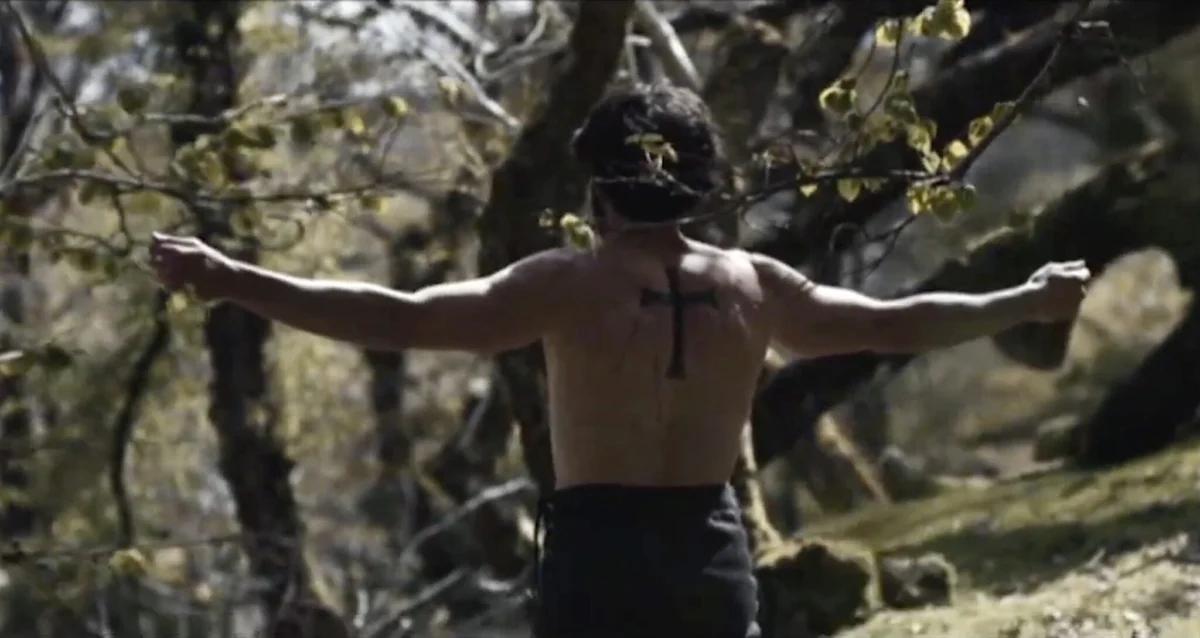
Brother Diarmuid (Tom Holland): Holland delivers a captivating performance as the novitiate monk, Diarmuid. Raised entirely within the monastery’s walls, he knows nothing of the world outside. Unlike the gifted, truly called Brendan of "The Secret of Kells," Diarmuid possesses no special skills or overt mystical devotion. He is a sweet, naive boy thrust into a nightmarish struggle for survival, fighting to cling to his beliefs and moral compass. He becomes the unwilling, yet strangely protected, bearer of the deadly relic—a choice partly by chance, partly by the elder monks’ belief that his innocence might shield him from its malevolent power. Holland’s portrayal here is a significant departure from his more famous superhero roles, showcasing a raw vulnerability and a nuanced shift from innocence to terror. His effortless transitions between English and Irish further underscore his commitment to the role.

-
The Mute (Jon Bernthal): Bernthal delivers a tour-de-force performance as "The Mute," a mysterious, silent giant who washed ashore at the monastery years prior. Serving the monks with unwavering devotion, he performs the heavy physical labor they cannot. His past is shrouded in speculation: Was he a crusader? A man burdened by bloody deeds, seeking absolution through servitude? His deep loyalty to Diarmuid is a poignant counterpoint to his latent capacity for extreme violence. Bernthal’s physical acting and the expressive power of his "wounded eyes" convey a complex inner world, hinting at a troubled soul pushed into unspeakable acts by forces larger than himself. When his old life "activates," he transforms into a wild-eyed berserker, a stark embodiment of the brutal realities that challenge the monks’ pacifist ideals.
-
Frère Geraldus (Stanley Weber): Geraldus embodies the rigid, dogmatic face of 13th-century Roman Catholicism. His eyes gleam with a dangerous glee whenever he speaks of damnation, showcasing a zealotry that borders on fundamentalism. He views the "Old Ways" of Ireland with infuriated disdain, representing a clash between the more accommodating, indigenous Irish monastic tradition and the uncompromising authority of Rome. His fervent belief in the relic as a tool for divine vengeance paints him as a chilling figure, whose faith fuels rather than tempers his aggression.
-
Brother Ciarán (John Lynch): In contrast to Geraldus, Brother Ciarán, the wise and mournful elder monk, represents a gentler, more protective form of faith. He desperately wishes to shield his brothers from the harshness of the world, serving as a moral anchor in a rapidly deteriorating situation. His quiet strength and profound sadness are beautifully matched against Geraldus’s fervent fanaticism.
-
Raymond de Merville (Richard Armitage): Armitage is compelling as Raymond, the Norman nobleman assigned to protect the monks. He is snide, venomous, and utterly devoid of pity, caring little for the Church’s ideals or the plight of the Irish. Raymond is a pragmatist, motivated solely by power, glory, and personal gain. His cynical view of the Crusades—as mere opportunities to earn "points for the afterlife" or simply gain advantage—highlights the mercenary undercurrents often masked by religious fervor. His conflicting desires with the monks and Geraldus set the group on an inevitable tragic course.
Realism in Brutality and Environment
The film’s R-rating is well-earned. The violence is brutal and matter-of-fact, never glorified. Fights are short, desperate grappling matches, close-quarters combat between terrified men wielding swords and shield edges, acutely aware that death is only a breath away. There is a torture scene that, while deeply upsetting, is presented without gratuitousness, serving instead to underscore the unflinching commitment of the film to its created world. This realism extends to the environment itself: the bleak, unforgiving Irish landscape, the constant threat of disease and starvation, and the sheer physical toll of medieval travel.

The Corrupted Pilgrimage
The very title, "Pilgrimage," serves as a grim irony. A pilgrimage, ideally, is a journey of devotion, a spiritual pause from daily life to focus on faith and community. In reality, as the film expertly demonstrates, pilgrimages are chaotic, expensive, and ripe for exploitation. This journey is not one of spiritual seeking but of removing a relic from its sacred resting place to be used as a weapon, much like the Ark of the Covenant in ancient times. Worse still, before it can even fulfill its destructive purpose in a "holy war," the entire expedition is hijacked for a far grubbier, purely political scheme, highlighting the pervasive corruption that can taint even the most sacred of endeavors. The film thus becomes a powerful commentary on the inversion of religious ideals and the ease with which faith can be manipulated for worldly power.
Critical Acclaim and Enduring Relevance: Official Responses and Implications
Upon its release, "Pilgrimage" garnered generally positive reviews, with critics commending its gritty realism, strong performances, and refreshing take on the historical thriller genre. It was praised for its commitment to historical accuracy and its ability to transport audiences to a bygone era without resorting to romanticization. While it may not have achieved widespread commercial success, its impact on those who discovered it has been significant, establishing it as an understated gem in the landscape of independent cinema. It frequently draws comparisons to other dark medieval thrillers like "The Name of the Rose," "Valhalla Rising," or "Black Death," films that similarly dare to delve into the harsher realities of the past.
Modern Resonance: Echoes of the Past
"Pilgrimage" is more than just a well-crafted historical drama; its themes resonate powerfully in the modern world. The clash between Geraldus’s uncompromising fundamentalism and the more nuanced, traditional faith of the Irish monks finds clear parallels in contemporary ideological conflicts, where rigid dogma often confronts more adaptable, indigenous spiritualities. The film’s depiction of the weaponization of belief—how sacred symbols and narratives can be twisted and exploited for political gain or violent ends—serves as a timeless warning. Diarmuid’s desperate struggle to retain his moral values and innocence amidst overwhelming brutality reflects universal human questions about maintaining integrity in a world that constantly tests ethical boundaries.
A Timeless Examination of Humanity
The film’s respectful yet unromanticized portrayal of Irish history and culture is a significant strength. It avoids the pitfalls of "Gaelmaxxxing"—a term used to describe an overly romanticized or exaggerated pride in Celtic heritage—by grounding its narrative in the harsh realities of the period. For those with a particular interest in Irish culture, the film offers a deeply moving glimpse into the lives of people striving to preserve their identity and faith against waves of invasion and cultural assimilation.
The reviewer’s personal reflection, professionalized for this context, connects the struggles of medieval scribes and artists—working by candlelight in tiny, cold huts, uncertain if their efforts would survive the Norsemen, the British, or sheer apathy—to contemporary anxieties. In an age where artificial intelligence threatens to commodify art and creativity, and where tech billionaires champion systems that could reduce human agency, the film serves as a poignant reminder of the enduring value of human endeavor. "Pilgrimage" implicitly champions the grit, resilience, and spiritual fortitude required to preserve culture, knowledge, and the human spirit against forces that seek to diminish or destroy them. It acknowledges the beauty and bravery of human creation while never shying away from the bigotry, zealotry, and harshness that have always been part of the human condition.

Conclusion: A Gritty Testament to Faith and Survival
"Pilgrimage" is a truly fantastic film—small and indie in its production, yet immense in its scope and impact. It is weird, gritty, and fiercely original, doing much to create a feeling of genuine uncanniness and honoring the true "otherness" of the past. Tom Holland and Jon Bernthal, in particular, deliver performances that highlight their incredible range, inhabiting ground-level characters forced to make impossible moral choices without the aid of superpowers or advanced weaponry.
The film’s strength lies in its ability to honor the romance and bravery inherent in the medieval period while simultaneously exposing its brutal realities, the pervasive zealotry, and the deeply ingrained bigotry. It is a powerful, thought-provoking journey that dares to examine the darker corners of faith and human nature, leaving a lasting impression on those who venture into its compelling, historically rich narrative. As a meditation on the perils of belief, the corruption of power, and the enduring human struggle for survival and meaning, "Pilgrimage" remains a compelling watch, well worth revisiting.