The Battle for Ithaca: Joyce Carol Oates Defends Christopher Nolan’s ‘The Odyssey’ Against Emily Wilson’s Scathing Critique
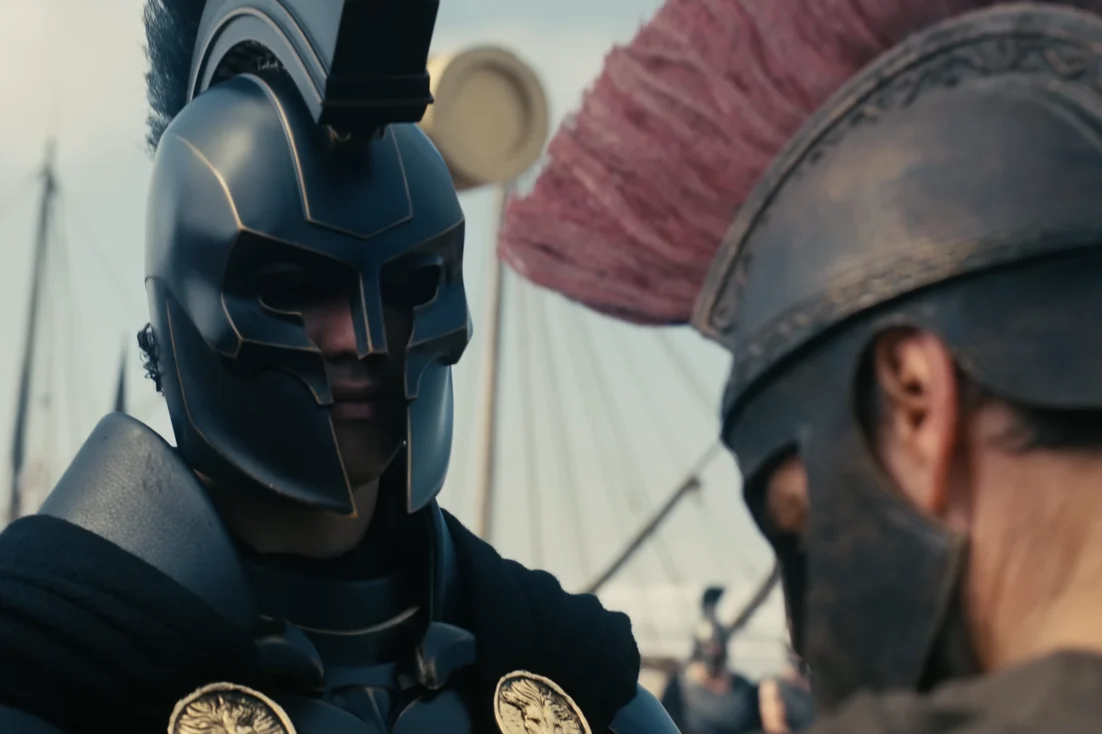
The intersection of high literature and blockbuster cinema has long been a site of intellectual friction, but rarely has it sparked a public feud as high-profile as the current clash over Christopher Nolan’s cinematic adaptation of The Odyssey. In a striking defense of artistic vision, celebrated author Joyce Carol Oates has publicly rebuked renowned translator Emily Wilson following Wilson’s viral, dismissive review of Nolan’s latest epic.
The controversy has ignited a broader debate regarding the boundaries of adaptation, the etiquette of academic criticism, and the fraught relationship between a primary text and its modern interpretations. As the film continues to dominate the global box office, the war of words between Oates and Wilson has become a cultural flashpoint, pitting the world of classical scholarship against the ambitions of contemporary filmmaking.
Main Facts: A Collision of Intellectual Titans
The dispute centers on Christopher Nolan’s long-awaited adaptation of Homer’s The Odyssey, starring Matt Damon as the "complicated" hero Odysseus. The film, which attempts to translate the ancient Greek epic into a sprawling, high-concept cinematic experience, was initially met with significant anticipation, particularly due to Nolan’s public admiration for Emily Wilson’s 2017 translation of the poem.
However, the tone shifted dramatically when Wilson, the first woman to translate The Odyssey into English and a Professor of Classical Studies at the University of Pennsylvania, published a scathing review in the London Review of Books (LRB). In her critique, Wilson did not merely find fault with the adaptation; she dismantled it, labeling the writing "abysmal" and accusing Nolan of failing to capture the psychological and ethical nuances of the source material.
Joyce Carol Oates, a prolific novelist and a frequent commentator on cultural trends, took to the social media platform X (formerly Twitter) to defend Nolan. Oates characterized Wilson’s critique not as a scholarly disagreement, but as a "crude" attack reminiscent of partisan political rhetoric. Oates’ intervention has shifted the focus from the film’s quality to the nature of intellectual discourse itself, questioning whether experts owe a certain level of "collegial" respect to those who adapt their work.
Chronology: From Inspiration to Indignation
The timeline of this controversy reveals a trajectory of mutual respect that disintegrated into public hostility.
The "North Star" Phase (2024–2025)
During the early production stages of The Odyssey, Christopher Nolan was vocal about his debt to Emily Wilson’s 2017 translation. In an interview with Empire magazine, Nolan revealed that the opening line of Wilson’s version—"Tell me about a complicated man"—served as his "north star." He credited Wilson with re-contextualizing Odysseus for a modern audience, moving away from the traditional "hero" archetype toward a more morally ambiguous and psychologically layered figure. This endorsement was seen as a bridge between the ivory tower of academia and the populist reach of Hollywood.
The Film’s Release and Initial Reception (Early 2026)
Nolan’s The Odyssey was released to massive commercial success. True to Nolan’s style, the film utilized IMAX technology to depict the supernatural elements of the story, including the Cyclops and the Sirens, with a focus on "big bangs and big giants." While general audiences praised the spectacle, the critical response was divided, with some critics questioning if the film’s grandiosity overwhelmed its human core.
The Wilson Review (Late 2026)
The tension reached a boiling point when Emily Wilson’s review appeared in the London Review of Books. Contrary to the "collegial" expectations of some, Wilson did not pull her punches. Despite being a primary influence on Nolan’s approach, she argued that the film missed the very "complication" he claimed to seek. The review went viral, particularly for its blunt assessments of the film’s aesthetics and narrative logic.
The Oates Rebuttal (Current)
Shortly after Wilson’s review began circulating, Joyce Carol Oates entered the fray. Her posts on X sparked a secondary wave of discourse, as she accused Wilson of being ungrateful for the cultural platform Nolan’s film had provided for the original text. This has led to the current state of affairs: a three-way conversation between the filmmaker’s intent, the scholar’s rigor, and the novelist’s defense of creative freedom.
Supporting Data: Analyzing the Critique
To understand the intensity of the backlash, one must look at the specific grievances Emily Wilson aired in her LRB review. Her criticisms were both structural and aesthetic, targeting what she perceived as a fundamental misunderstanding of Homeric themes.
Depth vs. Spectacle
Wilson’s primary contention was that Nolan’s film lacked "psychological, emotional, political and ethical depth." She wrote:
"I had hoped that Nolan’s affinity with these Homeric themes might push him to new creative heights… But ‘The Odyssey’ features his usual combination of grandiosity and superficiality… the film’s vision is too confused, its characters too underdeveloped, to deliver what it half-promises in terms of big ideas."
The Aesthetics of the Epic
In perhaps the most quoted section of the review, Wilson pivoted from narrative structure to the physical world of the film. She criticized the lack of sensuality and the poor depiction of ancient life, noting:
"The writing is abysmal. None of the characters has a convincing motivation for their actions or words. There are no sex scenes, and all the food looks horrible."
This critique of "horrible food" and "no sex scenes" became a point of mockery and debate on social media, with some arguing it was a shallow critique and others suggesting it pointed to a lack of "lived-in" realism in Nolan’s typically sterile, intellectualized environments.
The "Complicated Man" Paradox
The irony of the situation lies in the fact that Wilson’s own translation provided the framework for Nolan’s Odysseus. Wilson’s 2017 work was praised for its "iambic pentameter" and its refusal to gloss over the darker aspects of Odysseus’s character (such as his treatment of enslaved women). Wilson’s review suggests that Nolan took the "label" of a complicated man without doing the narrative work to justify it.
Official Responses: Oates’ Scathing Defense
Joyce Carol Oates did not mince words in her response to Wilson. Her defense of Nolan was predicated on the idea that Wilson’s tone was beneath the dignity of a world-class scholar.
"Rather than disagreeing with interpretations of Homer in a collegial manner, this person, who has benefited enormously from Nolan’s film, speaks in the crude language of MAGA folks attacking someone with ideas that differ from hers," Oates wrote.
Oates’ comparison of Wilson’s critique to "MAGA folks" is particularly provocative. It suggests that Wilson’s dismissal was not an intellectual exercise but a form of "cancel culture" or populism disguised as elitism. Oates further emphasized the "service" a translator owes to the legacy of a text:
"One would expect a translator, of all people, beholden to a text, in service to a text, to be just a wee bit more thoughtful & respectful of others who are acting in good faith just as (she would claim) she is."
This response highlights a fundamental disagreement over the "ownership" of classical texts. While Oates views Nolan’s film as a "good faith" effort to bring Homer to the masses—an effort from which Wilson herself benefits through increased book sales—Wilson views her role as a gatekeeper of the text’s integrity, regardless of the film’s commercial impact.
Implications: The Future of Cultural Adaptation
The feud between Oates, Wilson, and Nolan carries several significant implications for the future of arts and letters.
1. The End of the "Polite" Scholar
Traditionally, academics whose work is adapted by Hollywood maintain a stance of distant approval or quiet reservation. Emily Wilson’s "scorched earth" approach signals a shift. It suggests that scholars may no longer feel obligated to offer "collegial" cover for adaptations they find lacking, even if those adaptations boost their own profile.
2. The Limits of Nolanism
The critique of Nolan’s "grandiosity and superficiality" is not new, but coming from a Homeric scholar, it carries extra weight. It raises the question of whether Nolan’s "puzzle-box" filmmaking style—which prioritizes structure, time-dilation, and technical prowess—is fundamentally at odds with the character-driven, emotionally resonant requirements of ancient epic poetry.
3. The Digital Public Square
The fact that this debate played out on X via Joyce Carol Oates underscores the changing nature of literary criticism. Complex arguments about the "ethical depth" of a 3,000-year-old poem are now being distilled into viral posts and compared to modern political movements. This democratization of criticism allows for more voices, but as Oates points out, it may also lead to a "cruder" form of discourse.
4. Adaptation as a "Good Faith" Exercise
Oates’ defense hinges on the concept of "good faith." She argues that as long as a filmmaker approaches a text with respect and serious intent, they should be shielded from vitriolic personal attacks. This creates a tension between the artist’s right to interpret and the scholar’s right to evaluate. If "good faith" becomes the standard for immunity from criticism, the role of the critic is essentially neutralized.
Conclusion
The controversy surrounding Christopher Nolan’s The Odyssey is more than a simple disagreement over a movie; it is a battle over who has the right to define "The Complicated Man" in the 21st century. As Emily Wilson stands by her rigorous, perhaps rigid, standard for Homeric storytelling, and Joyce Carol Oates champions the creative freedom of the contemporary auteur, the audience is left to decide.
Is Nolan’s film a grand tribute that brings an ancient masterpiece to a new generation, or is it, as Wilson suggests, a hollow spectacle that misses the soul of the odyssey? Regardless of the answer, the exchange has ensured that The Odyssey remains as contested and vital today as it was in the age of oral tradition.