Academy of Motion Picture Arts and Sciences Announces 2026-2027 Leadership: Lynette Howell Taylor Re-elected as President
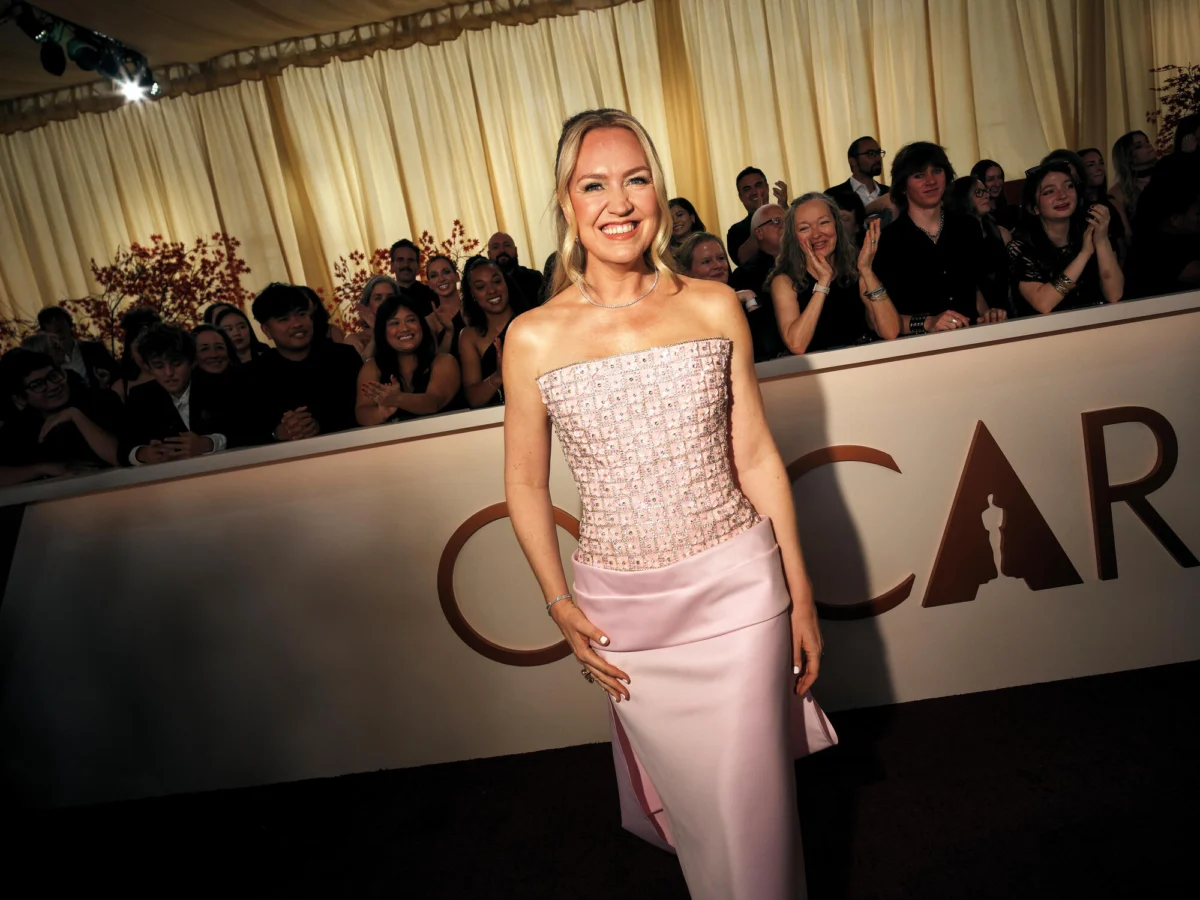
LOS ANGELES — In a move that signals continuity and strategic stability as the film industry’s most prestigious organization approaches its centennial, the Board of Governors for the Academy of Motion Picture Arts and Sciences (AMPAS) has officially re-elected Oscar-nominated producer Lynette Howell Taylor as President.
The election, which took place during the Board’s most recent session, establishes the leadership hierarchy for the 2026-2027 term. Howell Taylor, a veteran producer with a deep bench of critical and commercial successes, will continue to steer the Academy through a period of significant cultural and technological transition. Joining her is a slate of seasoned industry professionals representing various branches of the craft, most of whom have been returned to their posts by their peers.
Main Facts: The 2026-2027 Officer Slate
The Board of Governors, which acts as the ultimate authority on Academy policy and strategy, elected a diverse group of officers to lead its primary committees. The 2026-2027 leadership team includes:
- President: Lynette Howell Taylor (Producers Branch)
- Vice President (Chair, Membership Committee): Lesley Barber (Music Branch)
- Vice President/Treasurer (Chair, Finance Committee): David Dinerstein (Marketing and Public Relations Branch)
- Vice President (Chair, Awards Committee): Jennifer Fox (Producers Branch)
- Vice President (Chair, Equity and Inclusion Committee): Lou Diamond Phillips (Actors Branch)
- Vice President/Secretary (Chair, Governance Committee): Howard A. Rodman (Writers Branch)
While the majority of the leadership team consists of returning incumbents, David Dinerstein marks a new addition to the officer ranks, taking over the crucial role of Treasurer and Chair of the Finance Committee. This transition comes at a time when the Academy is diversifying its revenue streams beyond the annual Oscar telecast, including the continued expansion of the Academy Museum of Motion Pictures.
Chronology of Leadership and Governance
The re-election of Lynette Howell Taylor marks her second consecutive term as President. Her journey within the Academy’s governance has been one of steady ascent. A member of the Producers Branch since 2014, Howell Taylor previously served two terms as a governor before being elevated to the presidency.
Under the Academy’s bylaws, governors are typically limited to two three-year terms, followed by a mandatory two-year hiatus. However, the role of President carries specific provisions. Officers serve one-year terms with a maximum of four consecutive years in any one office. Because Howell Taylor is serving as President, she remains on the board as an ex officio voting member, allowing her to provide uninterrupted leadership despite having reached the standard governor term limits.
The timing of this election is particularly significant. The 2026-2027 term serves as the final "runway" before the Academy’s 100th anniversary in 2027/2028. This upcoming centennial is expected to be a global celebration of cinema history, and the current board is tasked with laying the groundwork for what CEO Bill Kramer has described as a "transformative moment" for the organization.
Supporting Data: Profiles in Leadership
To understand the direction of the Academy, one must look at the professional pedigrees of those elected to lead its committees.

Lynette Howell Taylor (President)
Howell Taylor is a powerhouse in the independent and studio film sectors. Her producing credits include the cultural phenomenon A Star Is Born (2018), which earned eight Oscar nominations. She also produced the critically acclaimed Captain Fantastic, Blue Valentine, The Place Beyond the Pines, and Half Nelson. Beyond feature films, she demonstrated her live-event prowess by producing the 92nd Oscars alongside Stephanie Allain, a feat that earned her an Emmy nomination. Her presidency has been defined by a focus on "globalizing" the Academy and strengthening the bond between the organization and its international membership.
Lou Diamond Phillips (Equity and Inclusion)
The re-election of Lou Diamond Phillips as Vice President and Chair of the Equity and Inclusion Committee underscores the Academy’s ongoing commitment to the "A2020" and "A2025" initiatives. Phillips, an iconic actor known for La Bamba and Stand and Deliver, has been a vocal advocate for underrepresented communities in Hollywood. His committee is responsible for overseeing the implementation of representation and inclusion standards for Oscars eligibility—a policy that has sparked significant industry-wide dialogue.
Lesley Barber and Jennifer Fox (Membership and Awards)
Lesley Barber, a distinguished composer (Manchester by the Sea), continues to oversee the Membership Committee. This role is vital as the Academy has swelled to over 10,000 members, with an increasing emphasis on international recruitment. Meanwhile, Jennifer Fox—producer of Michael Clayton and Nightcrawler—remains at the helm of the Awards Committee. This group is responsible for the "Rules of the Game," constantly adjusting category requirements and campaigning regulations to keep pace with the rise of streaming and changing theatrical windows.
David Dinerstein (Finance)
As the newcomer to the officer slate, David Dinerstein brings a wealth of marketing and distribution experience. As a co-founder of several distribution banners and a key figure in the success of films like Pulp Fiction and The Blair Witch Project during his earlier career, his financial oversight will be key as the Academy navigates the post-pandemic economic landscape of the entertainment industry.
Official Responses: A Vision for the Centennial
The announcement was met with a formal endorsement from Academy CEO Bill Kramer, who has worked closely with Howell Taylor to modernize the organization’s operations.
"We are so deeply grateful to Lynette, Lesley, David, Jennifer, Lou, and Howard for their commitment to the Academy and to our global film community," Kramer said in an official statement. "As we move toward our 100th anniversary, I am excited to continue our vital work with the Board and these exceptional Board officers to support our members, the industry, and the Academy’s mission and programs."
The "mission and programs" Kramer refers to extend far beyond the gold statues. They include the Academy’s extensive film archive—one of the largest in the world—its educational grants, and the Academy Museum, which has become a cornerstone of Los Angeles culture since its opening. The Board’s primary responsibility is to ensure these entities remain financially viable while fulfilling their educational mandates.
Implications for the Film Industry
The continuity of this leadership team suggests several key trends will persist in the coming years:

1. Stability in the "Streaming vs. Theatrical" Debate
With Jennifer Fox and Lynette Howell Taylor—both traditional producers who have successfully navigated the streaming era—at the helm, the Academy is likely to maintain its balanced approach toward theatrical requirements. While the Academy has reaffirmed its support for the theatrical experience, it has also shown a pragmatic willingness to adapt to the reality of digital distribution.
2. The Global Expansion of the Academy
The re-election of this board reinforces the "Academy100" initiative, a massive fundraising and branding campaign intended to solidify the Academy’s role as the global home of cinema. We can expect continued efforts to diversify the voting body geographically, moving the Oscars away from being a "Hollywood-only" event and toward a truly international stage.
3. Financial Diversification
Under the guidance of David Dinerstein and the Finance Committee, the Academy is expected to further insulate itself from the fluctuations of TV advertising revenue. While the ABC broadcast deal remains the organization’s primary source of income, the Board is increasingly looking toward philanthropic endowments and museum revenue to ensure long-term sustainability.
4. Refinement of Inclusion Standards
With Lou Diamond Phillips continuing his leadership of the Equity and Inclusion Committee, the industry can expect a "steady hand" in the enforcement of the Academy’s representation mandates. Rather than radical new shifts, the focus will likely be on the rigorous data collection and transparency regarding how productions meet these criteria.
Conclusion
The 2026-2027 Board of Governors election represents a vote of confidence in the current trajectory of the Academy of Motion Picture Arts and Sciences. By keeping Lynette Howell Taylor in the president’s chair, the Board has opted for experienced leadership to navigate the complex waters leading up to the organization’s 100th year.
As the industry continues to grapple with the fallout of labor disputes, the integration of artificial intelligence, and a shifting box office, the Academy’s leadership remains a rare point of institutional consistency. For the thousands of members worldwide, the message from the Board is clear: the Academy is focused on honoring its past while aggressively preparing for its second century.
For a complete listing of the Academy’s 2026-2027 Board of Governors and detailed branch breakdowns, stakeholders and the public are encouraged to visit the official Academy website at Oscars.org.