Castles in the Air: A New Tabletop RPG Weaves Gilded Age Coming-of-Age Narratives

A groundbreaking new tabletop roleplaying game (TTRPG), Castles in the Air, is set to transport players to the enchanting, yet complex, world of the American Gilded Age, inviting them to collaboratively craft their own coming-of-age sagas inspired by literary classics. Designed by Melia Carraway and published by Storybrewers Roleplaying, the game promises an immersive journey from the innocent wonders of childhood to the intricate challenges of adulthood, all set against a backdrop of societal transformation. Currently in the midst of a successful Kickstarter campaign, Castles in the Air has captured the imagination of TTRPG enthusiasts eager for narrative-driven experiences.
Main Facts: Unveiling a Narrative Gem
Castles in the Air emerges as a distinct entry in the tabletop roleplaying landscape, offering a refreshing departure from traditional fantasy or science fiction settings. Its core premise revolves around enabling players to embody characters who grow up together, navigating the formative years of their lives from spirited children to mature adults within the historical context of the Gilded Age (1870s-1890s) in the United States. This era, characterized by rapid industrialization, unprecedented economic growth, and significant migration, provides a rich tapestry for personal narratives interwoven with broader societal shifts.
The game draws explicit inspiration from beloved coming-of-age period dramas that have resonated across generations. Works such as Louisa May Alcott’s Little Women, famously adapted into Greta Gerwig’s critically acclaimed 2019 film starring Saoirse Ronan, Emma Watson, and Florence Pugh, and Lucy Maud Montgomery’s Anne of Green Gables, which saw a popular Netflix television adaptation in 2017, serve as foundational influences. These narratives, centered on themes of friendship, family, personal growth, and societal expectations, are distilled into Castles in the Air‘s collaborative storytelling mechanics.
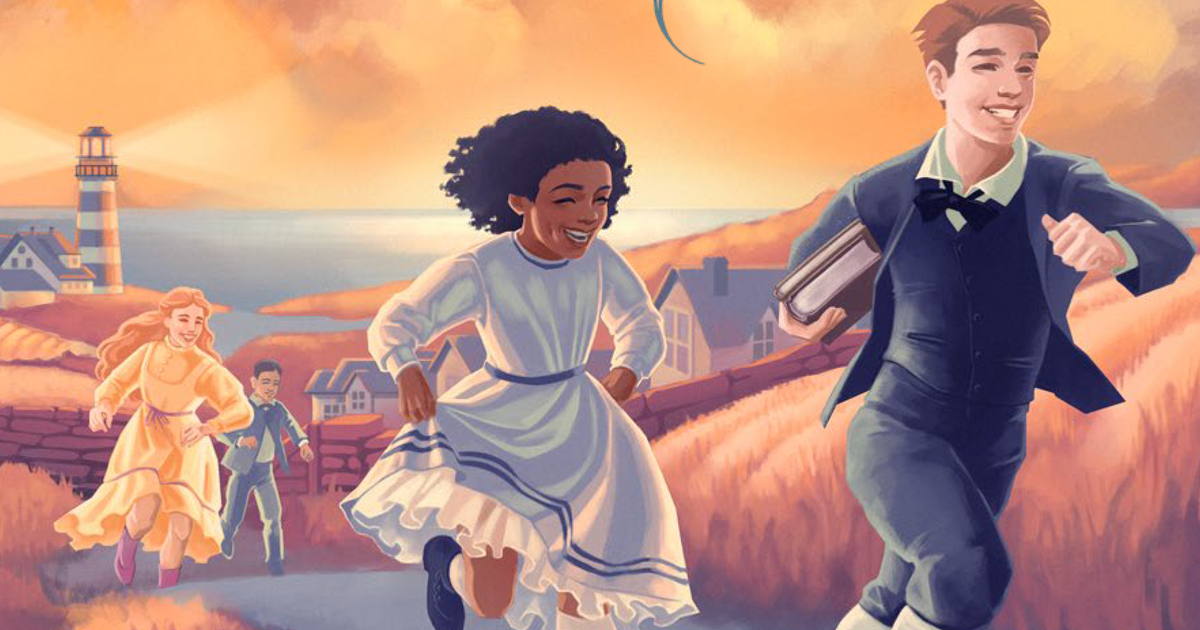
Players begin their journey as a tight-knit group of children, typically from rural, financially stable backgrounds, whose lives are filled with simple joys and boundless dreams. The early stages of the game encourage the development of shared childhood memories – from exploring local farmlands and swimming in sun-dappled lakes to stargazing on warm summer nights. As time progresses, characters mature, confronting the complexities of adolescence, including nascent crushes, burgeoning rivalries, and evolving personal aspirations. The narrative arc culminates in adulthood, where characters may find themselves drifting apart due pursuing divergent paths, only to potentially reunite years later, their shared past a potent bond.
Character creation is designed to be evocative and deeply personal, allowing players to select from classic archetypes such as the "troublesome scamp," the "studious bookworm," or the "spoiled princess." These archetypes are then fleshed out with unique elements including a personal "dream," a web of "childhood relationships," a distinct "family background," and crucially, a "bosom enemy." This system not only provides a strong foundation for character development but also actively encourages players to recreate or draw inspiration from their favorite literary figures, such as the fiercely independent Jo March or the imaginative Anne Shirley.
The game is the brainchild of designer and writer Melia Carraway, with significant contributions from Vee Hendro and Hayley Gordon, the co-founders of Storybrewers Roleplaying. This publishing house has already garnered acclaim for its narrative-rich TTRPGs, most notably Good Society, a game inspired by the intricate social dynamics of Jane Austen’s novels. The crowdfunding campaign for Castles in the Air is currently active on Kickstarter until June 9th, offering backers various tiers, including a physical copy for AU$99 (approximately £52/$77) slated for delivery in March 2025, and a digital version for AU$34 (approximately £18/$26).
Chronology: From Literary Inspiration to Crowdfunding Success
The genesis of Castles in the Air can be traced back to a profound appreciation for a specific subgenre of literature and film: the coming-of-age period drama. Melia Carraway, the primary designer and writer, envisioned a game that could capture the emotional depth, character-driven narratives, and timeless appeal of stories like Little Women and Anne of Green Gables. The initial concept was not merely to adapt these stories, but to provide a framework for players to inhabit similar roles and experiences, crafting their own unique narratives within a familiar thematic landscape.
The design process involved extensive research into the chosen historical period, the Gilded Age. Understanding the social mores, technological advancements, economic disparities, and daily life of the 1870s-1890s in the USA was crucial for grounding the fantastical elements of roleplaying in historical authenticity. Carraway aimed to balance historical accuracy with the flexibility required for collaborative storytelling, ensuring that the setting enhanced rather than constrained player creativity. Early iterations of the game focused on defining the core mechanics that would facilitate character growth over time, the evolution of relationships, and the subtle shifts from youthful optimism to adult realities.
Storybrewers Roleplaying, known for its commitment to narrative-focused TTRPGs, quickly recognized the potential of Carraway’s vision. Co-founders Vee Hendro and Hayley Gordon, whose previous success with Good Society demonstrated a clear understanding of crafting games around specific literary aesthetics, provided invaluable guidance and contributions to the project. Their experience in developing systems that prioritize character interaction, emotional beats, and collaborative narrative construction helped refine Castles in the Air’s mechanics and overall design philosophy. The collaboration ensured that the game would not only be evocative in its premise but also robust and engaging in its play.
The decision to launch Castles in the Air via Kickstarter was a natural progression, allowing Storybrewers Roleplaying to gauge community interest and secure funding for production. The campaign, which launched recently, quickly garnered significant attention. Backers were drawn to the unique blend of historical setting, literary inspiration, and the promise of a deeply personal and collaborative storytelling experience. The initial funding goal was met swiftly, signaling strong demand for TTRPGs that explore themes beyond traditional genre confines. The ongoing campaign has continued to build momentum, unlocking various stretch goals that promise additional content, artwork, and possibly further refinements to the game’s mechanics, enhancing the overall package for future players.
The anticipated release schedule places the digital version of Castles in the Air in players’ hands well before the physical copies, allowing early access to the rules and setting. The projected delivery of physical copies in March 2025 reflects the intricate process of final editing, printing, and international distribution, a common timeline for ambitious TTRPG projects. This phased release strategy aims to build anticipation and engage the community throughout the production cycle.
Supporting Data: Mechanics, Setting, and Storybrewers’ Legacy
Castles in the Air distinguishes itself not just through its evocative theme but also through its carefully designed mechanics that facilitate a genuine coming-of-age experience. The game is structured around narrative phases, each designed to capture different stages of life.
The Childhood Phase: Players begin as a "tight-knit group of children," a crucial element for establishing the shared history that underpins the entire game. The mechanics here are geared towards collaborative world-building and memory creation. Instead of complex stat blocks, the focus is on defining shared experiences: the secret hideouts, the imagined adventures, the simple pleasures of rural life. Prompts and narrative frameworks guide players to collectively describe their "local farmlands," "lakes," and "starry nights," building a vivid, common understanding of their early world. Players might use a system of "Childhood Bonds" or "Shared Dreams" that mechanically track their interconnectedness, generating narrative prompts for lighthearted escapades and innocent discoveries. Success in these early interactions might contribute to a collective "Childhood Pool" that can be drawn upon later for moments of nostalgic reflection or a burst of youthful resilience.
The Adolescence and Young Adulthood Phase: As characters transition into their teenage years and early twenties, the game introduces mechanics that reflect growing complexity and internal conflict. The simple "wonders and fears of childhood" give way to the "joys and hardships of adulthood." This includes the development of "crushes" and "heated rivalries." These are not merely narrative flourishes; they are integrated into the game’s relationship mechanics. Players might track "Affection Scores" or "Rivalry Points" with other characters (both player and non-player characters), which influence narrative outcomes and character choices. For instance, a high Affection Score might enable a character to confide a secret, while a strong Rivalry Point could lead to a public confrontation or a competitive challenge. The game likely utilizes a "milestone" or "chapter" system, where significant life events – a first job, leaving home, a heartbreak – mark the passage of time and prompt character development.
The Adulthood Phase and Drifting Apart: The final phase explores the bittersweet reality of growing up: the possibility of friends drifting apart as life pulls them in different directions. This is a unique and poignant mechanic for a TTRPG, often focusing on maintaining connections rather than acknowledging their potential dissolution. Castles in the Air embraces this, allowing players to narrate their characters’ divergent paths – perhaps one becomes a successful entrepreneur, another an activist, and another a quiet homemaker. The game might introduce "Life Paths" or "Destiny Cards" that provide narrative prompts for how characters spend their adult years. The possibility of "only meet once again" suggests a poignant endgame, where a final session or epilogue allows players to reflect on their characters’ journeys and the enduring, yet altered, bonds of their shared past.
Character Creation Deep Dive: The archetypes offered – "troublesome scamp," "studious bookworm," "spoiled princess" – are more than simple labels. They come with inherent narrative hooks and suggested motivations. The "scamp" might excel at getting into and out of trouble, using wit and charm. The "bookworm" might be a source of knowledge and a voice of reason, perhaps struggling with social anxieties. The "princess" might grapple with expectations, privilege, and the desire for genuine connection. Each archetype provides a starting point for developing a unique personality.
Crucially, the additional elements like a "dream," "childhood relationships," "family background," and "bosom enemy" provide immediate narrative friction and connection. A "dream" offers a long-term goal for the character, driving their ambition and choices. "Childhood relationships" explicitly tie characters to others in the group and the wider community. A "family background" grounds the character in their social and economic reality within the Gilded Age. And a "bosom enemy" – a rival whose presence is both irritating and strangely motivating – provides a consistent source of conflict and character development. This robust framework ensures that players can truly inhabit and evolve their characters, making it easy to see how one might create a character akin to Jo March with her dream of being a writer and her rivalry with Laurie, or Anne Shirley with her vivid imagination and her complex relationship with Gilbert Blythe.
The Gilded Age Setting: The choice of the American Gilded Age is far from arbitrary. This period (roughly 1870-1890s) was a time of immense social and economic upheaval. While often romanticized, it was also marked by stark contrasts: immense wealth alongside abject poverty, rapid technological advancement (telephones, electricity, railroads) alongside traditional agrarian lifestyles, and burgeoning urban centers alongside persistent rural communities. For a coming-of-age story, this era provides fertile ground for narrative conflict and character growth:
- Societal Expectations: Rigid class structures, gender roles, and expectations for children transitioning into adulthood offered significant challenges and opportunities for rebellion or conformity.
- Industrialization’s Impact: The encroachment of industry on rural life, the promise of the city, and the changing nature of work could force characters to make difficult choices about their futures.
- Economic Growth and Migration: The "American Dream" was both potent and elusive. Characters might grapple with opportunities for upward mobility, the struggles of new immigrants, or the pressure to maintain family status.
- Technological Marvels: The introduction of new technologies could be sources of wonder for children and tools for adults, further shaping their worldviews.
Castles in the Air leverages this backdrop to ensure that while the focus is on personal narratives, the broader world constantly influences the characters’ choices and destinies.
Storybrewers Roleplaying’s Pedigree: The involvement of Storybrewers Roleplaying adds significant weight to Castles in the Air. Their previous work, Good Society, demonstrated a masterful ability to translate the nuanced social dynamics of Jane Austen’s novels into a compelling TTRPG. Good Society focuses on navigating complex social obligations, managing reputation, and pursuing romantic connections within a rigid social hierarchy. Its success showed that there is a dedicated audience for TTRPGs that prioritize interpersonal drama, emotional depth, and collaborative storytelling over combat and exploration. The design philosophy behind Good Society – emphasizing narrative prompts, shared world-building, and character-driven stakes – clearly informs Castles in the Air. This lineage suggests that Castles in the Air will offer a similarly polished and engaging experience, building upon a proven track record of crafting games that evoke specific literary aesthetics and emotional journeys.
Official Responses: A Glimpse into the Creators’ Vision
While direct quotes from the design team are often reserved for exclusive interviews, the essence of their vision and excitement for Castles in the Air can be inferred from the game’s design and public statements surrounding the Kickstarter campaign.

Melia Carraway, as the primary designer and writer, is clearly driven by a passion for the coming-of-age genre and the Gilded Age setting. Her vision for Castles in the Air centers on authenticity and emotional resonance. One might imagine her stating, "We wanted to create a game that felt like stepping into your favorite classic novel, allowing players to not just read about characters growing up, but to be those characters, making their own choices and facing their own triumphs and heartbreaks. The Gilded Age offers such a rich, transformative period for these stories, full of both grand opportunity and quiet struggle." She likely emphasizes the game’s capacity for deep personal connection and collaborative narrative building, aiming for a truly memorable experience for each group.
Vee Hendro and Hayley Gordon, co-founders of Storybrewers Roleplaying, bring their established expertise in crafting narrative-forward games. Their contribution to Castles in the Air is evident in its refined mechanics and thematic cohesion. Reflecting on the project, they might articulate their philosophy: "At Storybrewers, we believe in games that tell meaningful stories. Castles in the Air perfectly aligns with this mission, providing a beautiful framework for players to explore universal themes of youth, friendship, ambition, and the passage of time. Building on our experience with Good Society, we’ve focused on creating a system that encourages genuine emotional investment and allows the shared narrative to unfold organically." Their involvement underscores a commitment to quality and a deep understanding of what makes a narrative TTRPG truly engaging.
The positive community reaction to the Kickstarter campaign serves as a powerful "official response" from the players themselves. The rapid funding and enthusiastic comments on the campaign page indicate a significant appetite for TTRPGs that offer different kinds of stories. Backers frequently praise the unique premise, the beautiful artwork, and the promise of a game that fosters emotional depth and collaborative storytelling. This collective endorsement validates the designers’ vision and confirms the growing interest in TTRPGs that explore human experience and historical settings with nuance and care.
Implications: Broadening Horizons in Tabletop Roleplaying
The emergence and early success of Castles in the Air carry several significant implications for the tabletop roleplaying game industry and its evolving landscape.
Firstly, it underscores the growing demand for narrative-focused TTRPGs that move beyond the traditional paradigms of combat, exploration, and dungeon crawling. For years, the TTRPG market was dominated by high-fantasy and sci-fi settings, often emphasizing tactical gameplay. However, games like Castles in the Air, alongside others from Storybrewers Roleplaying and similar independent publishers, demonstrate a clear shift towards experiences that prioritize character development, emotional arcs, and collaborative storytelling. This trend appeals to a broader audience, including those who may be intimidated by complex rulesets or who seek different kinds of engagement from their games.
Secondly, Castles in the Air contributes to the diversification of themes and settings within the TTRPG space. By focusing on a historical period like the Gilded Age and drawing inspiration from literary classics, the game opens up new avenues for storytelling that are rich in social commentary, personal drama, and historical context. This expansion beyond genre tropes enriches the entire hobby, offering players more varied experiences and demonstrating the incredible versatility of the TTRPG medium as a vehicle for diverse narratives. It champions the idea that any story, from epic sagas to intimate personal journeys, can be explored at the tabletop.
Thirdly, the game’s success signals a potential rise in what might be termed "cozy gaming" or "slice-of-life RPGs." While not entirely devoid of conflict, the core appeal of Castles in the Air lies in its exploration of everyday life, relationships, and personal growth rather than grand quests or world-saving endeavors. This niche, though perhaps smaller than the mainstream, is passionate and growing, seeking games that offer comfort, introspection, and deeply personal narratives. The emphasis on shared memories and the bittersweet nature of time passing resonates deeply with players looking for a more reflective and emotionally engaging experience.
Finally, the project’s successful crowdfunding campaign reinforces the power of independent publishers and designers to innovate and bring unique visions to life. Storybrewers Roleplaying, with Castles in the Air as its latest offering, continues to carve out a significant space for itself by consistently delivering high-quality, thematically rich games that challenge conventional TTRPG structures. Their ability to connect with an audience eager for these new experiences bodes well for the future of independent game design and the overall health of the TTRPG industry, suggesting that creativity and compelling concepts can thrive outside of major publishing houses.
In conclusion, Castles in the Air is more than just another TTRPG; it is a testament to the evolving nature of tabletop gaming. By inviting players to collaboratively build a poignant coming-of-age narrative within the historically rich Gilded Age, inspired by beloved literary works, it offers a deeply personal and emotionally resonant experience. Its journey from concept to a successful Kickstarter campaign highlights a growing demand for narrative diversity and sophisticated storytelling in the TTRPG world. As players eagerly await its release, Castles in the Air stands poised to become a cherished addition to the pantheon of games that remind us of the enduring power of stories, friendship, and the passage of time.