Locus Magazine Unveils August 2026 Issue: A Comprehensive Chronicle of the SFF Landscape
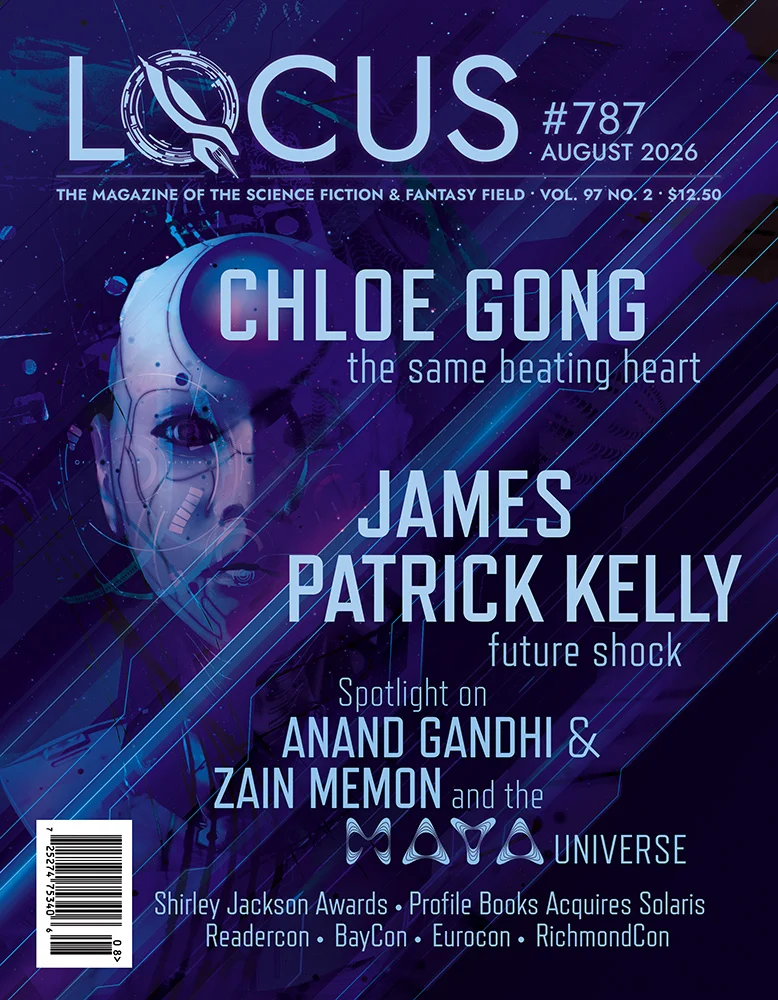
Oakland, CA – August 1, 2026 – Locus Magazine, the venerable institution often dubbed the "trade journal of the science fiction and fantasy field," has released its August 2026 issue, #787. This latest edition, marking the magazine’s 59th year of publication and its 30th Hugo Award-winning tenure, offers an expansive look at the dynamic world of speculative fiction. From insightful interviews with leading authors to critical industry news, convention reports, and a wealth of reviews, issue #787 stands as an indispensable guide to the genre’s pulse.
With cover and interview art masterfully crafted by Francesca Myman, the August issue cements Locus‘s reputation as the premier authority on all things SFF. It delves into the creative minds shaping the genre’s future, dissects significant shifts within the publishing landscape, and pays tribute to those who have left an indelible mark. This edition is not merely a collection of articles; it is a meticulously curated snapshot of a vibrant, evolving literary ecosystem, reflecting both the triumphs and challenges faced by authors, publishers, and readers alike.
Main Facts: A Deep Dive into SFF’s August 2026 Highlights
The August 2026 issue of Locus Magazine, #787 (Vol. 97, No. 2), delivers a rich tapestry of content designed to inform and engage its discerning readership. At its core, the magazine features in-depth interviews with two highly influential voices in contemporary speculative fiction: the acclaimed YA fantasy sensation Chloe Gong and the distinguished short fiction master James Patrick Kelly. These conversations promise to offer unique insights into their creative processes, thematic explorations, and perspectives on the genre’s trajectory.
Beyond individual author spotlights, the issue dedicates a significant portion of its pages to a comprehensive news roundup. Readers will find updates on prestigious awards, including the winners of the Shirley Jackson Awards and the Future Worlds Prize, alongside shortlists for the Le Guin Prize for Fiction and the Sunburst Award. The publishing world sees notable developments with Profile Books’ acquisition of Solaris, the launch of a new imprint, Pink Beam Press, and Simon & Schuster’s strategic relaunch of Pocket Books. Media enthusiasts will be particularly interested in the revival of Starlog Magazine, complete with a new podcast.
Convention reports provide firsthand accounts from major gatherings suchames Westercon78/BayCon 42, Readercon 35, MetropolCon/Eurocon, and RichmondCon, capturing the spirit and key discussions of these vital community events. The issue also presents the eagerly anticipated results of the 2026 Locus Survey, a crucial barometer for genre trends and reader preferences. Finally, a solemn section remembers significant figures lost to the SFF community, including R.S. Belcher, Mark J. McGarry, Dafydd Ab Hugh, Russell Kirkpatrick, Robin Johnson, and Katharine T. Carroll. The extensive review section, a hallmark of Locus, covers new works from an impressive array of authors, ensuring readers are well-informed on the latest and most significant releases across various SFF subgenres.
Chronology of Key Events and Industry Shifts
The August 2026 issue chronicles a period of significant activity and reflection within the science fiction and fantasy community, documenting a range of events that collectively paint a picture of a genre in flux and continuous evolution.
Publishing Industry Dynamics
The business side of SFF sees notable movements. The announcement that Profile Books has acquired Solaris is a major story. Solaris, renowned for its strong list of science fiction, fantasy, and horror titles, gains a new parent company in Profile Books, an independent publisher known for its diverse and critically acclaimed catalog. This acquisition signals potential new resources and wider distribution for Solaris, while Profile Books expands its footprint in the genre market. Industry observers will be keen to see how this merger impacts Solaris’s editorial direction and author roster in the coming years, speculating on whether it will lead to increased genre prominence or a more diversified publishing strategy.

Further highlighting the adaptive nature of publishing, Simon & Schuster’s relaunch of Pocket Books indicates a strategic move to revitalize a classic imprint. Pocket Books, historically a powerhouse in mass-market paperbacks and home to iconic tie-in fiction series like Star Trek, appears to be reinventing itself for a contemporary audience. This relaunch likely involves a modernized approach to content acquisition, potentially focusing on digital-first releases, new subgenres, or a re-emphasis on its celebrated legacy properties, aiming to capture both nostalgic readers and new generations.
The emergence of Pink Beam Press as a new imprint is another development generating buzz. While details remain sparse, the name suggests a potential focus on progressive, inclusive, or experimental speculative fiction. New imprints often signal a desire to fill perceived gaps in the market, champion underrepresented voices, or explore niche genres that larger houses might overlook. Pink Beam Press could become a significant player in shaping future SFF narratives.
Media Revivals and Evolution
The media landscape of SFF also sees a notable revival with the relaunch of Starlog Magazine, now accompanied by a podcast. Starlog, a legendary publication for generations of SFF fans, was a crucial source for news, interviews, and behind-the-scenes content on films, television, and books. Its return, particularly with a podcast component, demonstrates a savvy adaptation to modern media consumption habits. This hybrid approach allows Starlog to leverage its nostalgic appeal while reaching new audiences through audio, potentially re-establishing itself as a key voice in SFF media commentary and fandom.
Awards and Recognition
The August issue details a flurry of award announcements, underscoring the genre’s vibrant critical appreciation:
- Shirley Jackson Awards Winners: These awards celebrate outstanding achievement in the literature of psychological suspense, horror, and the dark fantastic. The winners reflect the genre’s continued exploration of unsettling themes and experimental narratives, often pushing the boundaries of traditional horror.
- Future Worlds Prize Winners: This prize, often focused on fostering new talent and diverse voices, highlights emerging authors whose speculative fiction grapples with contemporary issues and offers fresh perspectives. Its recognition is a crucial step for many burgeoning careers.
- Prometheus Awards Winners: Celebrating libertarian science fiction, these awards acknowledge works that explore themes of individual liberty, free markets, and anti-authoritarianism. Their continued presence underscores the ideological diversity within SFF.
- ESFS Awards Winners: The European Science Fiction Society Awards honor excellence in European SFF, promoting cross-cultural recognition and showcasing the continent’s rich contributions to the genre.
- Robert E. Howard Awards Winners: These awards pay tribute to works inspired by the creator of Conan the Barbarian, celebrating heroic fantasy, sword & sorcery, and historical adventure, keeping the spirit of pulp fiction alive.
- Le Guin Prize for Fiction Shortlist: The inclusion of its shortlist points to works that embody Ursula K. Le Guin’s legacy of literary excellence, social commentary, and imaginative depth, often with a humanitarian focus.
- Premios Kelvin Winners: Celebrating Spanish-language speculative fiction, these awards are vital for recognizing and promoting SFF from Hispanic cultures, broadening the genre’s international reach.
- Sunburst Award Shortlist: This Canadian award highlights excellence in Canadian speculative fiction, drawing attention to the distinct voices and narratives emerging from the nation.
- Heinlein Scholarship Recipients: These scholarships support aspiring writers and scientists, embodying Robert A. Heinlein’s vision for a future shaped by scientific inquiry and exploration.
Cultural and Political Flashpoints
A particularly contentious news item covered is the Utah ban on a Stephen King collection from public schools. This incident reflects ongoing debates about censorship, intellectual freedom, and the perceived appropriateness of certain literary works in educational settings. While specific reasons for the ban are not detailed, such actions typically stem from parental or community concerns over mature themes, language, or controversial content. This event sparks broader discussions within the SFF community and beyond about the role of literature in challenging perspectives and the importance of unfettered access to diverse narratives, even those that might be deemed uncomfortable.
Convention Circuit Developments
The convention scene sees both continuity and change. The most significant news is Westercon’s vote to retire the convention in 2028. Westercon, a long-standing regional SFF convention, has been a staple for decades. Its planned retirement in two years raises questions about the evolving landscape of fan gatherings, potential challenges in volunteer recruitment, financial sustainability, or changing attendee preferences. This decision will undoubtedly prompt reflections on the future of traditional SFF conventions.
Supporting Data: Context and Significance
The depth of Locus‘s August 2026 issue is truly revealed through the context it provides for each major announcement and feature. The interviews, industry news, and special reports are not merely headlines; they are carefully positioned within the broader narrative of SFF’s progression.

Voices of the Genre
Chloe Gong, interviewed in "The Same Beating Heart," represents the vanguard of young adult fantasy. Her previous works, known for their intricate world-building, compelling characters, and often darker, more mature themes within the YA framework, have garnered her a massive global following. The interview likely explores her transition between projects, her approach to character development, and the emotional resonance she strives for in her narratives, offering insights into what makes her work connect so profoundly with readers. Her meteoric rise reflects the sustained vitality and commercial success of the YA SFF market.
James Patrick Kelly, whose interview is titled "Future Shock," is a venerable figure in speculative fiction, celebrated for his award-winning short stories and novellas that often grapple with near-future technological and social issues. "Future Shock" suggests a deep dive into the anxieties and possibilities of tomorrow, a hallmark of his thought-provoking work. His perspective, drawing from decades of experience, offers a valuable counterpoint to newer voices, providing a historical anchor to discussions about the genre’s evolution. The interview is expected to touch upon the changing nature of speculative fiction, its responsibility in addressing contemporary crises, and the enduring power of short-form storytelling.
The Spotlight on Anand Gandhi & Zain Memon and the Maya Universe is particularly intriguing. Anand Gandhi, known for his philosophical and culturally resonant work in Indian cinema, and Zain Memon, a creative technologist, are poised to make a significant impact on SFF. The "Maya Universe" likely refers to an ambitious transmedia project – potentially a shared world, a series of interconnected narratives spanning various platforms (books, films, games, digital experiences) – that aims to blend ancient wisdom with futuristic concepts. This spotlight underscores SFF’s increasing global reach and its capacity for complex, cross-cultural storytelling, moving beyond traditional Western-centric narratives. It signifies a growing trend towards expansive, immersive narrative universes that engage audiences across multiple mediums.
The Locus Survey: A Genre Barometer
The 2026 Locus Survey Results are a cornerstone of this issue, providing invaluable data on the state of the SFF field. Conducted annually, the Locus Survey is widely regarded as one of the most comprehensive and influential polls within the genre. It typically gathers insights on favorite authors, novels, short fiction, artists, editors, and publishers, reflecting reader preferences and critical consensus. The 2026 results will offer a snapshot of current trends, highlighting shifts in popular subgenres (e.g., the continued rise of grimdark, the resurgence of space opera, or the growing prominence of cli-fi), the impact of diverse voices, and the evolving consumption habits of SFF readers (e.g., print vs. digital, audiobooks). These results inform industry professionals and readers alike, providing a quantitative measure of the genre’s health and direction.
Obituaries: Remembering Legends
The solemn Obituaries section, remembering R.S. Belcher, Mark J. McGarry, Dafydd Ab Hugh, Russell Kirkpatrick, Robin Johnson, and Katharine T. Carroll, serves as a vital historical record and a tribute to their contributions. While specific details of their SFF careers are not provided in the summary, Locus traditionally offers thoughtful reflections on the lives and legacies of these individuals. R.S. Belcher, for instance, might be known for his blends of fantasy and horror, while Dafydd Ab Hugh could be recognized for his hard science fiction or cyberpunk works. Russell Kirkpatrick may have been a beloved fantasy author, and others might have been crucial editors, artists, or dedicated fans who supported the genre tirelessly. These tributes ensure that the rich history of SFF, built by countless dedicated individuals, is never forgotten.
Official Responses and Community Reactions
While Locus primarily reports on events, the implications of these events often stem from, or provoke, official responses and community reactions.
Publishing Acquisitions and Relaunches
The acquisition of Solaris by Profile Books would typically be accompanied by official statements from both companies. Profile Books would likely emphasize its commitment to maintaining Solaris’s distinct identity and quality, perhaps announcing new investment in the imprint. Solaris, in turn, would likely express enthusiasm for the new partnership, highlighting potential synergies and increased opportunities for its authors. The SFF community’s reaction would likely be a mix of cautious optimism and anticipation, with authors and readers hoping for continued editorial excellence and perhaps a broader reach for Solaris titles.

The relaunch of Pocket Books by S&S would undoubtedly come with a detailed press release outlining the imprint’s new vision, target genres, and key authors. Simon & Schuster would emphasize its strategic intent to capture new market segments and revitalize a storied brand. Community response would likely be fueled by nostalgia, with long-time fans of Pocket Books’ classic series expressing excitement, while newer readers would be introduced to the imprint’s refreshed offerings.
The announcement of Pink Beam Press would be met with interest, particularly if its mission statement highlighted diversity, inclusivity, or experimental narratives. The SFF community, increasingly vocal about representation, would likely welcome a new imprint dedicated to these values, eager to see what new voices and stories it champions.
The Starlog Revival
The return of Starlog Magazine with a podcast would elicit widespread excitement among veteran SFF fans. Official announcements would likely focus on blending classic Starlog content with modern digital formats, promising deep dives into SFF media, interviews with creators, and fan-focused discussions. The podcast element, in particular, would be seen as a savvy move to reach a broader, more contemporary audience, allowing for real-time engagement and dynamic content that traditional print alone cannot offer.
Censorship Controversy in Utah
The Utah ban of a Stephen King collection would invariably trigger strong official responses and community outrage. School boards and library officials would likely issue statements justifying the ban based on "age appropriateness," "explicit content," or "alignment with community values." Conversely, intellectual freedom organizations, authors’ guilds, and segments of the SFF community would issue condemnations, framing the ban as censorship. Organizations like the American Library Association (ALA) and PEN America would likely release statements defending the right to read and the importance of diverse, challenging literature in education. Authors, including King himself, might offer public commentary, highlighting the chilling effect of such bans on literary expression and education. This issue often becomes a flashpoint for broader cultural wars, reflecting deep divisions over what content is deemed suitable for young readers.
Westercon’s Retirement
The Westercon committee’s official statement regarding its 2028 retirement would likely cite reasons such as declining volunteer engagement, financial pressures, or a desire to conclude on a high note. The announcement would prompt discussions within the convention circuit, with other regional cons potentially reflecting on their own sustainability. The SFF community would express a mix of sadness over the loss of a long-standing tradition and understanding of the challenges involved in organizing large-scale fan events in a rapidly changing world.
Implications: Shaping the Future of SFF
The collective news and features of Locus August 2026 issue reveal profound implications for the future trajectory of science fiction and fantasy, touching upon its commercial viability, cultural relevance, and creative boundaries.
Industry Consolidation and Innovation
The acquisition of Solaris by Profile Books is indicative of ongoing consolidation within the publishing industry. While it can bring new resources and market reach to a genre imprint, it also raises questions about editorial independence and the potential for a more homogenized market. Conversely, the launch of Pink Beam Press demonstrates a continued drive for innovation and diversification, suggesting that even as large entities grow, there remains fertile ground for new voices and niche markets. The relaunch of Pocket Books signifies publishers’ efforts to adapt historical brands to contemporary consumption patterns, often by blending print traditions with digital strategies, ensuring brand longevity in a dynamic marketplace.

The Evolving Media Landscape
The relaunch of Starlog with a podcast highlights a critical trend: the blending of traditional media with new digital formats. This hybrid approach is crucial for older brands to remain relevant and for the SFF genre to reach new audiences. It implies a future where content delivery is increasingly multi-platform, requiring creators and publishers to think beyond the printed page to engage fans through audio, video, and interactive experiences. This also reflects the growing influence of podcasts as a primary source of news, commentary, and community engagement within fandoms.
The Battle for Literary Freedom
The Utah ban of a Stephen King collection carries significant implications for intellectual freedom and the status of SFF within the literary canon. Such actions are not isolated incidents; they are part of a broader, ongoing cultural struggle over what stories are told, who tells them, and who gets to read them. For SFF, a genre often pushing boundaries and exploring controversial themes, censorship attempts are particularly concerning. This event reinforces the importance of advocacy for literary freedom and the need for SFF to continue engaging with challenging topics, even in the face of public pushback. It also underscores the importance of organizations like Locus in reporting on such events, thus keeping the community informed and mobilized.
The Health of Fandom and Community
The news of Westercon’s planned retirement offers a poignant reflection on the sustainability of traditional fan conventions. While new, smaller, or more niche conventions continue to emerge, the challenges faced by long-running events — from volunteer burnout to changing attendee preferences for virtual events or more intimate gatherings — point to a necessary evolution in how SFF fandom gathers and celebrates. This could lead to a decentralization of conventions, a greater emphasis on online communities, or a reimagining of what a "con" truly is in the 21st century.
The 2026 Locus Survey Results will provide vital data to understand these shifts, informing organizers, publishers, and authors about where the community’s energy and interests lie. It guides strategic decisions across the industry, from what books get published to where marketing efforts are focused, ensuring the genre remains responsive to its audience.
Creative Directions and Global Reach
The interviews with Chloe Gong and James Patrick Kelly showcase the genre’s dual capacity for both popular appeal and profound literary exploration. Gong’s success highlights the power of diverse voices and complex narratives in YA, while Kelly’s insights remind us of SFF’s role in prescient social commentary. The spotlight on Anand Gandhi & Zain Memon and the Maya Universe underscores the growing globalization of SFF, moving beyond its traditional Western roots to embrace rich narratives from around the world. This trend implies a future of increasingly diverse influences, intercontinental collaborations, and narrative universes that transcend single mediums or cultural origins.
In conclusion, the August 2026 issue of Locus Magazine serves as more than just a periodical; it is a critical historical document. It captures a moment when the SFF genre is grappling with rapid technological change, evolving publishing models, ongoing cultural debates, and an ever-expanding global reach. Through its meticulous reporting and insightful analysis, Locus continues to fulfill its essential role as the beacon illuminating the vibrant and complex landscape of science fiction and fantasy, guiding readers and professionals through its ever-unfolding future.