The Technicolor Turnaround: Trevor Phillips, Bari Weiss, and the High-Stakes Rebranding of CBS News
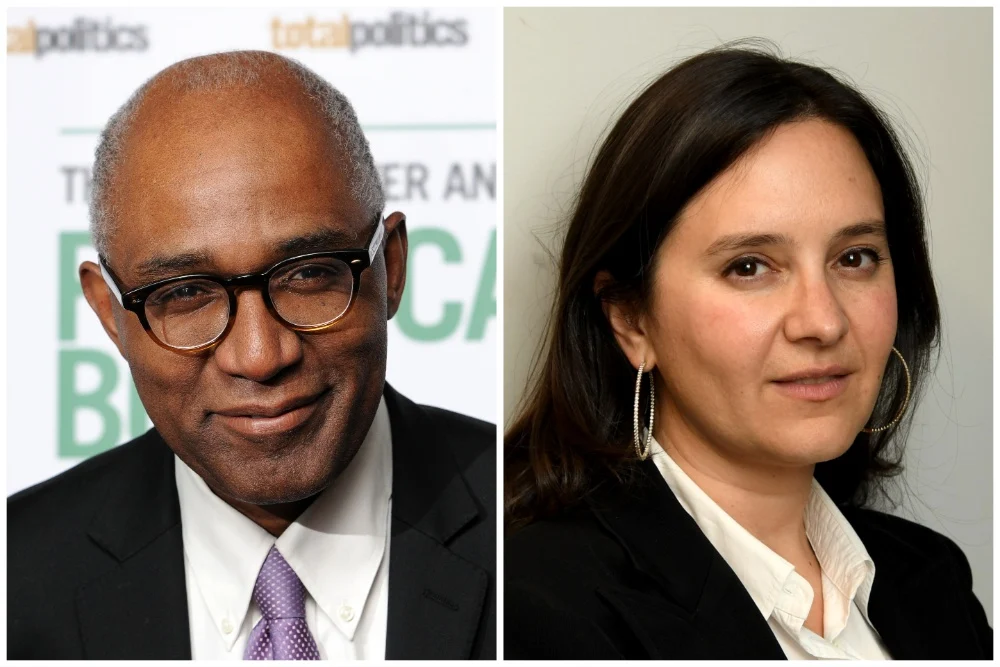
In a media landscape increasingly defined by ideological silos and declining trust in legacy institutions, the appointment of Sir Trevor Phillips as Senior Global Affairs Correspondent for CBS News marks a significant—and potentially volatile—inflection point for the American broadcaster. Phillips, a veteran of British broadcasting and a former political heavyweight, is not merely joining a newsroom; he is joining a self-described "mission" led by CBS News Editor-in-Chief Bari Weiss to steer the network away from what critics describe as institutional inertia and toward a more "heterodox" editorial philosophy.
In a wide-ranging and characteristically blunt interview with The Daily Telegraph, the 72-year-old Phillips offered a vivid assessment of the task ahead. Describing CBS as a "huge tanker of a network news organization," Phillips framed Weiss’s leadership as a high-stakes gamble that will either redefine modern journalism or result in a spectacular, highly visible failure.
"The great thing about her is that she’s one of those people who will either change the world or crash and burn," Phillips remarked. "But when they crash and burn, it’s in technicolour."
Main Facts: A Transatlantic Power Move
The transition of Sir Trevor Phillips from London to New York represents one of the most high-profile talent acquisitions in recent CBS history. Handpicked by Bari Weiss, Phillips will serve in a dual capacity: as the Senior Global Affairs Correspondent for the network and as a featured contributor to the venerable newsmagazine 60 Minutes.
Phillips’ arrival coincides with a period of profound structural and cultural upheaval at CBS News. Since Weiss took the helm, the network has been at the center of a heated debate regarding its editorial direction. While some internal and external critics have labeled the new regime "anti-woke," Phillips rejects this reductionist framing. Instead, he characterizes the Weiss era as an attempt to introduce "heterodoxy"—a variety of voices and perspectives that challenge the traditional Left/Right duopoly that has dominated American political discourse for decades.
Phillips, who has spent the last several years as a lead anchor for Sky News in the United Kingdom, brings a unique pedigree to the role. He is not a traditional "autocue" reader; he is a Knight of the Realm, a former chair of the Equality and Human Rights Commission (EHRC), and a man who has spent a lifetime at the intersection of race, politics, and public policy. His move to the U.S. at age 72 is, by his own admission, a "great adventure" and a testament to his belief in Weiss’s vision for the network.
Chronology: The Path to the "Bridge" of the CBS Tanker
To understand the weight of Phillips’ appointment, one must look at the timeline of his career and the recent evolution of CBS News.
- 2003–2012: The Policy Years: Phillips served as the head of the Commission for Racial Equality and later the Equality and Human Rights Commission in the UK. During this period, he became a controversial figure for his willingness to challenge "liberal orthodoxies" regarding multiculturalism, famously warning that Britain was "sleepwalking to segregation."
- 2021–2024: The Sky News Tenure: After decades in and out of the media, Phillips took over the Sunday morning political slot at Sky News. His tenure was marked by a rigorous, unsentimental interviewing style that prioritized policy over personality.
- 2022: Phillips was knighted for his services to equality and human rights, cementing his status as a pillar of the British establishment, albeit one who frequently critiqued that same establishment.
- 2025: The Weiss Appointment: Bari Weiss, the former New York Times columnist and founder of The Free Press, was appointed Editor-in-Chief of CBS News. Her mandate was clear: revitalize a legacy brand that was struggling to compete in a fractured digital age and address perceptions of ideological bias.
- Summer 2026: Phillips is slated to officially relocate to the United States to begin his tenure at CBS and 60 Minutes, marking the start of what he calls the "technicolour" experiment.
Supporting Data: The Changing Economics and Ideology of News
The "tanker" metaphor used by Phillips is backed by the economic realities facing Paramount Global, the parent company of CBS. Legacy news organizations have seen a steady decline in linear viewership, with audiences migrating to social media and independent newsletters.
Data from the Reuters Institute for the Study of Journalism suggests that "news avoidance" is at an all-time high, often driven by a perception that news is too depressing or too biased. Weiss’s strategy appears to be a direct response to these metrics. By bringing in "heterodox" voices like Phillips—who do not fit neatly into the American partisan divide—CBS is betting that there is a "silent majority" of viewers hungry for complexity.
Furthermore, Phillips’ interest in figures like Nigel Farage (UK), Giorgia Meloni (Italy), and Marine Le Pen (France) reflects a shift in global political data. These "populist" movements have consistently outperformed traditional polling models, suggesting that the "old Right/Left duopoly," as Phillips calls it, is no longer an accurate map of the political landscape. Phillips’ mission is to report on these currents without the filter of traditional editorial disdain, a move that is statistically aimed at capturing a broader, more globalized audience.
Official Responses and Editorial Philosophy
The appointment has not been without internal friction. Rumors have circulated within the CBS London bureau regarding the displacement of veteran correspondents. Specifically, reports suggested that reporter Holly Williams was sidelined from a high-profile interview with Reform UK leader Nigel Farage in favor of Phillips.
While Phillips declined to comment on specific personnel decisions, his response to the broader controversy was telling. He emphasized that the goal is not to promote a right-wing agenda, but to accurately reflect the world as it is.
"In the U.S., the controversy has been framed as ‘CBS News is becoming anti-woke,’" Phillips told The Telegraph. "But that’s not what Bari is about. Her point is that the media should be heterodox. There should be a variety of voices."
Phillips also offered a self-deprecating but firm defense of his journalistic style. Acknowledging that he is "not the smoothest presenter," he argued that his value lies in "managing the chaos" of live discourse and returning to the "business of reporting."
"Broadcast journalism has, to some extent, become the creature of entertainment," Phillips stated. "We need to return to the business of reporting. The story needs to come before the reporter. Too many people who do what I do put themselves between the viewer and the story, and that’s not our job."
Implications: The Future of Legacy Media
The implications of Phillips’ move to CBS extend far beyond a single hire. It represents a test case for whether legacy media can successfully pivot toward a "post-partisan" or "heterodox" model without alienating its core base or descending into tabloidism.
1. The "Technicolor" Risk
Phillips’ "crash and burn" comment acknowledges the volatility of this strategy. If Weiss and Phillips are perceived as leaning too far into "anti-woke" rhetoric, they risk losing the institutional credibility that 60 Minutes and CBS News have spent decades building. Conversely, if they succeed, they could provide a blueprint for the survival of legacy networks in the 21st century.
2. Redefining Diversity
Under Phillips’ view, diversity is not just about demographic representation but about "diversity of thought." By bringing a British perspective to American global affairs reporting, CBS is attempting to break the "Beltway" echo chamber. Phillips’ willingness to engage with figures like Meloni and Farage suggests that CBS will increasingly move toward a "realist" school of journalism, reporting on power as it exists rather than as the coastal elite wishes it to be.
3. The End of the "Reporter-as-Celebrity"
Phillips’ critique of reporters who "put themselves between the viewer and the story" is a direct shot at the "anchor-as-activist" model that has become prevalent in cable news. If Phillips can successfully implement a more detached, inquiry-based style at 60 Minutes, it may signal a broader industry shift back toward objective, field-based reporting.
4. A New Chapter for 60 Minutes
As the crown jewel of CBS News, 60 Minutes has always prided itself on being the "gold standard." However, even the gold standard requires polishing. Phillips’ age and experience may actually be an asset here; in a medium obsessed with youth, his "elder statesman" status provides a gravitas that aligns with the program’s historic brand, even as he pushes for more radical editorial shifts.
Conclusion
Sir Trevor Phillips’ move to CBS News is more than a career change; it is a declaration of intent. At 72, Phillips is embarking on a mission to help Bari Weiss turn around a "tanker" that many believe is heading for the rocks. By prioritizing heterodoxy over orthodoxy and reporting over entertainment, they are attempting to navigate a middle path through the most polarized era in modern history.
Whether this experiment results in a global journalistic renaissance or a "technicolour" crash remains to be seen. But in hiring Phillips, Bari Weiss has signaled that she is not interested in a quiet decline. The "adventure," as Phillips calls it, is just beginning, and the entire media world will be watching to see if this new "team on the bridge" can find a way to make the truth compelling again.