Unveiling the Midnight Mystery: Laura Sampson Retells "The Twelve Dancing Princesses" in "Enchanted Tales"
FOR IMMEDIATE RELEASE
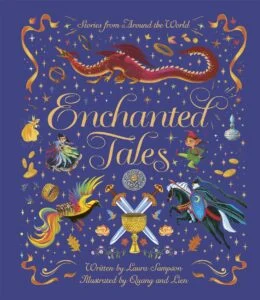
LONDON, UK – In a captivating new literary offering, "Enchanted Tales," published by Templar Books, renowned storyteller Laura Sampson invites readers into a world of timeless wonder with her masterful retelling of "The Twelve Dancing Princesses." This particular rendition draws its enchanting essence from the intricate French version by Charles Deulin, a narrative rich with regional details and a unique depth that distinguishes it within the vast tapestry of folklore. Sampson’s work not only preserves the classic allure of the tale but enriches it, presenting a narrative that resonates with both historical charm and contemporary appeal.
The story, a perennial favourite across Europe, delves into the perplexing mystery surrounding twelve royal sisters who, despite being locked securely in their chambers each night, emerge every morning with their satin slippers inexplicably worn through, as if they had danced until dawn. This enduring enigma forms the core of a narrative that explores themes of secret worlds, forbidden adventures, the transformative power of true love, and the triumph of the unassuming hero. Sampson’s "Enchanted Tales," adorned with evocative illustrations by Phung Nguyen Quang & Huynh Thi Kim Lien, promises to be a cherished addition to any library, offering a fresh perspective on a beloved classic.
The Enduring Mystery: Main Facts and Narrative Hook
Laura Sampson’s "Enchanted Tales" breathes new life into "The Twelve Dancing Princesses," a tale that has captivated audiences for centuries. The story, sourced from Charles Deulin’s French rendition, immediately plunges readers into a world where reality blurs with magic. At its heart lies the inexplicable phenomenon of the twelve princesses of Beloeil: each morning, their perfectly new dancing shoes are found utterly ruined, baffling their father, the Duke. Driven by desperation and a longing for answers, the Duke issues a decree: any man who can unravel the secret behind his daughters’ nocturnal excursions will be granted the hand of one of his princesses in marriage. However, this enticing offer comes with a perilous condition – failure to discover the truth within three nights results in a dire consequence, a fate that has already befallen numerous princes who dared to try.
This tantalizing premise sets the stage for the arrival of Michel, a humble cowherd known as "Stargazer," whose dreams extend beyond his simple village life. Sampson, through her retelling, carefully crafts a narrative that highlights the stark contrast between the glittering world of royalty and the grounded, observant nature of her protagonist. The inclusion of Deulin’s specific regional details – from the village of Montignies-sur-Roc to the grand Château of Beloeil – grounds the fantastical elements in a tangible, almost historical setting, enhancing the story’s immersive quality. The stage is perfectly set for a tale where an ordinary individual, guided by destiny and a touch of magic, might just uncover an extraordinary truth.
A Hero’s Unlikely Journey: The Chronology of Discovery
The narrative unfolds with a meticulous chronology, charting Michel’s transformation from a dreaming cowherd to the unlikely solver of a royal mystery.
The Call to Adventure and Initial Hesitation:
Michel, the young cowherd from Montignies-sur-Roc, is introduced as "Stargazer," a moniker that hints at his imaginative and aspirational nature. His mundane life is dramatically interrupted by the appearance of a fairy in a resplendent golden dress. Her prophetic song, "Go to the Château of Beloeil, and you will marry a princess!", plants the seed of destiny in his heart. Eagerly, Michel follows this ethereal guidance, arriving at the grand Château of Beloeil. Here, he immediately encounters the pervasive mystery: the worn-out shoes of the twelve princesses and the Duke’s desperate proclamation. The severity of the challenge, underscored by the ominous disappearance of previous suitors, initially daunts Michel. He, a simple cowherd, feels inadequate to compete with princes.
A Humble Beginning and a Glimmer of Hope:
Undeterred by his humble origins but cautious about direct confrontation, Michel secures work in the château gardens. His daily task involves crafting beautiful bouquets for the princesses, a role that keeps him in close proximity to the enigma without directly engaging it. The princesses, accustomed to such tributes, largely ignore him – all except for Lina, the youngest. Her fleeting glance and gentle smile ignite a spark of hope and determination within Michel, transforming his casual curiosity into a fervent desire to solve the mystery, primarily for her sake. This subtle interaction serves as a crucial turning point, imbuing the quest with a personal stake for the protagonist.
The Fairy’s Gifts and the Power of Invisibility:
The fairy reappears to Michel, this time bestowing upon him a set of magical tools: two baby laurel trees (one rose, one cherry), a golden bucket, and a golden rake. She instructs him to plant and tend them, promising they will grant his wishes. Michel diligently follows her counsel. One day, the cherry laurel blooms with a solitary white flower. Plucking it, he places it in his shirt button, a simple act intended to impress Lina. Miraculously, the flower renders him instantly invisible. This unexpected power is the key Michel needs, instantly shifting the odds in his favor and presenting him with a tangible means to penetrate the princesses’ secret world.
The First Night: A Descent into the Enchanted Realm:
Under the cloak of invisibility, Michel positions himself strategically beneath a bed in the princesses’ suite. As the heavy bolts secure the door for the night, the true magic begins. Wardrobes creak open, clothes rustle, and the sound of girlish laughter fills the air. Then, with three distinct claps, a hidden trapdoor in the floor swings open. Michel, ever vigilant, slips out and follows the princesses, so closely that he accidentally steps on Lina’s dress. Her brief pause, attributing the disturbance to a stumble, confirms his undetected presence.
The princesses descend a secret staircase, leading into a hidden corridor, and then into a series of increasingly fantastical woodlands. First, a shimmering silver forest, then one of gleaming gold, and finally, a breathtaking woodland of sparkling diamonds. Each step further immerses Michel and the reader into a world beyond imagination. These luminous paths lead them to a crystal-clear, glass-like lake, where twelve shining boats, each manned by a prince, await. Michel takes his place invisibly beside Lina, who wonders aloud why her boat feels so "slow and heavy," a subtle hint of his presence. The boats cross to a magnificent castle, glowing in the twilight, where wild music beckons. The castle’s ballroom is a spectacle of mirrors, sparkling lights, and rich tapestries, where the princesses dance with abandon. Michel observes Lina, her "velvet-black eyes" shining, entranced by the music and the dance. It is here that the poignant truth about the princes is revealed: they are the previous suitors, enchanted by a potion that has erased their memories of the world above, trapping them in this nightly revelry.
Gathering Proof and the Subtle Clues:
As the princesses’ shoes wear thin from the night’s exertions, the music ceases, and they indulge in an array of sugary treats: cookies, waffles, and cakes. Michel then silently follows them back through the enchanted woodlands and across the lake. During their return through the silver forest, he daringly breaks off a tiny sprig from one of the trees. The "CLANG!" that resonates through the wood briefly alarms the princesses, but they dismiss it as a bird. Michel races ahead, ascending the stairs, through the trapdoor, and out an open window, using a hanging vine to return to the gardens before dawn. He sheds his invisibility and resumes his daily task of gathering bouquets. Later, when he presents the flowers, Lina discovers the silver twig in hers, a seed of doubt planted in her mind.
For two subsequent nights, Michel repeats his invisible surveillance, each time plucking a sprig from the golden and then the diamond woodlands, placing them in Lina’s bouquet. The discovery of the diamond sprig is the final, undeniable proof.
Confrontation and the Test of Love:
Lina confronts Michel, her questions direct and accusatory: "You must have followed us. How?" Michel, maintaining his composure, simply replies, "I hid." Lina then presents him with the crucial choice: "You know that telling our father this secret rewards you with a wedding to one of us. Will you tell him?" Michel’s response, "I do not intend to," puzzles her. When she presses him for his reasons, he remains silent, but his "blue eyes meet Lina’s," a silent declaration of affection that causes "her heart melt."
The other princesses, observing this intimate exchange, mock Lina, deriding the notion of her marrying a gardener. Humiliated, Lina vehemently denies any such desire, throwing her bouquet at Michel in a fit of disdain. Later that day, the sisters conspire, agreeing that Michel, having uncovered their secret, must meet the same fate as the enchanted suitors. They invite him to join them, in plain sight, for the night’s dance.
The Prince in Disguise and the Breaking of the Spell:
Michel accepts the invitation, but his simple gardener’s clothes are unsuitable for a grand ball. Remembering the rose laurel, he whispers his wish into its petals. Instantly, he is transformed, dressed like a prince in "black velvet that matched Lina’s eyes," adorned with a "diamond feather brooch sparkling on his cap."
Once more, they descend through the trapdoor and journey through the magical woodlands to the castle. Lina, initially embarrassed by Michel’s princely appearance, laughs, "Don’t you look princely!" Michel, ever humble, responds, "Maybe. But I’m still a gardener. Not good enough for you." They dance through the night, a new dynamic between them. As the ball concludes, the eldest princess, adhering to the sisters’ plan, offers Michel a golden cup. "Gardener, secret-revealer, let’s drink to you!" she declares, intending for him to drink the forgetting potion. Michel, having overheard their intentions, raises the cup, his gaze fixed on Lina.
In a pivotal moment of true love and self-sacrifice, Lina cries, "NO!" and seizes the cup before he can drink. "Gardener or not, the thought of you trapped here forever breaks my heart!" Her heartfelt declaration breaks the enchantment, not just for Michel, but for all the enchanted princes. The spell shattered, they return to the world above, and the trapdoor, the gateway to the secret realm, vanishes forever.
Resolution and Royal Union:
In the Duke of Beloeil’s private quarters, Michel recounts the entire mystery. He then boldly asks for Lina’s hand in marriage. The wedding is celebrated as the grandest and happiest in the land, and Michel, the humble "Stargazer," becomes a prince. His journey from an ordinary cowherd to royalty, guided by courage, a fairy’s gifts, and ultimately, true love, concludes with him having "everything he could ever desire," rendering the magic of the laurel trees unnecessary.
Echoes of Antiquity: Supporting Data and Folklore Context
"The Twelve Dancing Princesses" (ATU 306) is a quintessential example of a widespread European folktale, categorized under the Aarne-Thompson-Uther Index. Its enduring popularity stems from its evocative imagery, intriguing mystery, and universal themes. While often attributed to the Brothers Grimm (KHM 133), the tale exists in countless variations across different cultures, each adding its own unique flavour. Laura Sampson’s choice to retell Charles Deulin’s French version, originally published in his 1884 collection "Contes du Roi Cambrinus," is particularly significant.
Deulin, a French writer from the French-Belgian border region, infused his rendition with rich, localized details that distinguish it from other versions. His specification of the Château of Beloeil (a real Belgian castle) and the village of Montignies-sur-Roc, along with meticulous descriptions of food, clothing, and place names, grounds the fantastical narrative in a tangible geographical and cultural context. This regional specificity offers a compelling contrast to the more generalized settings found in other European versions, providing a unique historical texture. For instance, while many versions feature an invisibility cloak or cap, Deulin’s use of a magical flower from a laurel tree is a distinct and charming detail. The fate of the previous suitors, trapped by an enchanted potion, also adds a layer of pathos and urgency to Michel’s quest, elevating the stakes beyond mere discovery.
Sampson’s decision to draw from Deulin’s text highlights the diversity within folklore and offers readers a less familiar, yet equally enchanting, interpretation. Her retelling serves as a bridge, connecting contemporary audiences with the rich tapestry of European oral tradition, demonstrating how these ancient stories can continue to captivate and instruct across generations. It underscores the idea that fairy tales are not static entities but living narratives, constantly reinterpreted and revitalized by new voices and cultural lenses.
Critical Acclaim and Enduring Legacy: Official Responses and Implications
While specific critical responses for Laura Sampson’s "Enchanted Tales" are emerging, the very act of its publication by Templar Books speaks volumes about the enduring appeal and perceived value of such retellings. Publishers, acting as gatekeepers of literary culture, invest in works they believe will resonate with readers and contribute meaningfully to the literary landscape. Sampson’s selection of Deulin’s version, with its nuanced details and compelling character arcs, suggests a conscious effort to offer a fresh perspective on a familiar narrative, appealing to both new readers and seasoned folklore enthusiasts.
The implications of Sampson’s "Enchanted Tales" extend beyond mere entertainment. Fairy tales, at their core, are powerful conveyors of cultural values, moral lessons, and psychological insights. "The Twelve Dancing Princesses," particularly in Deulin’s and Sampson’s hands, explores several profound themes:
- The Power of Observation and Humility: Michel, the "Stargazer," is not a prince by birth but possesses qualities of keen observation, patience, and a humble spirit that ultimately lead to his success. This reinforces the idea that true worth often lies beyond superficial titles or appearances.
- The Allure of Secret Worlds: The princesses’ nightly escapades tap into a universal human fascination with forbidden places and hidden pleasures. The story subtly explores the consequences of such secrets and the eventual necessity of confronting reality.
- The Transformative Power of Love: Lina’s decision to sacrifice her secret, and potentially her freedom, for Michel’s well-being is the ultimate act of true love. It’s her genuine affection that breaks the enchantment, emphasizing love’s ability to overcome even the strongest magical barriers and societal expectations.
- Challenging Societal Norms: The initial disdain from Lina’s sisters regarding her potential marriage to a gardener highlights societal class divisions. Michel’s eventual elevation to princehood through merit and love challenges these norms, advocating for a more egalitarian view of worthiness.
- The Journey of Self-Discovery: For both Michel and Lina, the journey involves significant self-discovery. Michel realizes his potential beyond his humble origins, while Lina learns to value genuine connection over societal pressures and the allure of fleeting pleasures.
Laura Sampson’s "Enchanted Tales" contributes to the ongoing tradition of reinterpreting and preserving folklore for contemporary audiences. By carefully curating and retelling a specific, regionally rich version of "The Twelve Dancing Princesses," Sampson not only entertains but also enriches our understanding of the tale’s diverse origins and its timeless messages. It encourages readers to look beyond the surface, to question mysteries, and to believe in the possibility of dreams coming true, irrespective of one’s starting point in life. The book serves as a potent reminder that the most profound magic often lies not in spells and enchantments, but in courage, perseverance, and the unwavering power of the human heart.