From Concept to Crowd Chaos: Dima Grigorev’s Ambitious "Imhotep: The Falcon of Gold" Music Video
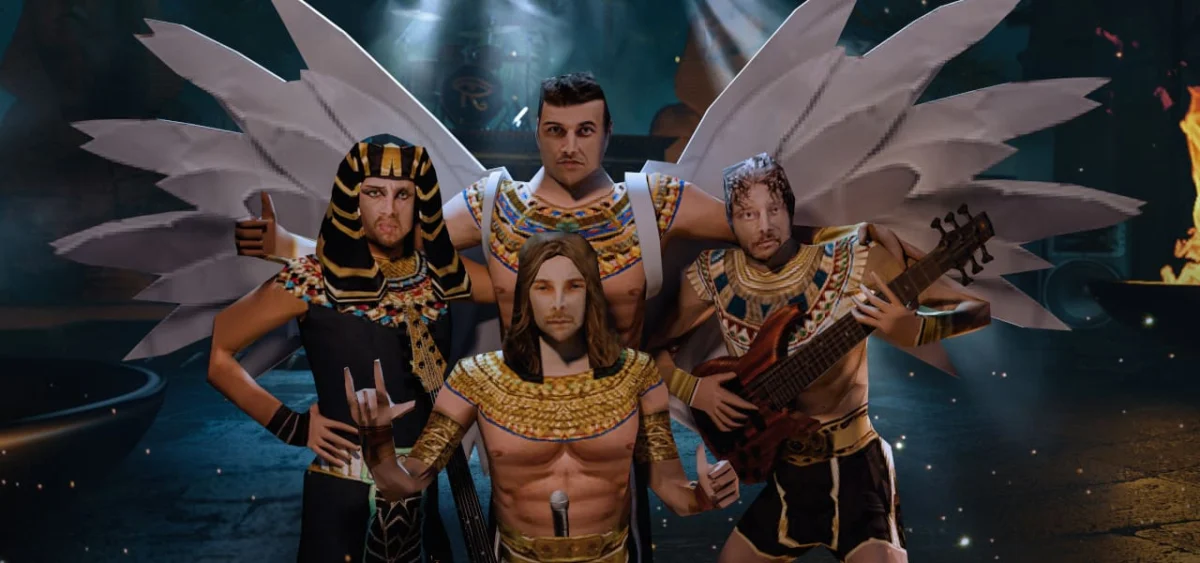
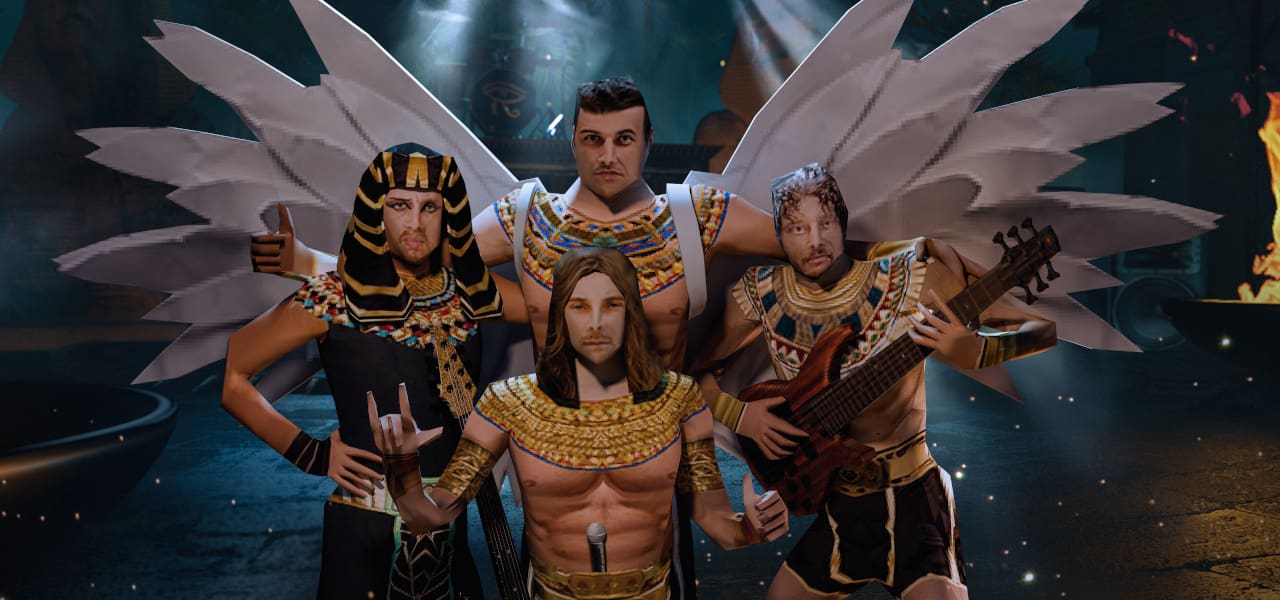
Montreal, QC – July 29, 2026 – In a testament to the burgeoning power of independent digital artistry, Montreal-based concept artist Dima Grigorev has delivered a music video for progressive metal band Shokran that is as audacious as it is visually arresting. What began as a request for a short social media clip evolved into "Imhotep: The Falcon of Gold," a full-fledged music video that masterfully blends ancient Egyptian iconography, the spectacle of televised talent competitions, and the visceral energy of a mosh pit, all rendered in a distinctively retro, PS2-esque aesthetic.
Grigorev, who largely produced the ambitious project single-handedly using Blender and Unreal Engine, recently unveiled a comprehensive "making-of" video, offering a deep dive into the creative and technical hurdles overcome during its five-month production. This endeavor highlights the increasing accessibility of sophisticated animation tools for individual artists, paving the way for more personal and experimental projects in the digital realm.
The Genesis of an Epic Vision
The collaboration between Grigorev and Shokran was born from a mutual admiration. Grigorev, a longtime admirer of the band’s progressive metal sound, was already familiar with their music from his university days studying graphic design. When the band reached out, seeking a short animated piece for social media, Grigorev saw an opportunity to push the boundaries.
"When progressive metal band Shokran approached Montreal-based concept artist Dima Grigorev about making a short animated clip for social media, he countered with a far more ambitious proposal: ‘Why not make an entire music video?’"
His enthusiasm was palpable. "Shokran sounded so fresh to me," Grigorev recalled. "So when they reached out to me, saying I was surprised is a huge understatement. I was so insanely motivated."
Shokran, in turn, were already fans of Grigorev’s distinctive visual style, evident on his Instagram account. This pre-existing appreciation granted him an almost unprecedented level of creative freedom. "They said, ‘We saw your Instagram. Do whatever you want,’" Grigorev shared with Cartoon Brew. This carte blanche, however, presented its own unique challenges for an artist venturing into animation production for the first time.
Navigating Creative Freedom and Technical Limits
Grigorev found that an entirely open brief, while liberating, could also be paralyzing, particularly for a solo artist making nearly every creative and technical decision. "If you give yourself complete freedom to do anything, your brain starts working in the wrong direction," he explained. "If I don’t limit myself, my thoughts drift too far, and it gets hard to pin down a specific idea because I want to try this, then that, then maybe something else."
The initial conceptualization phase involved a delicate balance between embracing his artistic impulses and finding a concrete narrative anchor. Grigorev decided to center the video around a live concert performance, a natural fit for a band. The crucial next step was to devise a simple logline that could effectively weave together the musical performance, the ancient Egyptian setting, and the song’s dramatic shifts.
Instead of a traditional storyboard, Grigorev opted for a more intuitive, timeline-driven approach. He repeatedly played Shokran’s track within Blender, listening intently for moments that suggested potential visual and narrative cues. This method allowed him to develop the video’s structure in tandem with the music, a departure from conventional animation workflows but one that proved effective for his independent production.
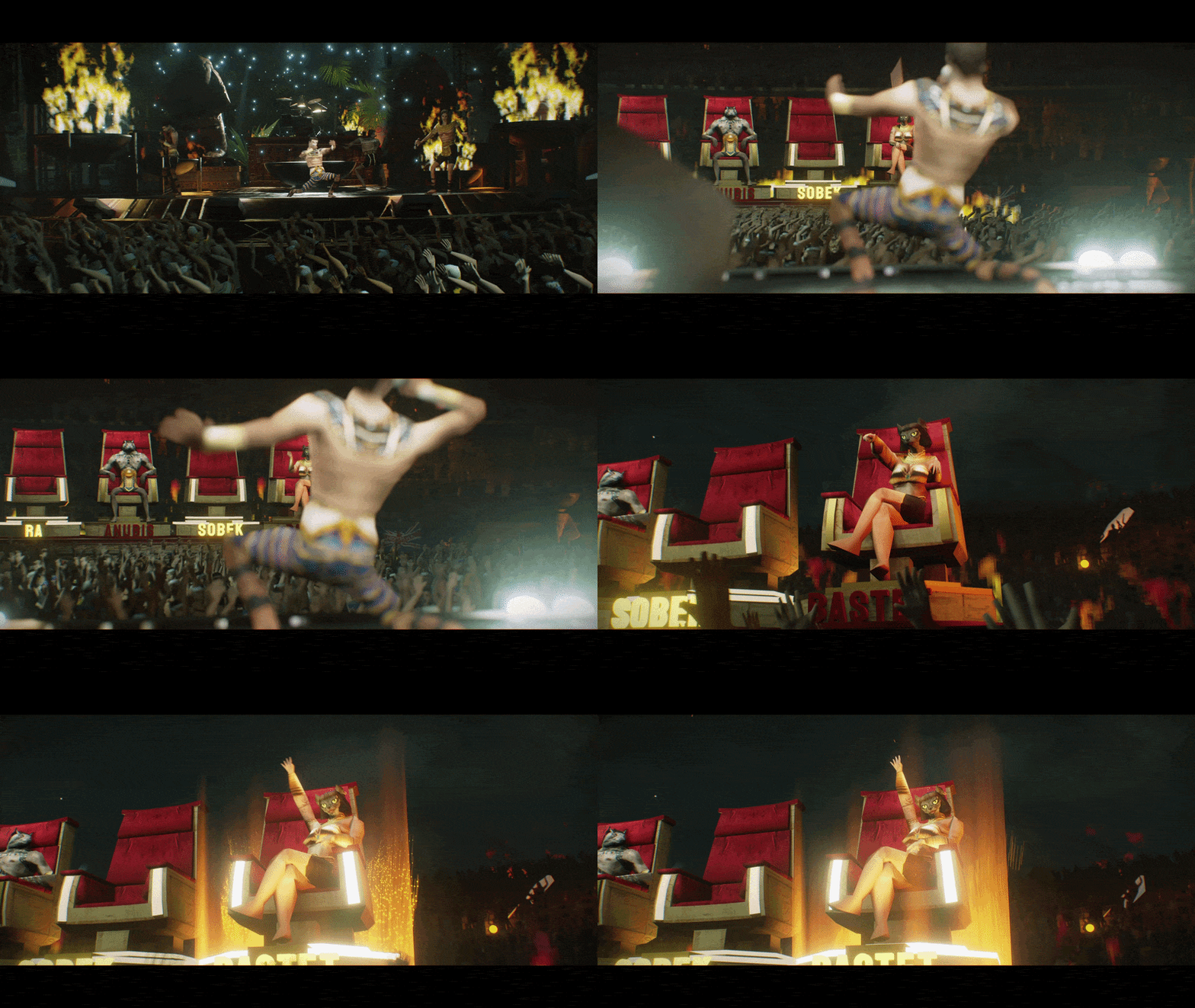
The song’s structure provided a clear framework. Grigorev identified four distinct musical crescendos, which he translated into four pivotal reactions from a panel of Egyptian deities serving as judges. This insight solidified the talent show concept, providing a narrative spine for the otherwise wild and chaotic visuals. "When it clicked, then I just went full into production because I already knew it was going to be good," Grigorev stated. "In my head, everything came together perfectly."
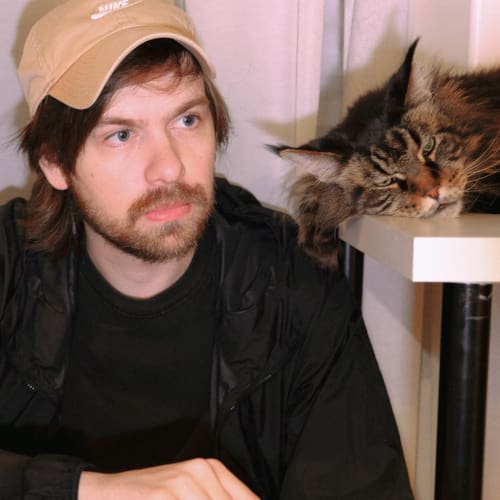
This conceptual breakthrough allowed Grigorev to imbue the video with a clear narrative arc while simultaneously populating it with gags, cameos, and personal touches. Notably, his Maine Coon cat makes a memorable appearance as a formidable participant in the frenzied mosh pit.
From Concept Art to Animation: A Skillful Evolution
Grigorev’s journey into animation was a natural progression from his established career. After graduating with a degree in graphic design in 2015, he spent five years honing his skills as a concept artist in the visual effects industry before transitioning to illustration within the gaming sector. While cinema remained a significant passion, he began seeking a more personal creative outlet.
His initial exploration involved music composition, resulting in approximately 100 demo tracks. However, he realized that these musical pieces would benefit from a compelling visual element to capture audience attention. Leveraging his existing proficiency with 3D software from his professional illustration work, Grigorev began teaching himself animation through online tutorials.
"I just made the scenes that I had already been making in 3D move," he explained, describing his early steps. "Those were my first steps. Since then, I’m just practicing, practicing."
The animation of the band’s performance itself required a dedicated tool. Grigorev invested in a Perception Neuron motion-capture suit, a decision driven by the need to capture the high-energy movements characteristic of Shokran’s music. While he had previously experimented with video-based motion capture, he found the results unsatisfactory. The demonstrations of the Perception Neuron suit, particularly its ability to capture acrobatic feats, convinced him it was the right choice for the project. "I ordered it just because of the Shokran music video," he admitted with a laugh, adding that it has since become a regular fixture in his personal projects.
The distinctive low-poly aesthetic of the video was also a pragmatic choice. A more detailed visual style would have demanded significantly more time than Grigorev, working alone and outside of his day job, could allocate. "I could have made something much more visually dense and polished, but then I wouldn’t have been able to pull it off with this level of speed and efficiency," he explained. This aesthetic choice, however, perfectly complements the retro charm and chaotic energy of the final product.
Tackling the Technical Beast: Crowd Physics and Unreal Engine
One of the most significant technical hurdles Grigorev faced was simulating the complex crowd physics. His initial plan to collaborate with a friend experienced in Houdini for these simulations was derailed when the friend became overwhelmed with other commitments. With no prior experience in Houdini himself, Grigorev had to find an alternative. This led him to Unreal Engine, a platform that proved instrumental in bringing the chaotic crowds to life.
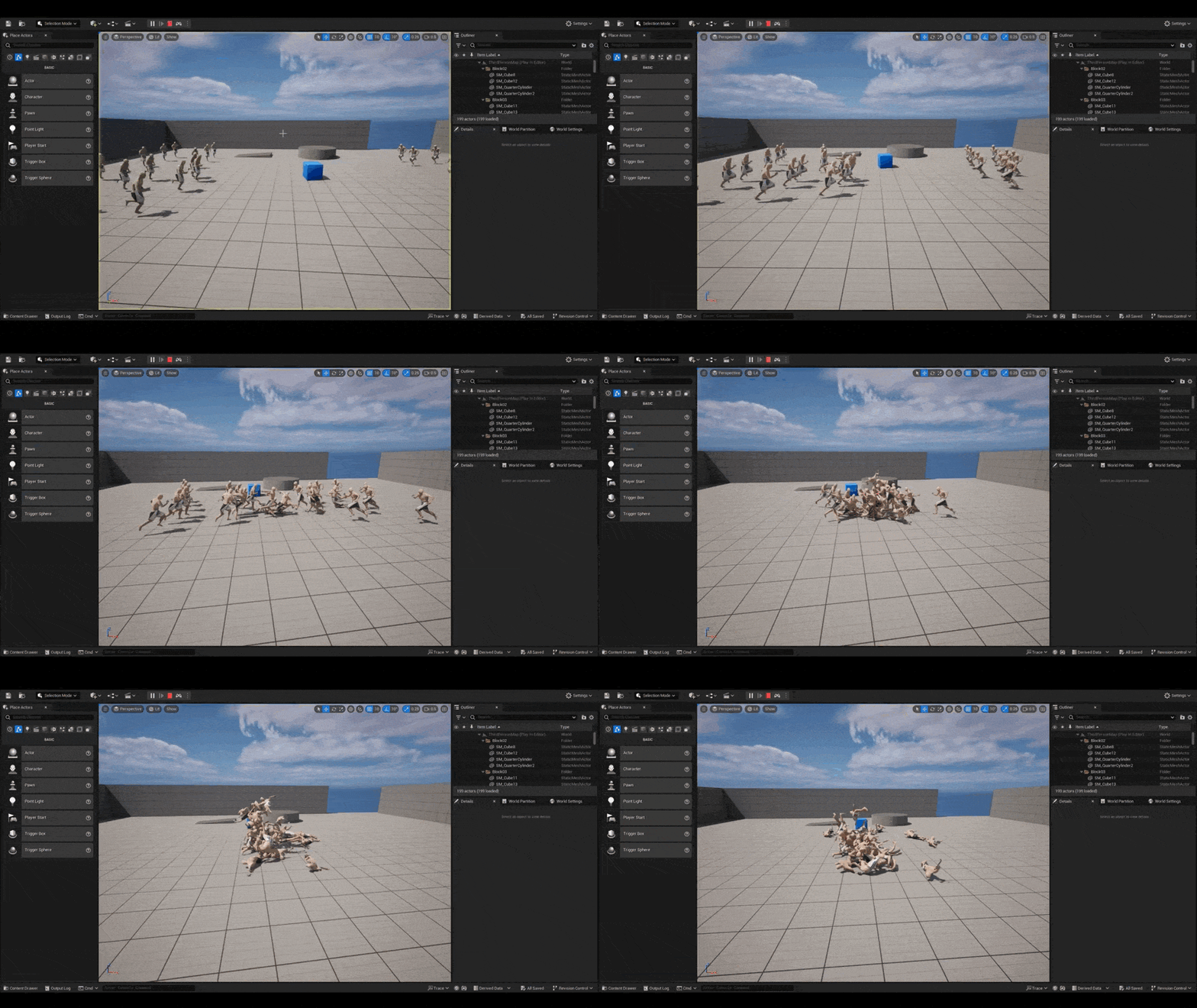
For the signature circle pit sequence, Grigorev directed characters along splines, differentiating between ragdoll and non-ragdoll physics models. By adjusting various parameters, he was able to manipulate their speed, creating increasingly frenetic and chaotic movement.
The "wall of death" sequence presented an even greater challenge. Grigorev enabled ragdoll physics for the entire crowd, establishing opposing spawn and target points, and then initiated a charge. The resulting collisions were amplified by adjusting the gravity settings, leading to an exaggerated and visually impactful spectacle. "I watched so many tutorials, and I just followed them religiously," he admitted. "If you asked me to recreate this stuff, I wouldn’t be able to. I’d need to watch the YouTube video again."
After running each simulation multiple times, Grigorev meticulously selected the most dynamic and entertaining results, which were then exported to Blender. Post-simulation cleanup was minimal, with camera work, focus shifts, and editing skillfully employed to smooth the transitions between different crowd behaviors. The inherent awkwardness of the physics simulations lent a supernatural and comedic quality to the scenes, evoking the unpredictable charm of older video games and contributing to the slapstick humor without sacrificing the sense of scale.
This project marked Grigorev’s first foray into Unreal Engine, a transition necessitated by Blender’s performance limitations as scenes became more complex. Unreal Engine offered significantly faster rendering capabilities and a more responsive viewport, ultimately improving his workflow. He now incorporates both Blender and Unreal Engine into his personal creative endeavors.
Directing the Gaze: The Art of Visual Storytelling
Grigorev’s background as a concept artist proved invaluable in integrating the large-scale crowd simulations with the core narrative elements. He masterfully employed lighting, focus, and composition to guide the viewer’s attention to the most crucial aspects of each shot.
"Hide what you don’t want people to focus on, and add detail only where you want the viewer to look," he advised. "You have to guide the viewer’s attention actively." This deliberate approach allowed him to effectively reuse character models within the broader crowd without making the repetition apparent. Characters in the foreground, closer to the camera, received more detailed designs and nuanced performances, drawing the audience’s eye and fostering a connection with the narrative.
"I feel like CG artists often miss this because they want to show every single detail they built and keep everything in focus, even when it’s not needed," Grigorev observed. "By showing less, you can tell a lot more and create the illusion of something much more complex."
The Indie Spirit: Pushing Boundaries and Inspiring the Future
The production of "Imhotep: The Falcon of Gold" extended beyond its initial three-month schedule, ultimately requiring approximately five months to complete. Grigorev undertook this monumental task without compensation, dedicating his evenings and weekends to the project while simultaneously attending French classes. He humorously attributed his sustained energy to the energy drinks featured in his making-of video.
Beyond the technical achievements, the project provided Grigorev with a crucial space to cultivate a distinct artistic style, separate from his commercial work. "Big studios just don’t want to take the big risks and do something completely new," he stated. "But indie artists, we’re trying to find our own style."
As animation and real-time rendering technologies become increasingly accessible, Grigorev anticipates a surge in independently produced projects of this caliber. "It’s getting so much easier for artists and animators actually to bring their ideas to life," he concluded. His journey with "Imhotep" exemplifies this trend, transforming a modest social media clip request into a full-fledged music video and demonstrating the power of individual vision and emerging tools to create groundbreaking artistic experiences.