The Canvas of Logic: Exploring the Creative Depth of Fantasketch
The landscape of indie puzzle games is often defined by a delicate balance between mechanical simplicity and emergent complexity. In an era where mobile marketplaces are saturated with "draw-to-solve" advertisements—many of which fail to deliver the depth they promise—a new contender titled Fantasketch is seeking to reclaim the genre’s integrity. Recently showcased at the Hyper Japan event, Fantasketch presents a vibrant, physics-driven world where the player’s creativity is the primary tool for navigation. By blending resource management with free-form drawing and a unique "dormancy" mechanic, the game offers a sophisticated take on the physics-puzzler subgenre.
Main Facts: A New Paradigm for Drawing-Based Puzzles
Fantasketch is a physics-based puzzle game that tasks players with navigating environments by drawing custom shapes and characters. Unlike traditional platformers or rigid logic puzzles, Fantasketch grants the player a high degree of agency in how they interact with the level geometry. The game’s core identity revolves around the transformation of ink into physical matter, where every stroke of the digital pen has consequences for the game world’s gravity and structural integrity.
The game distinguishes itself through three primary pillars:
- Creative Problem Solving: Players are not given a set of pre-defined tools; instead, they draw the tools they need, whether they be wheels, levers, or makeshift bridges.
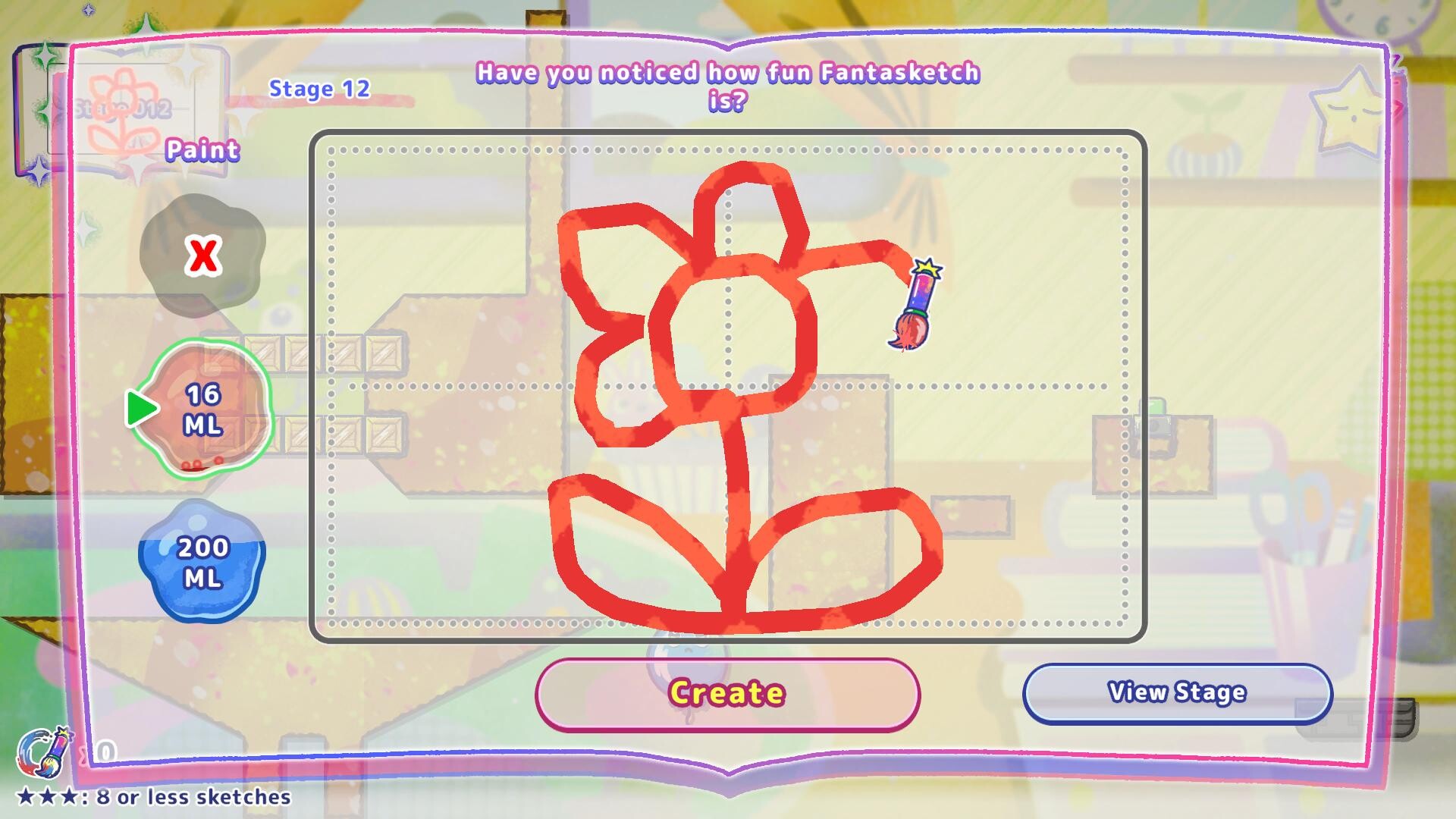
- The Paint Economy: Every level provides a finite amount of colored ink. This introduces a strategic layer, forcing players to consider the size and complexity of their creations against the remaining resources.
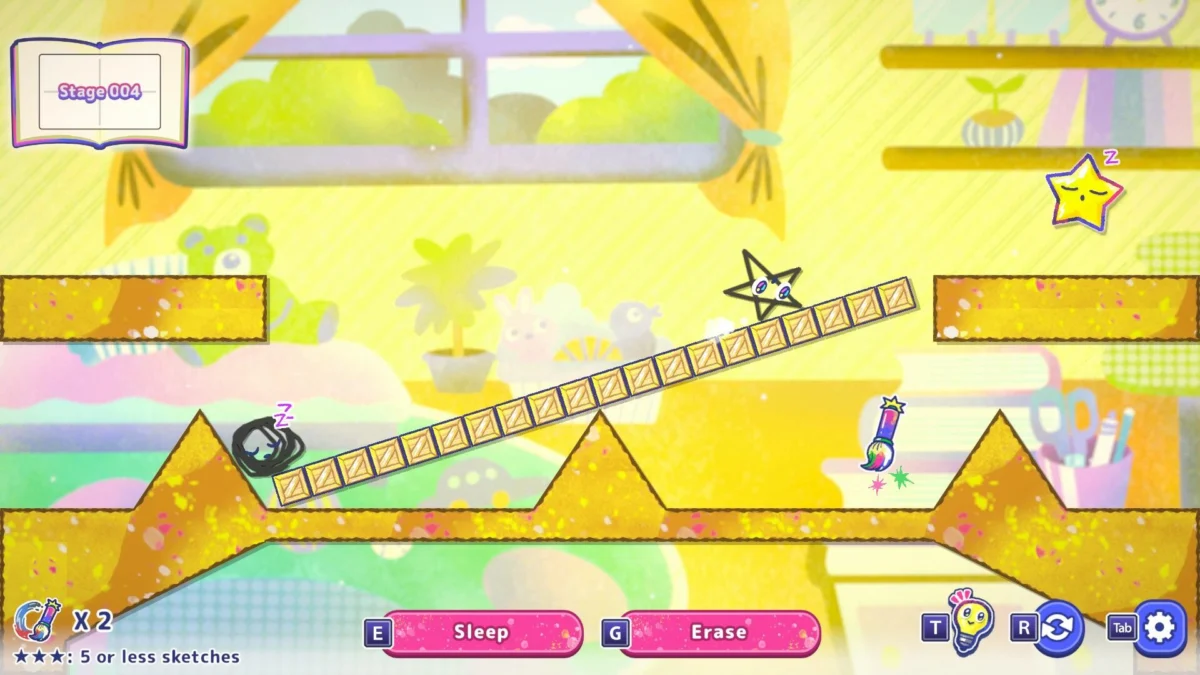
- The "Sleep" Mechanic: This is perhaps the game’s most innovative feature. Shapes can be "awakened" to perform actions or left "asleep" to serve as static environmental objects. This allows players to use their previous attempts—or intentional "failures"—as the literal foundation for their next move.
Currently, Fantasketch is in active development, with a playable demo having made waves at international cultural and gaming exhibitions. While a definitive release date remains unannounced, the title has already garnered significant interest on Steam, where it is available for wishlisting.
Chronology: From Concept to Hyper Japan Showcase
The journey of Fantasketch reflects a broader trend in the indie scene: the refinement of "hyper-casual" concepts into "mid-core" experiences. For years, the "draw-to-save" or "draw-a-bridge" concept has been a staple of mobile game advertising, though the actual gameplay often lacked the physics-based nuance advertised. The developers of Fantasketch appear to have identified this gap in the market, aiming to provide a high-fidelity, charming, and mechanically honest version of these concepts.
In mid-2024, the game reached a pivotal milestone with its presence at Hyper Japan, the UK’s largest celebration of Japanese culture, gaming, and technology. This event served as the public’s first major hands-on opportunity with the title. Attendees reported that the game felt significantly more tactile and responsive than its mobile inspirations. The demo showcased the introductory levels, teaching players the basics of shape-weight and gravity, before escalating into the "elemental" paints that define the mid-game experience.
The chronology of the game’s public lifecycle is currently in the "community building" phase. Following the success of the Hyper Japan demo, the developers have shifted focus to Steam, utilizing the platform’s "Next Fest" potential and wishlist metrics to gauge interest and refine the puzzle difficulty curves based on player feedback from the convention floor.
Supporting Data: The Mechanics of Creativity
To understand why Fantasketch resonates with puzzle enthusiasts, one must look at the data-driven mechanics of its gameplay loop. The game operates on a sophisticated physics engine that calculates the mass, friction, and center of gravity for every user-drawn object.
The Paint and Ability System
The game utilizes a color-coded ability system that adds a layer of "Metroidvania-lite" progression to individual puzzles.
- Red Paint (The Pyrogenic Property): The first specialized ink introduced is red. Characters drawn with this ink possess the ability to burn through wooden obstacles. However, the game adds a tactical twist: the "burn" effect is often only triggered when the character is in a specific state, such as being "asleep" or colliding at a certain velocity.
- Resource Constraints: Each level provides a numerical value for available ink. For example, a level might grant 500 units of blue ink but only 100 units of red. This prevents players from simply drawing a massive red blob to clear the screen, requiring them instead to draw precise, efficient shapes.
The "Asleep" vs. "Active" Duality
The most praised mechanic by testers is the "Sleep" system. In most puzzle games, a failed attempt results in a reset. In Fantasketch, a shape that doesn’t reach the goal isn’t necessarily a failure.
- Static Infrastructure: When a shape is "asleep," it becomes a fixed part of the environment. If a player draws a long, thin character that falls into a pit, they can leave it there.
- Adhesion: If timed correctly, new shapes can "stick" to sleeping shapes. This allows for the construction of complex bridges, ramps, and staircases built out of the "bodies" of previous attempts. This mechanic transforms the game from a simple "get from A to B" challenge into a construction simulator.
Official Responses and Developer Philosophy
While the developers have maintained a modest profile, their communications through Steam updates and at the Hyper Japan booth emphasize a philosophy of "Charm and Challenge." The visual aesthetic—reminiscent of a sketchbook brought to life—is a deliberate choice to make the high-difficulty puzzles feel less intimidating.
In responses to player inquiries during the demo sessions, the team highlighted that the game’s difficulty is "organic." Because there is no "correct" way to solve a puzzle, the difficulty is often a reflection of the player’s own ingenuity. A player who is good at drawing complex geometric shapes might find a different path than a player who prefers simple, brute-force designs.
The developers have also addressed the comparison to mobile games, stating that their goal was to bring "tactile weight" back to the genre. By moving the experience to PC, they can utilize more complex physics calculations that mobile processors often struggle to handle, allowing for more "emergent gameplay" where shapes interact in unpredictable but logical ways.
Implications: The Future of the Drawing Puzzler
The emergence of Fantasketch has several implications for the puzzle genre and the indie development landscape:
1. The Death of the "Fake Ad" Genre
For years, the gaming community has lamented the "false advertising" of mobile games that show drawing-based puzzles but deliver generic match-3 gameplay. Fantasketch represents a movement of "honest" games that take those advertised concepts and build them into full-featured, premium experiences. If successful, it could signal a shift where players look to PC and console platforms for the "pure" versions of ideas that originated in the mobile space.
2. Failure as a Resource
The "Sleep" mechanic in Fantasketch challenges the traditional gaming loop of "Try, Fail, Reset." By allowing players to keep their mistakes on the screen and use them as platforms, the game fosters a more forgiving and experimental atmosphere. This could influence future puzzle designs, encouraging developers to find ways to make player errors part of the solution rather than a barrier to progress.
3. The Democratization of Game Design
Because the player is essentially "designing" their own characters and tools in real-time, Fantasketch acts as a gateway to understanding basic game physics. It turns the player into a mini-level designer. This educational potential, wrapped in a charming aesthetic, makes it a candidate for "all-ages" appeal, bridging the gap between young children learning spatial awareness and adult puzzle fans looking for a logic-based challenge.
Conclusion
Fantasketch is more than a simple drawing game; it is a testament to the enduring appeal of physics-based logic. By grounding its whimsical art style in a rigorous mechanical framework—specifically the paint economy and the sleep mechanic—it offers a depth that belies its simple premise. As it moves toward an eventual release, the game stands as a beacon for what is possible when developers take a familiar concept and refine it with care, charm, and a commitment to player agency. For those who spent their childhood doodling in the margins of notebooks, Fantasketch promises a world where those doodles finally have the power to move mountains—or at least build a bridge over them.