Friedrich von Gentz: Architect of a Nuanced Conservatism in Revolutionary Europe
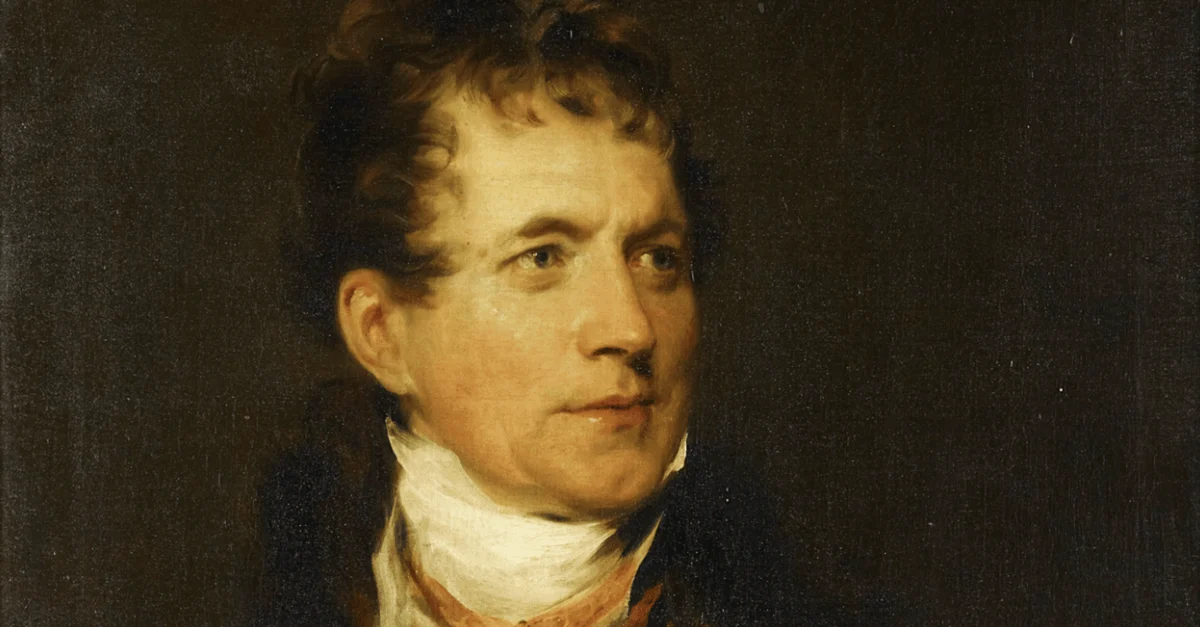
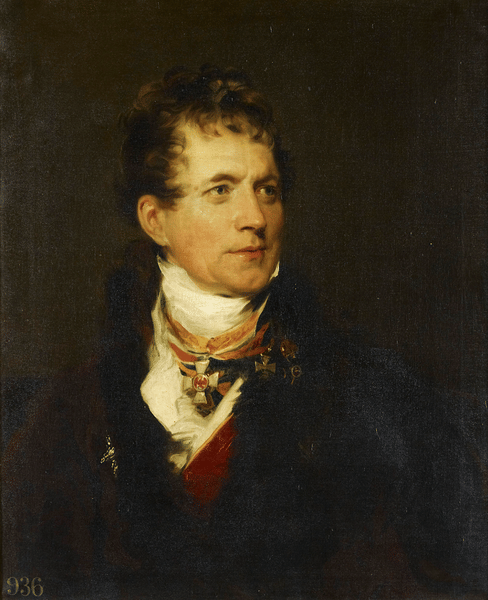
The tumultuous era of the French Revolution, a period that reshaped the political and philosophical landscape of Europe, gave rise to complex figures whose intellectual journeys mirrored the profound societal shifts of their time. Among these, the Prussian-Austrian diplomat and writer Friedrich von Gentz (1764-1832) stands out as a particularly intriguing and often misunderstood personality. While commonly characterized as a French Revolution reactionary and a conservative in the vein of Edmund Burke, such a simplistic portrayal fails to capture the intricate intellectual tapestry of a man deeply rooted in the German Enlightenment, who nonetheless became one of its most critical voices. Gentz’s lasting legacy lies not merely in his opposition to revolutionary excesses, but in his unique synthesis of Kantian rationalism with British traditionalism, a blend that profoundly influenced German thought and European diplomacy for decades.
A Mind Forged in the Aufklärung: Gentz’s Early Intellectual Landscape
Friedrich von Gentz was a product of his age, his early opinions of the French Revolution profoundly shaped by the rationalistic Enlightenment climate of 18th-century Berlin. The capital of Prussia, and Gentz’s childhood home, was then under the rule of the Hohenzollern king Frederick II, famously known as Frederick the Great. While Frederick’s reign began with considerable progressive zeal, by the 1780s, he had paradoxically become an "outdated baroque king" in an age increasingly defined by the Enlightenment.
Berlin’s Enlightenment Cradle
The Enlightenment, or the Aufklärung as it was known in the German-speaking states, was evolving with remarkable sophistication. Philosophers such as Immanuel Kant, Christian Garve, and Moses Mendelssohn were pushing intellectual boundaries, exploring the profound relationships between ethics, individual liberty, and the structure of government. Their writings questioned the established order, particularly the entrenched rule and privilege of a small aristocratic elite over the vast populace, especially when such authority seemed to suspend individual ethics for its own perpetuation. Consequently, by the time of his death in 1786, Frederick II’s initial popularity had waned among his more intellectually inclined subjects.
It was in this vibrant intellectual milieu that Gentz underwent his formative intellectual development. He frequented the renowned salons and social clubs of Frederick’s Berlin, mingling with the leading figures of the Aufklärung. Here, he absorbed ideas vibrant with Enlightenment rationalism, embraced a spirit of critical inquiry, and was exposed to the relaxed moral and social conventions of the period. This environment fostered in him a profound belief in the power of reason and the paramount importance of individual liberty.
Kant’s Indelible Mark
The most significant influence on Gentz’s intellectual sophistication came from Immanuel Kant. In 1783, Gentz enrolled at the University of Königsberg, where he studied directly under Kant, who by then was an internationally recognized philosopher, having published his seminal work, Critique of Pure Reason, in 1781. Kant’s teachings instilled in Gentz a rigorous analytical framework and a deep appreciation for the autonomy of reason.
Through his university education, Gentz was exposed to the core tenets of the Berlin Enlightenment thinkers, leaving an indelible mark on his intellect. He became particularly open to the revolutionary ideas of Jean-Jacques Rousseau, which championed popular sovereignty and the social contract. By 1789, the year the French Revolution erupted, Gentz firmly believed that reason and liberty were the most crucial aspects of human nature. He envisioned a political system where governance, both domestic and international, was founded upon these values, with rulers deriving their authority from the people and, crucially, being answerable to them. In 1791, he enthusiastically described the French Revolution as "the first practical triumph of philosophy, the first example of a form of government which is founded on principles and upon a consistent, logical system." (Reiff, 57). At this juncture, Gentz was an ardent supporter, seeing the Revolution as the grand realization of Enlightenment ideals.
The Turning Tide: Disillusionment and the French Revolution’s Descent
Gentz’s initial admiration for the French Revolution, however, proved to be short-lived. What began as a celebration of reason and liberty soon devolved into a spiral of violence and terror, fundamentally challenging his Enlightenment ideals.
From Idealism to Alarm
In early 1791, the French Revolution still represented, for Gentz, the practical application of a brilliant philosophical idea. However, the subsequent months brought an alarming shift in the Revolution’s trajectory. By late 1791 and especially throughout 1792, the burgeoning Republic embarked on a path marked by escalating violence and widespread terror. Events such as the September Massacres of 1792, where Parisian mobs brutally murdered thousands of imprisoned "enemies of the Revolution," and the subsequent establishment of the Reign of Terror under Maximillian Robespierre, with its widespread executions and suppression of dissent, deeply horrified Gentz. He witnessed the very ideals of humanity and liberty that the Revolution claimed to champion being subverted by its brutal manifestations. This stark contradiction between the stated ideals and the violent reality caused his initial enthusiasm to curdle into profound skepticism.
The Influence of Wilhelm von Humboldt
Gentz’s growing misgivings were further stirred by the evolving opinions of his close friend, Wilhelm von Humboldt, a prominent German philosopher and linguist. Humboldt, who had also initially been an ardent supporter of the French Revolution, began to express increasing skepticism by 1791. The intellectual camaraderie between the two men meant that Humboldt’s shift had a significant impact on Gentz. By the end of that year, Gentz, too, found himself firmly in the anti-Revolutionary camp. The shared disillusionment among intellectuals like Gentz and Humboldt underscored a broader European intellectual reaction against the excesses of the Revolution.
Translating Burke: A Conservative Synthesis
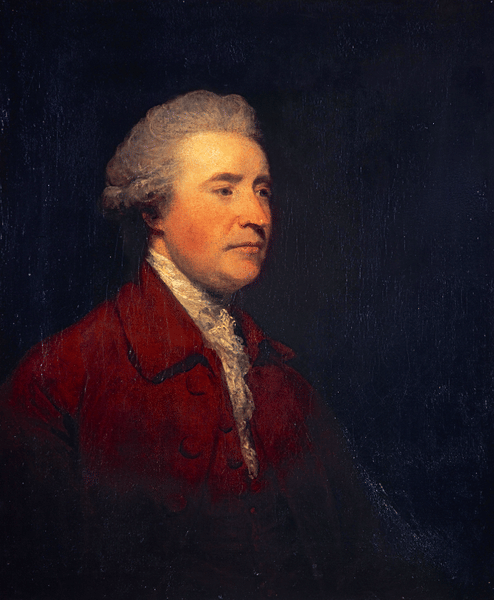
It was during this period of intellectual re-evaluation that Gentz encountered Edmund Burke’s seminal work, Reflections on the Revolution in France. This encounter proved pivotal, consolidating Gentz’s anti-Revolutionary stance and shaping his unique conservative philosophy.
Encountering Burke’s "Reflections"
In the spring of 1791, Gentz first read Burke’s Reflections, published in London in 1790, in its German translation. This initial translation, though described as "clumsy and poorly written," effectively conveyed Burke’s central arguments. Gentz’s initial reaction was one of hostility; he fundamentally disagreed with Burke’s premise, which attacked the French Revolution from its very inception. However, as the Revolution spiraled into terror by 1792, Burke’s prescient warnings about the dangers of abstract theorizing and the destruction of established institutions began to resonate with Gentz’s own growing alarm.
The German Translation and its Significance
By 1791, with his shift in opinion solidified, Gentz began the arduous task of translating Burke’s Reflections himself. His translation, titled Betrachtungen über die französische Revolution nach dem Englischen des Herrn Burke, was published in 1792. This work definitively marked Gentz’s public transition from a pro-Revolutionary to an anti-Revolutionary. By December 1792, he viewed the French Revolution as an existential threat to the peace and security of all nations. Gentz’s translation thus cemented his reputation in Germany as a leading anti-Revolutionary voice, a position he would maintain for the remainder of his life.
Beyond Blind Devotion: Gentz as a Kantian Conservative
Crucially, Gentz was no uncritical acolyte of Burke. While Burke’s arguments certainly drew his admiration as his own political stance shifted, this admiration was never one of blind, indiscriminating devotion. Gentz remained first and foremost a Kantian. His skepticism towards the French Revolution stemmed primarily from the terrorism it unleashed—the "excesses of pillaging, massacres, and vandalism"—not from a rejection of the Revolution’s stated principles of reason and liberty. He believed that the Revolution, in its violent manifestation, had betrayed its own ideals, becoming the very embodiment of injustice and oppression it claimed to fight.
Therefore, Gentz’s admiration for Burke derived from agreement on specific fundamental points: the importance of history and tradition, and the futility of constructing a viable political system solely on abstract concepts without regard for practical realities. However, Gentz did not inherit Burke’s deep-seated revulsion towards the Enlightenment that pervaded the original Reflections. As a "grandchild of the Enlightenment," Gentz could not fully abandon its philosophical tenets. His conservatism was thus a nuanced one, born of a critical engagement with, rather than a wholesale rejection of, the Enlightenment.
Distinguishing Revolutions: America vs. France
To further articulate his evolving conservative philosophy and critique of the French Revolution, Gentz published another significant work in 1800: The Origin and Principles of the American Revolution Compared with The Origin and Principles of the French Revolution. In this tract, he directly contrasted the two major revolutions of his era, highlighting what he perceived as the fundamental flaws of the French model.
The 1800 Tract: A Comparative Analysis
Gentz argued that the American Revolution, unlike its French counterpart, was primarily a defensive war. It sought to preserve existing rights and liberties against perceived infringements by a distant colonial power, rather than to overthrow an entire social and political order. This defensive nature, according to Gentz, instilled a degree of moderation and pragmatism in the American revolutionaries. They aimed for reform and the re-establishment of traditional liberties, not for a radical restructuring of society based on abstract, untested theories.
Offensive vs. Defensive War, Moderation vs. Frenzy
In contrast, Gentz characterized the French Revolution as an "offensive war" from its inception. It sought to aggressively dismantle existing institutions, traditions, and hierarchies, driven by an ideological zeal for abstract principles that disregarded practical consequences and historical context. This offensive posture, he argued, lacked any inherent mechanism for moderation, leading inevitably to "vengeful frenzy" and an "uncontrollable and violent" escalation when it should have become milder. The French Revolution, in his view, abandoned common sense for ideological purity, plunging the nation into chaos and tyranny, precisely what a truly enlightened and rational movement should have avoided.
Gentz’s Unique Contribution: A Kantian Lens on Burkean Thought
The enduring significance of Gentz’s translation of Burke’s Reflections lies in its distinct character, which transcended a mere linguistic conversion. As historian Johnathan Green argues, it was Gentz’s German rendition, rather than Burke’s original English text, that became the pivotal document fueling Berlin’s counter-Enlightenment thinkers and resistance to the French Revolution.
Johnathan Green’s Crucial Distinction
Green points out that it was highly improbable that many Berliners would have read the original Reflections. Therefore, Gentz’s translation acted as the conduit for Burke’s ideas into German intellectual discourse. This distinction is crucial because, as Green meticulously details, Gentz’s translation was fundamentally different from the original. Burke, from the outset, opposed the French Revolution on deeply moral and political grounds, viewing it as a catastrophic break with organic tradition. Gentz, however, was initially sympathetic and only became disillusioned by the Revolution’s descent into terror.
Reconciling Enlightenment and Conservatism
Crucially, Gentz did not simply inherit Burke’s conservatism, nor did he adopt Burke’s deep-seated revulsion towards the Enlightenment that permeated the original text. Gentz, a "grandchild of the Enlightenment," could not easily abandon the intellectual framework that had shaped him. By 1792, while in fierce agreement with the general intents and purposes of Reflections—particularly its critique of radical change and its emphasis on prudence—he remained unconvinced by its blanket aspersions towards the Enlightenment itself.
Philosophical Rigor and Extensive Footnotes
What Gentz masterfully achieved in his translation, Green claims, was a "super-imposition of Kantian rationalism upon Burke’s Reflections." Gentz believed that the true strength of Burke’s work lay in its emphasis on history, tradition, and moderation. However, he also perceived a lack of "philosophical sophistication and rigor" in Burke’s arguments, which Gentz diligently sought to provide. He accomplished this delicate balance through extensive footnotes and clarifications, which significantly extended the length of his translation. In essence, Gentz infused Burke’s British traditionalism with the philosophical erudition of the German Enlightenment. He extracted the best qualities of British conservatism—moderation, respect for established institutions, tradition, and pragmatism—and forged from them a potent diplomatic tool. This intellectual synthesis would go on to inform the "balance of power" politics in Central Europe for the remainder of the 19th century.
Diplomatic Architect: Shaping European Politics
Beyond his intellectual contributions, Friedrich von Gentz was a highly influential practical statesman and publicist, whose skills were put to use in the complex arena of European diplomacy. His alliance with one of the era’s most powerful figures, Klemens von Metternich, cemented his role in shaping the conservative order that emerged after the Napoleonic Wars.
Publicist and Diplomat
By 1793, Gentz had become one of the most vibrant and articulate voices against the French Revolution. He regularly submitted incisive political essays and articles to various journals and magazines, shaping public discourse and galvanizing anti-Revolutionary sentiment among the educated elite. His translation of Burke’s Reflections was specifically aimed at this "enlightened educated intelligentsia" of the day. He carefully presented Burke not as a traditionalist blindly opposed to all progress or an outright anti-Enlightenment figure, but rather as a defender of prudent reform and established order, while still retaining the authenticity of Burke’s main arguments. This intellectual balancing act, as discussed, was facilitated by his extensive philosophical commentary.
The Metternich Alliance
Gentz’s intellectual prowess and persuasive writing caught the attention of powerful figures. He eventually entered the service of the Austrian Empire, where he became a close confidant and advisor to the formidable Austrian foreign minister, Klemens von Metternich. Working alongside Metternich, Gentz leveraged his formidable skills as a publicist and political analyst to align with conservative forces across Europe. He played a crucial role in crafting the diplomatic strategies that aimed to restore stability and legitimate monarchical rule after the seismic disruptions of the French Revolution and the Napoleonic Wars.
Forging a "Balance of Power"
In the post-Napoleonic era, Gentz was instrumental in articulating and defending the principles of the Congress of Vienna (1814-1815), which sought to establish a new European order based on a balance of power. He skillfully wielded the intellectual tools he had forged—a blend of British traditionalism’s emphasis on moderation, respect for institutions, and pragmatism, combined with German rationalism’s clarity and systematic thought—to inform Austrian foreign policy. His writings and diplomatic efforts helped legitimize the conservative restoration, advocating for a cautious approach to change and a strong international framework to prevent future revolutionary upheavals. Gentz’s unique ability to synthesize diverse intellectual currents allowed him to articulate a compelling vision for European stability, influencing the course of international relations for decades.
Legacy and Implications: A Complex Figure for Modern Times
Friedrich von Gentz emerges as a truly unique figure in German intellectual and diplomatic history. His journey from an ardent Enlightenment idealist to a nuanced conservative offers profound insights into the intellectual ferment of an age grappling with revolutionary change.
Gentz’s enduring impact lies in his pioneering efforts to bring a distinct kind of thinking to the German public sphere—a sophisticated blend of the Berlin Enlightenment’s philosophy with British conservatism. He demonstrated that it was possible to be a "grandchild of the Enlightenment" while simultaneously critiquing its radical excesses and defending the value of tradition, prudence, and gradual reform. His work provided an intellectual bridge, allowing German thinkers to engage with conservative ideas without necessarily abandoning their rationalist heritage.
His critical analysis of the French Revolution, particularly his distinction between the American and French experiences, offered a powerful framework for understanding the dangers of unbridled ideological zeal and the importance of moderation in political change. This perspective remains relevant for contemporary discussions about revolution, reform, and the balance between idealism and pragmatism in governance.
Furthermore, Gentz’s role highlights the crucial importance of translation not merely as a linguistic exercise but as an act of intellectual transformation. His rendition of Burke was not a passive transfer of ideas but an active reinterpretation, infused with his own philosophical insights, thereby shaping how Burke’s conservatism was understood and absorbed within the German intellectual landscape. His influence on Metternich and the conservative order of post-Napoleonic Europe underscores the power of ideas, even those articulated by a publicist, to shape the geopolitical realities of an entire continent.
Conclusion: A Legacy of Nuance
In conclusion, Friedrich von Gentz was far more than a simple reactionary. He was a complex intellectual whose journey from Enlightenment enthusiast to sophisticated conservative mirrored the tumultuous evolution of his era. By synthesizing Kantian rationalism with Burkean traditionalism, he forged a distinctive conservative philosophy that championed moderation, historical continuity, and pragmatic governance. His influential translation of Burke, his comparative analysis of revolutions, and his diplomatic contributions alongside Metternich solidified his place as a pivotal figure who not only resisted revolutionary extremism but also enriched European thought with a nuanced and enduring vision of conservatism. His legacy reminds us that even in periods of radical change, intellectual honesty and a commitment to critical inquiry can lead to unexpected and profoundly influential syntheses of ideas.