The Architecture of Absurdity: The Peculiarly Logical Webcomics of Øyvind Thorsby
Introduction: The Persistence of the Infinite Canvas
In the late 1990s and early 2000s, the burgeoning "Web 2.0" era birthed a digital Renaissance for sequential art. This was the age of the "infinite canvas," a term coined by Scott McCloud to describe the limitless potential of the internet to host comics unfettered by the physical constraints of the printed page. While many ambitious artists of the time succumbed to mediocrity—often producing unpolished work for niche gaming communities—a few creators utilized the medium to build something genuinely singular.
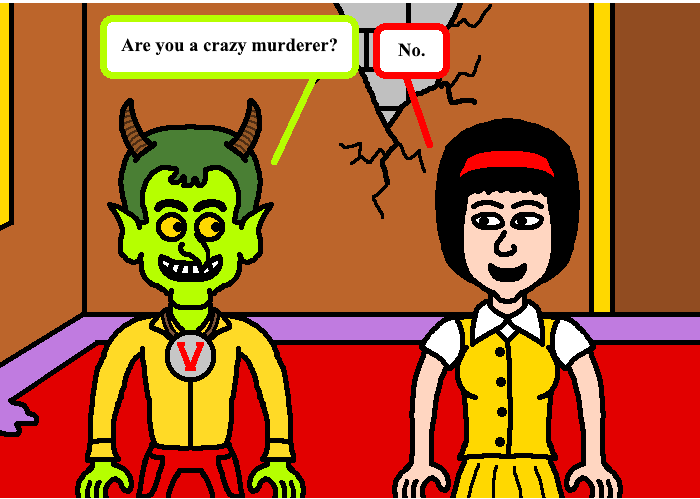
Among these outliers stands Øyvind Thorsby. Since his debut in 2001, Thorsby has cultivated a body of work that is as intellectually rigorous as it is visually idiosyncratic. Characterized by a "crude, stilted" art style that belies a deep sophistication, Thorsby’s comics occupy a unique intersection of evolutionary biology and classical farce. To read a Thorsby comic is to enter a world where the laws of nature are the primary drivers of the plot, and where the humor is derived from the cold, hard application of logic to the most absurd of circumstances.
Chronology: Two Decades of Speculative Satire
Thorsby’s career began during the foundational years of the webcomic medium, yet he has managed to maintain a consistent output that avoids the dated tropes of his contemporaries. His work has evolved from short, self-contained narratives into sprawling, long-form epics, all while maintaining a signature aesthetic: squiggly character profiles set against highly geometric, often stark backgrounds.
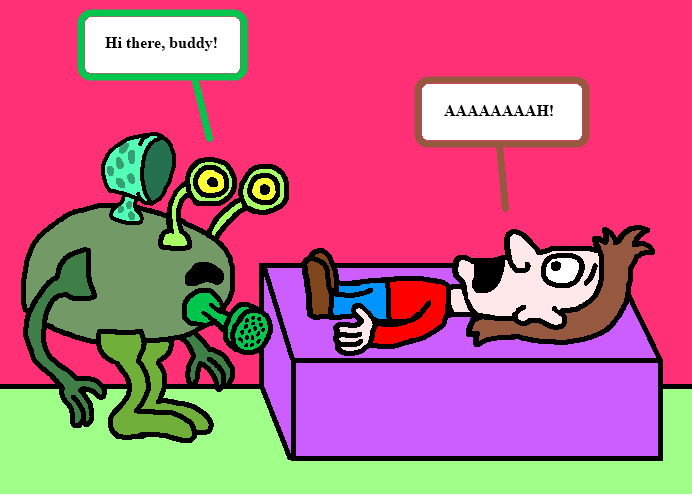
His early work established the "Thorsby Protocol"—a narrative structure where a specific biological or logical rule is introduced and then followed to its most catastrophic or hilarious conclusion. Over the last twenty-three years, he has moved through various genres, including domestic comedy (Lies, Sisters and Wives), space opera (The Accidental Space Spy), and political fantasy (Trixie Slaughteraxe for President). Despite these shifts in setting, his thematic core remains fixed on the tension between rational systems and irrational actors. Today, his ongoing project, My Other Brain Is An Idiot, continues this legacy, blending elements of his previous works into a complex, episodic "melting pot" of alien sociology.
Supporting Data: The Biological and Logical Frameworks
Thorsby’s work is less about the "wackiness" of alien life and more about the "incentives" created by biology. His stories function as elaborate thought experiments. To understand his impact, one must analyze the specific logic puzzles he presents across his most significant titles.
1. The Geometry of Deception: Lies, Sisters and Wives
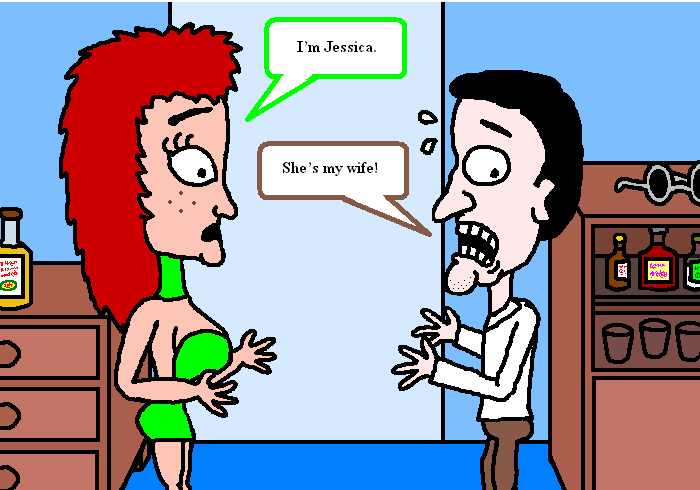
Though it lacks the alien world-building of his later work, this 34-page strip serves as the perfect introduction to Thorsby’s interest in systems. The protagonist, Jim, attempts to hide a mistress from a revolving door of family and friends. The humor is not derived from the act of lying itself, but from the "elaborate web of lies that do not technically contradict one another." Thorsby treats social deception like a mathematical proof; the farce escalates because every character acts rationally based on the false information they possess.
2. Information Mismatch: The Accidental Space Spy
In this long-form narrative, a human is mistaken for "Plume," a legendary spy. The core conflict arises from a "mismatch in understanding." Unlike traditional sci-fi, where "universal translators" bridge every gap, Thorsby’s universe is defined by the inability to comprehend alien dating cultures or social norms. Dangerous crises emerge from simple requests for information, proving Thorsby’s thesis that intelligence does not necessarily lead to mutual understanding.
3. The Evolutionary Dead End: The Case of the Lunnhuis
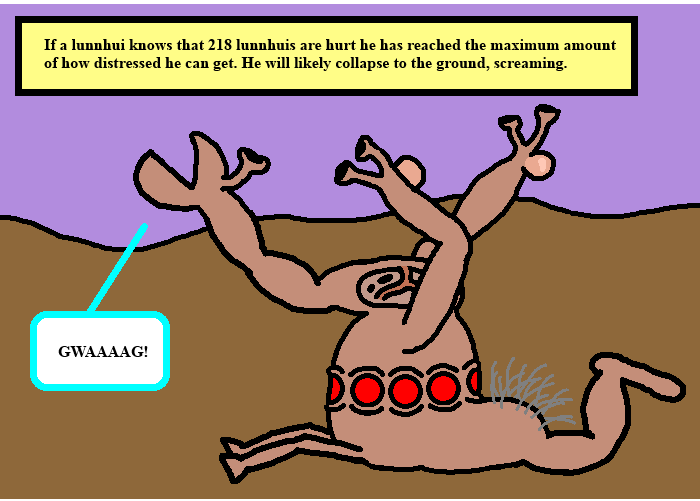
Perhaps the most striking example of Thorsby’s "functional worldbuilding" is his explanation of the lunnhuis. This intelligent alien race evolved to feel emotional anguish in direct proportion to the amount of suffering they know to exist. Thorsby posits that such a race, while morally superior, is "anathemic to being an intelligent race" in a competitive universe. They cannot rationalize widespread suffering, and thus, they cannot become significant players in intergalactic politics. It is a grim, logical take on empathy as an evolutionary disadvantage.
4. Physics and Comedy: The Invisible Eye
Thorsby frequently deconstructs common tropes using basic science. In several strips, he addresses the "invisibility" trope. While most fiction treats invisibility as magic, Thorsby points out that an invisible creature would be blind, as eyes function by reflecting and absorbing light. He uses this scientific reality to create "hilariously grotesque" scenarios, such as blind, invisible characters fumbling through mating rituals. This commitment to "cold, hard, logical science" is what separates his work from more mainstream, "publication-friendly" webcomics.
Professional Reception and Comparative Analysis
Critics and scholars of digital media have noted that Thorsby’s work represents a "forward-facing" approach to technical formatting. While his art style may appear unpolished, his use of the vertical infinite canvas is masterfully executed. By organizing panels vertically, Thorsby anticipated the mobile-first reading habits of the 2010s and 2020s. His panels are "as long or as short, as wide or as tall, as necessary," allowing the narrative pacing to dictate the layout rather than the standard constraints of a print page.
Comparison to Strange Planet
Thorsby’s work is often compared to Nathan Pyle’s Strange Planet, which also uses deadpan, technical language to describe mundane human behavior. However, where Strange Planet remains on the surface for the sake of four-panel accessibility, Thorsby goes deeper. He uses the infinite canvas to provide "gratuitous exposition" on evolutionary biology that Strange Planet could never accommodate. Thorsby’s work is "genuinely weird" because it refuses to simplify the logic for the sake of a punchline.
Implications: The Human Element in Rational Systems
The overarching implication of Thorsby’s ouevre is that irrationality is often just a different form of rationality that we don’t yet understand. His characters—be they socialist princesses like Trixie Slaughteraxe or hitmen working for "destiny"—often seem to have death wishes or act in "stupid" ways. Yet, Thorsby always reveals that their behavior hinges on "certain rational rules" dictated by their environment or biology.
Political and Social Subtext
There are undeniable political undertones in his work, particularly regarding his critique of tribalism and his exploration of socialist agendas in Trixie Slaughteraxe for President. However, these are rarely presented as "soapboxing." Instead, politics is treated as another biological system—an extension of how groups of organisms organize themselves to survive. In Transdimensional Brain Chip, his exploration of cults and intercultural conflict leads to the bizarre, yet logically defended, claim that "dangerous objects are more beautiful."
Conclusion: The Sincerity of the Grotesque
Øyvind Thorsby remains one of the most distinctive voices in the history of webcomics because he embraces the "imperfect presentation" as a hallmark of human art. His work is a reminder that big ideas do not require high-gloss production values to be effective.
By grounding his farces in the "peculiarly logical" realities of science and sociology, Thorsby has created a universe that feels more plausible than those found in high-budget science fiction. Whether he is explaining the evolutionary rationale behind homosexuality and suicide or depicting a class war in a fantasy kingdom, Thorsby’s sincerity is never in doubt. In the end, his comics are "strange little logic puzzles" that challenge the reader to find the sense in the nonsense, proving that even in the most alien worlds, logic—however cold or dry—is the ultimate universal language.