The Heartland Rebellion: Voters Defy Machine Politics and Economic Volatility
Main Facts: A Paradigm Shift in the American Electorate
In a week defined by political upheaval and unexpected electoral outcomes, the American voter has sent a resounding message to party establishments: the "same-old-same-old" approach to governance is no longer sufficient. From the plains of Kansas to the industrial hubs of Michigan, recent primaries and referenda have revealed an electorate motivated more by a visceral mood of defiance than by the strategic projections of political consultants or the massive influx of Political Action Committee (PAC) dollars.
The most startling results emerged from Missouri and Kansas—traditionally reliable Republican strongholds. In these states, voters decisively rejected measures designed to consolidate legislative power and dismantle long-standing nonpartisan systems. In Missouri, a proposal aimed at discouraging citizen-led ballot initiatives was defeated by a staggering 80% to 20% margin. Simultaneously, Kansas voters turned down a GOP-backed effort to transition the state’s judicial selection process from a merit-based appointment system to a popular election model, with 61% of voters opting to maintain the nonpartisan status quo.
In the Great Lakes region, the Democratic primary in Michigan signaled a similar shift toward ideological clarity over institutional caution. Dr. Abdul El-Sayed, a progressive candidate backed by Senator Bernie Sanders and Representative Alexandria Ocasio-Cortez, secured a narrow but significant victory. Perhaps more importantly, the immediate consolidation of party support behind El-Sayed suggests a level of progressive unity that stands in stark contrast to the fractious nature of previous cycles.
However, these domestic political shifts are occurring against a backdrop of severe economic and geopolitical instability. The ongoing conflict with Iran—frequently characterized as "Trump’s War"—has sent shockwaves through the global energy market. As gasoline prices soar more than a dollar per gallon above pre-war levels, oil conglomerates are reporting record-breaking profits, fueling a narrative of corporate opportunism and insider trading that may prove more influential in the upcoming general election than any traditional policy debate.
Chronology: A Week of Political and Economic Collision
The week’s events began with the high-stakes referenda in the Midwest, where Republican legislatures sought to test the limits of their mandates.
- Tuesday, 7:00 PM: Polls closed in Missouri and Kansas. Early returns immediately indicated a massive disconnect between the GOP leadership’s expectations and the public’s will. The Missouri amendment, which sought to modify amendment approval requirements and prohibit foreign spending—a move critics called a "Trojan Horse" to kill future grassroots initiatives—faced a landslide defeat.
- Tuesday, 11:00 PM: In Michigan, Abdul El-Sayed was declared the winner of the Democratic primary. Despite being heavily outspent by centrist opponents and facing skepticism regarding his progressive platform, El-Sayed’s victory signaled a "notching" of the progressive movement in the Midwest.
- Wednesday Morning: National attention shifted from the ballot box to the gas pump. Financial reports confirmed that "Big Oil" companies achieved record earnings during the same period that the administration’s war on Iran reached a fever pitch.
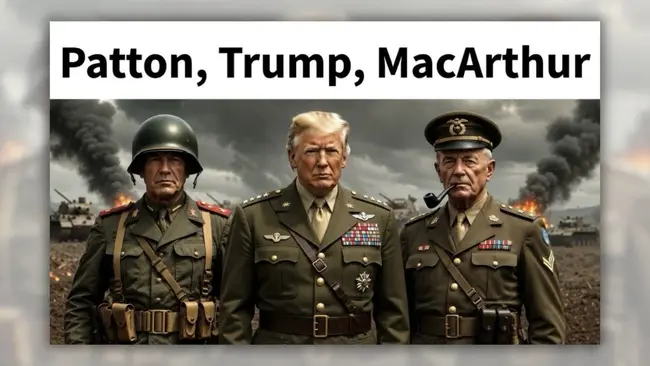
- Thursday: Accusations of "Stolen Valor" and "Cult of Personality" dominated social media following a controversial post by former President Trump. The post featured an AI-generated image comparing Trump to legendary military figures General George Patton and General Douglas MacArthur.
- Friday: Economic analysts released data suggesting that the rise in gas prices was not merely a result of supply chain disruption but was exacerbated by "replacement cost" pricing models, leading to widespread accusations of price gouging among the American commuting class.
Supporting Data: The Metrics of Discontent
To understand the scale of the current political shift, one must look at the data points that define the "mood" of the electorate.
The Referenda Landslide
In Missouri, the rejection of the measure to restrict ballot initiatives (80% "No") represents one of the most lopsided defeats for a major party platform in recent state history. This suggests that even conservative voters view the right to direct democracy as sacrosanct. In Kansas, the 22-point margin of victory for merit-based judicial appointments indicates a public desire to keep the judiciary insulated from the hyper-partisanship of the executive and legislative branches.
The Energy Crisis by the Numbers
The economic data is equally stark. Since the escalation of the Iran conflict, the average price of a gallon of gasoline has risen by approximately $1.15. While the administration points to the volatility of war, critics highlight that the price at the pump is often based on the future cost to refill a station’s supply (replacement cost) rather than the cost of the fuel currently in the tanks.
Furthermore, a recent report on oil company profits shows a direct correlation between the war’s duration and a 35% increase in quarterly earnings for the top five global energy firms. This has led to intensified scrutiny of "prediction markets" and potential insider trading within the White House, where well-placed individuals may be profiting from coming proclamations and military escalations.
The Michigan Primary
Abdul El-Sayed’s win, while close, is significant because of the demographics. He performed exceptionally well among young voters and in urban centers, areas where the "Tea Party" energy of previous decades has been replaced by a new, progressive "fuss" that is focused on systemic reform rather than mere obstruction.
Official Responses and Tactical Rhetoric
The response from political establishments has been a mix of strategic pivoting and a return to historical tropes.
The GOP: Reverting to the "Red Scare"
In response to the rise of progressives like El-Sayed, Republican strategists have largely bypassed nuanced policy critiques in favor of "Red Scare" tactics reminiscent of the 1920s and 1950s. Advertisements have increasingly used the hammer and sickle—an antiquated symbol—to define "Medicare for All" and other progressive proposals as "communism."
Furthermore, some GOP-aligned commentators have introduced an appeal to social conservatism that borders on the inflammatory. By suggesting that parents should feel more "shame" over their children adopting socialist policies than they would if their children were gay, these strategists are attempting to weaponize traditional values against economic reform.
The Democratic Unity
Conversely, the Democratic response in Michigan was uncharacteristically unified. El-Sayed’s former rivals immediately endorsed him, a move intended to prevent the "spoiler" effect that has plagued the party in the past. Nancy Pelosi and other party leaders have attempted to frame the progressive agenda as a functional necessity, though they remain haunted by the ghost of the Affordable Care Act debates, where the phrase "pass it to see what’s in it" became a liability.
The "Patton" Controversy
The Trump campaign’s use of AI to liken the former President to Patton and MacArthur has drawn sharp rebukes from veterans’ groups. Critics argue that for a leader who famously avoided service during his generation’s war through multiple deferments, the comparison is a deliberate insult to those who have actually worn the uniform. The imagery, featuring a "pretend uniform" with more medals than those earned by the real-life generals, has been labeled by some as a digital form of "Stolen Valor."
Implications: A High-Stakes Road to November
The implications of this week’s events suggest that the coming election cycle will be fought on two distinct fronts: the "Kitchen-Table" and the "Identity-Symbolic."
The Kitchen-Table Front
Gas prices and the cost of basic goods (like eggs, which played a pivotal role in 2024) will likely be the deciding factor for the "commuter class." If the Iran war continues to be perceived as a Republican-backed venture that serves the interests of Big Oil and insider traders at the expense of young families, the GOP may find it impossible to hold its ground in the Midwest. The "rational, reasonable argument" that war news directly causes price fluctuations is gaining a foothold, and voters are increasingly making the connection between foreign policy and their own bank accounts.
The Identity-Symbolic Front
The use of AI-generated imagery and "Red Scare" rhetoric suggests that the GOP is banking on an emotional, rather than rational, appeal. As Jonathan Swift famously cautioned, "Reasoning will never make a Man correct an ill Opinion, which by Reasoning he never acquired." If the electorate’s loyalty is embedded in identity and historical fears of "socialism," then the progressive surge may hit a ceiling.
The Failure of Machine Politics
Perhaps the most significant implication is the proven vulnerability of "machine politics." When voters in Kansas and Missouri—two of the reddest states in the union—reject their own party’s attempts to rig the system, it suggests a burgeoning cross-partisan movement in favor of institutional integrity.
As we move toward November, the central question remains: will the anger of the electorate be channeled into a coherent movement for policy change, or will it be dissipated by the "bureaucratic nightmares" and "confusing accusations" that have historically defined American healthcare and economic debates? For now, the voters have shown that they are not only watching but are willing to defy the experts to make their voices heard.