Unveiling the Primal Terror: The Enigmatic Lore of Ravvan and the Whispers of the Galchutt
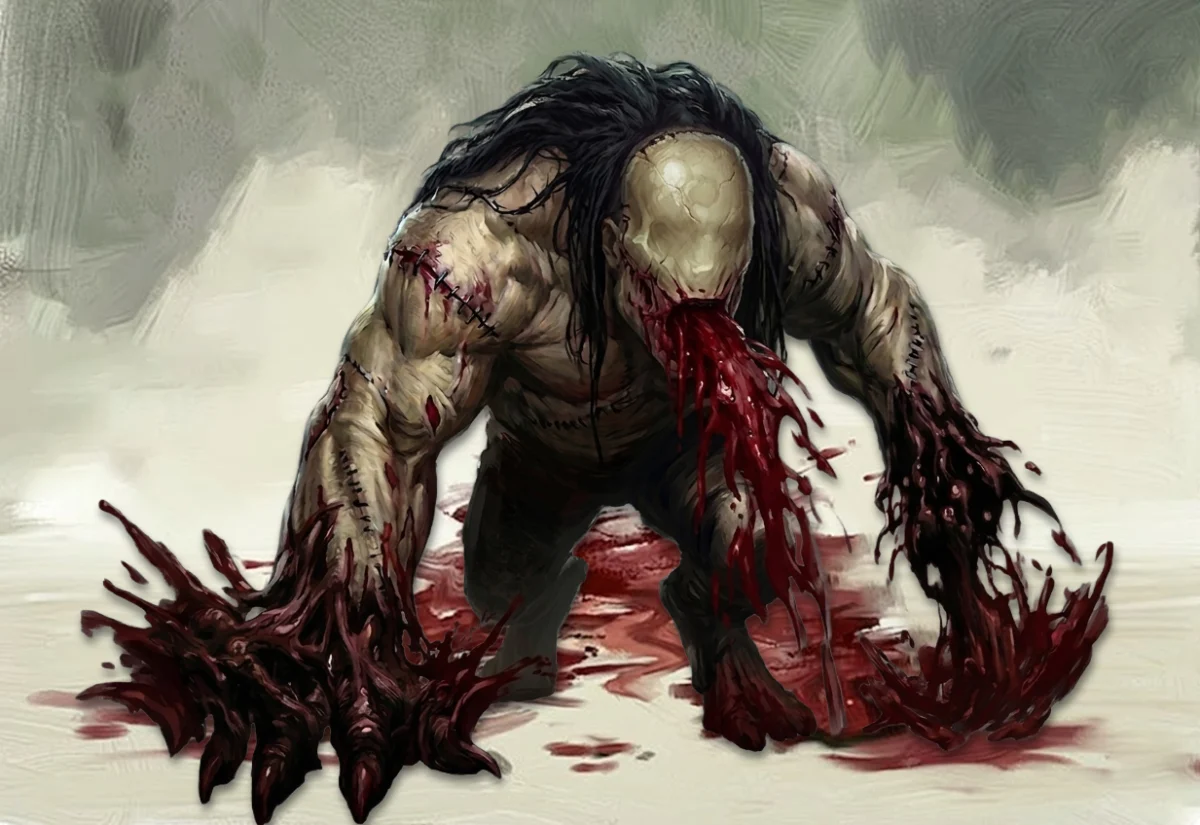
Ptolus, Aethelgard – In the shadowed annals of arcane lore and whispered legends, few entities command as much primal terror and insidious fascination as Ravvan. Described in ancient texts and recently unearthed cultist doctrines, Ravvan is not merely a deity of wrath but the very personification of unbridled Rage, the primordial Beast lurking within the deepest recesses of the collective consciousness. His existence, though largely confined to esoteric circles and the fervent chants of forbidden cults, represents a fundamental challenge to societal order and the very fabric of civilization. Recent findings, particularly the reclassification of Ravvan into the dreaded pantheon of the Galchutt, have sent ripples of apprehension through scholarly and ecclesiastical communities alike, suggesting a far more ancient and pervasive threat than previously understood.
I. Main Facts
The Personification of Primal Rage
Ravvan is fundamentally understood as the embodiment of Rage itself. Ancient verses, believed to be invocations or prayers to the entity, paint a visceral picture: "Blood gushes fresh in the mouth. Blood beats in the vein. Blood pours from the wound. Blood roars through the brain. Blood flares in the scent. Blood thickens in death. Blood fills the throat. Blood cleanses the hunger. Blood burns." This raw, intense imagery underscores Ravvan’s connection to fundamental biological processes and the most potent, instinctual emotions. He is not a distant god but a pulsating, ever-present force.
Beyond mere anger, Ravvan is identified as "the Beast lurking in the heart of all men," a potent symbol for the powerful, pulsing lust for domination and conquest that often underlies human ambition and conflict. His "howls are the primeval song of discord that belies all tongues," suggesting that all conflict, all division, all strife ultimately emanates from this singular, chaotic source. This makes Ravvan less a specific entity with a defined form and more an elemental force, a fundamental aspect of existence that continually threatens to unravel order.
The Caged Beast and Its Whispers
Despite his immense, destructive potential, Ravvan is not currently free to roam the planes or exert his full power. According to the foundational texts, "Though he is caged by the Sleep of the Faithful, the Beast’s rage beats upon the formless walls of that eternal prison just as the hot blood of passion beats through his veins." This imprisonment, known as the "Sleep of the Faithful," is a crucial aspect of Ravvan’s lore, hinting at a past struggle of immense proportions where powerful, benevolent forces managed to contain this primal threat.
However, even in confinement, Ravvan’s influence is far from quelled. His rage, perpetually beating against the ethereal walls of his prison, manifests in the mortal realm as "spurts of rage," where his will becomes "manifest." These manifestations are described as "whispers of the Beast that pulse through the red veils of the primal, holy fury." These whispers are not mere auditory phenomena; they are insidious psychic suggestions, urges towards violence, domination, and chaos that can subtly influence individuals and groups, sowing discord and inciting conflict. They are the insidious seeds of his return, planted deep within the subconscious.
The Cult of Ravvan: Blood, Strength, and the Idol
The worship of Ravvan is not a gentle faith; it is a fervent, often brutal, embrace of his chaotic principles. Adherents are urged to connect with the entity on a profound, almost alchemical level: "Let his Blood be joined to your own. Let the Beast pulse through your veins. In Ravvan there is strength. In Ravvan there is life. In Ravvan there is truth. Take of his strength. Lust of his life. Heed his truth." This passage implies a ritualistic communion, perhaps literal blood sacrifice or a metaphorical merging of wills, where followers seek to internalize Ravvan’s essence to gain power, vitality, and a distorted form of enlightenment. The "truth" offered by Ravvan is the brutal, unvarnished reality of domination and primal instinct, devoid of moral constraint.
Central to this worship is the "Idol of Ravvan." This artifact is described as a "squat statue of obsidian depicting a demonic beast with slavering fangs; folded, bat-like wings; serrated horns; and long, vicious claws." Its very appearance evokes the terror and predatory nature of Ravvan. The idol serves as a focal point for his power and influence, a physical manifestation crafted by cultists who "gathered the whispers of Ravvan and listened to his pulse in the many corners of the world." Through the idol, specifically "through his eyes of ruby blood, the voice of the Beast rang true," allowing his insidious whispers to amplify and potentially "deafen the world." The ruby eyes are believed to be conduits, glowing with an internal, malevolent light when Ravvan’s influence is strongest.
II. Chronology
Ancient Origins and the Age of Primal Discord
The precise genesis of Ravvan is lost in the deepest mists of time, predating recorded history and the rise of most conventional deities. Scholars of archaic lore speculate that Ravvan is not a created being but rather an inherent, fundamental force of the cosmos, an antithesis to order and creation. His presence is believed to have manifested in the earliest epochs, a period characterized by untamed wilds, brutal conflicts, and the nascent struggles for survival among sentient races. During this "Age of Primal Discord," Ravvan’s influence would have been unhindered, fueling the raw instincts of predation, territorialism, and the relentless drive for dominance that shaped early life.
Some arcane historians propose that Ravvan’s "howls" were the very first songs of war, the original catalyst for inter-tribal strife and the endless cycles of vengeance that scarred the nascent world. His nature as "the Beast lurking in the heart of all men" suggests an omnipresence, an underlying current of aggression that has always been a part of sentient existence, subtly guiding the evolution of conflict and power dynamics. Before his imprisonment, Ravvan may have been worshipped openly by savage tribes, warlords, and those who reveled in unbridled destruction, their rituals likely involving bloodletting and the conquest of weaker groups.
The Sleep of the Faithful and the Great Containment
The era known as the "Sleep of the Faithful" marks a pivotal turning point in Ravvan’s history. While specific details remain shrouded in myth and fragmented texts, it is understood that Ravvan’s unchecked rage and lust for conquest reached a zenith, threatening to plunge the entire world into an unending abyss of chaos and bloodshed. In response, a coalition of powerful, benevolent entities – collectively referred to as "the Faithful" – intervened. These entities are often depicted as ancient guardians, divine beings, or primordial forces dedicated to preserving balance and life.
The Great Containment, as it is sometimes called, was a cosmic struggle of unimaginable scale. The "formless walls of that eternal prison" suggest a magical or divine construct, a pocket dimension or an ethereal cage designed to hold an entity of immense, formless power. The Faithful, through immense sacrifice and coordination, managed to subdue Ravvan and force him into a state of suspended animation or deep slumber, severing his direct access to the material planes. This act, however, was not a destruction but a containment, acknowledging that Ravvan’s fundamental nature could not be eradicated without unraveling the very fabric of the cosmos. The Faithful then entered their own "sleep" or withdrew, exhausted, ensuring Ravvan’s prison remained guarded, albeit subtly. For millennia, the world knew relative peace from Ravvan’s overt influence, though his whispers continued to echo faintly.
Resurgence and Modern Manifestations: The Shadow of the Spire
In recent centuries, and particularly in the last few decades, there have been unsettling signs of Ravvan’s resurgence. The "Sleep of the Faithful" appears to be weakening, or perhaps Ravvan’s insidious will has found new ways to circumvent his ancient prison. Reports from various regions, including the city of Ptolus, indicate a marked increase in instances of unexplained rage, sudden outbreaks of violence, and the formation of new, clandestine cults dedicated to primal deities.
The discovery of the Idol of Ravvan in a previously undisturbed ruin, possibly during the events of what is now referred to as "Act I" in certain arcane circles, proved to be a critical catalyst. This artifact, carefully crafted to focus Ravvan’s "whispers," allowed his influence to amplify significantly. These whispers, initially subtle and easily dismissed, began to resonate more strongly, "echoing through the chambers of the blood" of susceptible individuals.
This period of subtle infiltration eventually gave way to more overt manifestations. The emergence of chaos cults, particularly in the run-up to what some historians now label "Act II" of a larger, unfolding cosmic drama, is a direct consequence. These cults, drawn to the promise of strength and truth in Ravvan’s blood, began performing rituals and chanting the "Song of Discord," acting as conduits for the Beast’s latent power. The gradual unveiling of Ravvan’s true nature, culminating in his reclassification as a Galchutt, served as a chilling realization for those who had been investigating the burgeoning chaos. Many now look back and realize they had been hearing the faint "whispers of the Galchutt" for months, unknowingly drawn into a much grander, more ancient conflict.
III. Supporting Data
Textual Analysis: The Lorebooks of Ravvan
The primary source of information on Ravvan comes from a collection of fragmented texts and ritualistic incantations, often bound in obsidian or human skin, collectively referred to as "The Lorebooks of Ravvan." These gruesome tomes offer profound, if unsettling, insights into the entity.
-
"The Roar of the Beast": This section of the lorebooks describes the eternal struggle within Ravvan’s prison. It suggests that the "formless walls" are not physical but metaphysical, constantly battered by his internal, passionate fury. The "whispers" are not random but targeted, seeking out minds already predisposed to anger, ambition, or despair. They are described as seductive, promising release from weakness and the chains of morality. Cultists interpret this as proof of Ravvan’s enduring power, a test of faith, and an assurance that his eventual freedom is inevitable. The roaring is said to be a spiritual echo, a deep vibration felt by those attuned to his presence, urging them towards primal acts.
-
"The Blood of Ravvan": This particular passage forms the core of Ravvan’s cultist doctrine. The phrase "Let his Blood be joined to your own" is often taken literally by his most devoted followers, leading to blood pacts, ritual scarification, and even the consumption of sacrificial blood imbued with Ravvan’s essence. The promised "strength" is not just physical but also spiritual, granting followers an unyielding will, immunity to fear, and an enhanced capacity for violence. "Life" is interpreted as a liberation from the constraints of mortal existence, a vibrant, uninhibited vitality fueled by primal urges. The "truth" is the brutal reality of the strong dominating the weak, an absolute rejection of empathy or altruism. This doctrine justifies their darkest impulses, framing them as a divine mandate.
-
"The Idol of Ravvan": The lorebooks contain detailed instructions for the creation and veneration of Ravvan’s idols. The choice of obsidian, a volcanic glass, is significant, symbolizing the raw, destructive power of the earth and the hardened, unyielding nature of Ravvan’s will. The demonic features – slavering fangs, bat-like wings, serrated horns, vicious claws – are not merely decorative but are believed to channel specific aspects of his power: predation, swift destruction, piercing insight, and rending force. The "ruby blood eyes" are explicitly stated to be the primary conduit for his voice, glowing with a malevolent inner light during ceremonies, projecting his telepathic whispers directly into the minds of his adherents, intensifying their fervor and binding them to his will.
-
"The Song of Discord": This section elaborates on the ritualistic chants and invocations used to honor and empower Ravvan. The prayer-chant – "The blood, the hunt / The dance, the fire / Return, return, return" – is a potent summary of Ravvan’s essence. "The blood" signifies life, sacrifice, and the visceral connection to Ravvan. "The hunt" represents the primal drive for predation, conquest, and the pursuit of domination. "The dance" refers to the chaotic, frenzied movements of battle and celebration of destruction. "The fire" symbolizes purification through annihilation, passion, and the consuming force of rage. The repeated "Return, return, return" is a fervent plea for Ravvan’s full liberation, a call for his complete manifestation in the world, an echo of the original "wine, song" chant repurposed for darker ends. This chant is performed during ceremonies to create a resonant field, amplifying Ravvan’s whispers and drawing his attention.
Scholarly Interpretations and Cultist Doctrines
Within the hallowed halls of academia and clandestine cultist gatherings, Ravvan is viewed through starkly contrasting lenses. Mainstream scholars, often from institutions like the Academy of Swords or the Arcane Congress, approach Ravvan as a dangerous, albeit fascinating, subject of study. They categorize him as a "primal entity" or a "chaos god," meticulously cataloging his lore while issuing dire warnings about his influence. Dr. Arion Thorne of the Ptolus University’s Department of Ancient Arcana suggests that "Ravvan represents the ultimate psychological weapon, capable of exploiting the darkest corners of the human psyche. His ‘whispers’ are not merely suggestions, but carefully tailored psychic intrusions designed to dismantle reason and incite base instinct."
Conversely, Ravvan’s cultists view these texts as sacred scripture, the literal word of their imprisoned lord. Their doctrines revolve around liberation: liberating Ravvan from his prison and liberating themselves from the "shackles" of morality, law, and civilization. They believe that by embracing Ravvan’s "truth," they can achieve a higher state of being, unburdened by weakness and fear. High Priestess Xyria, a known leader of the Obsidian Claw cult, once proclaimed in a intercepted manifesto: "The world is a lie built on weakness. Ravvan offers the strength to shatter that lie and build a new truth, forged in blood and fire." They often engage in acts of wanton destruction, calculated cruelty, and ritualized combat, believing each act strengthens Ravvan’s pulse and hastens his return.
IV. Official Responses
Ecclesiastical Denouncements
Established religious institutions, particularly those dedicated to benevolent or lawful deities, universally condemn Ravvan and his cults. The Church of the Shining Light, a prominent order in Ptolus, has issued numerous anathemas against any who would heed Ravvan’s call. High Prelate Theodorus recently declared, "Ravvan is anathema, a festering wound upon the soul of creation. His ‘strength’ is illusion, his ‘life’ is decay, and his ‘truth’ is the ultimate falsehood. We urge all faithful to be vigilant against his insidious whispers and to report any signs of his cults to the authorities immediately." Templar orders and inquisitors are actively tasked with identifying and neutralizing Ravvan’s followers, often engaging in fierce battles against their fanatical adherents. Sermons frequently warn against the temptations of primal rage and the allure of unearned power, highlighting Ravvan as the ultimate embodiment of these destructive forces.
Civic and Arcane Warnings
Civic authorities, including the city watch and the Imperial Guard, have officially categorized Ravvan’s cults as extremist terrorist organizations. Public decrees frequently warn citizens about the dangers of engaging with suspicious groups that promote violence or esoteric blood rituals. Bounties have been placed on known cult leaders, and special task forces have been established to infiltrate and dismantle their networks. Captain Valerius of the Ptolus City Watch stated in a recent press conference, "These cults pose a direct and immediate threat to public safety. Their acts of violence are not random; they are deliberate, ritualistic, and intended to sow fear and chaos. We will not tolerate their presence within our city walls."
The Arcane Congress, the leading body of mages and spellcasters, has issued its own warnings, focusing on the magical and psychic dangers posed by Ravvan’s influence. Master Arcanist Lyra Vancroft, a specialist in extraplanar entities, cautions against the "psychic contamination" that can result from exposure to Ravvan’s whispers, even unintentionally. "The Idol of Ravvan is not merely a statue; it is a potent magical artifact, a conduit. Its influence can corrupt minds and destabilize magical energies. Any such artifact discovered must be handled with extreme caution and immediately reported to authorized arcane personnel for secure containment." They have also developed counter-rituals and protective wards designed to mitigate the effects of Ravvan’s insidious psychic attacks.
The Silence of the Faithful
Perhaps the most enigmatic official "response" is the apparent silence of "the Faithful." The ancient texts describe them as the ones who caged Ravvan, yet their current status or involvement remains unknown to the general populace and even to most scholars. Some theories suggest they are still locked in their own "sleep," their energies depleted from the Great Containment, only stirring when Ravvan’s threat becomes existential. Others believe they operate in extreme secrecy, their interventions subtle and undetectable, guiding events from the shadows. The absence of a clear, active response from these ancient guardians is a source of both mystery and unease, leaving the burden of defense against Ravvan’s resurgence largely to the mortal races and their established institutions. Their continued "sleep" may itself be a form of vigilance, a deep magical stasis maintaining the very prison that holds Ravvan.
V. Implications
Societal Impact of Ravvan’s Resurgence
The re-emergence of Ravvan’s influence carries profound implications for society. Increased instances of unprovoked violence, organized crime with a ritualistic bent, and a general erosion of trust and civility can all be attributed, at least in part, to his insidious whispers. Communities once thought safe are now experiencing unsettling acts of vandalism, arson, and even murder, often accompanied by disturbing symbols or chants linked to Ravvan’s cults. This creates a climate of fear and suspicion, leading to social unrest and challenging the authority of governing bodies. The very foundations of law and order are being tested as individuals, swayed by Ravvan’s promise of unbridled power, increasingly reject established norms. Economic stability also suffers as trade routes become dangerous and public morale plummets.
The Galchutt Connection: A Deeper, Older Threat
The reclassification of Ravvan from a mere "beast god" to a member of the Galchutt pantheon is perhaps the most alarming development. The Galchutt are ancient, cosmic entities of immense power, often associated with chaos, destruction, and the unraveling of reality itself. This re-contextualization elevates Ravvan from a localized threat to an integral part of a much larger, more pervasive, and arguably more dangerous cosmic force. It suggests that Ravvan is not just an isolated entity of rage but a specific manifestation or agent of a primordial evil seeking to consume or reshape existence.
This connection implies a grander, more insidious agenda. If Ravvan is a Galchutt, his whispers are not merely inciting localized rage but are part of a coordinated, ancient effort to weaken the fabric of reality, preparing the world for the full, terrifying emergence of the entire Galchutt collective. The "Sleep of the Faithful" might not just be containing Ravvan, but an entire tier of these cosmic horrors. The implications are staggering, suggesting that the current struggles against Ravvan’s cults are merely skirmishes in a much larger, inter-dimensional war for the fate of all creation.
Future Threats and Unveiling the Truth
The understanding that "whispers of the Galchutt" were present for months before their true nature was revealed is a chilling testament to their subtlety and patience. This foreshadowing indicates that the world is likely facing a slow, creeping infiltration rather than an overt invasion. The Galchutt operate by undermining, corrupting, and exploiting existing weaknesses. Future threats will likely involve the continued manipulation of key figures, the incitement of widespread societal discord, and the gradual erosion of moral fortitude.
Investigators and arcane scholars are now scrambling to re-evaluate historical events and seemingly isolated incidents, searching for other subtle signs of Galchutt influence that may have been overlooked. The fight against Ravvan, therefore, becomes a critical front in a much broader conflict, a battle not just against a cult but against a cosmic force of chaos. Unveiling the full truth of the Galchutt and their agenda is paramount, as understanding their nature is the first step towards formulating an effective defense.
The Enduring Allure of Primal Rage
Despite the obvious dangers, Ravvan’s cults continue to attract new adherents. The enduring allure of primal rage, the promise of unbridled power, and the liberation from societal constraints are powerful temptations. In a world often characterized by frustration, powerlessness, and injustice, Ravvan offers a simplistic, brutal solution: take what you desire, dominate those who oppose you, and embrace the raw, untamed essence of your own being. This psychological appeal is perhaps the most insidious aspect of Ravvan’s influence, allowing him to recruit from within the very societies he seeks to dismantle. The struggle against Ravvan is thus not just a physical one against his cults, but a spiritual and philosophical battle for the hearts and minds of sentient beings, a constant vigilance against the beast that truly lurks within.