Andrew Johnson: A President Forged in Conflict, Defined by Reconstruction’s Turmoil
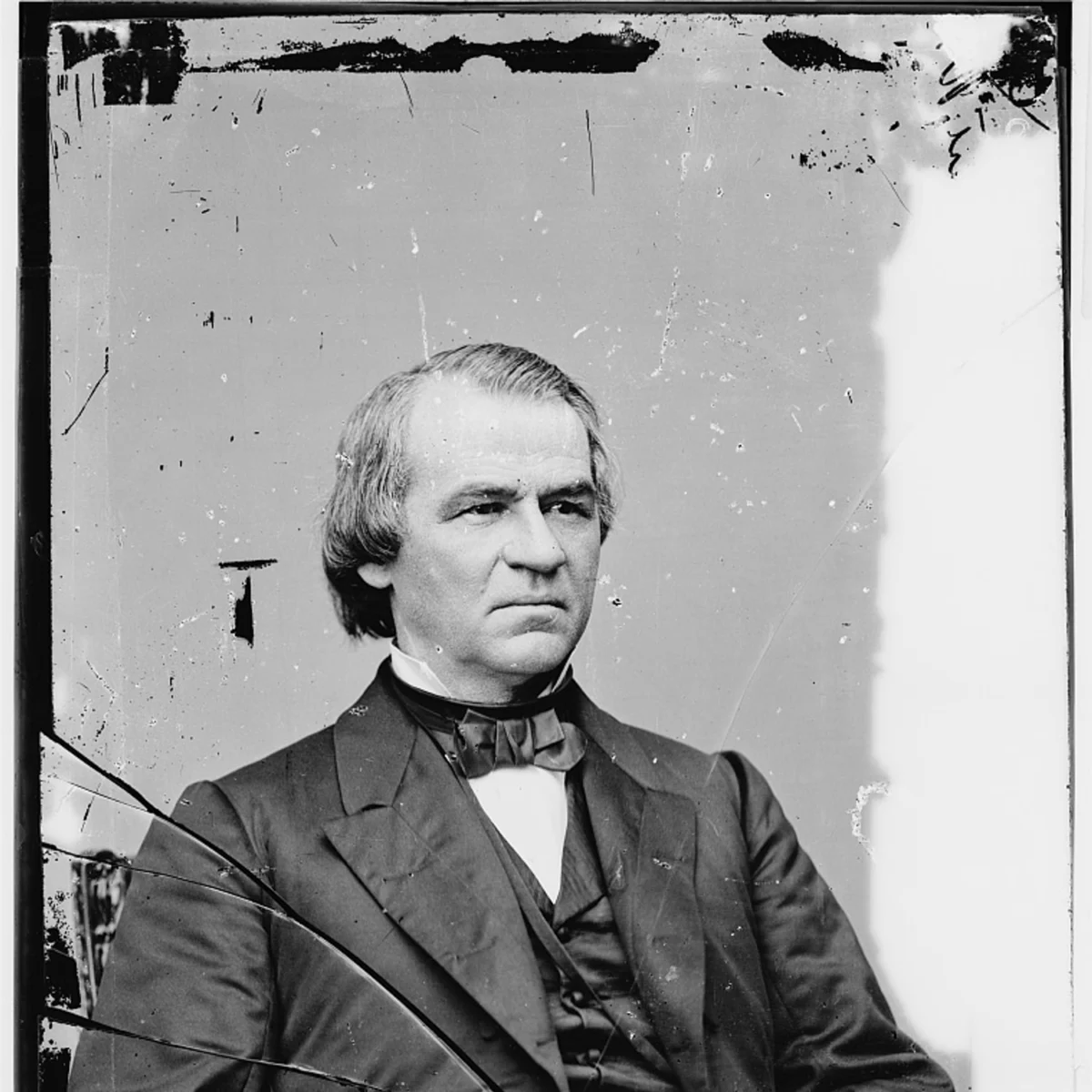
Washington, D.C. – Andrew Johnson, the 17th President of the United States, remains one of the most polarizing and critically evaluated figures in American history. Thrust into the nation’s highest office by the tragic assassination of Abraham Lincoln in April 1865, Johnson inherited a country grappling with the monumental task of Reconstruction following the devastating Civil War. His presidency, marked by an unyielding conflict with a Republican-controlled Congress, ultimately led to his impeachment in 1868, a dramatic constitutional clash he survived by a single vote. Often ranked among the least effective U.S. presidents, Johnson’s policies and confrontational style are seen by many historians as a profound misstep at a pivotal moment, exacerbating racial tensions and hindering the advancement of civil rights for newly freed enslaved people.
Born into abject poverty in the South, Johnson’s life was a testament to a relentless upward struggle. Yet, his populist appeal, rooted in his humble origins, ironically contributed to his downfall when he failed to bridge the ideological chasm that defined post-war America. His vision for a swift, lenient reintegration of the Confederate states stood in stark opposition to the Radical Republicans’ demands for federal protection of Black civil rights and punitive measures against the former rebels. This fundamental disagreement shaped his entire term, leaving an indelible, often negative, mark on the era.
Chronology of a Controversial Life
From Poverty to Political Ascent: The Self-Made Man
Andrew Johnson’s journey began in the most humble circumstances. Born on December 29, 1808, in a modest two-room cabin in Raleigh, North Carolina, his early life was, as one acquaintance recalled, "one intense, unceasing, desperate upward struggle." His father, Jacob Johnson, a poor and illiterate hotel porter, died when Andrew was just three, succumbing to a heart attack after heroically rescuing two wealthy hotel guests from drowning. This left his widowed mother, Mary ‘Polly’ McDonough, to tirelessly work as a washerwoman, struggling to feed Andrew and his older brother, William, after their sister Elizabeth died in infancy.
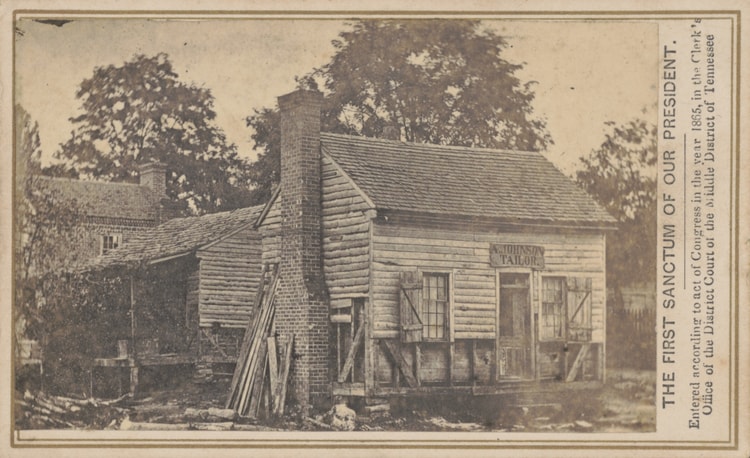
To alleviate the financial burden, Polly apprenticed both sons to James Selby, a local tailor. At only 14, Andrew was contractually bound until his 21st birthday. While mastering the craft, he developed a lifelong love for learning, often having neighbors read to him and the other apprentices in the shop. This informal education proved crucial to his future political development. In 1826, restless at 17, Johnson and William broke their indenture and fled to New Carthage, North Carolina, to work as tailors. Warrants for their arrest for breach of apprenticeship led Johnson to return to his mother. Soon after, the entire family moved west to Greeneville, Tennessee, where Johnson opened his own tailor’s shop. There, he met and quickly married 16-year-old Eliza McCardle, the daughter of a shoemaker. Eliza became instrumental in his intellectual growth, tutoring him in reading, writing, and arithmetic, and reading to him as he worked.
Johnson swiftly ingratiated himself into the Greeneville community. His rustic, folksy speaking style and narrative as a self-made, self-educated man resonated with the locals. His shop became a hub for political discourse, leading Eliza to encourage his political ambitions. In 1829, at 21, Johnson was elected alderman, and within a few years, became mayor of Greeneville. His political career rapidly ascended; he was elected to the Tennessee House of Representatives in 1835, serving eight years in state politics. During his time in Nashville, Johnson cultivated a powerful reputation as the "defender of the poor common man," garnering strong support from mechanics, artisans, and rural farmers. His populist politics aligned increasingly with those of the Jacksonian Democrats, and he frequently championed the administration of President Andrew Jackson.
The Road to Washington and the Impending Crisis
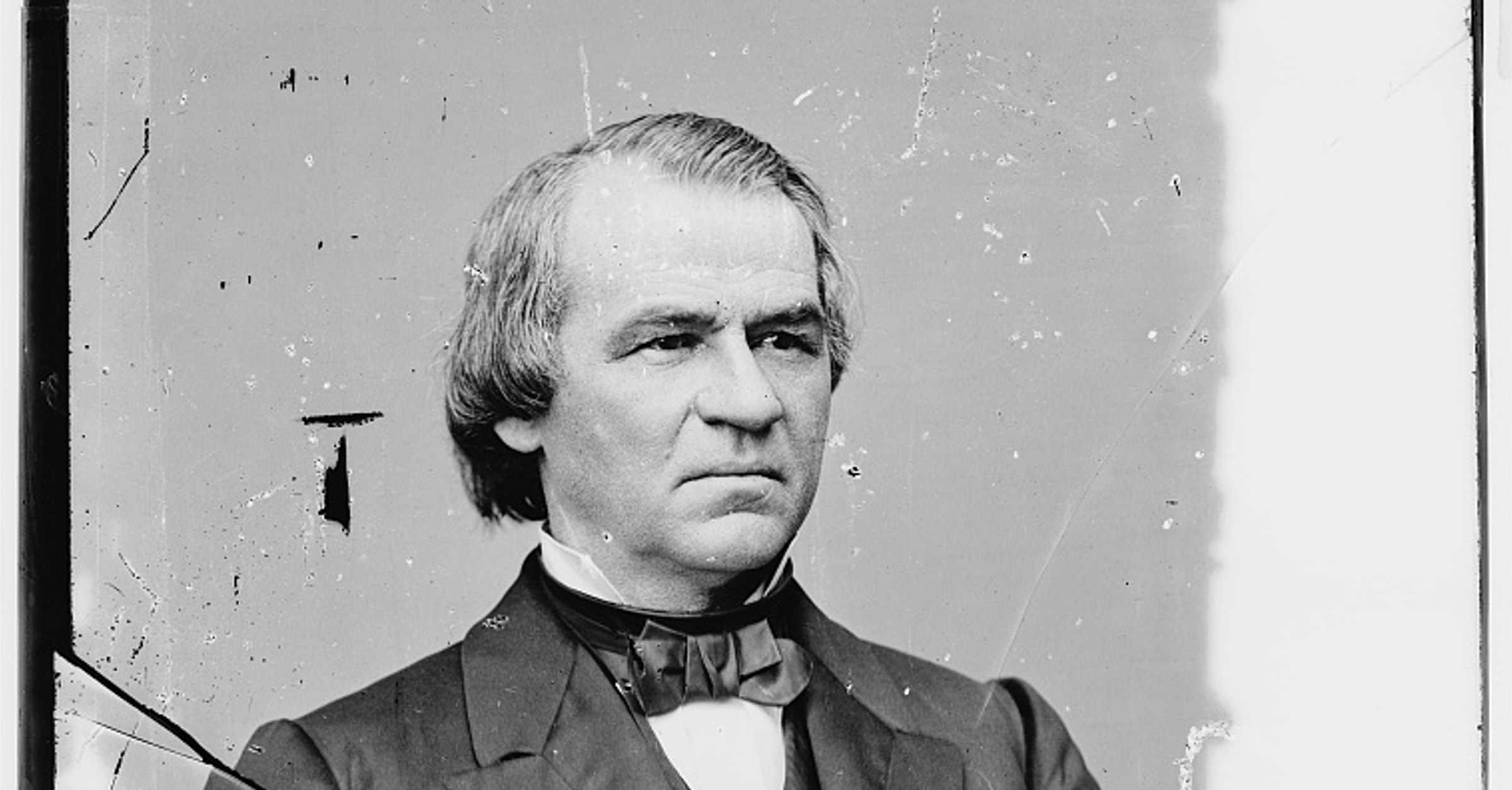
In 1843, Johnson won election to the U.S. House of Representatives, embarking for Washington, D.C. His wife, Eliza, suffering from tuberculosis, remained behind but continued to be a crucial support, even helping him draft speeches. In Congress, Johnson consistently sided with the Democratic Party on issues of slavery and states’ rights. A slaveowner himself, having purchased a 14-year-old girl named Dolly the same year he entered Congress, he firmly believed slaves were personal property and that the Constitution prohibited federal or state governments from abolishing slavery on those grounds.
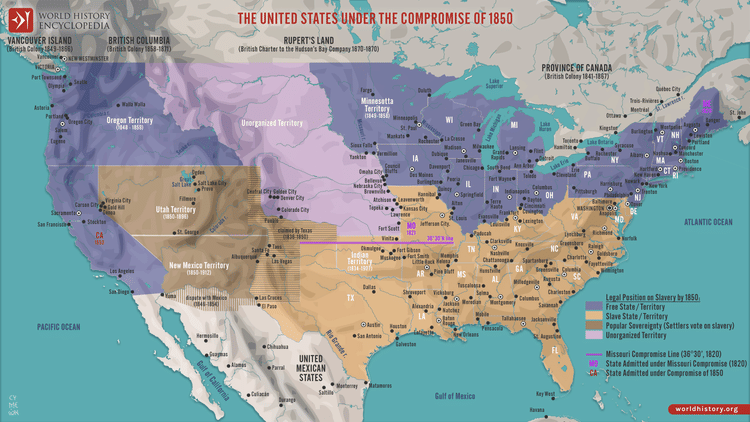
He was a fervent supporter of the Democrats’ expansionist "manifest destiny" policies, including the Mexican-American War (1846-1848), despite his personal dislike and frequent quarrels with President James K. Polk. Johnson generally supported the Compromise of 1850, which allowed California to enter the Union as a free state, but notably opposed the provision that would ban slavery in Washington, D.C. In 1852, political opponents successfully gerrymandered his district out of existence, leaving Johnson disheartened and believing his career was over.
However, his political resilience proved formidable. The following year, he was elected governor of Tennessee. Although the position offered limited authority, Johnson leveraged his influence to advocate for public libraries and establish Tennessee’s first public school system. In 1856, he returned to Congress, this time as a U.S. Senator, continuing to toe the Democratic Party line, championing lower tariffs and opposing antislavery measures.
As the nation teetered on the brink of civil war, divided by the issue of slavery, Johnson, a Southerner and slaveholder, emerged as a staunch Unionist. He abhorred the thought of secession. In December 1859, following John Brown’s raid on Harpers Ferry, Johnson delivered a fiery speech on the Senate floor, castigating Northerners and abolitionists for their refusal to compromise on slavery, blaming their inflexibility for the escalating crisis.
Civil War: A Unionist in a Seceding South
Tensions exploded with the election of Abraham Lincoln, the antislavery Republican candidate, in November 1860. This triggered the "Secession Winter" of 1860-61, as seven slave states declared independence and formed the Confederate States. Johnson vehemently opposed secession and was horrified when his home state considered joining the Confederacy. In the spring of 1861, he returned to Tennessee to argue passionately against secession. His unwavering pro-Union stance earned him multiple death threats, forcing him to deliver speeches with a gun on his lectern. Despite his efforts, Tennessee voted to secede in June 1861. Unlike many Southern politicians who sided with their states, Johnson defiantly remained in the U.S. Senate, solidifying his status as a Union hero in the North.
Johnson spent the winter of 1861 advocating for military action to reclaim Tennessee, a wish granted the following spring when Union forces occupied much of the state, including Nashville. In March 1862, President Lincoln appointed Johnson military governor of Tennessee, tasking him with administering the Union-occupied territories. In retaliation, Confederates seized Johnson’s lands, confiscated his slaves, and converted his home into a military hospital.
As military governor, Johnson moved decisively to suppress Confederate influence. He mandated loyalty oaths for public officials, shut down pro-Confederate newspapers, and fortified Nashville. Despite his fierce loyalty to the Union, Johnson was no abolitionist. He had famously convinced Lincoln to exempt Tennessee from the Emancipation Proclamation of 1863, which freed slaves in other rebel states. However, he gradually acknowledged that the defeat of the Confederacy necessitated the end of slavery and reluctantly supported efforts to recruit former slaves into the Union army.
In the crucial run-up to the 1864 U.S. presidential election, which many believed would determine the war’s outcome, Johnson was chosen as Lincoln’s running mate. As a Southern Democrat, his presence on the "National Union Party" ticket was intended to assuage the concerns of Northern Copperheads (Democrats who opposed the war) and project an image of national unity. The Lincoln-Johnson coalition secured a decisive victory in November 1864, effectively sealing the Confederacy’s fate. Johnson was inaugurated as vice president on March 4, 1865. The night before, he had notoriously become "staggeringly drunk" at a party, delivering a long, rambling, and incoherent inaugural speech that deeply embarrassed his allies and foreshadowed the instability to come.
The Sudden Presidency and the Battle for Reconstruction
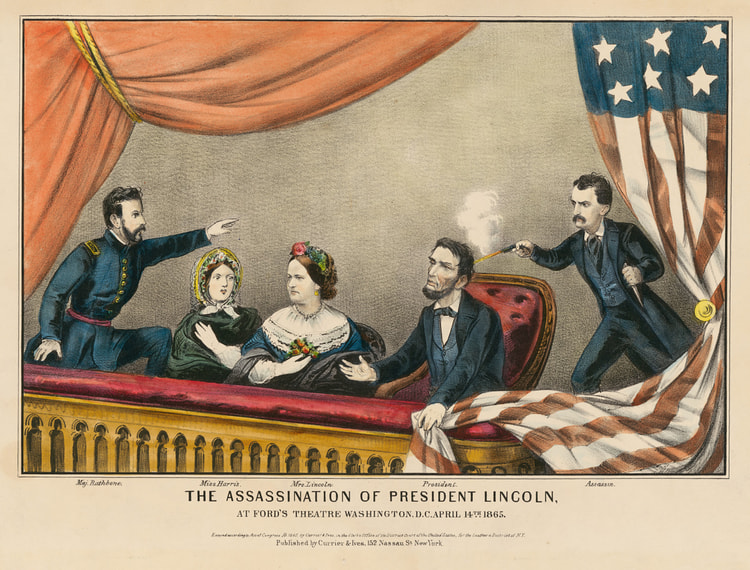
Johnson was abruptly thrust into the presidency on April 15, 1865, following Lincoln’s death from a gunshot wound inflicted by Confederate sympathizer John Wilkes Booth. Johnson, who was also a target of Booth’s conspiracy but escaped harm, was at Lincoln’s bedside and sworn in just hours later. Cabinet members, recalling his drunken inauguration speech, were surprised by his solemn and dignified demeanor. He held his first cabinet meeting that same day, opting to retain Lincoln’s cabinet, as news arrived of the last major Confederate army’s surrender. The Civil War was over, but the daunting task of reconstructing the nation lay ahead, with all eyes on Johnson’s leadership.
Initially, many Republicans harbored optimism about Johnson’s presidency. They believed he would not only continue Lincoln’s work but also ensure the enfranchisement of formerly enslaved people (freed by the Thirteenth Amendment) and impose severe penalties on the South. After all, Johnson had famously declared that treason "must be made odious, and traitors must be punished and impoverished." However, it quickly became evident that Johnson’s vision for Reconstruction diverged sharply from that of the Radical Republicans.
Johnson echoed his predecessor’s belief that secession was unconstitutional, meaning the Southern states had never truly left the Union. Consequently, he advocated for a Reconstruction process that was "as quick and painless as possible." He offered lenient paths for former Confederate states to rejoin the Union, crucially not requiring them to grant suffrage or civil rights to freedpeople. Johnson firmly believed that voting rights were a matter for individual states, arguing that Northern states, many of which had not yet extended suffrage to Black men, had no moral standing to impose it on the South. He also granted amnesty to most ex-Confederates whose property was valued at less than $20,000, reflecting his conviction that poor White Southerners had been misled into rebellion by the wealthy, slave-holding aristocracy.
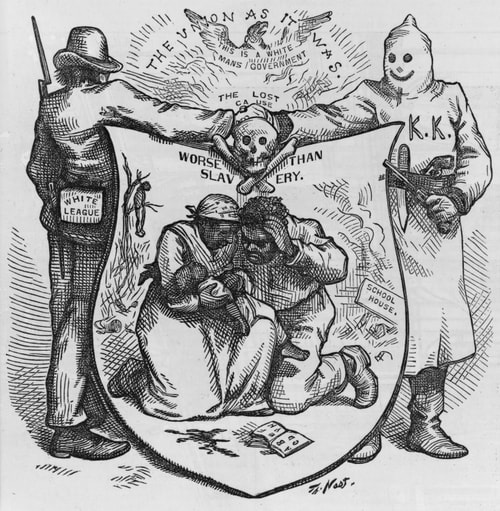
This lenient approach, later dubbed "Presidential Reconstruction," infuriated congressional Republicans who believed the South needed punishment and that former slaves required robust federal protection and aid to truly transition to freedom. For months, Congress, not reconvening until December, could do little. During this period, the former Confederate states exploited Johnson’s leniency, reasserting their power. They elected ex-Confederates to Congress and enacted the notorious "Black Codes" between 1865-66. These codes revived old vagrancy laws, restricting Black Americans’ freedom of movement and forcing them into contract labor or imprisonment, effectively creating a system akin to slavery under a new name. Republicans were outraged, but under Johnson’s plan, little could be done. White supremacist terror groups like the Ku Klux Klan also began to emerge, terrorizing Black voters and communities.
The Clash with Congress and Impeachment
When Congress reconvened in December 1865, Republicans knew they had to act decisively to avoid losing the gains of the Civil War. They refused to seat the newly elected Southern congressmen and established a Joint Committee to formulate their own Reconstruction plan. Johnson viewed this as a direct usurpation of his presidential authority and moved to thwart "Radical Reconstruction." He vetoed two key congressional measures aimed at protecting Black liberties: the Civil Rights Act of 1866 and an extension of the Freedmen’s Bureau Bill. However, his vetoes only deepened the partisan divide, alienating both moderate and Radical Republicans.
Congress swiftly overrode both vetoes, making the acts law. Congress also passed the Fourteenth Amendment to the U.S. Constitution, guaranteeing citizenship to all persons born on U.S. soil and ensuring equal protection under the law. Johnson opposed the amendment, but it was ratified by the requisite number of states, including his home state of Tennessee.
In response to this congressional defiance, Johnson went on the offensive. He embarked on an 18-day speaking tour of the Midwest, his infamous "swing around the circle," defending his actions and lambasting his Radical Republican opponents. The tour backfired spectacularly. Johnson delivered self-aggrandizing speeches, at times comparing himself to Jesus, and frequently engaged in undignified arguments with hecklers. The result was a Republican landslide in the 1866 midterm elections, solidifying their control of Congress.
In January 1867, Radical Republican leader Thaddeus Stevens introduced legislation to impose martial law on the South, dissolving state governments and reorganizing them into five military districts. These "Reconstruction Acts" were implemented on March 2, 1867, despite Johnson’s pocket veto. Ironically, by attempting to hasten the end of Reconstruction, Johnson had inadvertently prolonged it and intensified the partisan chasm.
On the same day, Congress passed the Tenure of Office Act, restricting the president’s right to remove certain officeholders without congressional approval. This act was a direct response to rumors that Johnson intended to dismiss cabinet members who supported Radical Reconstruction. Already enraged by his diminishing power, Johnson chose to confront Congress by firing Secretary of War Edwin M. Stanton, a close ally of the Radical Republicans.
Instead of calling Congress’s bluff, Johnson walked directly into their trap. Congress immediately initiated impeachment proceedings, a move unprecedented in American history. Republicans celebrated the prospect of removing Johnson and replacing him with a more compliant leader, while Johnson’s supporters decried it as an attempt by Congress to nullify presidential power and assume dictatorial authority.
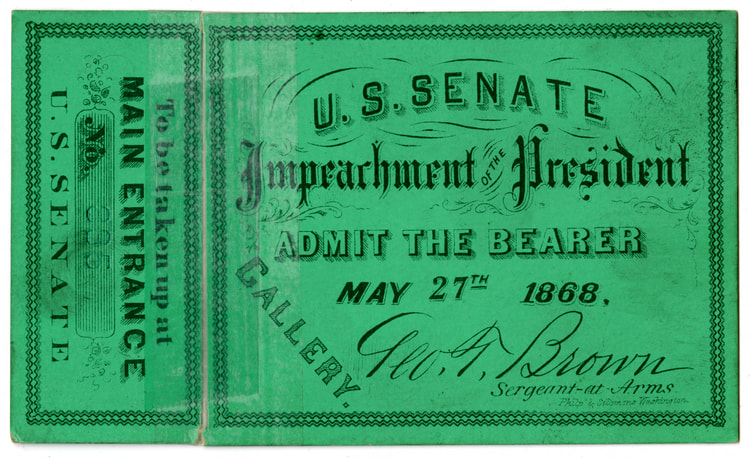
On February 24, 1868, the U.S. House of Representatives impeached Johnson by a vote of 128 to 47, alleging he had violated the Tenure of Office Act. On March 5, the impeachment trial began in the Senate, presided over by Chief Justice Salmon P. Chase. The prosecution argued that by firing Stanton and appointing his own candidate, Johnson had abused his executive power and defied Congress’s authority. The defense countered that Johnson had not violated the Tenure of Office Act, which they contended only applied to officeholders appointed by the current administration. Since Lincoln had appointed Stanton, Johnson had done nothing wrong. Furthermore, the defense asserted that a president should be allowed to test the constitutionality of congressional legislation without fear of impeachment. In the end, Johnson was acquitted, as the prosecution fell one vote short of the two-thirds majority required for conviction. The president was reportedly overcome with emotion upon hearing the verdict.
Post-Presidency and Legacy
Although Johnson salvaged the remainder of his term, his effectiveness as a leader was shattered. Congress, still controlled by his Radical Republican enemies, continued to marginalize him, and the impeachment proceedings irrevocably tarnished his reputation. Despite remaining popular among ex-Confederates and poor Southern Whites, Johnson lost his bid for renomination at the Democratic National Convention in July 1868.
He spent his final presidential months fiercely resisting Radical Reconstruction and issuing numerous pardons to former rebels. On Christmas Day 1868, he issued his most comprehensive pardon, extending amnesty even to former Confederate President Jefferson Davis. On March 3, 1869, his last day in office, he held a large public reception at the White House and pointedly refused to attend the inauguration ceremony of his successor, Ulysses S. Grant.
After leaving Washington in 1869, Johnson returned to Greeneville, where he was celebrated by friends and neighbors. However, this homecoming was soon overshadowed by tragedy: his son Robert committed suicide that same year. Bereft and restless in Greeneville, Johnson sought to return to national politics and rebuild his reputation. In 1875, he achieved a remarkable comeback, winning election to the U.S. Senate and returning to the nation’s capital.
By this point, Reconstruction was drawing to a close. American citizens were growing weary of the military occupation of the South, and President Grant’s administration faced waning popularity due to financial difficulties and corruption scandals. The timing seemed ripe for Johnson’s political resurgence. However, fate intervened. On July 31, 1875, only a few months after his return to national politics, Andrew Johnson died of a stroke at the age of 66. He is remembered as one of the weakest and least effective U.S. presidents, a figure unequal to the critical moment of Reconstruction, whose policies deepened the scars of war rather than healing them.
Supporting Data and Official Responses
Johnson’s presidency was a constant battle of official responses and counter-responses between the executive and legislative branches. His initial "Presidential Reconstruction" proclamations were met with increasing alarm by Congress, particularly the lenient amnesty terms (excluding only high-ranking Confederate officials and wealthy landowners) and the absence of requirements for Black suffrage. The swift passage of "Black Codes" by Southern states, such as Mississippi’s law prohibiting Black people from renting or leasing farmland, served as concrete evidence for Republicans that Johnson’s approach was failing.
Congress’s response was robust: refusing to seat Southern delegations, establishing the Joint Committee on Reconstruction, and passing the Civil Rights Act of 1866 and the Freedmen’s Bureau Bill. Johnson’s vetoes of these landmark pieces of legislation were powerful official statements of his opposition, grounded in his belief that they overstepped federal authority and infringed on states’ rights. For instance, he argued the Civil Rights Act was unconstitutional because it conferred federal citizenship and protection on Black Americans, which he believed was beyond Congress’s power without a constitutional amendment. Congress, in turn, delivered its definitive official response by overriding his vetoes, demonstrating a supermajority determined to impose its will.
The Fourteenth Amendment, passed by Congress in 1866 and ratified in 1868, was a direct legislative repudiation of Johnson’s policies, constitutionally enshrining birthright citizenship and equal protection. Johnson’s active campaigning against its ratification and his subsequent "swing around the circle" speeches constituted his most public official responses, though they proved politically disastrous. The ultimate legislative offensive against Johnson came with the Reconstruction Acts, which placed the South under military rule, and the Tenure of Office Act, a clear attempt to curb his executive power. His defiance in firing Secretary Stanton was a direct challenge to this act, leading to his impeachment, the ultimate official charge of wrongdoing by the legislative branch against the executive. The Senate’s acquittal, by a single vote, while saving his office, officially demonstrated the profound institutional distrust that defined his term.
Implications and Lasting Impact
The implications of Andrew Johnson’s presidency are far-reaching and continue to resonate in discussions of American democracy, race relations, and the balance of power. His confrontational approach to Reconstruction, driven by deeply held beliefs in states’ rights and white supremacy, arguably prolonged the suffering and disenfranchisement of African Americans in the South for generations. By opposing federal protections for freedpeople, he inadvertently empowered former Confederates and allowed the rapid rise of white supremacist organizations like the Ku Klux Klan, whose terror tactics undermined nascent Black political and economic power. The failure to secure robust federal guarantees for civil rights during his tenure set the stage for the Jim Crow era, where systemic discrimination persisted for nearly a century.
Constitutionally, Johnson’s impeachment trial established a critical precedent. While he was acquitted, the process underscored the principle of presidential accountability and the legislature’s power to check executive overreach, even if the high bar for removal remains difficult to meet. It also highlighted the inherent tension between presidential and congressional authority, particularly during periods of national crisis.
Johnson’s personal narrative, from an illiterate tailor to President, is a powerful testament to the American ideal of upward mobility. However, his inability to transcend his personal prejudices and partisan loyalties during the nation’s most critical period of reunification cast a long shadow over this achievement. His legacy is a complex tapestry woven with threads of personal ambition, political intransigence, and a profound misunderstanding of the moral and practical necessities of true national reconciliation. His presidency stands as a stark reminder of how individual leadership, or the lack thereof, can dramatically alter the course of history, especially when confronted with challenges as fundamental as defining freedom and equality in a nation reborn from civil war.