The Day the Pacific Ignited: Revisiting the Attack on Pearl Harbor
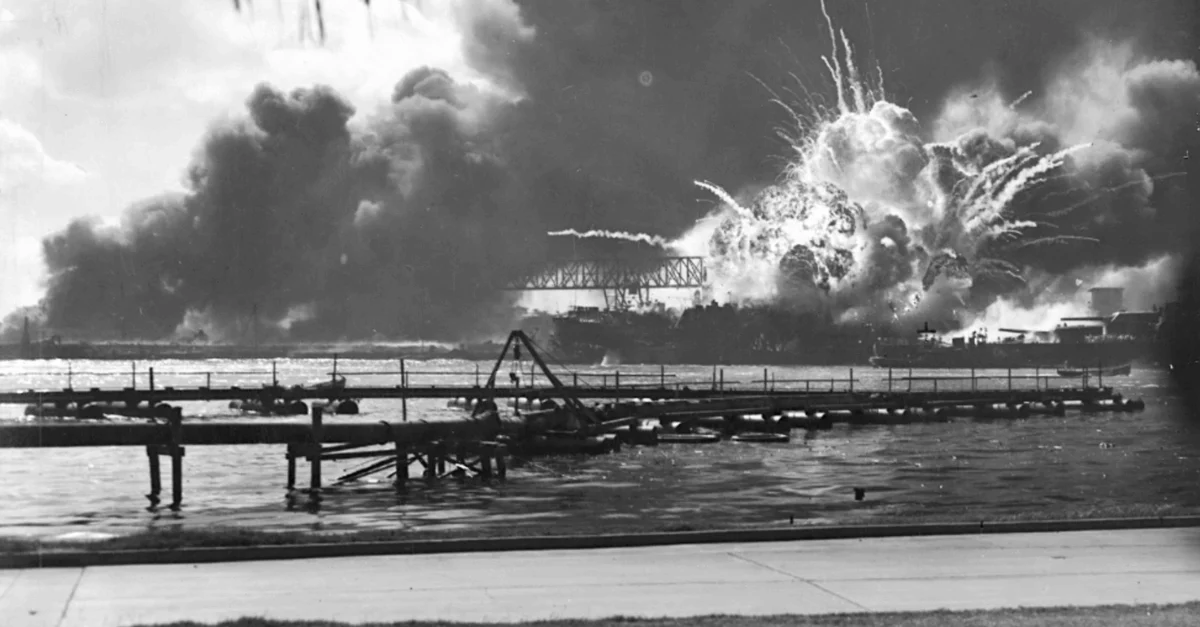
HONOLULU, HAWAII – Seventy-seven years ago, on a serene Sunday morning, December 7, 1941, the tranquil waters of Pearl Harbor erupted into a maelstrom of fire and steel. Without a formal declaration of war, Imperial Japan launched a devastating surprise aerial assault on the unsuspecting U.S. Pacific Fleet anchored in Hawaii. This audacious act of aggression, meticulously planned and executed, instantly shattered American isolationism and plunged the United States into the deadliest conflict in human history, World War II.
Japan’s military government, already a formidable expansionist power with territories spanning Manchuria, Korea, coastal China, and French Indochina, sought to secure vital raw materials, particularly oil, to fuel its grand imperial ambitions across the Pacific. The preemptive strike on Pearl Harbor, it was hoped by Japanese strategists, would cripple the U.S. Navy sufficiently to allow Japan to dominate the Pacific theatre of the Second World War (1939-1945) without significant immediate opposition.
While the attack inflicted immense damage, sinking or severely damaging numerous battleships and causing over 3,500 casualties, a crucial miscalculation ultimately undermined Japan’s strategic objective. The U.S. Navy’s invaluable aircraft carriers, the future backbone of naval warfare, were fortunately not in port that day, and vital fuel and supply dumps were left largely intact. Consequently, the United States, galvanized by the unprovoked assault, was able to recover its naval strength and eventually mount a relentless counteroffensive that would culminate in Japan’s ultimate defeat in August 1945, with devastating consequences for its population.
Main Facts: A Morning of Infamy
The attack on Pearl Harbor was a meticulously planned military operation executed by the Imperial Japanese Navy Air Service against the United States naval base at Pearl Harbor, Hawaii. The primary objective was to neutralize the U.S. Pacific Fleet, thereby preventing it from interfering with Japan’s planned military actions in Southeast Asia against overseas territories of the United Kingdom, the Netherlands, and the United States.
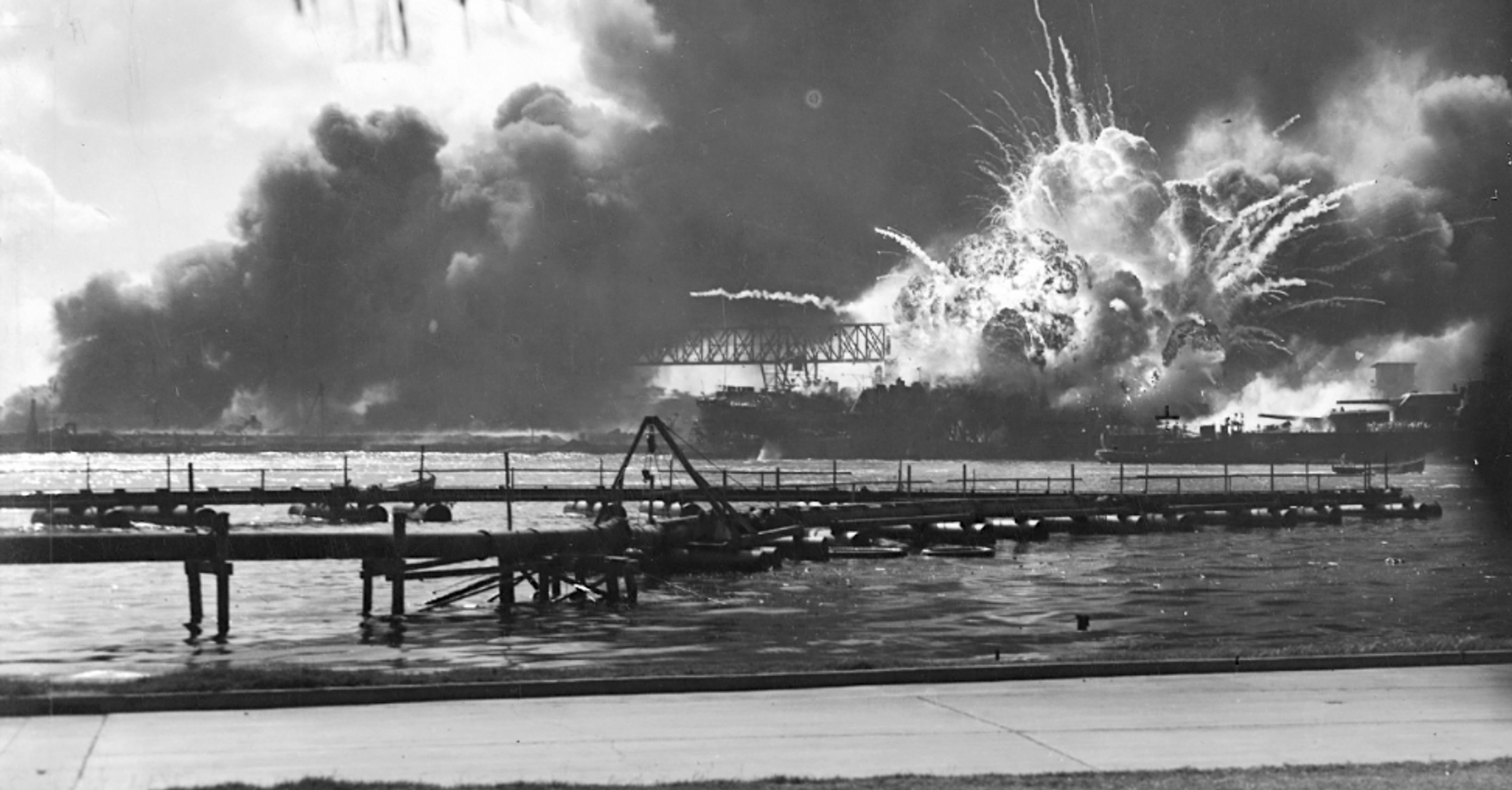
At approximately 7:48 AM Hawaiian Time, the first wave of Japanese aircraft, comprising bombers, torpedo planes, and fighter escorts, descended upon the naval base. A second wave followed shortly thereafter. The element of surprise was complete, catching the U.S. forces entirely off guard. The attack lasted just under two hours, but its impact was profound and immediate.
Key outcomes of the attack included:
- Naval Losses: Eight U.S. Navy battleships were either sunk or damaged. Of these, four were sunk: USS Arizona, USS Oklahoma, USS West Virginia, and USS California. The USS Arizona suffered a catastrophic explosion and sank within minutes, becoming a permanent memorial. The USS Oklahoma capsized. While all four were eventually salvaged and three returned to service, the damage to the battle fleet was severe. Additionally, three cruisers, three destroyers, an anti-aircraft training ship, and a minelayer were damaged or destroyed.
- Aircraft Destruction: Nearly 200 U.S. aircraft were destroyed and another 159 damaged, many caught on the ground at airfields like Hickam Field and Wheeler Field.
- Human Cost: The attack resulted in 2,403 American fatalities, including 68 civilians, and 1,178 wounded. The majority of the casualties were naval personnel aboard the battleships.
- Japanese Losses: In stark contrast, Japan’s losses were remarkably light, consisting of 29 aircraft and five midget submarines, with 64 personnel killed.
- Critical Misses: Crucially, the U.S. Navy’s three aircraft carriers (USS Enterprise, USS Lexington, and USS Saratoga) were not in port, having been dispatched on other missions. The base’s vital fuel oil storage tanks, submarine base, and repair facilities, which were critical for long-term naval operations, were also left undamaged.
The Pearl Harbor attack was a tactical masterpiece for Japan, demonstrating impressive coordination and audacity. However, its strategic impact proved to be a catastrophic miscalculation, as it failed to achieve its ultimate goal of breaking American will and instead provoked a unified and determined response.
Chronology: The Road to War
The attack on Pearl Harbor was not an isolated incident but the culmination of decades of Japanese imperial expansion, economic pressures, and escalating geopolitical tensions in the Pacific.
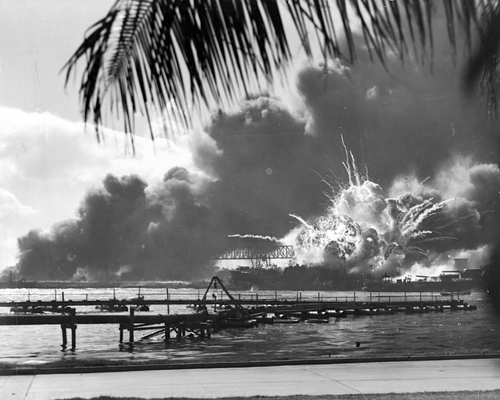
Japanese Imperial Expansion
Japan’s ambition to forge its own empire in Asia and the Pacific began in the late 19th century. Following the Meiji Restoration, Japan rapidly modernized and militarized, looking to secure resources and prestige akin to Western colonial powers.
- Late 19th Century: Japan occupied the Ryukyu, Bonin, and Kurile Islands in the 1870s.
- First Sino-Japanese War (1894-1895): Japan decisively defeated China, acquiring Formosa (Taiwan) and the Pescadores Islands, marking its emergence as a regional power.
- Russo-Japanese War (1904-1905): Another stunning victory against Russia solidified Japan’s position and granted it significant influence in Korea and Manchuria.
- Annexation of Korea (1910): Japan formally annexed Korea, turning it into a colony.
- First World War (1914-1918): As an ally of Britain, France, and the United States, Japan received control of Germany’s Pacific colonies (the Mariana, Caroline, and Marshall Islands) as a reward for its participation. These island chains, strategically positioned, significantly challenged the United States’ ability to defend its interests, particularly in the Philippines.
Rise of Japan’s Military Government
The 1930s witnessed a profound shift in Japanese politics, with a powerful military government taking control. This rise was fueled by a complex mix of domestic challenges and external ambitions.
- Domestic Instability: Social and economic problems, exacerbated by frequent earthquakes and rapid population growth (one million new inhabitants annually), strained Japan’s limited resources. The global Great Depression of 1929 and a subsequent slump in world trade further intensified these pressures, leading to widespread discontent.
- Militarism and Nationalism: The military presented itself as the solution, promising stability, defense against perceived foreign threats, and a path to prosperity through expansion. Emperor Hirohito, though a constitutional monarch, largely served to formally legitimize decisions made by the increasingly dominant military leadership.
- Economic Strategy: In 1932, the Japanese economy began to recover, boosted by the devaluation of the yen and massive government spending on armaments. However, this military expansion created an insatiable demand for raw materials that Japan, a resource-poor nation, simply did not possess.
Aggression and Alliances
Japan’s militarist government increasingly pursued an aggressive foreign policy, often in defiance of international norms.
- Invasion of Manchuria (1931): Japan openly challenged the League of Nations by occupying Manchuria, a resource-rich region in northeast China with strategic importance. Citing a fabricated incident (the Mukden Incident), Japan established the puppet state of Manchukuo in March 1932. The League of Nations proved ineffective, with member states reluctant to impose economic sanctions during a global economic crisis. Japan subsequently renounced its League membership in March 1933.
- Second Sino-Japanese War (1937): Japan launched an all-out war of conquest in China, ostensibly to protect its assets against rising Chinese nationalism. This brutal conflict saw Japan’s government taking full control of industries, labor, and the press, putting the entire economy on a war footing. By 1937, military spending consumed 65-75% of the national budget, a dramatic increase from 1931.
- Axis Alliance: Japan allied itself with other aggressive revisionist states, Fascist Italy and Nazi Germany, signing the Anti-Comintern Pact. This treaty outlined mutual cooperation in empire-building and a united front against communism, further isolating Japan from democratic powers.
- Setback at Nomunhan (1939): A significant setback occurred in the summer of 1939 when Japanese forces were decisively defeated by the Soviet Union in the border region between Manchuria and Outer Mongolia (Battle of Khalkhin Gol). This defeat, resulting in 18,000 Japanese casualties, reinforced the argument within the Japanese military, particularly the navy, that future expansion should focus on the Pacific rather than the Soviet mainland.
- Overconfidence: Despite the Soviet defeat, Japan’s long string of victories over 65 years fostered an immense sense of overconfidence within its military government. There was a widespread belief in the superiority of Japanese armed forces, particularly over the European nations already defeated by Nazi Germany, and even over the as-yet-untested United States. Propagandist education had instilled in many Japanese a belief in their racial and cultural superiority and an unswerving determination to serve the Emperor, making the idea of Japanese domination of the Pacific seem inevitable.
Quest for Resources and Southeast Asia
The need for natural resources, especially oil, became the most pressing driver of Japanese expansion.
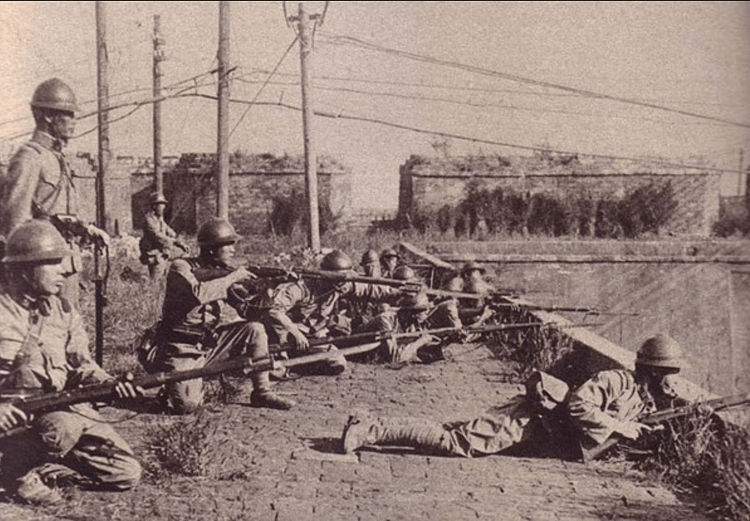
- Oil Dependence: Japan’s war economy was critically dependent on imported oil, producing only 6% of its own requirements. Other vital imports included iron ore, coal, lead, tin, rubber, and nickel. Alarmingly for Japan, at least two-thirds of its imported oil in 1936 came from the United States. While Japan had begun stockpiling raw materials, this was insufficient for a prolonged conflict.
- Exploiting European Weakness: The outbreak of WWII in Europe in 1939, with Germany’s invasion of Poland, presented Japan with a perceived window of opportunity. Military defeats suffered by the Netherlands, France, and Britain in Europe in 1940 led Japanese militarists to believe these powers would be too preoccupied to defend their valuable colonial assets in the Pacific. The Netherlands and France, largely occupied by Nazi Germany by June 1940, still controlled the oil-rich Dutch East Indies (Indonesia) and resource-rich French Indochina, respectively.
- Expansion into Southeast Asia: Japan swiftly capitalized on this perceived weakness. In September 1940, Japanese forces occupied northern French Indochina. By the spring of 1941, several key southern Chinese ports were under Japanese control. A Soviet-Japanese non-aggression pact in April 1941 secured Japan’s northern flank, allowing it to concentrate forces southward. In July 1941, Japan attacked southern Indochina. With these moves, the United States emerged as the only significant obstacle to Japan’s unfettered expansion in the Pacific.
Supporting Data: The Calculus of Conflict
The decision to attack Pearl Harbor was a desperate gamble by Japan, driven by a complex interplay of economic necessity, strategic ambition, and a fatalistic view of its inevitable confrontation with the United States.
US Sanctions and Isolationism
Through the late 1930s, the United States, increasingly alarmed by Japan’s aggressive imperial ambitions, sought to impede its war-making capabilities through economic measures.
- Economic Blockade: By June 1941, U.S. economic sanctions had become a near-total blockade, blocking the export of critical materials such as crude oil, gasoline, copper, iron, and steel to Japan, along with many other raw materials essential for its military development. Britain (through Malaya) and the Netherlands (through the Dutch East Indies) joined in, halting oil exports to Japan. A general trade embargo effectively slashed U.S. trade with Japan by three-quarters.
- Support for China: The U.S. and Britain actively supported Chiang Kai-shek, the Chinese nationalist leader, in his efforts to resist further Japanese expansion.
- Financial Freeze: Japanese financial assets in U.S. banks were frozen, severely limiting Japan’s ability to purchase vital resources on the international market.
- Policy of Deterrence: The U.S., while officially neutral, was clearly attempting to impede aggressor states, mirroring its actions in the European theatre of WWII, but stopping short of direct military intervention.
The Greater East Asia Co-Prosperity Sphere
Japan’s response to the suffocating oil embargo was not capitulation but a declaration of intent to escalate its imperial ambitions.
- New Economic Order: Japan announced its intention to create the "Greater East Asia Co-Prosperity Sphere," an economic and political bloc ostensibly designed to liberate Asia from Western colonial rule, but in reality, intended to establish Japanese hegemony and secure access to vital resources.
- Declaration of Hostility: The Japanese government declared that any state unwilling to join this sphere would be treated as an enemy, effectively signaling its intention to forcibly incorporate vast swathes of Asia into its dominion. The embargo, far from curbing Japanese expansion, seemed to have pushed it towards an even more aggressive stance.
Decision for War
By late 1941, the Japanese government saw war with the United States as unavoidable if it were to continue its imperial project.
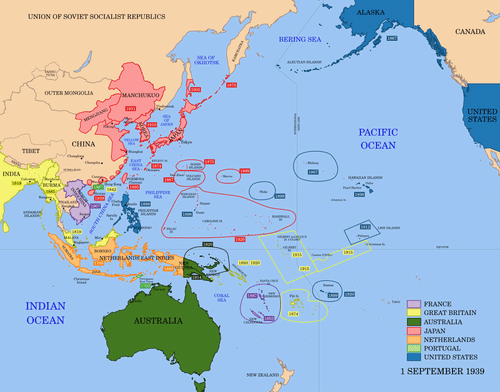
- Inevitable Conflict: On December 1, 1941, the Japanese government made the fateful decision to declare war on the United States, Britain, and the Netherlands. The prevailing sentiment was that these states would eventually declare war on Japan anyway if it continued its expansion, particularly into the oil-rich territories of British Malaya and the Dutch East Indies.
- The "Sleeping Giant": An attack on Britain and the Netherlands’ Asian colonies was certain to provoke the United States, which President Roosevelt had famously described as a "sleeping giant."
- Preemptive Strike Strategy: The audacious plan for a secret aerial attack on Pearl Harbor was conceived with the hope of delivering a knockout blow to the U.S. Pacific Fleet. The goal was to remove the United States as a significant player in the Pacific War before it could fully mobilize, thereby allowing Japan a free hand to consolidate its territorial gains.
- Numerical Disparity: Japanese strategists understood that in a protracted war, the numerically smaller Japanese Navy and the vastly inferior Japanese economy could not compete with the immense industrial and military potential of the United States. A "short, sharp victory" was deemed essential to secure Japan’s ill-gotten gains and perhaps even compel a weakened U.S. to seek a negotiated peace, maintaining its policy of isolationism without a significant naval presence in the Pacific.
The Mastermind: Admiral Yamamoto Isoroku
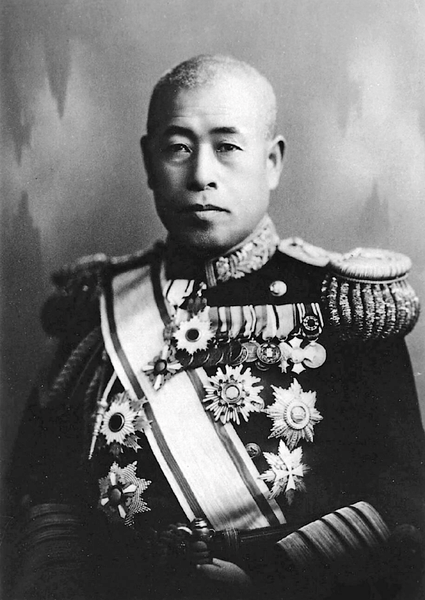
The architect of the Pearl Harbor attack was Admiral Yamamoto Isoroku (1884-1943), Commander-in-Chief of the Combined Fleet. Yamamoto, a brilliant but cautious strategist who had studied at Harvard and served as naval attaché in Washington, D.C., was acutely aware of America’s industrial might. He famously warned, "I can run wild for six months… after that, I have no expectation of success."
- Plan Development: Yamamoto’s plan was incredibly ambitious, requiring absolute surprise, the deployment of at least six of Japan’s largest aircraft carriers to reach such an isolated target, and a vast support fleet including submarines and refuelling ships.
- Strategic Shift: He faced considerable opposition from within the Naval General Staff, particularly Admiral Osami Nagano, who initially favored an attack on the Philippines. Yamamoto, however, convinced Nagano that a decisive strike on Hawaii was the only way to achieve the necessary tactical advantage.
- Audacious Gamble: Commander Minoru Genda (1904-1989), tasked with assessing the feasibility of the plan, articulated the underlying desperation: "It was felt that in the case of war, if Japan were to fight in a conventional way there was little hope of winning." The attack was a high-stakes gamble, aiming for both a massive material blow and a profound psychological one.
- Technological Edge: Yamamoto’s plan leveraged Japanese technological advancements, particularly newly developed torpedoes capable of operating effectively in shallow waters. The U.S. military, unaware of this capability, harbored a complacent belief that Pearl Harbor’s shallow depths made it immune to torpedo attacks from aircraft, a critical misjudgment that facilitated the Japanese success.
Official Responses: Surprise and Aftermath
The attack on Pearl Harbor achieved its primary tactical objective: complete surprise, leading to devastating initial damage. However, the American response would swiftly transform this tactical victory into a strategic blunder for Japan.
The Element of Surprise
Despite escalating tensions, the U.S. was indeed caught off guard, a fact that has fueled historical debate and even conspiracy theories.
- Intelligence Failure: While U.S. military intelligence was aware that some form of Japanese operation was imminent, intelligence analysts widely believed the Philippines, located a mere 200 miles (320 km) from Japan’s Formosa bases, would be the most likely target. The vast distance to Pearl Harbor, some 3,400 miles (5,500 km) from Japan, led most U.S. commanders to assume any attack there would be limited to sabotage or submarine activity, not a full-scale carrier-borne air assault.
- Communication Breakdown: The lack of effective communication between intelligence gatherers in Washington and commanders in the field was a critical factor. Intercepted coded Japanese consular messages indicated a strong interest in Pearl Harbor, but these warnings were either misinterpreted, ignored, or not relayed effectively. Blunders, such as sending the latest decoding machine to Britain instead of Hawaii, exacerbated the issue. These failures are generally attributed to inter-service rivalries, institutional incompetence, and a general underestimation of Japanese capabilities rather than any deliberate withholding of information.
- Conspiracy Theories Debunked: Claims that President Franklin D. Roosevelt or U.S. military leaders were aware of the planned attack and deliberately chose not to warn local commanders—to provide an ideal pretext for entering WWII—lack conclusive evidence. Similarly, the notion that the U.S. oil embargo was a deliberate provocation to force Japan into an aggressive act to sway public opinion into supporting war is largely unsubstantiated. The sheer audacity of the Japanese gamble, and the profound shock it delivered, often lead to such attempts to rationalize how the U.S. Navy could have been so unprepared.
Devastating Blow and Missed Opportunities
The immediate consequences for the U.S. Pacific Fleet were severe, yet the Japanese failed to deliver a truly crippling blow.
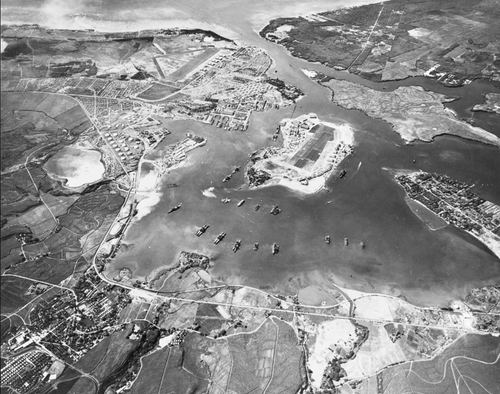
- Tactical Triumph: The Pearl Harbor attack was an overwhelming tactical success for the Japanese. Out of 94 U.S. ships based at the harbor, the Japanese task force sank or seriously damaged 18, including eight battleships. Nearly 200 U.S. aircraft were destroyed or damaged, and 2,403 people were killed, with 1,178 wounded. Japanese losses were minimal: 29 aircraft and five midget submarines.
- Strategic Failure: Crucially, the two U.S. aircraft carriers, USS Lexington and USS Enterprise, were at sea on maneuvers and thus escaped destruction. This proved to be a pivotal factor in the subsequent Pacific War, as aircraft carriers would soon replace battleships as the dominant naval weapon. Furthermore, the base’s vital fuel depots, submarine base, and repair facilities were left undamaged. Had these critical assets been destroyed, Pearl Harbor’s ability to operate as a forward naval base would have been severely hampered for months, potentially years. The attack, therefore, was a tactical victory but a profound strategic failure.
Implications: A Nation Awakened
The attack on Pearl Harbor irrevocably altered the course of American history and the global trajectory of World War II.
The Pacific War Ignited
Pearl Harbor was not an end in itself but the dramatic opening act of the Pacific War, which the Japanese referred to as the Great East Asia War.
- Initial Japanese Victories: The day after Pearl Harbor, Japanese forces continued their offensive, destroying the majority of 35 B-17 Flying Fortress aircraft belonging to the USAAF on Luzon Island in the Philippines. Throughout 1942, Japan achieved a string of rapid and significant victories, conquering vast territories across Southeast Asia and the Pacific, including the Philippines, Malaya, Singapore, Hong Kong, and the Dutch East Indies.
- Inevitability of Defeat: However, despite these early successes, Japan’s long-term prospects were grim. The combined industrial and military resources of the Allies, particularly the United States, far outstripped Japan’s capacity for a sustained global conflict. As Yamamoto himself had foreseen, Japan could not win a protracted war of attrition.
A Nation Galvanized
The unprovoked attack on Pearl Harbor instantly shattered America’s deep-seated isolationist sentiment.
- "A Date Which Will Live in Infamy": President Franklin D. Roosevelt’s powerful address to a joint session of Congress on December 8, 1941, declared December 7th a "date which will live in infamy" and formally requested a declaration of war against Japan. Congress overwhelmingly approved, with only one dissenting vote. Three days later, Germany and Italy, Japan’s Axis allies, declared war on the United States, effectively bringing America into the European theatre as well.
- Massive Mobilization: The attack galvanized the American public and industry like no other event. Overnight, the U.S. transformed from a nation hesitant about foreign entanglements to one fully committed to total war. Factories shifted from civilian to military production, millions of men volunteered or were drafted into the armed forces, and women entered the workforce in unprecedented numbers. The "sleeping giant" had been brutally awakened and was now fully committed to vengeance and victory.
The Path to August 1945
The war in the Pacific would be a long, brutal, and bloody struggle, characterized by fierce naval battles, amphibious assaults, and intense aerial campaigns.
- Relentless Counteroffensive: The U.S. Navy, leveraging its undamaged aircraft carriers and rapidly expanding industrial base, began a relentless "island-hopping" campaign, gradually pushing Japanese forces back across the Pacific. Battles such as Midway, Guadalcanal, Iwo Jima, and Okinawa became synonymous with unimaginable ferocity.
- Ultimate Defeat: By 1945, Japan was reduced to defending its home islands, its navy decimated, and its cities ravaged by conventional bombing. The war culminated in August 1945 with the atomic bombings of Hiroshima and Nagasaki, followed by Japan’s unconditional surrender. The consequences for the Japanese population were catastrophic, marking a tragic end to an era of imperial ambition.
A Turning Point in History
Pearl Harbor remains a potent symbol of surprise attack, national resolve, and the transformative power of a single event.
- End of Isolationism: For the United States, it marked the definitive end of its long-standing policy of isolationism and its emergence as a global superpower, a role it would continue to play throughout the Cold War and beyond.
- Geopolitical Shift: The attack fundamentally reshaped global geopolitics, setting the stage for the post-war order and the rise of new alliances and rivalries.
- Legacy of Vigilance: The lessons of Pearl Harbor—particularly the importance of intelligence, preparedness, and effective communication—continue to influence military strategy and national security policies to this day, serving as a constant reminder of the perils of underestimating an adversary.