The Digital Renaissance: Concept Art World and the Vanguard of Modern Visual Storytelling
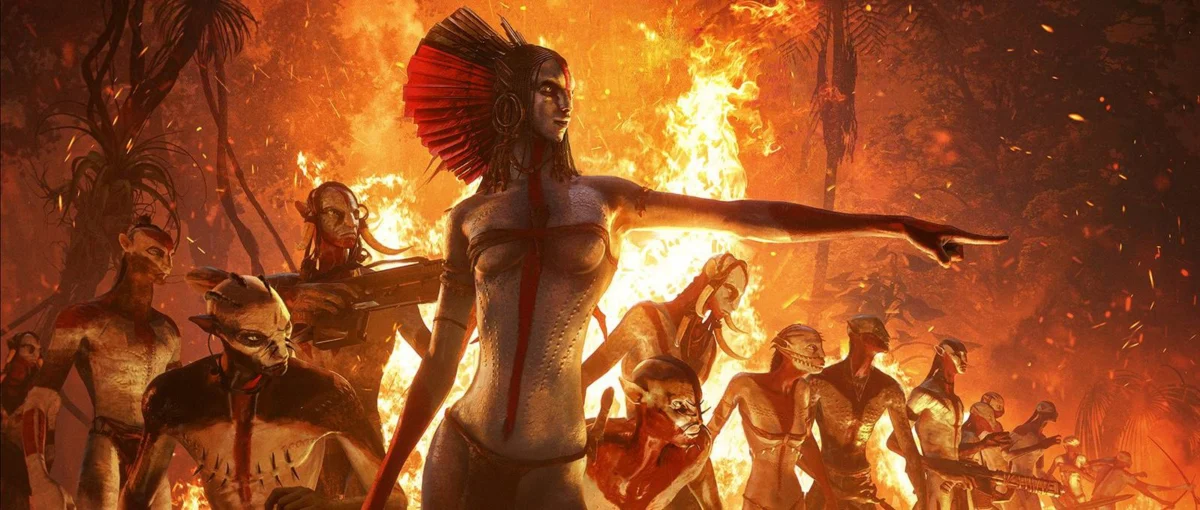
In the rapidly evolving landscape of the entertainment industry, the visual identity of a film, video game, or animated series is often forged long before a single frame is shot or a line of code is written. At the heart of this creative gestation lies the field of concept art—a discipline that bridges the gap between abstract imagination and tangible reality. Concept Art World (CAW), a preeminent online platform, has solidified its position as a critical repository and advocate for this craft. By spotlighting masters such as Andreas Rocha, Jakub Rozalski, Dan Milligan, and David Levy, CAW not only showcases aesthetic excellence but also serves as a frontline defender of intellectual property in an era increasingly defined by the encroachment of generative artificial intelligence.
Main Facts: A Hub for Visual Development
Concept Art World stands as a leading resource dedicated to the high-stakes world of visual development. Its mission is multifaceted: it functions as a gallery for world-class portfolios, a news outlet for industry shifts, and an educational platform for the next generation of digital painters. The platform’s influence spans across major entertainment sectors, including Hollywood’s blockbuster machinery, the global gaming industry, and the burgeoning field of independent animation.
The site’s recent focus on a diverse quartet of artists—Andreas Rocha, Jakub Rozalski, Dan Milligan, and David Levy—highlights the breadth of the medium. From Rocha’s ethereal landscapes and Rozalski’s alternate-history dieselpunk to Milligan’s narrative-driven storyboards and Levy’s futuristic industrial designs, these artists represent the "gold standard" of the industry.
Furthermore, Concept Art World has taken a decisive editorial and legal stance regarding the future of digital art. The platform has explicitly updated its terms to prohibit the use of its hosted content for the training of artificial intelligence systems. This move reflects a growing movement within the creative community to protect the "human element" of design from unauthorized algorithmic scraping.
Chronology: From Matte Paintings to the Digital Frontier
The evolution of concept art, as tracked by platforms like CAW, follows a distinct trajectory from the physical to the digital, and now, to the algorithmic.
The Analog Era (Pre-1990s)
In the early days of cinema, "concept art" was synonymous with production design and matte painting. Artists used oils, acrylics, and physical models to envision worlds like those seen in Star Wars or Blade Runner. The work was labor-intensive and required a deep understanding of physical light and perspective.
The Digital Shift (1990s – 2010s)
The introduction of digital tablets and software like Adobe Photoshop revolutionized the speed at which artists could iterate. During this period, Concept Art World emerged as a digital lighthouse, providing a centralized location where artists could move away from obscure forums and into a professional, curated spotlight. This era saw the rise of "super-artists" who could produce cinematic-quality paintings in a fraction of the time required by traditional methods.
The Era of World-Building (2010s – 2020s)
Concept art evolved from simple "sketches" into deep world-building. Artists like Jakub Rozalski began creating entire universes (such as the 1920+ series) that birthed board games, video games, and novels. Concept Art World became the primary vehicle for these creators to reach both industry scouts and the general public.
The AI Inflection Point (2022 – Present)
The emergence of generative AI models like Midjourney and Stable Diffusion marked a turning point. As these models were trained on vast datasets of human-made art—often without consent—platforms like CAW became battlegrounds for copyright protection. The current period is defined by a push for ethical standards and the re-assertion of the value of human-led visual development.
Supporting Data: Profiling the Masters of the Craft
To understand the value of the content Concept Art World protects, one must examine the specific contributions of the artists currently featured on the platform.
Andreas Rocha: The Architect of Atmosphere
Based in Lisbon, Portugal, Andreas Rocha is renowned for his "painterly" approach to digital environments. His work often focuses on the interaction between light and nature. Unlike the sterile precision of some digital art, Rocha’s work retains a textured, organic feel that evokes emotion. His tutorials and showcased works on CAW provide a blueprint for how to balance technical digital tools with traditional artistic sensibilities.
Jakub Rozalski: The Narrative Visionary
Polish artist Jakub Rozalski is perhaps best known for his Scythe board game and the Iron Harvest video game universe. His work, characterized by the juxtaposition of rural, early 20th-century landscapes with massive, clanking mechs, demonstrates the power of concept art to tell a story within a single frame. Rozalski’s inclusion in the CAW ecosystem highlights the platform’s role in supporting artists who are not just service providers for studios, but intellectual property creators in their own right.
Dan Milligan: The Cinematic Storyboarder
While environment art captures the "where," Dan Milligan captures the "how" and "when." As a premier storyboard artist and illustrator, Milligan’s work is about movement, pacing, and camera angles. His contributions to Concept Art World emphasize the "visual development" aspect of the industry—showing how a script is translated into a visual language that a director can follow.
David Levy (Vyle): The Sci-Fi Industrialist
David Levy is a titan in the world of science fiction concept art. With a resume that includes Tron: Legacy, Prometheus, and Avatar, Levy’s work—often signed as "Vyle"—focuses on the "industrial" side of the future. His designs for spaceships, sprawling cities, and high-tech hardware set the aesthetic tone for some of the highest-grossing films in history. CAW’s archive of Levy’s work serves as a masterclass in functional, believable futuristic design.
Official Responses: The Battle Over Intellectual Property
The most significant "official" statement found within the recent updates of Concept Art World is its stringent anti-AI training policy. The footer of the platform now contains a clear legal directive: "Any training of AI systems using this content is strictly prohibited."
This response is a direct reaction to the "scraping" practices of tech companies. Industry experts and legal analysts suggest that this is part of a broader "walled garden" strategy being adopted by high-end creative repositories. By explicitly forbidding AI training, CAW is setting a precedent for:
- Contractual Protection: Providing artists with a platform that actively defends their copyright, making it a "safe harbor" for professional portfolios.
- Ethical Sourcing: Encouraging studios to hire human artists rather than relying on models trained on those artists’ stolen work.
- Data Sovereignty: Asserting that the human creativity showcased on the site is a finite, protected resource, not a public utility for machine learning.
The platform’s leadership has consistently messaged that while technology is a tool, the "visual development" process is a human-centric endeavor that requires empathy, narrative understanding, and intentionality—qualities that AI currently mimics but does not possess.
Implications: The Future of the Creative Economy
The stance taken by Concept Art World and the artists it represents has profound implications for the future of the entertainment industry.
The Premium on "Human-Made"
As AI-generated imagery becomes ubiquitous and increasingly "average," there is a predicted surge in the value of human-made concept art. Studios may begin to use "Human-Only" certifications for their visual development to avoid legal complications regarding copyright and to ensure a unique "hand-crafted" look that AI cannot consistently replicate.
Educational Evolution
Concept Art World’s role as a tutorial hub is shifting. Education is moving away from just "how to paint" toward "how to think like a designer." The focus is on narrative depth and structural logic—areas where human artists like Milligan and Levy excel. The goal is to produce artists who can do what an AI cannot: interpret a director’s vague emotional cue and turn it into a functional, original world.
Legal Precedents
The explicit prohibition of AI training on CAW may eventually serve as evidence in copyright litigation. If a generative model produces work that is "substantially similar" to the unique styles of Rocha or Rozalski, the fact that the platform hosting their work explicitly forbade scraping could be a cornerstone of a legal challenge.
The Survival of Originality
Ultimately, the preservation of sites like Concept Art World is about the survival of originality. If the "training data" for the future of art is restricted to existing human excellence, the industry faces a choice: continue to invest in the masters of the craft or risk a "model collapse" where AI begins to train on other AI-generated images, leading to a homogenization of visual culture.
In conclusion, Concept Art World is more than a gallery; it is a fortress for the creative spirit. By curating the works of Rocha, Rozalski, Milligan, and Levy, and by taking a hard line against the unauthorized use of their data, CAW is ensuring that the concept art of tomorrow remains as vibrant, diverse, and human as the masterpieces that define the industry today.