A Landmark in British Broadcasting: ‘Sorry, I Didn’t Know’ Renewed for Record-Breaking Seventh Season
In an era of rapid content turnover and shifting linear television priorities, certain programs manage to transcend their time slots to become cultural institutions. Such is the case for Sorry, I Didn’t Know, the groundbreaking British comedy panel show that has officially been renewed for its seventh season on ITV. This renewal is not merely a routine extension of a successful format; it represents a historic milestone in the landscape of United Kingdom broadcasting, cementing the show’s legacy as a pioneer for Black-led production and representation.
The announcement, confirmed by ITV and TriForce Productions, marks a decade since the network first commissioned the series. With Season 7 now greenlit, the show has officially broken the record for the longest-running Black TV show in British history—a title previously held by iconic staples of the late 20th century. As the television industry continues to grapple with questions of diversity and sustainable representation, Sorry, I Didn’t Know stands as a testament to the longevity and necessity of inclusive storytelling.
Main Facts: A Historic Seventh Season
The core of this announcement lies in the sheer longevity of the production. Sorry, I Didn’t Know is produced by TriForce Productions, a Black-led production company that has championed diverse talent for years. With the Season 7 re-order, the series extends its own record as the longest-running show from a Black-led production house on a major UK commercial network.
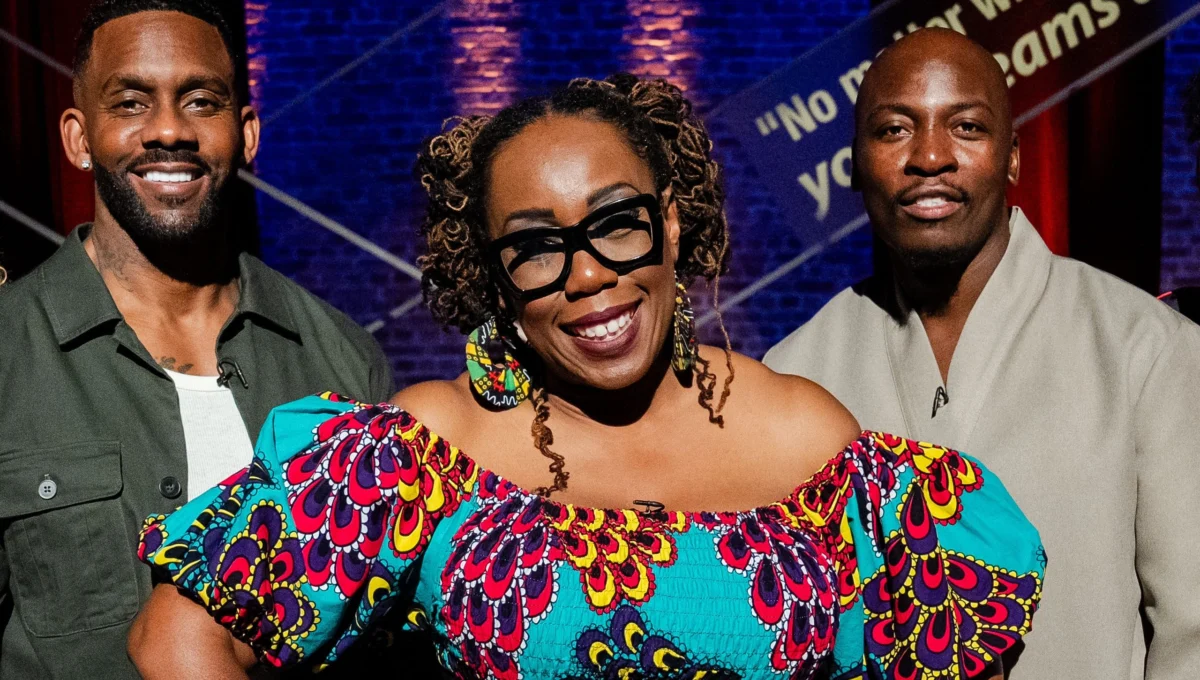
Host Chizzy Akudolu, who transitioned from team captain to the central hosting role in the previous season, is confirmed to return. She will be joined once again by the show’s veteran team captains: actor and musician Richard Blackwood and comedian Eddie Kadi. The format remains a high-energy, comedic battle of wits where contestants compete in a quiz centered on Black history—a subject often overlooked in traditional educational curricula.
The new season is scheduled to air later this year across ITV1 and the network’s streaming platform, ITVX. Filming is slated for this summer in London, once again utilizing a live studio audience to capture the spontaneous energy that has become a hallmark of the program. While the specific guest lineup for Season 7 remains under wraps, the production has a history of attracting high-caliber talent from the worlds of stage, screen, and sports.
Chronology: A Decade of Evolution
To understand the weight of this renewal, one must look back at the show’s ten-year journey. The concept for Sorry, I Didn’t Know was first piloted in 2016. At that time, the landscape for Black-led comedy on British television was in a state of flux. While there had been flashes of brilliance in previous decades, consistent, multi-season platforms for Black talent were increasingly rare.
ITV first commissioned the series from TriForce Productions with the intent of creating a "window" into Black history that was as entertaining as it was educational. For the first five seasons, the show was hosted by actor Jimmy Akingbola, whose charisma helped establish the show’s identity. During this period, the show moved from being a niche experimental project to a staple of the ITV schedule, particularly during periods of cultural reflection such as Black History Month.
The most significant shift in the show’s internal structure occurred during the transition to Season 6. Chizzy Akudolu, a long-time fixture on the show as a team captain, stepped into the host’s chair, replacing Akingbola. This move was met with critical acclaim, as Akudolu’s sharp wit and deep familiarity with the format provided a seamless transition. The 2025/2026 season (Season 7) represents the next chapter in this evolution, proving that the show can adapt and thrive through changes in leadership and shifting viewer habits.
Supporting Data: Surpassing the Icons
The claim that Sorry, I Didn’t Know is now the longest-running Black TV show in British history is a significant one, requiring a look at the historical data of the UK television archives. While "Black TV show" can be a broad categorization, industry experts and the show’s representatives point to two specific benchmarks that have now been surpassed:
- Desmond’s (Channel 4): Perhaps the most beloved Black British sitcom of all time, Desmond’s ran for six seasons between 1989 and 1994. Set in a Peckham barbershop, it was a cornerstone of Channel 4’s commitment to diverse programming. By reaching Season 7, Sorry, I Didn’t Know moves past the season count of this legendary series.
- The Real McCoy (BBC Two): This influential sketch show ran for five seasons between 1991 and 1996, with an additional "Best of" special. It was instrumental in launching the careers of many Black British comedians, but its run was ultimately shorter than the decade-long journey of the TriForce production.
Verifying these records is notoriously complex due to varying definitions of "seasons" and the inclusion of specials or spin-offs. However, both ITV and TriForce Productions have expressed certainty that Sorry, I Didn’t Know has set a new high bar for longevity.
The success of the show is also reflected in the caliber of guests it has hosted. Over the years, the panel has featured a "who’s who" of British talent, including Adjoa Andoh (Bridgerton), Susan Wokoma (Enola Holmes), Munya Chawawa, and Oti Mabuse. This rotating door of talent has ensured that the show remains relevant to different demographics, bridging the gap between younger social media stars and established icons of the industry.
Official Responses: A Vision for the Future
The renewal has been met with enthusiasm from both the production side and the network executives who manage ITV’s entertainment portfolio. Fraser Ayres, Executive Producer for TriForce, highlighted the personal and professional significance of the tenth anniversary.
“We’re so excited Chizzy is taking her place again as queen of the show,” Ayres stated. “At 10 years and the seventh season, it’s an incredibly special one. Having been in every episode since the pilot in 2016, she’s the perfect host to shepherd us into this next chapter.”
Ayres also alluded to the current social climate, suggesting that the show’s blend of humor and education is more vital than ever. “With lots of surprises planned for this series, it’s going to be a special one. We thank ITV for the support they give us to keep making this ground-breaking show, as it seems like a little bit of knowledge, and a lot of laughs, is needed now more than ever.”
The commissioning of Season 7 was spearheaded by Katie Rawcliffe, ITV’s Director of Entertainment & Daytime Commissioning, alongside Entertainment Commissioner Gemma John-Lewis. Their continued backing of the project signals a strategic commitment from ITV to maintain programs that offer diverse perspectives while maintaining high entertainment value. The production team remains a tight-knit group, with Ayres, Minnie Ayres, and Jimmy Akingbola serving as executive producers, and Delia Williams acting as series editor.
Implications: The "Edutainment" Model and Industry Diversity
The renewal of Sorry, I Didn’t Know carries implications that extend far beyond the walls of the ITV studios. It serves as a case study for several key trends in modern media:
1. The Power of the "Edutainment" Format
The show has mastered the art of "stealth education." By using the familiar, high-energy format of a comedy panel show, it introduces audiences to historical facts, figures, and events that are frequently absent from the mainstream British consciousness. This model has proven effective in engaging viewers who might otherwise shy away from traditional documentaries. The success of Season 7 suggests there is a sustained appetite for content that challenges the status quo while providing genuine entertainment.
2. The Sustainability of Black-Led Production
For years, a criticism of the UK TV industry was that diverse shows were often "one-offs" or short-lived experiments. The decade-long run of Sorry, I Didn’t Know proves that when a Black-led production company like TriForce is given consistent support and a platform, it can produce a long-running, commercially viable product. This success provides a blueprint for other independent production houses aiming to break into the mainstream.
3. Representation in the "Captain’s Chair"
The roles of Richard Blackwood and Eddie Kadi as team captains are crucial. In the history of British panel shows (such as Mock the Week, QI, or Have I Got News For You), the "captain" and "host" roles have historically been dominated by white talent. By centering the entire show around Black hosts and captains, Sorry, I Didn’t Know normalizes Black authority and expertise in the comedy space.
4. Strengthening the Streaming Portfolio
As ITV continues to push its ITVX streaming service, having a "record-breaking" legacy title is a significant asset. Long-running shows with multiple seasons provide a "bingeable" archive that can attract and retain subscribers. The show’s ability to perform well both on linear TV (ITV1) and digital platforms (ITVX) makes it a versatile tool in the network’s arsenal.
In conclusion, the seventh-season renewal of Sorry, I Didn’t Know is more than just a win for TriForce Productions; it is a milestone for British television history. By surpassing the records of past classics and maintaining its relevance over a decade, the show has proven that Black history is not a niche subject, but a foundational part of the British narrative that resonates with a broad, diverse audience. As filming begins this summer, the industry will be watching to see how this record-breaking series continues to innovate and educate in equal measure.