The Architect of Fandom: The Life and Legacy of Ted White (1938–2026)
At the Corflu 41 fanzine convention in Las Vegas in 2024, writer Sandra Bond asked Ted White, then 86, if there was anything left in his life he wished he had accomplished. His response was a singular, unwavering "No."
It was a statement of fact from a man who had spent seven decades navigating the overlapping territories of science fiction, jazz, comics, and counter-culture. Theodore Edward White, known to the world as Ted White, passed away in August 2026, leaving behind a legacy as one of the most influential "fan-pro" figures in the history of genre fiction. As a Hugo Award-winning writer, a transformative editor of Amazing Stories and Heavy Metal, and a fierce critic, White was the bridge between the amateur enthusiasm of 1950s fanzines and the professional sophistication of modern speculative media.
I. Main Facts: A Polymath of the Pulp and the Progressive
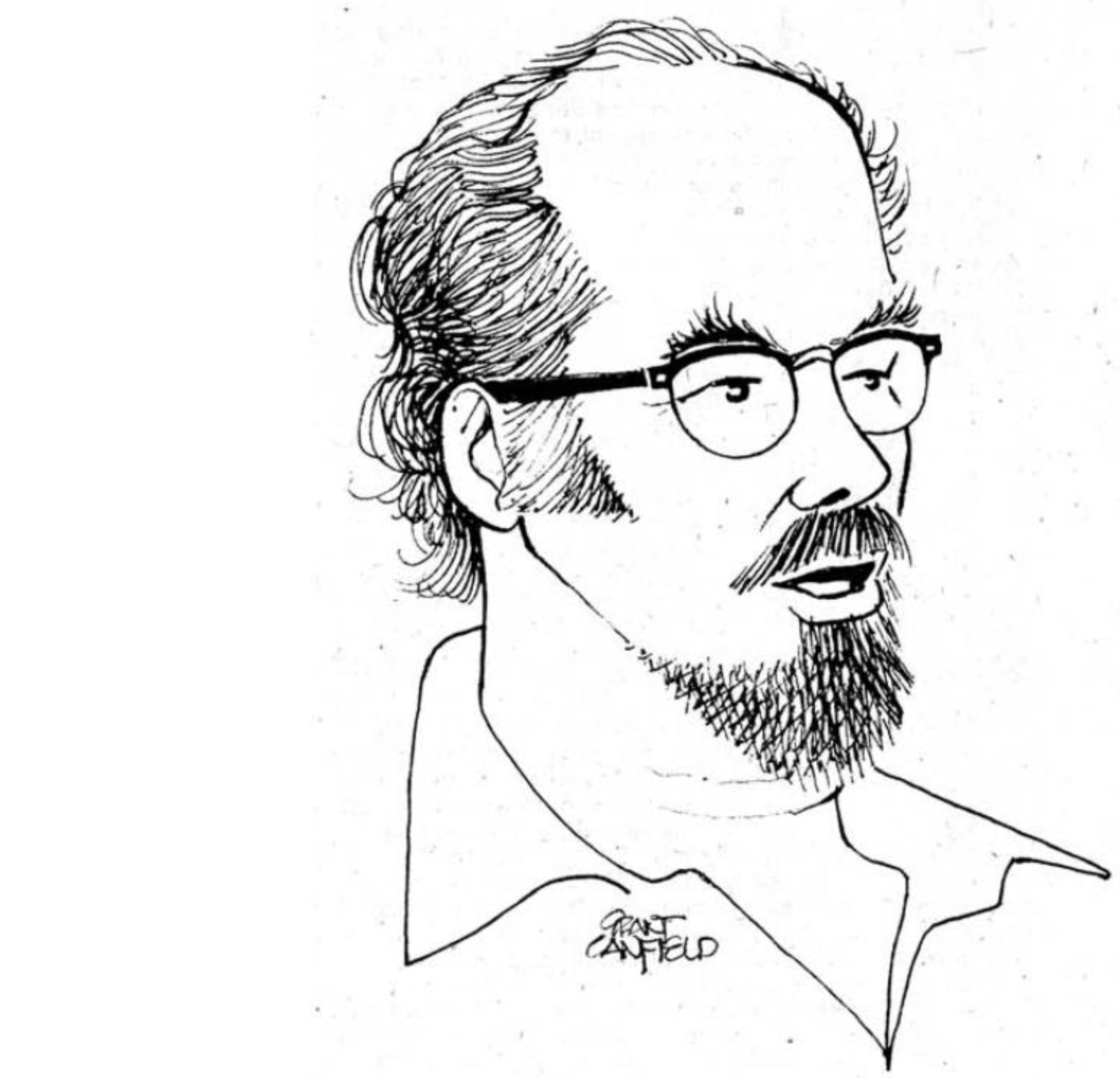
Ted White was born on February 4, 1938, in Washington, D.C., and spent the majority of his life in Falls Church, Virginia. He was a rare breed of intellectual who refused to categorize his interests by hierarchy. To White, a Superman fanzine was as worthy of critical rigor as an Ornette Coleman jazz record or a hard science fiction novel.
Throughout his career, White achieved several landmark milestones:
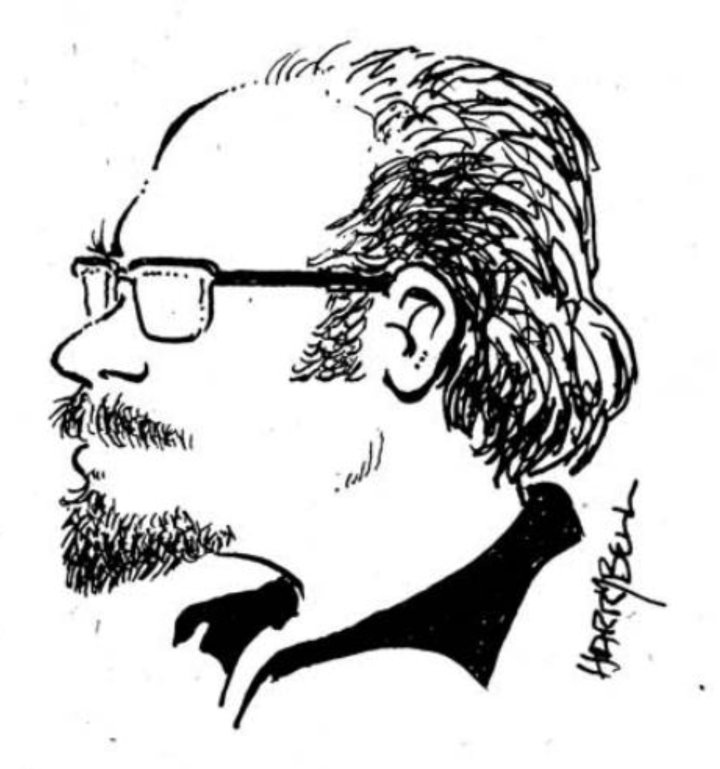
- The Hugo Award: In 1968, he won the Hugo for Best Fan Writer, a testament to his status as the premier voice in science fiction fandom.
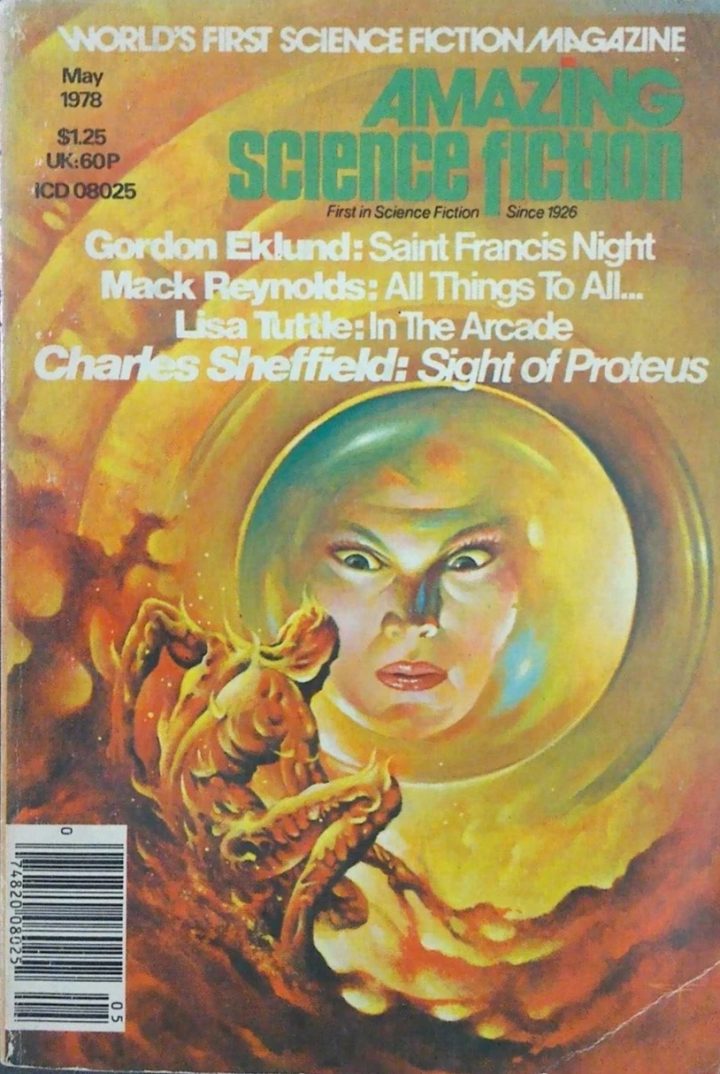
- Editorial Leadership: He served as the editor of Amazing Stories and Fantastic for nearly a decade (1968–1979) and had a high-profile, if brief, tenure as the editor of Heavy Metal (1979–1980).
- Literary Output: Between 1964 and 1978, he authored 11 novels, including original works like the Qanar trilogy and licensed properties such as Captain America: The Great Gold Steal.
- Music Criticism: He was a respected jazz critic for Metronome and later a progressive rock radio personality known as "Dr. Progresso."
White’s life was defined by the transition from "passive audience member" to "active creator," a philosophy that began with a $10 mimeograph machine and ended with him shaping the direction of some of the most iconic magazines in American history.
II. Chronology: From Mimeographs to Newsstands
The Fanzine Revolution (1951–1960)
White’s journey began at age eight when he discovered science fiction. By his early teens, he was immersed in the "lettercols" (letter columns) of professional magazines (prozines). He credited Raymond A. Palmer, editor of Other Worlds Science Stories, for teaching him that an editor could be a "palpably real presence."
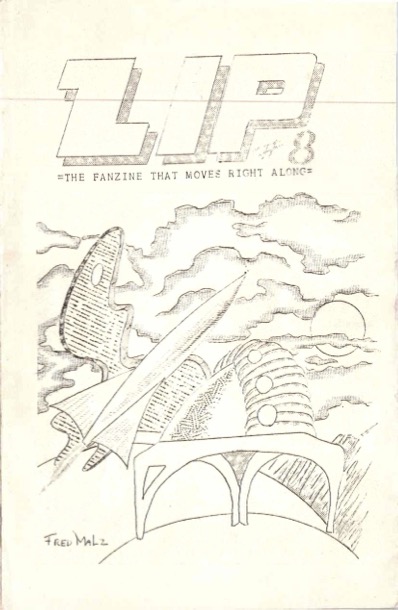
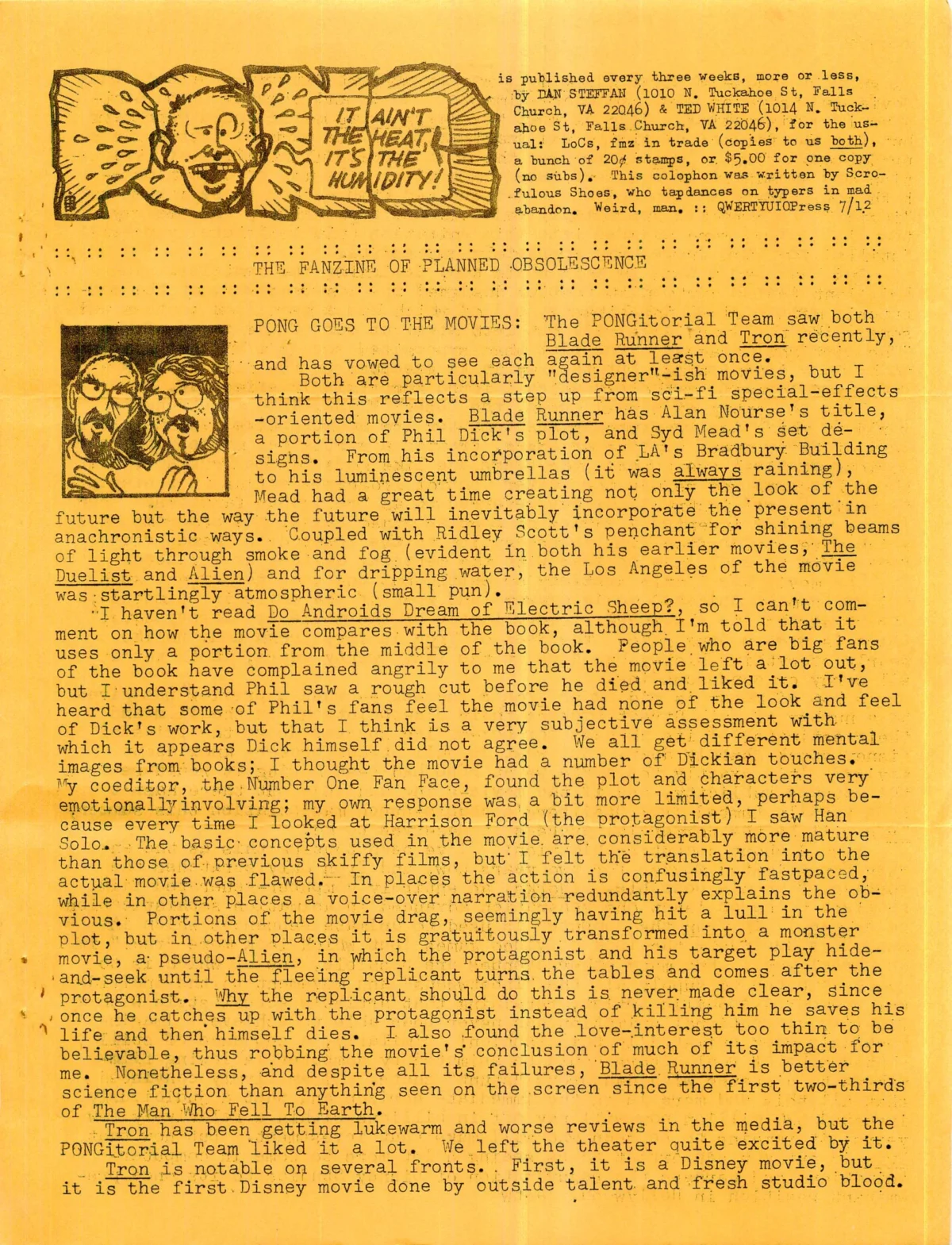
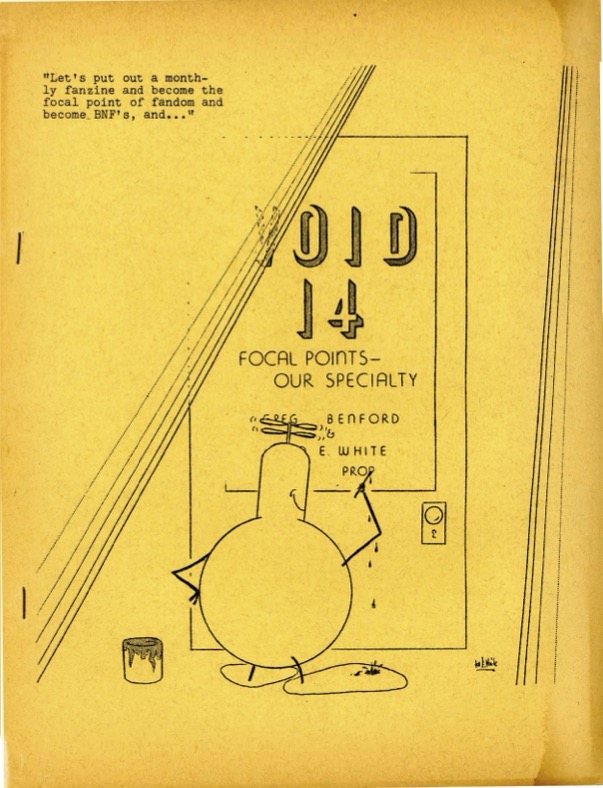
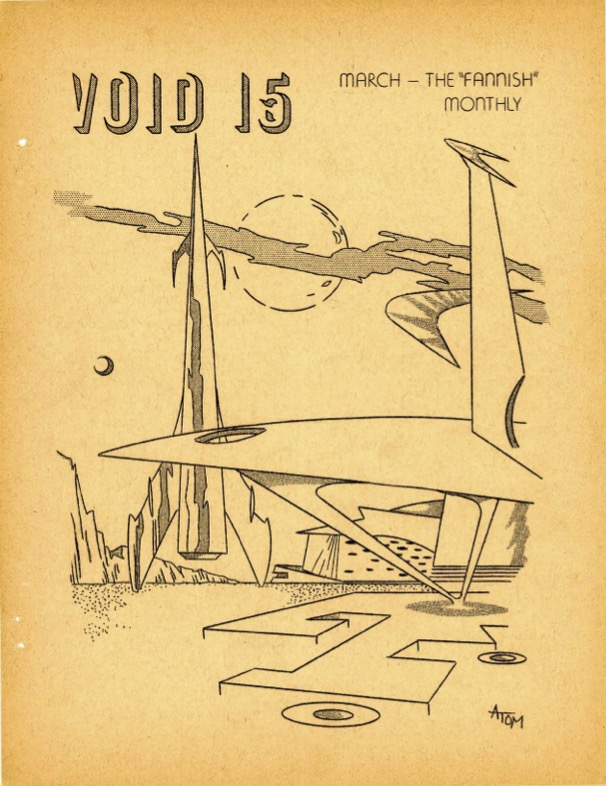
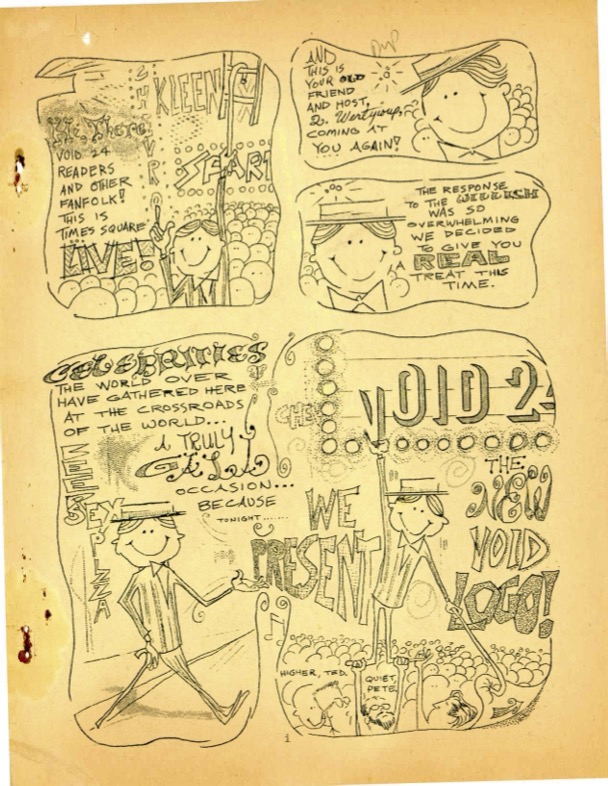
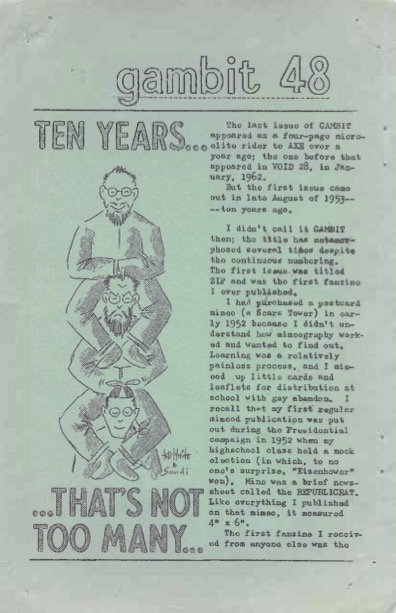
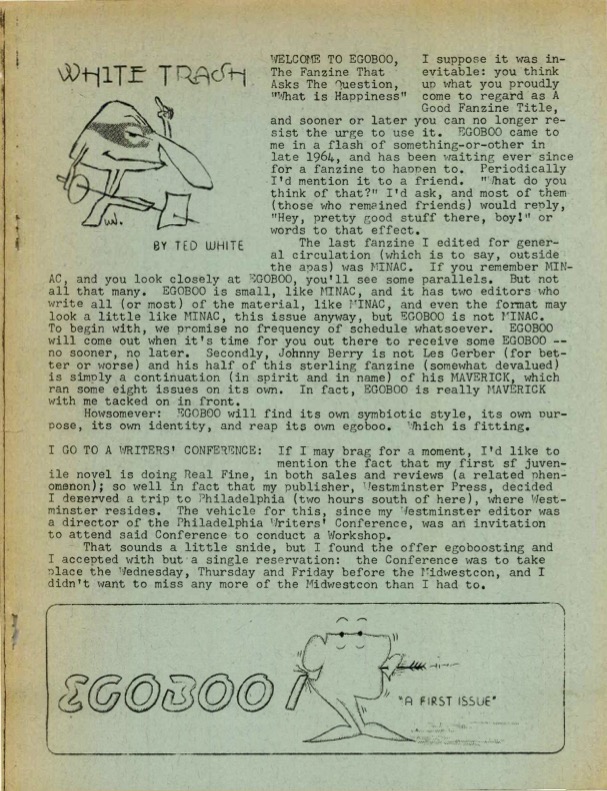
In 1953, at age 15, White moved from reader to publisher. Using a Sears postcard-sized mimeograph, he produced Zip #1. This modest publication was a turning point. As White later reflected, he had to abandon the pursuit of a "perfect" fanzine and embrace a "real" one, "warts and all." This DIY spirit led him to found or contribute to legendary fanzines such as Void, Minac, and Egoboo.
The New York Years and the Fanoclasts (1960–1968)
In 1959, White moved to New York City with his first wife, Sylvia Dees. He quickly became a fixture of the city’s bohemian scene, living in the Lower East Side during its transition into the "East Village." He found work as a jazz critic, earning the respect of Ornette Coleman, and became a founding member of the Fanoclasts, an elite, invitation-only science fiction fan group.
This period was marked by intellectual ferment and controversy. In 1964, White became a central figure in the "Boondoggle," a famous fandom conflict involving Walter Breen. White defended Breen against a ban from Worldcon based on civil libertarian principles, though Breen’s later convictions for child molestation would cast a long, dark shadow over that era of fandom history. White eventually expressed his deep disappointment in Breen, noting that the "liking" for the man had evaporated long before the legal system finally intervened.
The Golden Era of Editing (1968–1980)
In 1968, White took the helm of Amazing Stories and Fantastic. The magazines were struggling under the ownership of Ultimate Publishing Company, which relied heavily on cheap reprints. White transformed them into venues for new, high-quality fiction. Despite working with a shoestring budget and an owner who famously refused to use a mailing service to save money, White improved the editorial standards significantly. He introduced writers like Roger Ebert to the SF world and used his editorials to foster a deep sense of community.
In 1979, White moved to Heavy Metal. Though his tenure lasted only a year, he attempted to bring a "unified vision" to the magazine, moving it away from being a "scrapbook" of translated French comics and toward a curated cultural publication with dedicated columns on music and film.
III. Supporting Data: The Philosophy of the "Outsider on the Inside"
White’s impact is best measured by his refusal to conform to the expectations of the industries he worked in. Gary Groth, co-founder of Fantagraphics and The Comics Journal, noted that White was a "seasoned science fiction author" who treated comics with a critical intelligence that was virtually non-existent in the 1960s.
The Buckler Plagiarism Suit:
White’s fearlessness as a critic was legendary. In 1983, his writing in The Comics Journal led to a $260,000 lawsuit after he accused comic artist Rich Buckler of plagiarism. Fantagraphics won the case because, as Groth bluntly put it, "he [Buckler] was a plagiarist." White’s commitment to truth over industry politeness made him a hero to many and a pariah to some.
Editorial Innovation:
At Amazing Stories, White’s data-driven approach to saving the magazine involved:
- Reducing Type Size: To pack more fiction into the same page count.
- Price Adjustments: Increasing the cover price to 60 cents to offset newsstand losses.
- New Talent Acquisition: Prioritizing original stories over the "reprint-only" policy of his predecessors.
IV. Official Responses and Personal Reflections
The passing of Ted White prompted a wave of tributes from the communities he helped build.
Gary Groth, The Comics Journal:
"Ted was a fearless critic who took on sacred cows in both the comics and science fiction world, unafraid to vent unorthodox and unpopular opinions. Ted always struck me as an outsider on the inside… it never felt like he belonged to any institutional clique. Which was just one more thing I liked about him."
Spencer Carlin, Stepson:
Reflecting on White’s home in Falls Church, which served as a hub for artists and musicians for decades, Carlin noted: "I was always treated like an adult amongst Ted and his community when it came to imagination and inclusion… Experiences and exposure to this world surely shaped who I became."
The Fandom Community:
White was a frequent Guest of Honor at conventions and a multi-time winner of Fan Activity Achievement (FAAn) Awards. His "Falls Church Second Friday" parties became a legendary institution, running for nearly 40 years and serving as a salon for the brightest minds in genre fiction.
V. Implications and Legacy: A Life Without Regrets
Ted White’s death marks the end of an era for "First Fandom" sensibilities. He was a man who proved that the "fan" and the "professional" were not two different people, but two stages of the same creative evolution.
The Democratization of Criticism
White’s work in the 1950s and 60s prefigured the modern internet culture of blogging and social media critique. By treating "low" art—comic books and pulp magazines—with the same academic and aesthetic scrutiny as "high" art, he helped pave the way for the modern era where genre fiction dominates the cultural zeitgeist.
The "Unified Vision"
His tenure at Heavy Metal and Amazing Stories remains a case study in editorial integrity. White believed that a magazine should have a soul and a specific point of view, rather than being a mere commodity. While this often led to clashes with publishers who prioritized circulation over content, the issues produced under his watch remain some of the most sought-after by collectors today.
Final Years
In his later years, White returned to his first love: music. As a member of the improvisational band Conduit, he played saxophone and keyboards, continuing to explore "conceptual breakthroughs" until the end. Even his 1986 legal troubles—a brief prison sentence for drug possession—did not dampen his spirit; he spent his time in jail writing letters that were later published as a testament to his resilience.
Ted White lived a life of intellectual curiosity that spanned the transition from the analog age of the mimeograph to the digital age of global connectivity. He was a critic who wasn’t afraid to be sued, an editor who wasn’t afraid to be fired, and a fan who never lost his wonder. When he told Sandra Bond he had no regrets, he wasn’t just being concise—he was telling the truth of a life fully lived.