A Decade of Stars: No Man’s Sky Celebrates 10 Years with ‘Cosmos’ Tease and the Legacy of its Virtual Reality Evolution
Introduction: The Decade-Long Redemption Arc
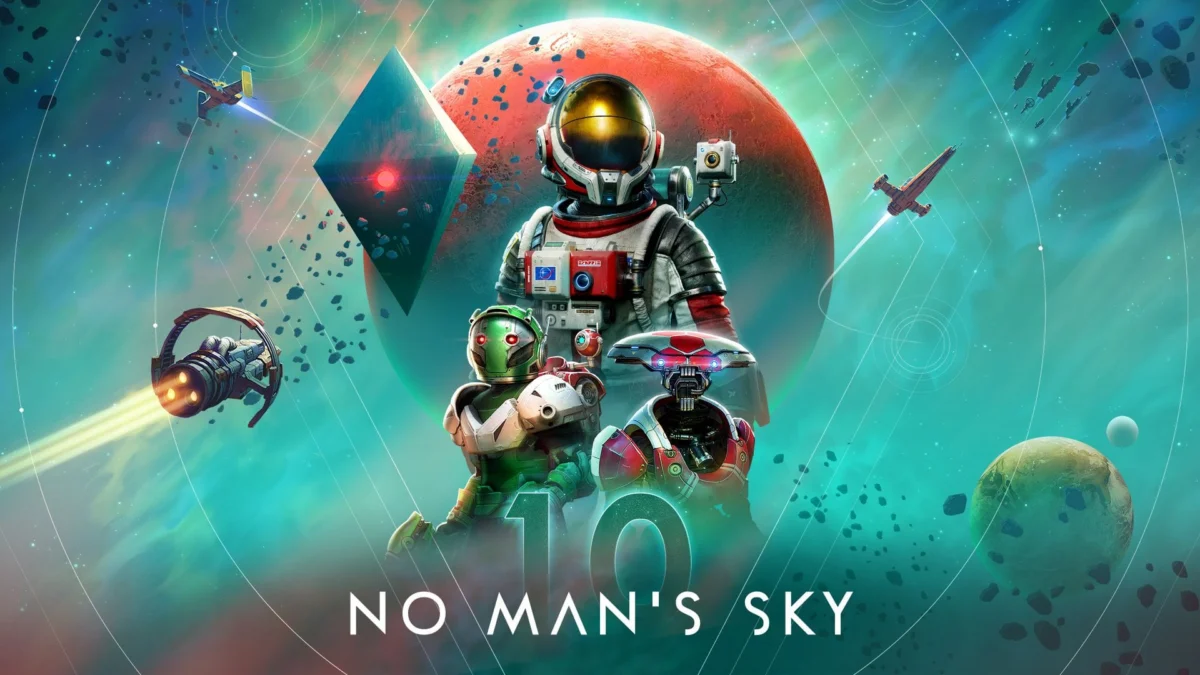
In the volatile landscape of the modern gaming industry, few stories are as evocative or as frequently cited as the redemption of No Man’s Sky. Once the poster child for over-ambitious marketing and launch-day disappointment, the title has spent the last decade transforming into a gold standard for post-launch support and developer transparency. This week, Hello Games officially marked the ten-year anniversary of its procedural universe, releasing a commemorative video that serves as both a retrospective of its staggering growth and a cryptic harbinger of its future.
The milestone celebration culminated in the teasing of the game’s next major content milestone: the "Cosmos" update. While details remain sparse, the announcement has reignited the fervor of a community that has seen the game grow from a lonely exploration sim into a massive, multi-faceted ecosystem. Central to this journey has been the developer’s unwavering—if sometimes technically challenging—commitment to virtual reality (VR), a feature that has redefined how players interact with the infinite reaches of the Euclid Galaxy.
Chronology: From a Silent Launch to an Infinite Universe
To understand the weight of the ten-year anniversary, one must look back at the turbulent timeline that defined No Man’s Sky.
The Rocky Foundation (2016–2017)
Released in August 2016, No Man’s Sky initially buckled under the weight of impossible expectations. The launch version lacked many of the features promised in early trailers, leading to a period of intense public scrutiny and developer silence. However, Hello Games chose to "speak through code." The Foundation update (1.1) introduced base building, followed by the Pathfinder and Atlas Rises updates, which added land vehicles and a cohesive 30-hour narrative arc.
The Multiplayer and VR Revolution (2018–2019)
The year 2018 saw the release of NEXT, which finally brought true multiplayer to the game, causing a massive resurgence in player numbers. However, for VR enthusiasts, the watershed moment arrived in August 2019 with the Beyond update. This was not a mere "VR mode" but a complete overhaul that allowed the entire game to be played in virtual reality, featuring fully tracked motion controls and a redesigned cockpit interface.
The Expansion Era (2020–2024)
While many developers would have moved on to a sequel, Hello Games continued a relentless pace of free updates. Origins doubled the variety of planetary flora and fauna; Prisms overhauled the lighting engine; and Interceptor introduced corrupted worlds and sophisticated starship combat. Throughout this era, the game transitioned across console generations, moving from the PS4/Xbox One era to the high-performance realms of the PS5 and Xbox Series X/S.
The Decennial Milestone (2026)
As the game enters its tenth year, it stands as a testament to persistence. The anniversary video released by Hello Games chronicles these milestones, transitioning from the lonely, orange-hued planets of 2016 to the vibrant, populated, and technologically dense universe of today. The video concludes with the word "Cosmos," signaling that the journey is far from over.
Supporting Data: The Technical Evolution of the VR Frontier
While No Man’s Sky is celebrated across all platforms, its relationship with Virtual Reality provides a fascinating case study in technical perseverance. Unlike many "VR-ported" titles, Hello Games has treated VR as a first-class citizen, despite the game’s notoriously high resource demands.
Comparison with Industry Peers
The integration of VR into high-profile, "flat" games has historically been a mixed bag. The article highlights a stark contrast between Hello Games’ approach and that of other industry giants:
- Bethesda’s Skyrim and Fallout VR: While legendary in scope, these titles were often criticized for "unplayable" initial integrations, lacking basic features like physical ladders or manual reloading, often requiring the modding community to fix fundamental issues.
- Elite Dangerous: Once a VR darling, the 2021 Odyssey update disappointed fans by rendering on-foot gameplay in a 2D "theatre mode" within the headset, rather than providing a true VR experience.
- Hitman: World of Assassination: Initially launched with a divisive PC VR implementation, it took until 2025 for the developers at IO Interactive to bring the PC version up to the standards of the PlayStation VR2 version.
The Performance Hurdle
No Man’s Sky is a procedurally generated game, meaning the CPU and GPU must work in tandem to calculate terrain, flora, and fauna on the fly. This makes VR—which requires high frame rates to prevent motion sickness—a significant challenge.
- PC VR: On mid-range hardware, players often reported having to drop rendering resolutions to 50% or lower and utilizing "Standard" (low) settings to maintain a stable 90 FPS.
- PS VR2 and the PS5 Pro: The PlayStation ecosystem has seen the most dramatic improvements. Initial PS VR2 reviews noted a "blurry" image due to the game’s heavy reliance on temporal anti-aliasing. Hello Games responded by implementing Eye-Tracked Dynamic Foveated Rendering, which uses the headset’s internal cameras to focus maximum graphical power only where the player is looking.
- The AI Leap: Most recently, No Man’s Sky became one of the first titles to utilize PSSR (PlayStation Spectral Super Resolution) on the PS5 Pro, using AI upscaling to deliver a crisp 4K-like experience in VR without the traditional performance tax.
Official Responses: Sean Murray and the "Cosmos" Vision
Following the release of the anniversary video, Hello Games founder Sean Murray released a written statement expressing gratitude to the community. Murray’s tone has shifted over the decade from the wide-eyed ambition of 2014 to a more measured, appreciative "community-first" philosophy.
"It’s been an incredible ten years," Murray stated. "We are constantly surprised by the ways players inhabit this universe. With ‘Cosmos,’ we wanted to look back at where we’ve been, but more importantly, look forward to the mysteries we haven’t solved yet."
While Murray did not provide a specific feature list for "Cosmos," industry analysts suggest the title implies a focus on deep-space phenomena. Speculation within the community ranges from the introduction of moving planetary orbits (a feature cut from the original 2016 launch) to the addition of more complex astronomical events like collapsing stars or gas giant exploration. Murray confirmed that "more info on that update" would be coming in the very near future, maintaining the developer’s tradition of short marketing cycles followed by immediate releases.
Implications: The Legacy of a Living Game
The ten-year anniversary of No Man’s Sky carries significant implications for the broader gaming industry and the future of Hello Games.
The "No Man’s Sky" Effect
The game has created a blueprint for "service-based" games that aren’t predatory. By providing a decade of massive content updates entirely for free, Hello Games has built a level of brand loyalty that is almost unparalleled in the industry. This "redemption arc" has influenced how other studios handle botched launches, such as CD Projekt Red’s recovery with Cyberpunk 2077.
The Future: Light No Fire
The continued support for No Man’s Sky serves as a massive marketing engine for the studio’s next project, Light No Fire. This upcoming title promises a "truly open world" on a single, earth-sized fantasy planet. The technical lessons learned from optimizing No Man’s Sky—particularly in the realm of VR and procedural generation—are expected to be the backbone of this new venture. Fans are hopeful that the VR support perfected over the last seven years in No Man’s Sky will be a day-one feature for Light No Fire.
The VR Standard
Finally, the anniversary reaffirms that VR is not a "gimmick" for Hello Games, but a core pillar of their design philosophy. In an era where many AAA studios are retreating from high-end VR due to its niche market share, Hello Games remains one of the few beacons of hope for the medium. Their willingness to adopt cutting-edge tech like PSSR and foveated rendering shows a commitment to pushing the hardware to its limits.
As the community awaits the arrival of "Cosmos," the sentiment remains clear: No Man’s Sky is no longer a game defined by its past, but by its infinite potential. Ten years in, the universe isn’t getting smaller; it’s just getting started.