Decoding the Cosmos: Hollandspiele Unveils "City of Six Moons," a Board Game Written in an Alien Tongue
FOR IMMEDIATE RELEASE
In a move that promises to redefine the boundaries of interactive entertainment and challenge conventional notions of game design, Hollandspiele, the acclaimed independent publisher known for its distinctive and often thought-provoking titles, is poised to release "City of Six Moons." This upcoming single-player board game distinguishes itself not merely by its thematic depth but by an unprecedented design choice: its entire rulebook is penned in an alien language, a cryptic collection of icons, glyphs, and symbols that players must decipher before they can even begin to play. Furthermore, its designer, Amabel Holland, has declared she will offer no clarification on the rules, leaving players to grapple with the mystery entirely on their own.
This audacious project is more than just a game; it is an elaborate meta-puzzle, an exercise in xenolinguistics, and a philosophical statement on the nature of understanding and cultural interpretation. "City of Six Moons" invites players not only to guide the fortunes of an alien civilization but to embody the very act of encountering and interpreting an extraterrestrial culture, starting with its foundational directives.
The Main Facts: A Game Beyond Language Barriers
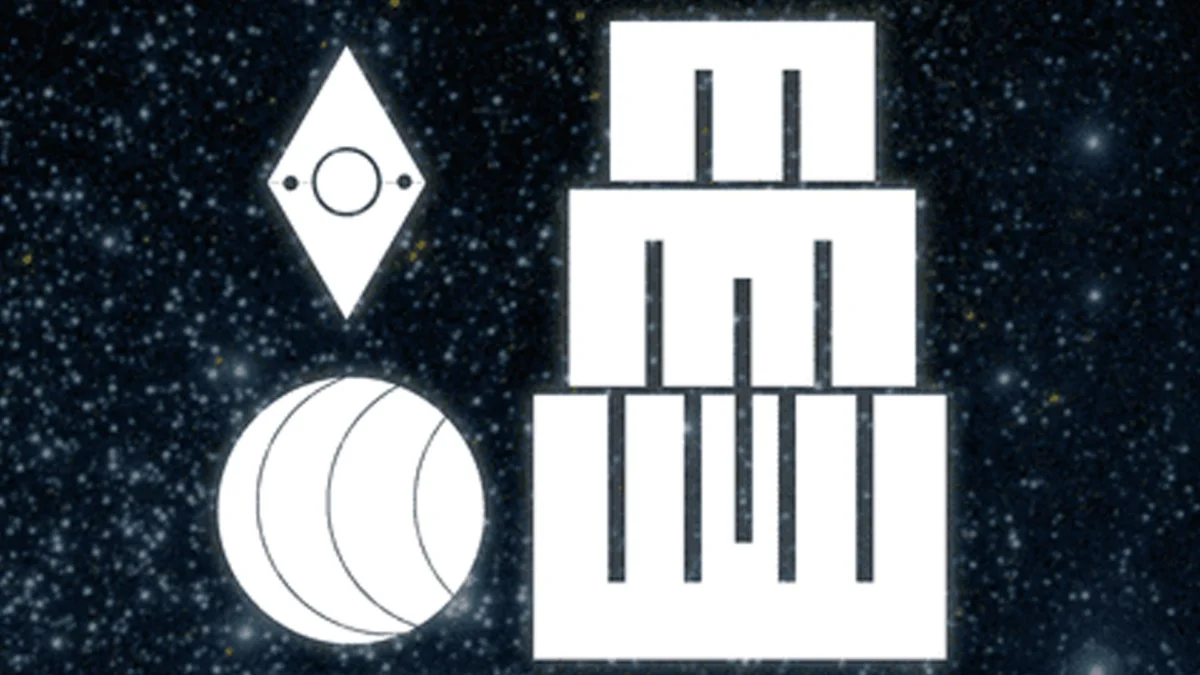
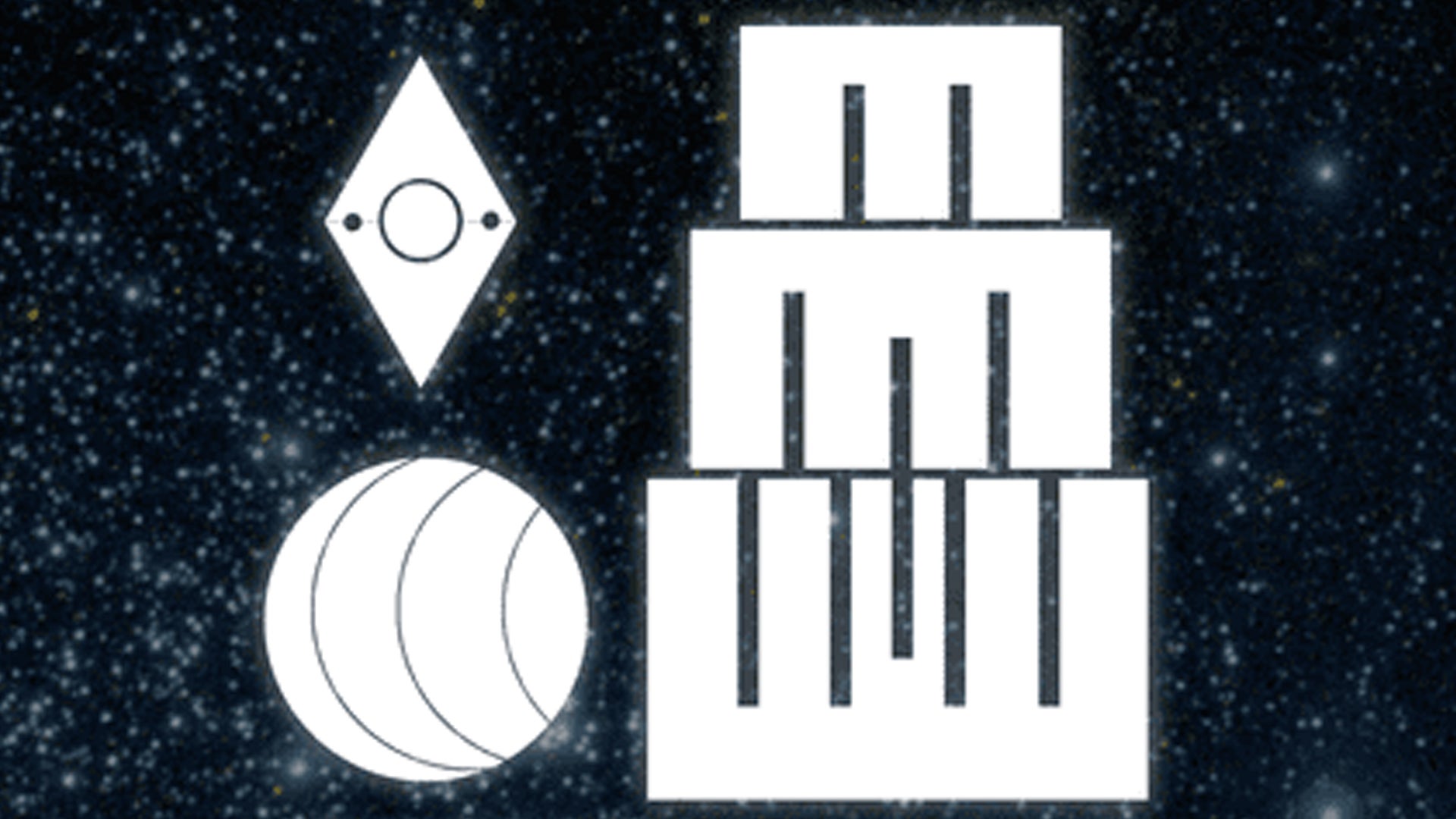
At its core, "City of Six Moons" is an upcoming solo board game from Hollandspiele, conceptualized by designer Amabel Holland. Unlike traditional board games where rulebooks serve as straightforward instructional guides, this title’s rulebook is presented entirely in a fictional alien language. Players are tasked with the formidable challenge of translating this language—composed of unique icons, glyphs, and symbols—to comprehend the game’s mechanics and objectives.
The central conceit is that the game is designed as if it were created by an alien civilization, mirroring the experience of humans attempting to understand an entirely foreign culture. This immersive design extends to the crucial detail that players will never receive official confirmation on the correctness of their translations or interpretations of the rules. Amabel Holland has explicitly stated her refusal to answer any rules questions, reinforcing the game’s central premise of self-discovery and interpretation.
The game’s theme revolves around guiding an alien civilization, suggesting elements of strategy, resource management, or narrative progression, though the specifics remain shrouded in the untranslated rules. The artwork for the game, depicting a celestial city under multiple moons, offers the only visual clue to its thematic content and potential clues for deciphering its hidden language.
Chronology of an Unconventional Announcement
The first whispers of "City of Six Moons" began circulating with its mention on Dicebreaker, highlighting the game’s unique approach to rulebooks. This initial reveal sparked immediate intrigue within the board gaming community, drawing attention to its unprecedented challenge.
Further details and confirmation of the designer’s uncompromising stance on rules clarification emerged via a blog post on BoardGameGeek, which accurately noted Holland’s refusal to answer questions. This added another layer to the game’s mystique, signaling to prospective players that "City of Six Moons" would demand an unusual level of engagement and self-reliance.
Amabel Holland herself later elaborated on the game’s philosophical underpinnings and replayability through a post on Bluesky. She confirmed that, once deciphered, "City of Six Moons" would indeed be a "functional, replayable game." However, she also articulated a profound aspect of the player experience: the "loss" that players might feel once the code is cracked. This "loss," she explained, is an intentional part of the journey, designed to "linger," suggesting a meta-narrative about the transient nature of discovery and the shift from pure puzzle to established gameplay.
The game is slated for release next month, adding "City of Six Moons" to Hollandspiele’s "Coming Soon" roster. This timeline positions the title as an imminent and highly anticipated, albeit profoundly challenging, addition to the solo gaming landscape. The relatively short window between announcement and release builds anticipation, setting the stage for a concentrated burst of communal effort as players worldwide grapple with its linguistic puzzle.
Supporting Data: The Philosophy of Hollandspiele and the Art of Cryptic Design
To fully appreciate the radical nature of "City of Six Moons," one must understand the ethos of its publisher, Hollandspiele, and the designer, Amabel Holland. Hollandspiele, co-owned by Amabel and Mary Holland, has carved a niche in the board game industry by consistently publishing games that prioritize depth, unique mechanics, and often, a higher degree of complexity than mainstream titles. They are renowned for their focus on historical simulations, wargames, and strategic puzzles, often appealing to what they term "the experienced gamer." This background makes Hollandspiele a natural home for a game that actively defies convention and demands intellectual rigor from its players. Their catalogue frequently features titles that challenge players to think deeply, engage with complex systems, and often grapple with imperfect information or challenging decision spaces. "City of Six Moons" represents an extreme manifestation of this design philosophy, pushing the boundaries of what a game can ask of its audience.
Amabel Holland herself is a celebrated and prolific designer, known for her intricate designs and willingness to experiment with game structures and narratives. Her work often delves into historical accuracy, geopolitical simulations, and abstract strategy, all while maintaining a distinctive authorial voice. Her previous titles often explore themes of systemic complexity, emergent narratives, and the consequences of player choices within constrained environments. "City of Six Moons" can be seen as an extension of this artistic trajectory, applying her intellectual curiosity to the very act of game instruction.
The concept of a game requiring players to decipher its rules is not entirely without precedent, though "City of Six Moons" takes it to an unprecedented level. Elements of cryptic instruction or meta-puzzles have appeared in various forms of interactive media:
- Alternate Reality Games (ARGs): These games often integrate real-world puzzles, websites, and hidden clues that players must collectively solve to progress a narrative. They frequently involve deciphering codes, languages, or abstract symbols, blurring the lines between game and reality.
- Legacy Games: While not requiring translation, legacy games like Pandemic Legacy or Gloomhaven often introduce new rules or modify existing ones through sealed envelopes or "unlockable" content, forcing players to adapt and learn iteratively. The rulebook itself evolves, but it remains in a human-readable language.
- Escape Rooms and Puzzle Games: Many digital and physical escape rooms rely on players interpreting symbols, patterns, and seemingly illogical clues to unlock secrets and progress. However, these are typically self-contained puzzles, not the foundational rulebook for an entire strategic game.
- Art Games and Experimental Titles: A small subset of indie or avant-garde games intentionally subvert traditional gameplay or instruction to provoke thought or create a specific emotional experience. Some might feature deliberately obscure rules or rely heavily on player interpretation, but few have made the entire rulebook an alien language.
"City of Six Moons" transcends these precedents by making the act of rule comprehension the primary initial barrier and a core gameplay element. It transforms what is typically a functional, transparent document into the game’s most formidable puzzle. This design choice elevates the player’s role from mere participant to active interpreter and co-creator of the game’s foundational logic. It taps into primal human urges for discovery, problem-solving, and the satisfaction of cracking a code.
The game’s title, "City of Six Moons," combined with the theme of guiding an alien civilization, hints at a grand narrative and complex strategic depth once the rules are understood. The presence of six moons could imply cyclical events, unique factions, or distinct phases within the game, all of which will only become apparent through successful decipherment. The cover artwork, a single, enigmatic image, likely serves not just as aesthetic appeal but as a critical first key to unlocking the iconographic language. This suggests that visual literacy and pattern recognition will be as crucial as linguistic deduction.
Official Responses: Amabel Holland’s Vision for Experiential Play
Amabel Holland’s statements regarding "City of Six Moons" provide crucial insight into the artistic intent behind this daring project. Her refusal to clarify rules is not an act of dismissiveness but a deliberate design choice central to the game’s identity. It embodies the very essence of encountering a truly alien culture: one must derive meaning from context, patterns, and inference, without the luxury of direct communication or an authoritative guide.
On Bluesky, Holland affirmed that despite its unconventional rulebook, "City of Six Moons" is designed to be a "functional, replayable game" for those who successfully navigate its linguistic labyrinth. This reassurance is vital, as it confirms that the initial deciphering puzzle leads to a tangible, engaging gameplay experience, rather than being an end in itself. This distinguishes it from pure puzzle books, positioning it firmly within the realm of strategic board gaming.
However, it is Holland’s further commentary on the player experience that truly illuminates her vision. She articulated that a "loss" might be felt by players once the code is cracked and the game’s secrets are revealed. "That loss is a thing I want you to feel; I want it to linger," she stated. This profound insight speaks to the ephemeral nature of discovery. The thrill of the unknown, the arduous journey of interpretation, and the triumph of understanding are experiences that, by their very nature, transform once achieved. Once the alien language becomes familiar, it loses its mystery, its "alienness." This intentional design choice suggests that Holland is not just creating a game, but orchestrating an emotional and intellectual journey, acknowledging the bittersweet satisfaction that often accompanies mastery. The initial struggle, the prolonged engagement with the unknown, becomes a cherished memory, a unique phase of gameplay that cannot be replicated once the veil is lifted. This ‘lingering loss’ is a sophisticated layer of meta-narrative, embedding the player’s emotional arc directly into the game’s overarching design.
This philosophical stance aligns with other artistic endeavors that value the process of interpretation as much as the final understanding. It challenges the conventional consumer expectation of immediate gratification and transparent instruction, instead offering a deeper, more personal engagement with the game’s constructed reality. Holland’s statements frame "City of Six Moons" not merely as a product to be consumed, but as an experience to be lived, understood, and reflected upon.
Implications: Reshaping Player Expectations and Industry Norms
The release of "City of Six Moons" carries significant implications for players, the board game industry, and the very philosophy of game design.
For Players: A Journey of Intellectual Fortitude and Collective Discovery
For individual players, "City of Six Moons" promises an unparalleled journey of intellectual fortitude. It demands patience, analytical thinking, and an openness to ambiguity. The initial hours, or even days, will likely be spent not on strategic moves but on linguistic deduction, pattern recognition, and hypothesis testing. This meta-game of decipherment will be a core part of the experience, potentially even more challenging and rewarding than the game itself.
Despite being a solo game, the communal aspect is almost guaranteed. Players will undoubtedly flock to online forums, Discord channels, and social media platforms to share their findings, theories, and frustrations. This will create a unique, emergent collaborative puzzle-solving community, akin to an ARG. The absence of an official arbiter means that different groups, or even individual players, might arrive at slightly different interpretations of the rules. This raises fascinating questions about canonical rules versus emergent consensus, and whether a "perfect" understanding is even necessary or achievable. The shared struggle and subsequent discussions will extend the game’s lifespan and create a rich tapestry of player experiences.
The "loss" mentioned by Amabel Holland highlights a sophisticated psychological aspect. Players will experience a profound shift from the thrill of pure discovery to the more conventional enjoyment of strategic play. This transition itself becomes part of the game’s narrative, forcing players to confront the changing nature of their relationship with the game.
For the Board Game Industry: Pushing Boundaries and Challenging Accessibility
"City of Six Moons" represents a bold departure from industry norms, which typically prioritize clear, accessible rulebooks to minimize barriers to entry. This game deliberately erects a barrier, transforming it into the game’s primary challenge. This could inspire other designers to experiment with rulebook presentation and meta-puzzles, fostering a new wave of innovative and challenging titles.
However, it also raises questions about accessibility. While rewarding for those who embrace the challenge, it inherently limits its audience to players willing and able to undertake such an intense intellectual exercise. This could spark debates within the industry about balancing innovation with broad appeal and the role of designers in guiding or confounding their players. Hollandspiele’s established reputation for catering to "experienced gamers" mitigates some of this risk, as their audience is more predisposed to complex experiences.
The success or failure of "City of Six Moons" could serve as a case study. If it garners critical acclaim and a dedicated player base, it might validate the potential for niche, experimental designs to thrive. If it proves too frustrating for a significant portion of its audience, it could underscore the importance of clarity in game instructions.
For Game Design Philosophy: Redefining the Rulebook and Designer-Player Relationship
Philosophically, "City of Six Moons" redefines the role of the rulebook. No longer a mere instruction manual, it becomes an integral game component, a puzzle unto itself, and a gateway to a deeper, more immersive experience. It challenges designers to think beyond functional utility and consider the rulebook as a canvas for artistic expression and player engagement.
It also fundamentally alters the designer-player relationship. By refusing to answer rules questions, Amabel Holland empowers players, shifting the burden of authority and interpretation from the creator to the participant. This decentralization of authority forces players into a more active, interpretive role, fostering a sense of ownership over their understanding of the game. It’s a bold statement on the nature of authorship and collaboration, suggesting that the "true" game emerges in the minds and interpretations of its players.
This approach could be seen as a form of "ludo-narrative convergence," where the act of learning the game (the "ludo" or gameplay) becomes intrinsically tied to the game’s narrative theme (encountering an alien civilization). The player’s journey of decipherment mirrors the in-game civilization’s journey of self-discovery or external interaction.
Conclusion: A Cryptic Invitation to a New Frontier
"City of Six Moons" by Amabel Holland and Hollandspiele is more than just an upcoming board game; it is a profound experiment in interactive design, a daring challenge to conventional play, and a philosophical inquiry into the nature of communication and understanding. By cloaking its rules in an alien tongue and offering no official translation, the game invites players on an unparalleled journey of intellectual discovery, cultural immersion, and personal interpretation.
Its imminent release next month will undoubtedly ignite fervent discussion and collective effort within the board gaming community. Whether players ultimately achieve a perfect understanding of its alien language or embrace a fluid, evolving interpretation, "City of Six Moons" is poised to leave an indelible mark. It stands as a testament to the boundless creativity within the board game medium, pushing the boundaries of what a game can be, what it can demand of its players, and the unique, lingering "loss" that accompanies the decipherment of truly alien secrets. For those ready to brave its cryptic depths, "City of Six Moons" offers not just a game, but an invitation to a new frontier of interactive experience.