Enlil in the E-Kur: A Sumerian Hymn Echoing Through Millennia
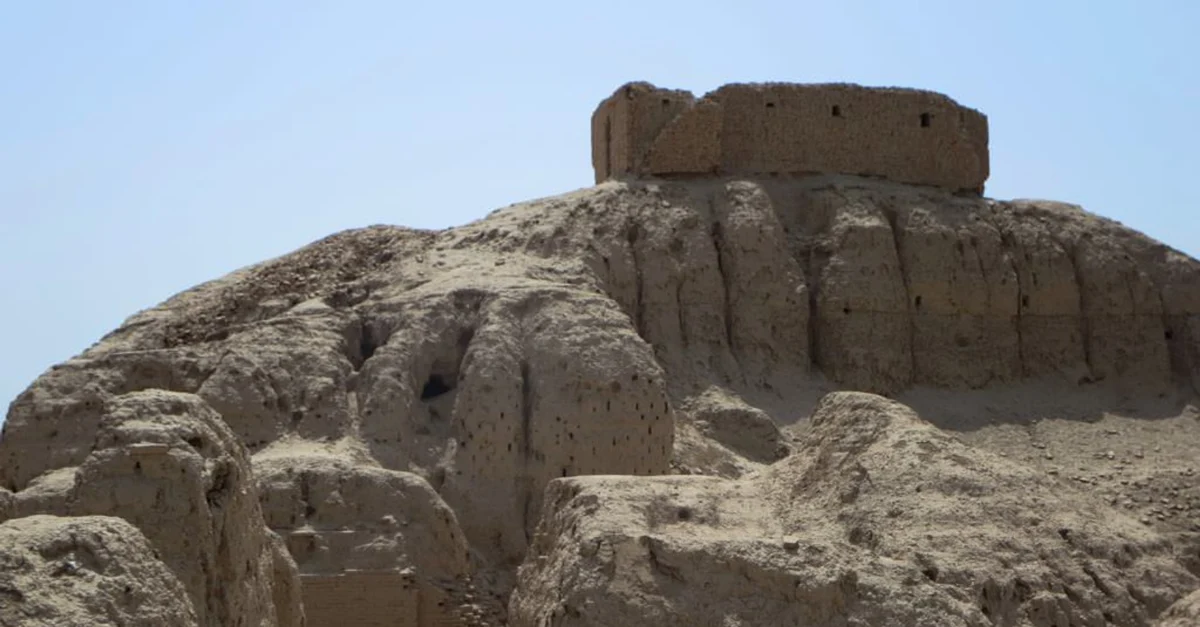
Nippur, Mesopotamia – Dating back to approximately 2000 BCE, the ancient Sumerian hymn Enlil in the E-Kur stands as a monumental work of Mesopotamian literature, offering profound insights into the religious beliefs and societal values of one of civilization’s earliest cultures. This revered composition meticulously praises Enlil, the preeminent Sumerian sky god, alongside his magnificent temple-ziggurat in Nippur, known as the E-Kur, and his divine consort, Ninlil. Depicting all three in resplendent terms, the hymn elevates Enlil to the status of a supreme creator god, a vision that resonates with startling parallels in later Abrahamic traditions, particularly within the books of the Bible.
The enduring significance of Enlil in the E-Kur transcends its historical context, not only serving as a primary source for understanding Sumerian theology but also as a testament to the sophisticated literary achievements of the era. Its detailed descriptions of divine power, cosmic order, and the earthly embodiment of sacred space continue to captivate scholars and enthusiasts alike, underscoring its pivotal role in the intellectual and spiritual landscape of the ancient Near East.
The Heart of Sumerian Devotion: Main Facts of the Hymn
Enlil in the E-Kur (also known by various titles such as Enlil A, Hymn to Enlil, and Hymn to the E-kur) is a powerful Sumerian religious poem celebrating the god Enlil, his wife Ninlil, and their sacred precinct, the E-Kur, located in the holy city of Nippur. Composed in cuneiform script, the hymn provides a vivid portrayal of Enlil as the architect of existence, the fount of all creation, and the ultimate arbiter of fate for both gods and humanity. His temple, the E-Kur, meaning "Mountain House," is depicted not merely as a physical structure but as a cosmic nexus—the "Dur-an-ki," or "bond between heaven and earth."
The work is lauded for its rich poetic language, intricate structure, and theological depth. It systematically praises Enlil’s immutable commands, his role in maintaining universal order, and the blessings he bestows upon the land and its people. The hymn also delineates the ethical framework expected within Nippur, emphasizing righteousness, justice, and respect, underscoring the interconnectedness of divine will and human conduct. Its influence on later religious texts, notably the biblical Psalms, is a subject of ongoing academic discussion, particularly concerning shared motifs such as divine shepherding and creation narratives.
A Sacred Timeline: Chronology and Historical Context
The period around 2000 BCE, when Enlil in the E-Kur is thought to have been composed, falls within the broader span of the Ur III period (circa 2112 to circa 2004 BCE). This era marked a resurgence of Sumerian culture and political centralization after the decline of the Akkadian Empire. Nippur, already an ancient and revered city, held a unique status throughout Mesopotamian history, consistently regarded as a holy city and the undisputed cultic seat of Enlil. Its spiritual importance transcended political shifts, with rulers across successive dynasties—from the Early Dynastic period (circa 2900-2350/2334 BCE) through the Akkadian (2350/2334-2154 BCE) and Ur III periods, and even later monarchs—prioritizing the construction, renovation, and restoration of Enlil’s temple complex.
The kings of the Ur III period, particularly Ur-Nammu (reigned circa 2112-2094 BCE) and his son Shulgi (reigned 2094 to circa 2046 BCE), paid special attention to Nippur. These monarchs actively sought to legitimize their authority by aligning themselves with Enlil and Ninlil, portraying their rule as divinely sanctioned. It is widely believed that Enlil in the E-Kur dates from Shulgi’s reign, a period known for a flourishing of Sumerian literature that often celebrated divine-royal connections, as evidenced by other works like Shulgi and Ninlil’s Barge. This suggests the hymn was not just a devotional piece but also served a political function, reinforcing the divine mandate of the ruling dynasty.
Enlil’s worship itself spanned an impressive period, from approximately 2900 BCE until around 141 BCE, demonstrating his enduring centrality in the Mesopotamian pantheon. The physical remnants of this devotion, the cuneiform tablets bearing Enlil in the E-Kur, were unearthed in fragments during archaeological excavations in the early 20th century. The painstaking process of translation and publication followed, with the initial scholarly works appearing between 1918 and 1928, gradually revealing the hymn’s profound beauty and significance to the modern world.
Unveiling Divine Splendor: Supporting Data and Textual Analysis
Enlil in the E-Kur offers a panoramic view of Sumerian cosmology, theology, and social ethics, primarily through its glorification of Enlil and his sacred domain.

The Omnipotent Deity: Enlil’s Transformation and Attributes
Enlil’s journey within the Mesopotamian pantheon is remarkable. Initially, he emerged as the Sumerian god of the air, the son of An (Anu), the Lord of the Heavens. However, over time, Enlil ascended to replace his father as the king of the gods, becoming the most powerful deity in the pantheon. He formed a crucial divine triad with Anu and Enki, the god of wisdom, though in Enlil in the E-Kur and many other myths, he is unequivocally depicted as supreme. He was the revered keeper of the Tablets of Destiny, which held the fates of both gods and humans, and was universally acknowledged as the creator and preserver of universal order.
The hymn consistently addresses this vision of Enlil as all-powerful, emphasizing his greatness through various epithets and descriptions. He is called "Nunamnir" and "Great Mountain," symbolizing his lofty, unassailable nature. The text opens by asserting: "Enlil’s commands are by far the loftiest, his words are holy, his utterances are immutable! The fate he decides is everlasting…" This immediate declaration establishes his absolute authority. His presence inspires awe and even fear: "…his glance makes the mountains anxious, his … reaches (?) into the interior of the mountains. All the gods of the earth bow down to Father Enlil…"
Later in the hymn, Enlil is described with powerful, almost cosmic imagery: "He alone is the prince of heaven, the dragon of the earth. The lofty god of the Anuna himself determines the fates. No god can look upon him." The poet further casts him as a benevolent yet formidable figure, a "faithful shepherd of the teeming multitudes, herdsman, leader of all living creatures." This "shepherd" motif, in particular, has garnered significant attention for its striking resemblance to the imagery used in biblical texts like Psalm 23.
The E-Kur: A Cosmic Nexus and Earthly Paradise
The E-Kur, Enlil’s temple complex in Nippur, is not merely a dwelling place but a sacred microcosm, described with unparalleled grandeur. It is the "Dur-an-ki," the "bond between heaven and earth," a site where the divine and mortal realms converge. The hymn paints a picture of a temple rising "from the soil" on "pure land as high as a towering mountain," embodying both natural majesty and human artifice. Its opulence is emphasized through precious materials: "Its brickwork is red gold, its foundation is lapis lazuli."
The E-Kur’s significance extends beyond its physical splendor. It is depicted as a bastion of order and justice, where "no evil word to be spoken in judgement." A long list of transgressions—"deception, inimical speech, hostility, impropriety, ill-treatment, wickedness, wrongdoing, looking askance (?), violence, slandering, arrogance, licentious speech (?), egotism and boasting"—are declared "abominations not tolerated within the city." This passage highlights the moral code intrinsically linked to Enlil’s divine presence and the sanctity of Nippur. The city itself is portrayed as a protective, inescapable force: "The borders of Nibru form a great net, within which the hurin eagle spreads wide its talons. The evil or wicked man does not escape its grasp."
Inside the E-Kur, abundance reigns. "At the festivals, there is plenty of fat and cream; they are full of abundance. Its divine plans bring joy and rejoicing, its verdicts are great. Daily there is a great festival, and at the end of the day there is an abundant harvest." However, this abundance is balanced by strict prohibitions against greed: "The temple of Enlil is a mountain of abundance; to reach out, to look with greedy eyes, to seize are abominations in it."
Ninlil: The Esteemed Consort
The hymn also pays homage to Ninlil, Enlil’s divine consort, presenting her as a figure of grace and wisdom. She is described as "the holy consort, whose words are of the heart, her of noble countenance… her of beautiful shape and limbs, the trustworthy lady of your choice." Significantly, she shares the "holy throne, the pure throne" with Enlil, taking "counsel and discusses matters with you," and together, they "decide the fates… at the place facing the sunrise." This depiction underscores Ninlil’s vital role not merely as a companion but as an active participant in divine governance and the determination of destinies, further enriching the hymn’s theological landscape.
The World Without Enlil: A Testament to Creation
Perhaps one of the most powerful passages in Enlil in the E-Kur is a hypothetical scenario contemplating a world devoid of Enlil’s presence (lines 109-130). This section serves as a profound testament to his role as a creator and sustainer:
"Without the Great Mountain Enlil, no city would be built, no settlement would be founded; no cow-pen would be built, no sheepfold would be established; no king would be elevated, no lord would be given birth… The sea would not produce all its heavy treasure, no freshwater fish would lay eggs in the reedbeds, no bird of the sky would build nests in the spacious land; in the sky the thick clouds would not open their mouths; on the fields, dappled grain would not fill the arable lands, vegetation would not grow lushly on the plain; in the gardens, the spreading trees of the mountain would not yield fruits." This detailed enumeration of what would cease to exist without Enlil unequivocally positions him as the ultimate source of all life, order, and prosperity, a creator god whose absence would plunge the cosmos into utter chaos.
Echoes and Interpretations: Official Responses and Scholarly Views
The popularity of Enlil in the E-Kur in ancient Mesopotamia is evident from the numerous copies discovered at Nippur and other sites. Its inclusion in the edubba ("House of Tablets"), the Mesopotamian scribal school curriculum, specifically as part of the advanced "Decad" course of study, attests to its canonical status and its role in educating future scribes in theological, literary, and ethical principles. This indicates that the hymn was not just a cultic text but a cornerstone of advanced Sumerian education, solidifying its place in the intellectual heritage of the time.
Today, Enlil in the E-Kur is highly regarded by scholars as one of the most important works of ancient Mesopotamian literature. Its intricate structure, which alternates between third-person descriptions and direct addresses to the deity, creates a dynamic and immersive devotional experience. Scholar Jeremy Black highlights the dominance of images like "righteousness, festivity, visual brilliance, awesomeness, fatefulness, and justice" throughout the poem, showcasing the multifaceted nature of Enlil’s divine character.
One of the most compelling aspects of the hymn, particularly for modern scholarship, is its potential influence on later biblical texts. The depiction of Enlil as a "faithful shepherd" (line 93) resonates strongly with Psalm 23’s famous opening, "The Lord is my shepherd…" Beyond this specific motif, scholars suggest broader thematic and linguistic parallels with other biblical books, including parts of Isaiah, the Gospels, and the Book of Revelation, especially concerning creation narratives, divine judgment, and cosmic order. This scholarly "response" underscores the hymn’s enduring impact and its contribution to understanding the intellectual lineage of religious thought in the Near East.
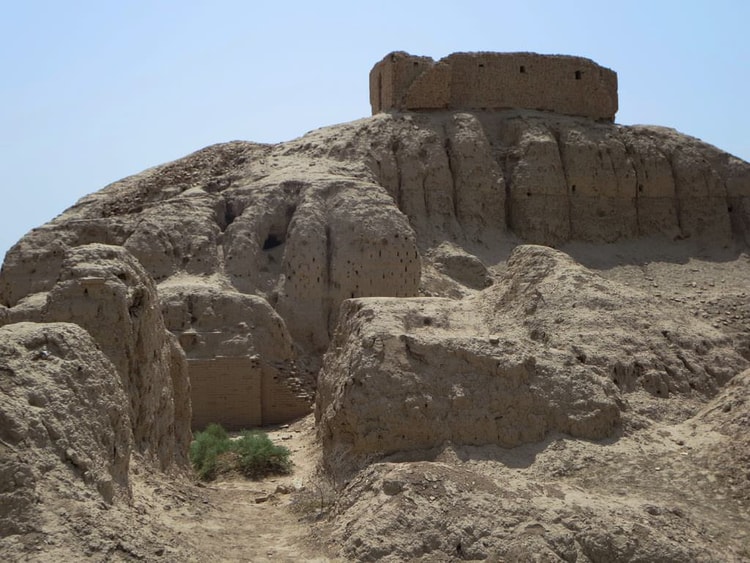
Black also emphasizes the cosmological significance of the E-Kur: "In Sumerian cosmology, Enlil’s sanctuary Dur-an-Ki was conceptualized as the bond between heaven and earth – which is what the name itself signifies. Its great stepped tower, still prominent in the desert landscape today, must have been a dominant, awe-inspiring landmark in ancient times too." This interpretation highlights how the physical grandeur of the ziggurat and the poetic exaltation in the hymn worked in concert to instill a sense of divine presence and cosmic connection in the populace.
A Legacy Enduring: Implications and Lasting Significance
The implications of Enlil in the E-Kur are vast, reaching far beyond its ancient origins. In its immediate context, the hymn served as a powerful tool for reinforcing religious belief and social cohesion. Sung at festivals, it would have been a central element of communal worship, reminding the populace that, despite earthly challenges, a benevolent yet omnipotent god was in control, guiding their destinies and preserving universal order. The interplay between the physical edifice of the E-Kur ziggurat and the lyrical praise of the hymn created a symbiotic relationship, where the towering structure visually affirmed the deity’s majesty, and the words articulated his incomprehensible power and presence.
The hymn’s detailed ethical injunctions and its emphasis on justice and righteousness also reveal the societal values that Sumerian civilization sought to uphold, presenting a vision of an ordered society mirroring the cosmic order maintained by Enlil. This integration of religious doctrine with social norms underscores the holistic nature of ancient Mesopotamian worldview.
Perhaps the most profound implication lies in its enduring literary and theological legacy. Enlil in the E-Kur offers a crucial window into the origins of complex religious thought, demonstrating how early civilizations grappled with questions of creation, divine authority, and human purpose. Its striking parallels with later Abrahamic traditions suggest a continuity of certain religious motifs and literary expressions across millennia, highlighting the deep roots of Western religious consciousness in the ancient Near East. The "faithful shepherd" motif, the concept of a creator god, and the emphasis on divine immutable commands are just a few examples of ideas that found new life and interpretation in subsequent religious frameworks.
In conclusion, Enlil in the E-Kur is more than just an ancient poem; it is a vibrant testament to Sumerian intellectual and spiritual sophistication. It continues to inform our understanding of early religion, literature, and the complex interplay between human aspiration and divine power, solidifying its status as an invaluable heritage of human civilization. Its praise, culminating in lines like, "Great Mountain, Father Enlil, your praise is sublime," remains a powerful echo of devotion from the dawn of recorded history.