Uncanny Magazine Secures Prestigious World Fantasy Award Nominations for Short Fiction
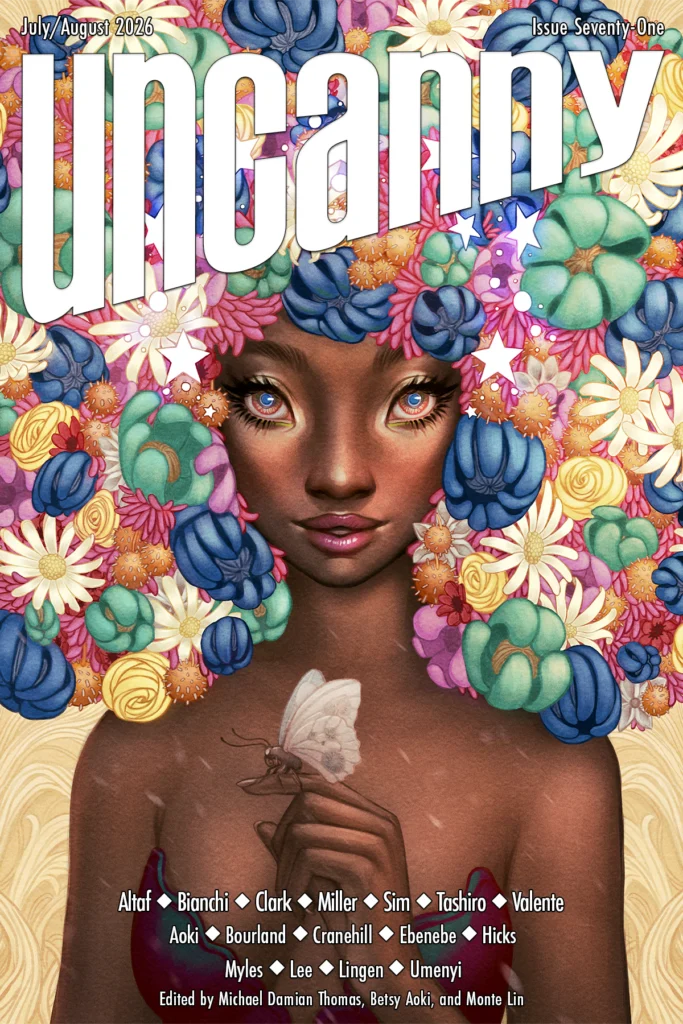
OAKLAND, CA – October 26, 2024 – Uncanny Magazine, a leading voice in contemporary science fiction and fantasy, has once again garnered significant critical acclaim, announcing two of its published works as finalists for the coveted World Fantasy Award in the Best Short Fiction category. The nominations underscore the magazine’s commitment to showcasing exceptional talent and innovative storytelling within the speculative fiction genre.
The nominated stories are "10 Visions of the Future; or, Self-Care for the End of Days" by Samantha Mills and "Unfinished Architectures of the Human-Fae War" by Caroline M. Yoachim. Both works exemplify the breadth and depth of modern speculative fiction, tackling complex themes with originality and literary finesse. The winners will be unveiled during the 2026 World Fantasy Convention, scheduled to take place in Oakland, California, from October 22 to 25. This recognition not only celebrates the individual achievements of the authors but also solidifies Uncanny Magazine‘s reputation as a vital platform for genre literature.
Main Facts: A Double Nomination for Literary Excellence
The announcement of the 2026 World Fantasy Award finalists has brought considerable attention to Uncanny Magazine, an online and print publication known for its curated selection of science fiction and fantasy stories, poetry, and essays. Receiving two nominations in the highly competitive Best Short Fiction category is a testament to the editorial vision and quality standards maintained by the magazine.
Samantha Mills’s "10 Visions of the Future; or, Self-Care for the End of Days" is a work that explores the intersections of speculative futures and personal well-being, a theme that resonates deeply with contemporary anxieties and aspirations. Mills, an author celebrated for her incisive social commentary wrapped in imaginative narratives, delivers a piece that is both thought-provoking and emotionally resonant. Her narrative style often blends the mundane with the extraordinary, creating worlds that feel both alien and intimately familiar.
Caroline M. Yoachim’s "Unfinished Architectures of the Human-Fae War," on the other hand, delves into the rich traditions of fantasy, reimagining the age-old conflict between humanity and fae creatures through a lens of intricate world-building and poignant character development. Yoachim is renowned for her ability to craft emotionally complex stories that often subvert genre expectations, and this nominated work is no exception. Her narratives frequently explore themes of identity, belonging, and the consequences of conflict, making her a compelling voice in modern fantasy.
The World Fantasy Award, established in 1975, is one of the most prestigious accolades in the speculative fiction field, recognizing excellence in fantasy literature. Administered by the World Fantasy Convention, the awards are judged by a panel of distinguished authors, editors, and critics, making a nomination a significant mark of literary achievement. The Best Short Fiction category specifically highlights standalone stories that demonstrate exceptional craft and imaginative power, often serving as a springboard for authors to gain wider recognition. For Uncanny Magazine to have two entries on this ballot speaks volumes about its consistent contribution to the genre’s literary landscape.
Chronology: A Legacy of Innovation and Recognition
The journey to these nominations is rooted in Uncanny Magazine‘s consistent pursuit of excellence since its inception. Founded in 2014 by Lynne M. Thomas and Michael Damian Thomas, the magazine quickly carved out a niche for itself with its unique blend of "Year’s Best" quality fiction, poetry, non-fiction, and interviews. Its mission was to create a space for "genre-bending" stories that challenged conventional boundaries and celebrated diverse voices.
The Rise of Uncanny Magazine
From its inaugural issue, Uncanny Magazine has been characterized by its commitment to publishing thoughtful, inclusive, and imaginative works. Its editorial team, comprising award-winning professionals, has consistently sought out stories that not only entertain but also provoke thought and emotional engagement. This dedication quickly earned Uncanny a reputation for being a trendsetter in the digital and print speculative fiction market. Within a few years, it began receiving accolades from various corners of the industry, including Hugo, Nebula, and Locus Award nominations and wins, cementing its status as a powerhouse in short-form speculative fiction. The magazine’s commitment to paying professional rates to its contributors further solidified its standing as a respected and desirable venue for authors.
The Prestige of the World Fantasy Awards
The World Fantasy Awards themselves boast a rich history, having been presented annually since 1975. Conceived to celebrate the best in fantasy literature, they have evolved to recognize a wide array of works, from novels to anthologies, short stories, and lifetime achievements. The awards are distinct for their unique statuette, designed by Gahan Wilson, which until 2015 was a bust of H.P. Lovecraft, and since then, a sculpture of a tree. This change reflects the awards’ ongoing commitment to inclusivity and re-evaluation.
Over the decades, the World Fantasy Awards have become a benchmark for quality in fantasy literature, with past winners forming a veritable who’s who of the genre’s most influential figures. A nomination, let alone a win, often translates into increased visibility for authors and their works, attracting new readers and critical attention.
A Pattern of Excellence
This is not the first time Uncanny Magazine has seen its contributors recognized by the World Fantasy Awards. The magazine has a track record of fostering award-winning talent and publishing stories that resonate with judges and readers alike. Previous nominations and wins for stories, essays, and even the magazine itself in other major genre awards have built a strong foundation, demonstrating a consistent editorial vision that champions compelling narratives and innovative literary approaches. This consistent presence on prestigious award ballots underscores Uncanny Magazine‘s enduring influence and its role in shaping the landscape of modern speculative fiction. The 2026 nominations are a continuation of this impressive legacy, reaffirming the magazine’s position at the forefront of the genre.
Supporting Data: Deep Dives into Nominated Works and the Convention
To understand the significance of these nominations fully, it is crucial to delve deeper into the nature of the nominated works, the specific category, and the context of the World Fantasy Convention.
Thematic Resonance: Samantha Mills’s "10 Visions of the Future; or, Self-Care for the End of Days"
Samantha Mills’s nominated story is a prime example of how speculative fiction can serve as a powerful lens through which to examine contemporary societal issues. The title itself, "10 Visions of the Future; or, Self-Care for the End of Days," suggests a narrative structure that is both fragmented and cohesive, exploring multiple potential futures while grounding them in the very human need for self-preservation and well-being. Mills is known for her ability to blend literary prose with speculative concepts, often presenting scenarios that are both wondrous and unsettling. Her work frequently explores themes of environmental decay, technological impact on humanity, and the resilience of the human spirit in the face of overwhelming challenges. This particular story likely offers a kaleidoscopic view of various dystopias and utopias, each serving as a metaphor for our current trajectory, while simultaneously offering pathways for emotional and psychological survival. The story’s appeal lies in its intellectual rigor combined with its emotional accessibility, making it a compelling read for both genre enthusiasts and literary critics.
World-Building and Conflict: Caroline M. Yoachim’s "Unfinished Architectures of the Human-Fae War"
Caroline M. Yoachim’s "Unfinished Architectures of the Human-Fae War" represents a masterful take on classic fantasy tropes. Yoachim has a well-established reputation for crafting intricate worlds and populating them with deeply human, often flawed, characters. The concept of a "human-fae war" is a staple in fantasy literature, but Yoachim’s approach is often characterized by its unique angles, unexpected plot twists, and profound emotional depth. Her stories frequently explore the nuances of conflict, the grey areas of morality, and the long-lasting repercussions of historical events. In "Unfinished Architectures," readers can expect a narrative that delves into the aftermath or ongoing complexities of such a war, perhaps focusing on the individuals caught between two warring factions, or the very structures (literal and metaphorical) left incomplete by prolonged strife. Yoachim’s writing style is often described as elegant and precise, capable of evoking vivid imagery and complex emotions with economy and grace. This story likely showcases her talent for making ancient conflicts feel fresh and relevant.
The Best Short Fiction Category
The Best Short Fiction category of the World Fantasy Awards is dedicated to individual stories that are typically under 10,000 words. This category is often considered a crucible for emerging talent and a showcase for established authors to experiment with new ideas or perfect their craft in a concise format. The criteria for judging typically include originality, literary merit, emotional impact, and the effectiveness of the speculative element. Given the sheer volume of short fiction published annually across numerous magazines, anthologies, and online platforms, being selected as a finalist is a significant achievement, indicating that a story has stood out among thousands of submissions and publications. It underscores the story’s ability to transcend genre expectations and achieve a high level of artistic quality.
The 2026 World Fantasy Convention in Oakland, CA
The World Fantasy Convention (WFC) is an annual gathering of authors, artists, editors, publishers, and fans of fantasy literature. It serves as a nexus for networking, discussion, and celebration within the genre. The 2026 convention, hosted in Oakland, California, from October 22 to 25, promises to be a vibrant event. Oakland, with its rich cultural tapestry and proximity to the thriving Bay Area literary scene, offers an ideal backdrop for the convention. Attendees can anticipate a diverse program including author readings, panel discussions, art shows, autograph sessions, and the much-anticipated awards ceremony. The convention provides a unique opportunity for the speculative fiction community to converge, exchange ideas, and honor the year’s most outstanding works. The awards ceremony, the culmination of the convention, is a grand event where the genre’s luminaries are recognized, and new talents are celebrated, making the potential win for Uncanny Magazine‘s authors a highlight of the event.
Official Responses: Voices of Pride and Anticipation
The news of the World Fantasy Award nominations has elicited enthusiastic responses from the Uncanny Magazine team and the nominated authors, reflecting immense pride and anticipation for the upcoming ceremony.
From Uncanny Magazine Leadership
Lynne M. Thomas and Michael Damian Thomas, Co-Publishers and Co-Editors-in-Chief of Uncanny Magazine, expressed profound satisfaction with the nominations. "We are absolutely thrilled and incredibly proud to see Samantha Mills and Caroline M. Yoachim recognized as World Fantasy Award finalists," stated Lynne M. Thomas. "This dual nomination for Best Short Fiction is a magnificent validation of the incredible talent we are honored to publish and the meticulous work of our entire editorial team. Both ’10 Visions of the Future; or, Self-Care for the End of Days’ and ‘Unfinished Architectures of the Human-Fae War’ are exemplary pieces that push the boundaries of what speculative fiction can achieve, both intellectually and emotionally. It’s a testament to the vibrant and diverse voices we strive to amplify at Uncanny."
Michael Damian Thomas added, "Our mission from day one has been to curate and present ‘Year’s Best’ quality stories that resonate deeply with readers and challenge their perceptions. To have two stories recognized by such a prestigious award committee is an immense honor and reinforces our belief in the power of short fiction to convey profound truths and spark imagination. We extend our heartfelt congratulations to Samantha and Caroline, and indeed to all the finalists. We eagerly await the ceremony in Oakland."
From the Nominated Authors
Samantha Mills shared her excitement and gratitude for the nomination. "To be recognized by the World Fantasy Awards is truly humbling," Mills commented. "I poured a great deal of thought and emotion into ’10 Visions of the Future,’ exploring what it means to find resilience in uncertain times. To know that it has resonated with the judges and is being considered alongside such incredible works is an honor I can barely articulate. I’m deeply grateful to Uncanny Magazine for providing a home for this story and for their unwavering support of speculative fiction."
Caroline M. Yoachim also expressed her appreciation. "I’m absolutely delighted by the World Fantasy Award nomination for ‘Unfinished Architectures of the Human-Fae War’," said Yoachim. "Crafting that story allowed me to explore themes of legacy, conflict, and the enduring spirit of various cultures through a fantastical lens. Uncanny Magazine has always been a champion of innovative storytelling, and I’m incredibly thankful to Lynne, Michael, and the entire team for believing in my vision. Congratulations to all the other finalists; it’s an honor to be in such esteemed company."
These responses highlight a collective sense of achievement and a shared commitment to advancing the literary merits of speculative fiction, while also emphasizing the vital role played by magazines like Uncanny in nurturing and promoting such works.
Implications: Broadening Horizons and Elevating the Genre
The dual World Fantasy Award nominations for Uncanny Magazine carry significant implications, not only for the magazine and its authors but also for the broader landscape of speculative fiction and the role of short fiction within it.
Enhanced Prestige for Uncanny Magazine
For Uncanny Magazine, these nominations further cement its status as an indispensable institution in the speculative fiction community. Consistent recognition from major awards like the World Fantasy Awards translates into increased visibility, attracting more high-caliber submissions from authors and expanding its readership. This enhanced prestige can also lead to greater opportunities for funding, collaborations, and wider distribution, ultimately strengthening its capacity to continue publishing exceptional content. The magazine’s brand, already strong, will be further elevated, solidifying its reputation as a consistent source of award-worthy fiction.
Career Trajectories for the Authors
For Samantha Mills and Caroline M. Yoachim, a World Fantasy Award nomination is a monumental boost to their careers. Such recognition significantly increases their profiles within the genre and beyond. It can lead to more opportunities for publication, higher advances for future projects, and greater attendance at literary events. For Mills, it validates her unique approach to future-gazing and self-care narratives, potentially opening doors for longer works exploring similar themes. For Yoachim, it reinforces her standing as a master of intricate world-building and emotional depth in fantasy, possibly attracting interest from publishers for novel-length expansions of her work or new series. Even without a win, the nomination itself serves as a powerful endorsement of their literary talent and imaginative prowess.
The Vitality of Short Fiction
These nominations underscore the enduring vitality and artistic merit of short fiction. In an era often dominated by novels and sprawling series, the World Fantasy Awards’ recognition of two distinct short stories highlights the genre’s capacity for profound impact within a concise format. Short fiction serves as a crucial incubator for new ideas, experimental styles, and diverse voices, often tackling complex themes with an immediacy that longer works cannot always achieve. These nominations remind readers and publishers alike that significant literary achievements can and do occur within the bounds of a few thousand words, encouraging continued investment in and appreciation for this crucial format.
Impact on the 2026 World Fantasy Convention
The announcement sets an exciting tone for the 2026 World Fantasy Convention in Oakland. With a strong slate of nominees, particularly in the short fiction categories, the convention is poised to be a vibrant celebration of the genre’s current strengths. The awards ceremony itself will undoubtedly be a highlight, drawing significant attention to the winners and finalists. The focus on short fiction can also inspire programming at the convention, including panels on the craft of short story writing, the future of short fiction markets, and discussions with the nominated authors. This heightened anticipation contributes to the overall success and impact of the convention as a cultural event.
Broadening the Appeal of Speculative Fiction
Ultimately, these nominations contribute to the broader goal of elevating speculative fiction within the wider literary landscape. Awards like the World Fantasy Awards help to dismantle artificial barriers between "genre" and "literary" fiction, demonstrating that stories featuring fantastical or futuristic elements can possess profound artistic merit and tackle universal human experiences. By recognizing works that are both imaginative and deeply resonant, the awards help to expand the audience for speculative fiction, drawing in readers who might not traditionally engage with the genre, and affirming its place as a significant and evolving form of artistic expression. The success of Uncanny Magazine and its authors is a testament to the dynamic and thriving nature of modern speculative fiction.