Helldivers 2 Launches "Frontlines of Freedom" Campaign, Echoing Political Rhetoric and Speculation
Stockholm, Sweden – [Current Date] – The galaxy-spanning war effort in Arrowhead Game Studios’ massively popular cooperative shooter, Helldivers 2, has entered a new phase with the launch of the "Frontlines of Freedom" update and its accompanying in-game campaign, "Termicide 2.0." This latest initiative sees the forces of Super Earth embarking on an ambitious construction project: a colossal, gas-infused barrier intended to repel the relentless Terminid insectoid threat. While framed within the game’s signature over-the-top, militaristic satire, the campaign’s narrative and accompanying promotional materials have drawn significant attention for their pointed allusions to real-world political discourse, particularly the controversial border wall proposals championed by former U.S. President Donald Trump.
The "Termicide 2.0" campaign, now live for all Helldivers 2 players, tasks them with defending the construction of this gargantuan defensive structure, officially dubbed the "TCS 2.0" (Termicide Containment System 2.0). This marks a significant escalation from the initial "Termicide" campaign which, according to in-game lore, resulted in unintended consequences, including the mutation of Terminids and the transformation of a planet into a supercolony. The parallels drawn between the fictional Super Earth initiative and Trump’s signature policy proposal are not subtle, fueling debate and analysis among players and gaming journalists alike.
The Genesis of Termicide 2.0: A Chronicle of In-game and Real-World Echoes
The concept of a massive, impenetrable wall as a solution to an existential threat has a long and contentious history in both fictional narratives and contemporary politics. In Helldivers 2, the Terminids, a swarm of aggressive, bio-mechanical insects, represent the primary external menace to the utopian, albeit totalitarian, society of Super Earth. The game’s core premise revolves around the Helldivers, elite shock troops tasked with spreading "managed democracy" across the galaxy, often through brutal and overwhelming force.
The initial "Termicide" campaign, which concluded prior to the "Frontlines of Freedom" update, was a direct, albeit in-game, attempt to eradicate the Terminid threat. However, the lore details that this effort backfired spectacularly, leading to unforeseen and detrimental evolutionary leaps in the Terminid population and a planet-wide ecological disaster. This narrative provides a foundation for the development of "Termicide 2.0," which is presented as a more refined, albeit equally ambitious, solution.
The stark parallels to Donald Trump’s proposed border wall between the United States and Mexico are difficult to ignore. Trump’s rhetoric consistently emphasized the construction of "a big, beautiful wall" and famously asserted that Mexico would pay for it. This assertion, coupled with the project’s eventual halting and subsequent partial resumption under different administrations, mirrors the narrative arc that Arrowhead appears to be drawing inspiration from.
The trailer for the "Frontlines of Freedom" update features narration that directly echoes this sentiment: "The Ministry of Defense has approved a bold new initiative to make the galaxy safe again. Protecting our citizens from fascism behind an impenetrable barrier of democratic resilience. Construction is already underway on the new TCS 2.0. Bigger. Better. And safer than Termicide 1 ever was." This language, particularly the emphasis on "democratic resilience" and the construction of a formidable barrier against an external "fascist" threat, is seen by many as a direct commentary on political populism and isolationist policies.
Supporting Data: In-game Lore and Promotional Material Analysis
The "Frontlines of Freedom" update is not merely a thematic overlay; it’s deeply integrated into Helldivers 2‘s evolving player-driven narrative. The game has shifted from weekly "Major Orders" to longer, multi-week themed campaigns designed to offer "clearer stakes and consequences based on player actions." This new approach allows for more sustained narrative arcs, such as the ongoing construction and defense of the TCS 2.0.
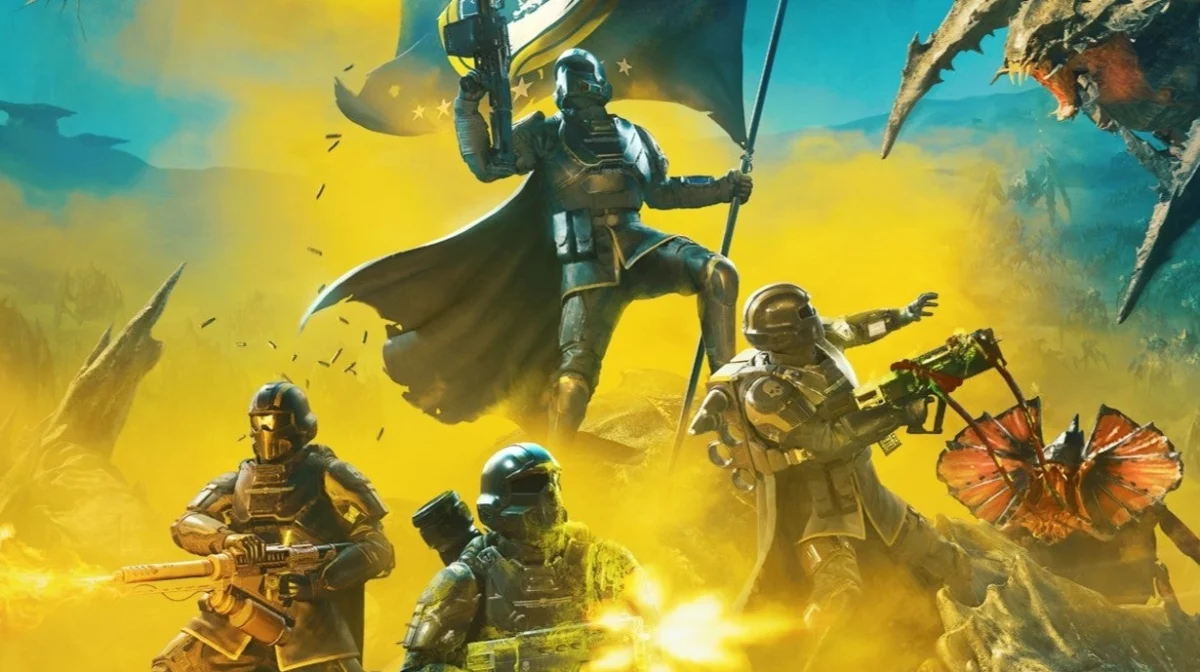
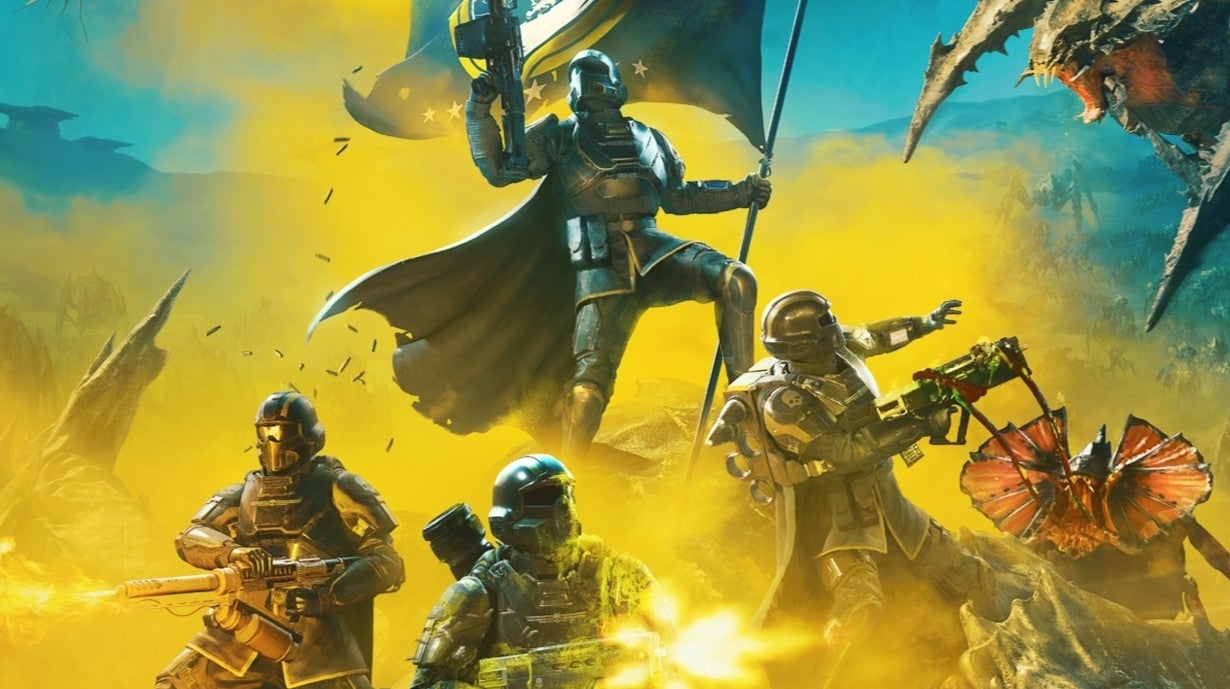
Players participating in the "Termicide 2.0" campaign are rewarded with an R-4 Hyena Marksman Rifle, a tangible incentive for contributing to the galactic war effort. The visual representation of the TCS 2.0 in promotional art and in-game assets depicts a colossal, imposing structure, emphasizing its scale and defensive capabilities. The accompanying image in the original article, depicting Helldivers striking poses amidst a Terminid onslaught with flags and capes, further amplifies the jingoistic and propagandistic tone that the game frequently satirizes.
The inclusion of a YouTube trailer titled "HELLDIVERS 2 Campaign Brief: Termicide 2.0" directly links the in-game event to its narrative context. The narration within this trailer, as previously quoted, explicitly uses phrases that resonate with contemporary political discourse, solidifying the connection. The "abortive original ‘Termicide’ campaign" and its consequences serve as a narrative justification for the scaled-up and more robust "Termicide 2.0," implying that past failures necessitate more extreme measures.
The game’s developers, Arrowhead Game Studios, have a history of embedding sharp satire and social commentary within their titles. Helldivers 2, in particular, leans heavily into a Starship Troopers-esque critique of militarism, propaganda, and the seductive allure of authoritarianism masked as patriotism. The "Termicide 2.0" campaign appears to be a continuation and evolution of this satirical approach, utilizing a highly recognizable real-world political touchstone as a focal point for its commentary.
Official Responses and Developer Intent
While Arrowhead Game Studios has not issued a direct, explicit statement confirming the Trump-specific inspiration for "Termicide 2.0," the developers have consistently maintained that Helldivers 2‘s narrative is intended to be satirical and to provoke thought. In the past, developers have alluded to their inspirations being drawn from a variety of sources, including science fiction literature and films known for their critical takes on society and politics.
The game’s lead writer, Johan Pilestedt, has previously discussed the team’s intent to create a world that is both entertaining and thought-provoking. The satirical commentary in Helldivers 2 is not typically subtle, aiming to highlight the absurdities and dangers of unchecked nationalism and propaganda. The "Termicide 2.0" campaign, with its direct echoes of political rhetoric surrounding border security and national defense, fits squarely within this established pattern.
The decision to leverage such a prominent and polarizing political issue within the game’s narrative is a deliberate choice, likely intended to engage players on a deeper level and to spark discussion about the themes being explored. The game’s developers appear to be using the "Termicide 2.0" campaign as a vehicle to explore the idea of grand, often costly, and ultimately questionable solutions to complex problems, drawing a direct line from fictional galactic threats to contemporary societal anxieties.
Implications: The Interplay of Gaming, Satire, and Political Discourse
The "Termicide 2.0" campaign in Helldivers 2 raises several important questions about the role of satire in video games and its relationship to real-world political discourse.
Firstly, it highlights the power of video games as a medium for social and political commentary. By embedding nuanced (or in this case, arguably not-so-nuanced) critiques within an interactive and engaging experience, games can reach audiences and provoke thought in ways that traditional media may not. The shared experience of playing Helldivers 2 and participating in its narrative campaigns can foster collective interpretation and discussion among players, creating a unique space for engaging with complex themes.
Secondly, the campaign underscores the increasingly blurred lines between entertainment and political commentary. As political rhetoric becomes more theatrical and sensationalized, it offers fertile ground for satire. However, as the original article notes, there’s a risk that such satire can become "wallowing in crapulence" if it doesn’t evolve. The effectiveness of Helldivers 2‘s satire hinges on its ability to remain sharp and insightful, rather than simply mirroring existing political discourse without adding significant critical depth.
The article’s author raises a pertinent concern: the potential for the Trump administration, or similar political movements, to co-opt or utilize such "shit-eating, irony-poisoned burlesque" for their own propaganda purposes. This highlights the complex and sometimes unpredictable nature of satire, where the intended critique can be misinterpreted or even weaponized by those it aims to mock. The ongoing evolution of Helldivers 2‘s narrative campaigns, with their emphasis on player agency and consequence, suggests that Arrowhead is aware of the need to keep the game’s narrative dynamic and responsive, potentially to avoid becoming a predictable echo chamber.
Finally, the "Termicide 2.0" campaign serves as a reminder of the enduring human tendency to seek simple, often monumental, solutions to complex problems. Whether it’s a wall in space or a wall on Earth, the appeal of a tangible, imposing barrier as a symbol of security and control remains potent. Helldivers 2‘s satirical exploration of this theme, through the lens of intergalactic warfare and managed democracy, invites players to reflect on the motivations behind such proposals and the potential consequences of their implementation, both within the game and in the world beyond. The ongoing success of Helldivers 2 and the heated discussions surrounding its narrative choices suggest that players are not only looking for explosive action but also for games that engage with the world around them in meaningful, and often provocative, ways.