"The Vampire Lestat" Unleashes a Gloriously Chaotic New Era for AMC’s Immortal Universe
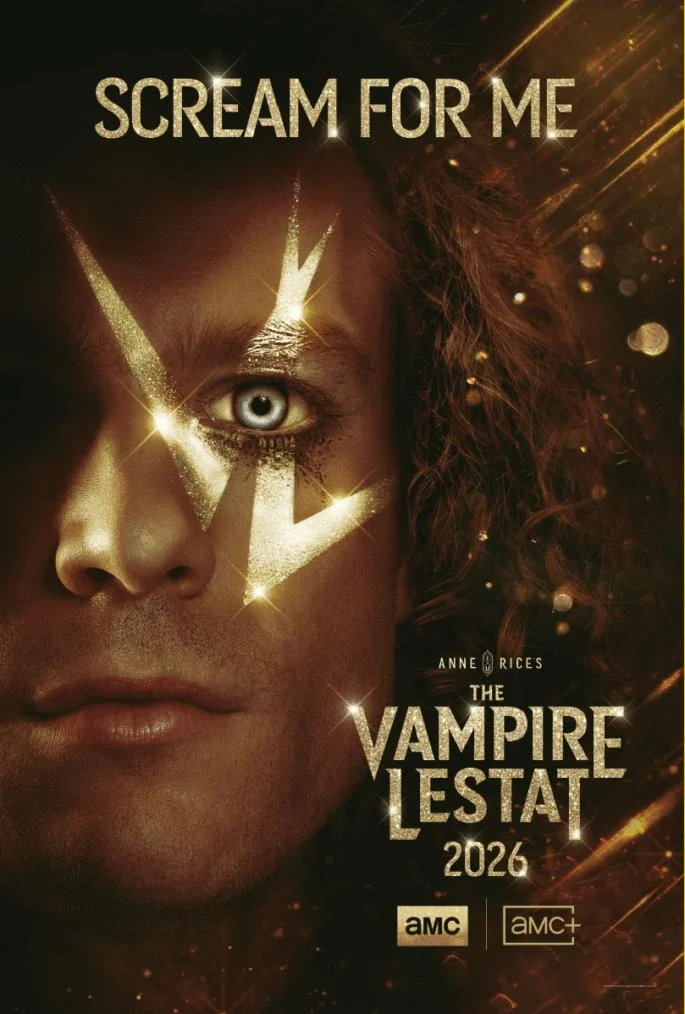
Los Angeles, CA – June 10, 2026 – Several years after its ambitious launch, AMC’s "Immortal Universe," a sprawling adaptation of Anne Rice’s beloved supernatural sagas, has firmly established itself as a significant player in the contemporary television landscape. Following the critically acclaimed debuts of Interview with the Vampire (2022) and Mayfair Witches (2023), the franchise has continued its rapid expansion, albeit with a notable shift in narrative and tone. The latest installment, The Vampire Lestat, which premiered on June 7, 2026, marks the third season of the flagship Interview series, plunging viewers into the tumultuous mind of its charismatic, mercurial anti-hero.
This bold retitling signals a deliberate and exciting new chapter, aligning the television adaptations more closely with the foundational texts of Rice’s iconic "Vampire Chronicles." While the franchise saw a brief stumble with the unexplained cancellation of its third series, Talamasca: The Secret Order (2025), after just one season, AMC’s commitment to Interview and Mayfair Witches remains unwavering. The Vampire Lestat not only commemorates the half-century mark of Anne Rice’s towering influence on vampire fiction—the "Vampire Chronicles" spanning fifty years of publication from 1976 to 2026—but also ushers in a new era of storytelling that is as electrifying as it is disorienting.
The Evolution of AMC’s Immortal Universe
AMC’s foray into Anne Rice’s gothic realms began with Interview with the Vampire, which quickly garnered praise for its lush visuals, compelling performances, and a fresh, queer-inclusive interpretation of the source material. The initial two seasons meticulously adapted the first novel, Interview with the Vampire (1976), introducing audiences to the tortured Louis de Pointe du Lac (Jacob Anderson) and his complicated, often toxic, relationship with the enigmatic Lestat de Lioncourt (Sam Reid) and the ancient vampire Armand (Assad Zaman). The narrative was largely framed through Louis’s melancholic, introspective recounting of his immortal life to journalist Daniel Molloy (Eric Bogosian) in modern-day Dubai.
Mayfair Witches, which premiered in 2023, offered a different flavor of supernatural intrigue, delving into the powerful, generational magic of the Mayfair family. While the two series exist within the same "Immortal Universe," their narrative styles and thematic explorations are distinct, showcasing the breadth of Rice’s world-building. The short-lived Talamasca: The Secret Order aimed to explore the mysterious occult investigators who monitor the supernatural world, a concept integral to both The Vampire Chronicles and Lives of the Mayfair Witches. Its cancellation, without clear explanation from AMC, was a surprise to many, suggesting potential challenges in expanding the universe beyond its core narrative pillars.
However, the continued investment in Interview demonstrates AMC’s strategic focus. The decision to retitle the third season to The Vampire Lestat, mirroring the second novel (1985), is a clear indication of a long-term vision. This approach, which will see future seasons adopt the titles of subsequent books—with the upcoming fourth season already confirmed as The Queen of the Damned (1988)—provides a direct roadmap for viewers and reinforces the adaptation’s fidelity to Rice’s literary legacy. It allows each season to embody the distinct narrative voice and thematic preoccupations of its corresponding novel, preparing audiences for the significant tonal and structural shifts inherent in Rice’s sprawling saga.
Lestat’s Unfiltered Narrative: A Dive into Chaos
Viewers embarking on The Vampire Lestat (or TVL, as it’s affectionately known) are met with an immediate and jarring tonal shift from the preceding seasons. Gone is the melancholic, meandering, and largely linear storytelling of Louis. Instead, we are thrust into the mind of Lestat, whose narration is, by turns, joyful, maudlin, manic, and profoundly depraved. His approach leaps across his personal history with little regard for cognitive dissonance, mirroring the character’s flamboyant and impulsive nature from the novels. This radical departure demands a warning: prepare for tonal whiplash.
Further complicating the narrative structure is the season’s ambitious framing device. The very first scene of the first episode is set post-events of The Queen of the Damned, an intriguing flash-forward that immediately establishes a sense of destiny and impending cataclysm. We find ourselves at an exclusive auction, where a collection of recordings is being sold. These aren’t just Lestat’s cataclysm-triggering rock star songs, but also a series of narrative recordings tellingly titled "The Failures." From this point, the audience is pitched backward in time as the first record begins to play, and Lestat, embodied with electrifying intensity by Sam Reid, emerges as an unfiltered voice-over.
Crucially, the journalist of Interview fame, Daniel Molloy (Eric Bogosian), is no longer merely an interviewer but a participant. Now a vampire himself, Daniel has joined Lestat and his band on tour as a documentarian. This transformation fundamentally alters the dynamic; the story now emanates directly from Lestat, no longer mediated or filtered through another’s perspective. It’s Lestat’s turn to tell his truth, however chaotic or self-serving it may be, and to reclaim his narrative from Louis’s previous "slander."
The "Brat Prince" on Tour: A Motley Entourage
Lestat’s decision to become a rock star is presented as an unabashed, direct reaction to how he feels about Louis having publicly maligned him in Daniel Molloy’s book. This act of vampiric showmanship, a defiant roar against perceived injustice, drives the season’s central plot. Lestat, ever the dramatic, seeks to control his own narrative through the most public and theatrical means possible: music.
Accompanying Lestat on this gloriously chaotic journey in a tour bus that could rival Spinal Tap for grime and eccentricity is a colorful and diverse entourage. The core band—Larry (Noah Reid), Alex (Seamus Patterson), Salamander (Ryan Kattner), and TC (Sarah Swire)—provide the musical backbone to Lestat’s volatile stage presence. But the supporting cast extends far beyond the stage:
- Dr. Fareed Bhansali (Gopal Divan): Previously attending to Louis in Dubai, Dr. Bhansali now serves as the private physician for Lestat and his band. His role underscores the inherent risks and peculiar medical needs of a touring vampire rock star and his human companions.
- Christine Claire (Jeanine Serralles): A formidable newcomer, Lestat’s lawyer takes her job of shielding the band from potentially catastrophic legal fallout—resulting from Lestat’s unwise predations and supernatural antics—with utmost seriousness. Her presence highlights the clash between ancient vampiric impulses and modern legal realities.
- Dee Pharma (Amaka Umeh): Lestat’s social media coordinator has the additional, unusual responsibility of consuming illicit substances. This allows any vampires present, including the mysterious Sofia—revealed in a shocking twist to be Lestat’s biological mother and fledgling, Gabriella Vecce de Lioncourt (Jennifer Ehle)—to drink her blood and get high, adding another layer of depravity and complexity to the tour.
- Samuel Barclay (Christopher Geary): The former Playwright-in-Residence of Armand’s Paris coven returns in a modern guise as "a vampire DJ of some renown." Geary’s humorous and nuanced performance makes Barclay, who seemingly continues to spy for the Talamasca, a fan favorite, adding an element of espionage to the already volatile mix.
Electrifying Performances and Haunting Melodies
The heart of The Vampire Lestat beats to the rhythm of Daniel Hart’s returning musical compositions and Sam Reid’s utterly electrifying performance. Reid’s vocals on Lestat’s songs are not merely competent; they are extraordinary, ranging from tender ballads to terrifying anthems. His physical stage presence during the season’s concert scenes is equally compelling, cementing Lestat’s status as a bona fide rock god. It’s a rare feat for an actor to become such a convincing double threat in such short order, and many anticipate significant awards recognition for Reid’s musical contributions alone.
Lestat’s autobiographical songs are more than mere entertainment; they are windows into his tormented soul, a public confession and confrontation of his past. Tracks like "Your Biggest Fan," written from the perspective of Magnus (Damien Atkins)—Lestat’s medieval alchemist maker, depicted here with terrifying precision as an abuser and stalker—lay bare the profound, undealt-with trauma Lestat carries. The season delves deep into his complex relationship with Magnus, but also, disturbingly, with his biological mother, Gabriella. Their two-hundred-odd year incestuous relationship (sometimes overlapping awkwardly with his romantic entanglements with Louis or Armand) is an ongoing source of emotional turmoil, and her presence on the road further complicates Lestat’s already fragile emotional state.
Interweaving Plots: Global Strife and Personal Demons
Beyond Lestat’s immediate entourage and personal drama, the season skillfully weaves in larger narrative threads first seeded in the show’s earlier installments. The enigmatic Talamasca agents, Raglan James (Justin Kirk) and Rashid (Bally Gill), return, keeping close tabs on Lestat’s risky antics. Their surveillance extends to the alarming phenomenon known as the "Great Conversion," a movement within the vampire world that has seen fledglings created at an unprecedented rate. The worldwide vampire population has spiked dramatically, from approximately 1,600 in 2022 to a staggering 290,000 in 2025. This exponential growth poses an existential threat, as the collective feeding rate has tipped the world into a precarious state of "more deaths than births" among humans, threatening the very food source of the immortal species.
Even Louis de Pointe du Lac makes a significant return, having expanded his worldwide empire from fine art to a vast chain of hotels and real estate. In one of the season’s most memorable comedic scenes, a highly-counseled Lestat and Louis clash after a Detroit coven attempts to assassinate Lestat following a performance that damages "Dracula’s Daughter," Louis’s Motor City hotel. Moses Sumney makes a stellar series debut as Lemuel, Louis’s sharp legal representation and current lover, adding another layer of intrigue and emotional entanglement to the immortal power struggles.
The interpersonal drama and global strife are further compounded by Lestat’s active haunting by "muses" from his tempestuous past. Magnus is a recurring spectral presence, as is Nicolas de Lenfent (Joseph Potter), Lestat’s ill-fated childhood friend and violinist, with whom he shared a romantic involvement in eighteenth-century Paris during the founding of the Théâtre des Vampires coven with Armand. Lestat’s abusive father (Peter Outerbridge) and brothers (Kaleb Horn and Rhys Alexander Phillips) also weave in and out of his hallucinations as scornful, tormenting presences.
Confronting the Past: Trauma, Therapy, and Destiny
Lestat uses the tour as an escape, a desperate attempt to outrun his past. Yet, by invoking it night after night through his songs, he inadvertently ensures he’s losing the race. The music becomes a catalyst, forcing him to confront each of these haunting shades. Often, he processes the attached grief and trauma during documentary interview sessions with Daniel Molloy. These sessions, however, are not without their own consequences; Daniel, now a vampire himself, is just as invasive and ruthless with his questioning as he was with Louis. But Lestat, as an interview subject, is far less willing to be pushed, routinely pushing back against Daniel’s probing inquiries, creating a dynamic tension that fuels much of the season’s psychological depth.
Out of necessity, the events of The Queen of the Damned have already begun to bleed into the narrative. Marius de Romanus (Christopher Heyerdahl), Armand’s abuser and maker, appears in flashbacks, particularly concerning his eighteenth-century attempt to make Lestat his replacement as the custodian of Those Who Must Be Kept—Akasha and Enkil, the primordial vampires. Much like in the novels, Lestat strikes up a telepathic rapport with Akasha (Sheila Atim) as he tends to her prone, statue-like form, eventually feeding on her and being fed upon in turn. In this adaptation, Marius’s discovery of this transgression is met with swift, unforgiving retribution; he immediately ousts Lestat from the role of keeper, leaving him adrift to eventually travel to America, where his fateful encounter with Louis awaits.
While TVL ambitiously connects many of the narrative threads from Interview‘s first two seasons amidst its chronological chaos, viewers are advised to refresh their memories of previous events to avoid disorientation. The scope is vast, and with only seven episodes allotted by the network, showrunner Rolin Jones and his creative team occasionally struggle with pacing, particularly in the finale. However, this is arguably forgivable, as the events of this season are clearly intended to be wrapped up in the next, a narrative approach Jones also employed in the two-part structure of Interview‘s initial adaptation.
Critical Reception and Looking Ahead
The Vampire Lestat is undeniably a dizzying adventure, oscillating between delight and distress with lightning speed. These rapid emotional shifts have proven polarizing; some viewers have found the experience disorienting, even outright detesting the departure from Interview‘s narrative style and pacing, longing for a return to its more measured approach. However, the writing team has been transparent in interviews, consistently emphasizing the season’s intended tonal and structural shifts. They have consciously taken their cue from the novels, where Lestat has always been a more chaotic and disjointed narrator compared to Louis or Armand. This artistic choice, while challenging, remains faithful to the spirit of Rice’s original work.
Beyond Sam Reid’s stunning center-stage turn, additional standout performances elevate the series. Jacob Anderson as Louis continues to imbue his character with a compelling blend of weariness and quiet strength, even in his limited appearances. Assad Zaman’s portrayal of Armand, though less prominent this season, delivers a chilling and touching performance in the finale, reaching a pitch previously seen in the powerful fifth episode of season two, cementing his role as one of the ongoing antagonists. Among the secondary cast, Lestat’s band deserves honorable mention for their collective energy, as does Christopher Geary, whose humorous, nuanced performance as Sam Barclay has made him a fan favorite.
Finally, Lestat’s lineup of "muses" wouldn’t be complete without mentioning one of the season’s best-kept secrets: Delainey Hayles returns as Claudia, Lestat’s and Louis’s fledgling who met her tragic fate in 1949 at the hands of Armand’s theater troupe in Paris. Hayles, who took over the role from Bailey Bass between seasons one and two of Interview, shines incandescently. Claudia is presented as a vengeful spirit, and the opportunity for her to speak her piece to her adoptive fathers about their failures is nothing short of what she deserves. This narrative move is profoundly poignant and perfectly in keeping with a season focused on the pervasive effects of intergenerational trauma and the implications of carrying them into eternity. Lestat’s failures are not only his perpetual struggle to find peace but his tragic tendency to continue the cycle of inflicting these horrors upon others.
The Vampire Lestat is a bold, ambitious, and often unsettling journey into the psyche of Anne Rice’s most famous creation. It’s a season that demands engagement, challenging viewers to embrace its deliberate chaos and revel in its operatic scale. As the "Immortal Universe" continues to expand with The Queen of the Damned on the horizon, AMC is clearly committed to exploring the full, complex tapestry of Anne Rice’s vision, ensuring her legacy looms large over the landscape of contemporary fantasy and horror for years to come.